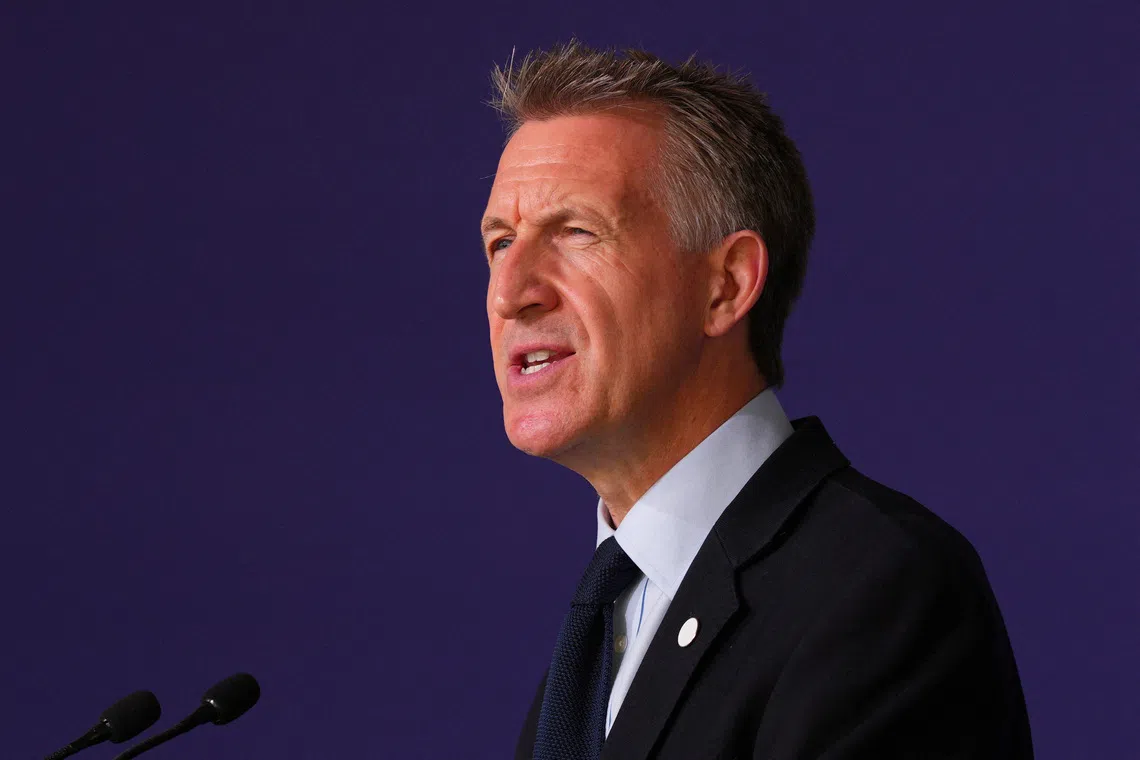
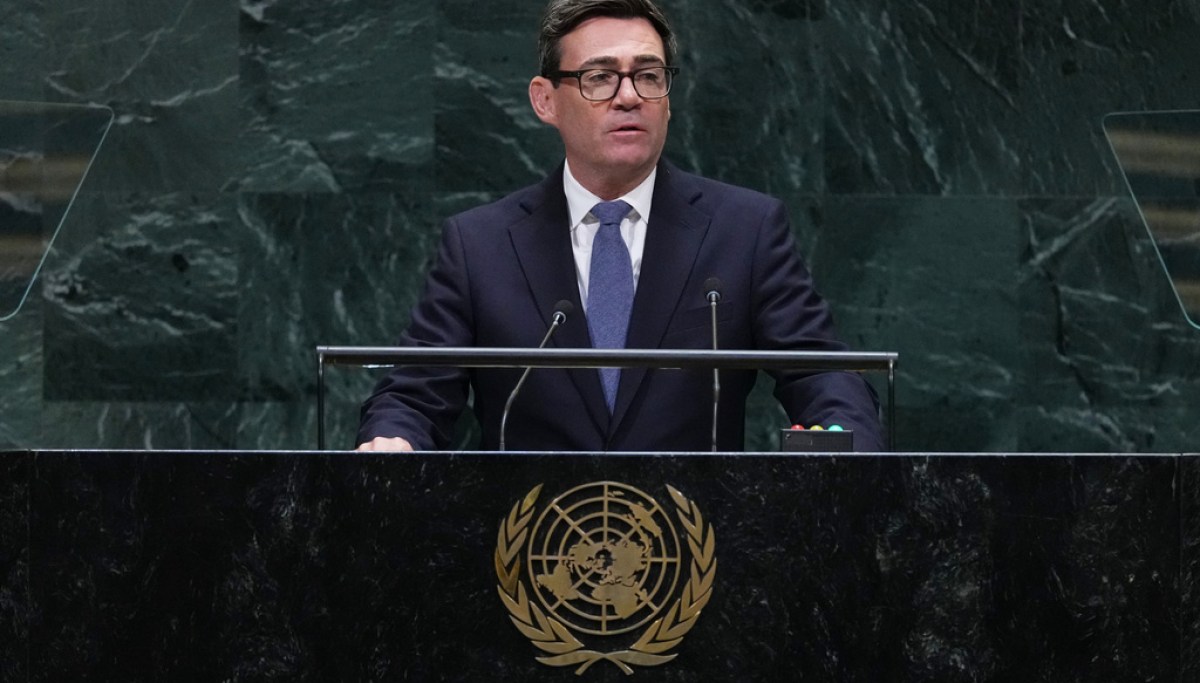
Photo via BBC News

Is Burnham right to blame Russia for spreading online disinformation?

Read the original at BBC News ↗
Cite

Sardarizadeh, S., & Durbin, A. (2026, September 23). Is Burnham right to blame Russia for spreading online disinformation? BBC News. https://www.bbc.co.uk/news/articles/ckd79wldjzl4o?at_medium=RSS&at_campaign=rss

Dated when The Aporia collected the article, usually within hours of publication. Check the original for its exact date and byline.

BBC News · collected 2026-09-23 · by Shayan Sardarizadeh, Adam Durbin

Quick Summary

BBC Verify examines claims by UK Prime Minister Andy Burnham about Russian disinformation campaigns and finds evidence of extensive use of AI to create fake videos impersonating British public figures, journalists, and news organizations. These efforts aim to influence opinions on issues such as the war in Ukraine and upcoming elections in Western countries. The article highlights specific instances where Russian-linked groups used AI technology to spread false narratives through social media platforms like TikTok and X (formerly Twitter), affecting hundreds of thousands of users.
Written by AI on 2026-09-23, from this article's own text only (the story summary below draws on all the coverage).

AI analysis

Story summary

Prime Minister Andy Burnham highlighted in his UN speech that Russia is conducting an "insidious campaign" targeting people in the UK through online disinformation. The BBC's Verify project tracked a series of fake videos featuring British public sector workers, such as a 999 call operator named Aaron whose voice was cloned to create misleading content about the 2025 Polish presidential election. This is part of a larger Russian-linked disinformation campaign called Matryoshka. In another instance in 2023, BBC Verify uncovered a propaganda operation involving 12,000 fake TikTok accounts from Russia that posted misleading videos in multiple languages to influence views on the war in Ukraine. These operations demonstrate how sophisticated Russian tactics can manipulate public opinion across different platforms and countries.

Written for “Russia Online Disinformation” on 2026-11-01, grounded in this article and the 0 other(s) covering the same event.

Story

📰 Russia Online Disinformation
Politics · 1 article(s) covering the same event.

Compared with similar articles

This article reads leans left and hedges 9% of its claims. Each row says how that neighbour differs.
BBC News
Outlet record 68/100
“The articles discuss different aspects related to Russia's online disinformation campaigns and do not describe the same specific incident.”
Daily Mail
Hedges 3 of 25 claims Outlet record 68/100
“The articles discuss different aspects of Andy Burnham's stance on Russia and defense spending. Article A focuses on Kemi Badenoch's criticism of Burnham for not acting quickly enough on defense spending, while Article B discusses Burnham's speech at the UN about Russian disinformation campaigns.”
The Guardian
⚖️ Leans left Hedges 2 of 74 claims Outlet record 66/100
“Article A discusses a meeting between Andy Burnham and Donald Trump at the UN general assembly, while Article B focuses on Burnham's speech about Russia-linked disinformation campaigns. The articles describe different specific events.”
Mother Jones
⚖️ Leans left Hedges 7 of 43 claims Outlet record 95/100
“The articles discuss different aspects of disinformation campaigns; one focuses on Prime Minister Burnham's comments about Russian disinformation efforts broadly, while the other details a specific deepfake video falsely attributed to Mother Jones.”
The Straits Times
Hedges 0 of 6 claims Outlet record 66/100
“The articles describe different actions related to Russia, one focusing on disinformation campaigns and the other on briefings about security threats.”
BBC News
Hedges 3 of 37 claims Outlet record 68/100
“Article A reports on Prime Minister Andy Burnham's speech at the United Nations General Assembly announcing new initiatives against Russian disinformation and AI standards. Article B discusses BBC Verify's examination of Russia-linked disinformation campaigns, which is a separate analysis rather than the same specific event.”
Al Jazeera
⚖️ Leans left Hedges 0 of 3 claims Outlet record 60/100
“Article A reports on PM Burnham's address to the UN General Assembly specifically regarding Russian electoral interference and his announcement, while Article B discusses a broader examination of Russia-linked disinformation campaigns and their impact.”
Washington Examiner
Hedges 4 of 29 claims Outlet record 70/100
“Article A describes PM Burnham's address at the U.N. General Assembly, while Article B discusses a BBC analysis of Russian disinformation campaigns in response to Burnham's comments.”
Daily Mail
⚖️ Leans left Hedges 4 of 21 claims Outlet record 68/100
“Article A describes a speech given by Andy Burnham at the United Nations where he claims that Putin has exploited Brexit to sow division in Britain. Article B discusses broader disinformation campaigns linked to Russia and their attempts to influence public opinion, but does not specifically focus on Burnham's speech or the context of Brexit.”
Evening Standard
Hedges 1 of 32 claims Outlet record 65/100
“While both articles discuss Andy Burnham's criticism of Russian disinformation at the UN, Article A focuses on summarizing his speech and key points made during it, while Article B examines and questions the validity of those claims post-speech. Therefore, they cover different aspects of the event.”
How this article was measured signals, leaning charts, publisher record, byline, topics and claims

Signals How these are calculated →

Claims extracted
32
sentences that state something as happening or true
Uncertain
9%
3 of 32 hedged ("reportedly", "may", "according to")
Leaning
Leans left
of the writing, not the subject · beta estimate
Publisher signals
68/100
BBC News's corrections and hedging, across everything collected from it. Not a measure of accuracy.
Outlets on this story
1
Politics
Same framing elsewhere
1
articles that frame the event the way this one does
Analyzed 2026-09-23 · how these are computed

How this is being covered How these are calculated →

Article leaning vs. publisher reliability
Source leaning vs. consistency

Publisher

BBC News · 4811 article(s) · 6 correction(s) detected
Running correction rate · 6 correction(s)

Who wrote this

Shayan Sardarizadeh
1 article(s) here · 1 carrying a prediction
🔮 But Aaron's case indicates ordinary British citizens could also be a target.
The only article under this byline in the corpus.
Adam Durbin
1 article(s) here · 1 carrying a prediction
🔮 But Aaron's case indicates ordinary British citizens could also be a target.
The only article under this byline in the corpus.

Topics

BBC Verify British Russia Russian Ukraine

Subjects

BBC Verify ORG · 7× Russia GPE · 6× Ukraine GPE · 4× Russian NORP · 3× Aaron PERSON · 2× British NORP · 2× Reddit ORG · 2× TikTok ORG · 2× Andy Burnham PERSON · 1× Germany GPE · 1×

Narrative

And in 2023, BBC Verify found a major propaganda operation involving bogus accounts on TikTok, which posted misleading videos in multiple languages - including English - generating millions of views, with the aim of influencing the views of users in several European countries about the war in Ukraine. TikTok removed more than 12,000 fake accounts involved in the operation, saying its investigation indicated that the accounts originated from Russia. Another campaign was discovered during the 2019 UK general election campaign when a trove of confidential documents about a possible trade deal between the UK and US was posted by an anonymous user on the platform Reddit and later used by the Labour Party in its campaign.
framing: assertive · carried by 1 article(s) · first seen 2026-09-23
🔮 But Aaron's case indicates ordinary British citizens could also be a target.
2026-09-23 · BBC News
Is Burnham right to blame Russia for spreading online disinformation? · assertive framing

Claims (32 extracted, 3 hedged)

- Published After Prime Minister Andy Burnham put Russia-linked disinformation campaigns under the spotlight, BBC Verify has been examining how these attempts to influence people's opinions work. asserted
attempts → publish → opinions
We have tracked – and debunked – numerous online disinformation campaigns produced by Russia-linked groups that have attempted to shift public opinion on issues like the war with Ukraine, influence elections in the US and Germany, damage social cohesion and undermine trust in authorities or institutions. asserted
that → track → authorities
What kind of disinformation is being spread? asserted
kind → spread → disinformation
In his UN speech, Burnham said there was an "insidious campaign" being carried out by the Russian government to target people in the UK. asserted
Burnham → say → UK
Last year, a series of fake videos featuring British public sector workers appeared online. asserted
series → feature → workers
Among them was a 999 call operator in Preston named Aaron, who told BBC Verify he was shocked to find out his voice had been cloned with AI to create a fake video of him talking about the 2025 Polish presidential election. asserted
him → name → election
Those videos are part of a major Russian-linked disinformation campaign known as Matryoshka, which BBC Verify and other research groups have been tracking. asserted
Verify → link → which
AI is used to create fake videos - sometimes dozens a day - which impersonate journalists and major news organisations like the BBC to push disinformation about Ukraine and Western countries onto people's social media feeds. asserted
which → use → feeds
But Aaron's case indicates ordinary British citizens could also be a target. uncertain
citizens → indicate → ?
In the run-up to the 2024 US presidential election, BBC Verify reported how there was a shift in focus from Ukraine to post fabricated videos about the US election. asserted
Verify → report → election
We are once again seeing early evidence of similar misleading videos ahead of November's US midterm elections. asserted
We → see → elections
BBC Verify has previously exposed a large-scale disinformation campaign run by a former US police officer now based in Russia. asserted
Verify → expose → Russia
With the help of AI, the operation created hundreds of fake local news websites in the UK, US, France and other Western countries with the aim of spreading completely made-up stories. asserted
operation → create → stories
One of these was a fake news website called the London Crier which falsely claimed that Ukrainian President Volodymyr Zelensky had bought a mansion owned by King Charles at a bargain price. asserted
Zelensky → call → price
It was seen by hundreds of thousands of users on X and shared by an official Russian embassy account. We also found that a fake AI-narrated video on YouTube was the source of the bogus story. asserted
video → see → story
The platform removed it after we reported it. asserted
we → remove → it
And in 2023, BBC Verify found a major propaganda operation involving bogus accounts on TikTok, which posted misleading videos in multiple languages - including English - generating millions of views, with the aim of influencing the views of users in several European countries about the war in Ukraine. TikTok removed more than 12,000 fake accounts involved in the operation, saying its investigation indicated that the accounts originated from Russia. Another campaign was discovered during the 2019 UK general election campaign when a trove of confidential documents about a possible trade deal between the UK and US was posted by an anonymous user on the platform Reddit and later used by the Labour Party in its campaign. asserted
trove → find → campaign
While the documents appeared to be genuine, Reddit later confirmed in a statement the leak "was part of a campaign that has been reported as originating from Russia". asserted
that → appear → Russia
But there are questions about how widespread or effective some of these disinformation campaigns are in reality. asserted
some → be → reality
While many of them appear to be extensive and organised, it is hard to determine how widely they have spread or how significant a role they have played in actually influencing people. asserted
they → appear → people
Do other countries sponsor disinformation campaigns? asserted
countries → sponsor → campaigns
Russia is also not alone in using industrial-scale disinformation campaigns which spread false information to further its own geopolitical aims, as other authoritarian governments like China, North Korea and Iran are also major players in online disinformation. asserted
governments → use → disinformation
BBC Verify has previously reported on a number of X accounts posting in support of Scottish independence, but whose location information indicated they originated from Iran. asserted
they → report → Iran
And, at the height of the Coronavirus pandemic, the BBC discovered a network of more than 1,200 faked or hijacked accounts on Facebook, Twitter and YouTube that posted pro-Chinese government and anti-US messages. asserted
that → discover → messages
There is evidence to suggest Western governments also engage in disinformation campaigns, although the scale of their operations are not always clear. asserted
scale → be → operations
An investigation by Reuters in 2024, external revealed that during the Covid pandemic, the US military ran a covert anti-vaccine influence operation to discredit China's Sinovac jab. asserted
military → reveal → jab
AI has also exacerbated the spread of disinformation, as images can now be more easily faked and videos misleadingly edited using text prompts. asserted
videos → exacerbate → prompts
Text generation has also improved and can create plausible, authoritative and coherent sounding fake news reports. asserted
generation → improve → reports
BBC Verify saw evidence of this during US-Israel war with Iran. asserted
Verify → see → Iran
While in the early weeks of the Russia-Ukraine conflict most of the disinformation published online consisted of old or misleading videos and inaccurate claims, we have seen a deluge of AI-generated images and videos since the Iran war began back in February of this year. uncertain
war → publish → year
Carl Miller, an author and founder of the Centre for the Analysis of Social Media at Demos, told BBC Verify that state-run influence operations "amplify and exploit existing grievances and fissures - making it really hard to work out exactly what sort of effect they might have". uncertain
they → tell → effect
"Influence operations are quite fragile things, usually, and we need to find ways of making them much more likely to fail if they target us," he added. asserted
he → need → us

💬Give feedback
🕘History 🎫Support