Photo via Times of India

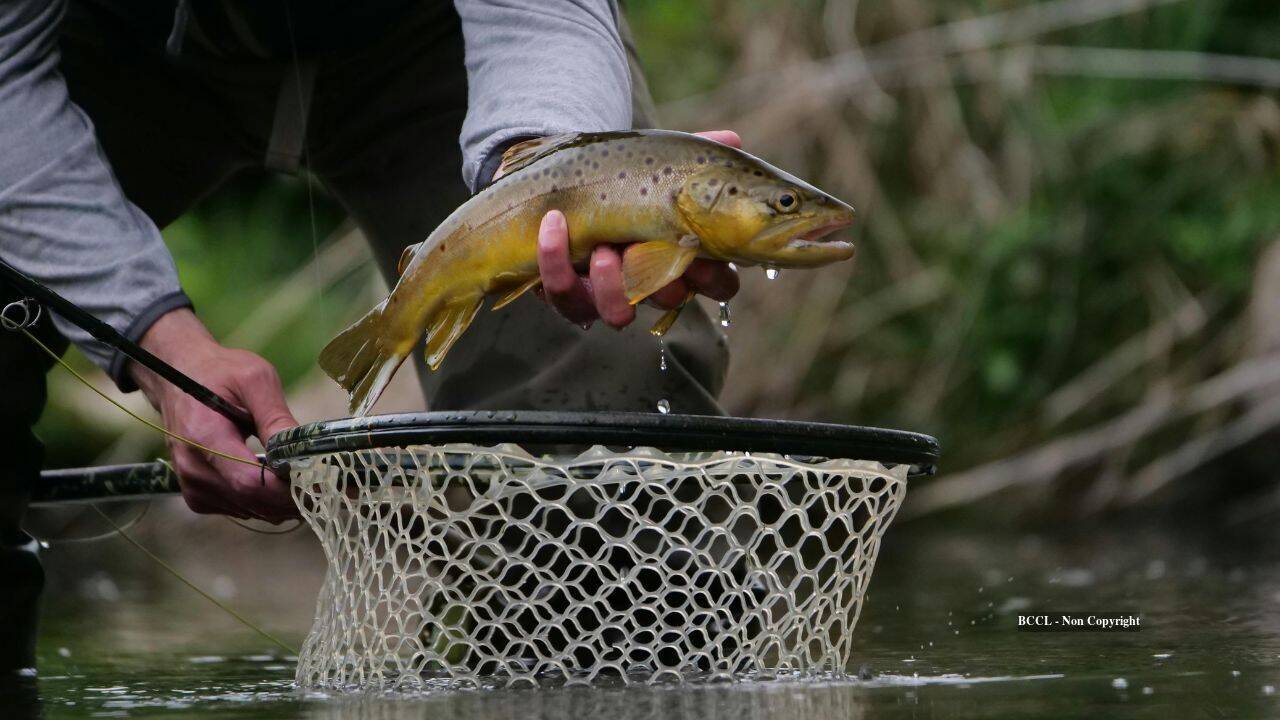
California removed 44,000 trout from Sierra lakes, helping frog numbers soar from 190 to 18,800

Read the original at Times of India ↗
Cite

TOI Science Desk. (2026, September 23). California removed 44,000 trout from Sierra lakes, helping frog numbers soar from 190 to 18,800. Times of India. https://timesofindia.indiatimes.com/science/wildlife/in-2001-california-began-removing-non-native-trout-from-high-sierra-lakes-by-2011-nearly-44000-fish-were-removed-from-19-lakes-as-frogs-in-three-restoration-lakes-rose-from-about-190-to-over-18800/articleshow/134435177.cms

Dated when The Aporia collected the article, usually within hours of publication. Check the original for its exact date and byline.

Times of India · collected 2026-09-23 · by TOI Science Desk

Quick Summary

In Sequoia and Kings Canyon National Parks in California, conservation efforts to remove non-native trout from 19 lakes resulted in the removal of nearly 44,000 fish by 2011. This initiative led to a dramatic recovery of mountain yellow-legged frog populations, increasing them from around 190 individuals to over 18,800 within the restored lakes. The project aimed at restoring ecological balance and improving the resilience of frog species against threats such as fungal diseases.
Written by AI on 2026-09-23, from this article's own text only (the story summary below draws on all the coverage).

AI analysis

Story summary

In 2001, staff at Sequoia and Kings Canyon National Parks initiated a project to remove non-native trout from selected Sierra Nevada lakes and streams, historically home to mountain yellow-legged frogs but naturally fishless. By 2011, they had removed nearly 44,000 trout from 19 lakes, completely eradicating them from nine of those lakes. This conservation effort led to a dramatic increase in frog populations; surveys showed an upsurge from approximately 190 frogs and tadpoles to over 18,800 in three restoration sites. The National Park Service credits this project with restoring ecological balance and strengthening the frog population's resilience against threats like deadly fungal diseases. This initiative highlights the impact of removing introduced species on native wildlife conservation.

Written for “California Trout Removal Benefits Frogs” on 2026-11-01, grounded in this article and the 0 other(s) covering the same event.

Story

📰 California Trout Removal Benefits Frogs
Environment · 1 article(s) covering the same event.

Compared with similar articles

Nothing to compare against. No article is close enough to this one for the pipeline to have linked or judged the pair.
How this article was measured signals, leaning charts, publisher record, byline, topics and claims

Signals How these are calculated →

Claims extracted
102
sentences that state something as happening or true
Uncertain
12%
12 of 102 hedged ("reportedly", "may", "according to")
Leaning
not political
takes no side on a contested political question
Publisher signals
59/100
Times of India's corrections and hedging, across everything collected from it. Not a measure of accuracy.
Outlets on this story
1
Environment
Same framing elsewhere
1
articles that frame the event the way this one does
Analyzed 2026-09-23 · how these are computed

How this is being covered How these are calculated →

Article leaning vs. publisher reliability
Source leaning vs. consistency

Publisher

Times of India · 3882 article(s) · 2 correction(s) detected
Running correction rate · 2 correction(s)

Who wrote this

TOI Science Desk
299 article(s) here · 1 carrying a prediction
🔮 The work will be carried out by the West Tennessee River Basin Authority, which is preparing a plan to restore the river and the land around it.
🔮 Cornell University scientists have developed genetically engineered tomato plants that turn red-purple when nitrogen becomes scarce, giving farmers a visible warning that crops may need fertiliser.
🔮 By studying these crystals and other mineral grains, scientists could establish the meteorite's age and identify later changes caused by water.
🔮 Centuries later, bronze objects found in Scandinavia would preserve chemical signatures consistent with the metals produced at this Spanish site, offering evidence of connections that may have crossed much of Europe.
🔮 She explored whether an inexpensive device could capture airborne genetic material and support the detection of bacterial pathogens.
🔮 This control may help it maintain its orientation and move along a narrow path without losing its bearings.
🔮 The university says the sculpture will subsequently go on permanent display at its Turner Museum of Glass.
🔮 By bringing together nature, wellness facilities and educational spaces, Winter Garden aimed to create a setting where visitors could exercise, learn about nutrition and gardening, and spend time outdoors.
🔮 Also discovered was a 4,500-year-old humanoid idol, which archaeologists hope will help shed light on the cultural traditions of the region.
🔮 When garlic mustard spreads across the forest floor, other plants may struggle to obtain the resources they need to survive.
Wire or desk byline, not an individual reporter.
Also by TOI Science Desk
Nothing else under this byline is closely related to this article, so these are simply their most recent.
All 299 articles by TOI Science Desk →

Topics

California Sequoia The National Park Service

Subjects

The National Park Service ORG · 4× California GPE · 1× Sequoia ORG · 1×

Narrative

In 2001, staff at Sequoia and Kings Canyon National Parks began removing non-native trout from selected lakes and streams, restoring water bodies that had historically been home to mountain yellow-legged frogs but were naturally fishless.
framing: assertive · carried by 1 article(s) · first seen 2026-09-23
🔮 Tadpoles could grow in shallow water, young frogs could move around the edges of lakes and adults could reproduce without constantly avoiding fish.

Claims (102 extracted, 12 hedged)

High in California’s Sierra Nevada, a conservation project changed the future of a disappearing amphibian. asserted
project → change → amphibian
In 2001, staff at Sequoia and Kings Canyon National Parks began removing non-native trout from selected lakes and streams, restoring water bodies that had historically been home to mountain yellow-legged frogs but were naturally fishless. asserted
that → begin → frogs
By 2011, nearly 44,000 trout had been removed from 19 lakes, including complete removal from nine. asserted
trout → remove → nine
The results were striking: surveys in three restoration lakes recorded an increase from nearly 190 frogs and tadpoles to more than 18,800. asserted
surveys → record → 18,800
The National Park Service says the project helped restore ecological balance and placed the frog population in a stronger position to face other threats, including deadly fungal disease. asserted
project → say → disease
A fish introduced into fishless lakes The mountain yellow-legged frog is native to the high country of the Sierra Nevada. asserted
frog → introduce → Nevada
These frogs evolved in lakes, ponds and streams where fish were naturally absent. asserted
fish → evolve → lakes
For thousands of years, the frogs’ life cycle developed without the pressure of predatory trout. asserted
cycle → develop → trout
Tadpoles could grow in shallow water, young frogs could move around the edges of lakes and adults could reproduce without constantly avoiding fish. uncertain
adults → grow → fish
The situation began to change when people introduced trout into high-elevation water bodies. asserted
people → begin → bodies
From 1870 to 1988, several non-native trout species were stocked in lakes, ponds, marshes and streams across Sequoia and Kings Canyon National Parks. asserted
species → stock → Parks
The National Park Service says these included golden, rainbow, golden-rainbow hybrid, brook and brown trout. asserted
these → say → trout
The fish were introduced partly to create recreational fishing opportunities and attract visitors. asserted
fish → introduce → visitors
But the stocking programs altered ecosystems that had developed without fish. asserted
that → alter → fish
Trout did not simply become another species in the food web. asserted
Trout → become → web
They became powerful new predators in places where mountain yellow-legged frogs had few natural defences against them. asserted
frogs → become → them
Why the frogs declined Trout affect mountain yellow-legged frogs in several ways. asserted
Trout → decline → ways
They eat tadpoles and small frogs, compete with frogs for insects and force the amphibians into smaller, lower-quality areas. asserted
They → eat → areas
The presence of fish can also separate frog populations. asserted
presence → separate → populations
When trout occupy lakes and connecting streams, frogs may be pushed into isolated ponds or narrow areas where they have fewer options for feeding, breeding and escaping environmental stress. uncertain
they → occupy → stress
The National Park Service reports that mountain yellow-legged frogs have disappeared from 92 per cent of their historic range in the Sierra Nevada. asserted
frogs → report → Nevada
Both recognised species—the mountain yellow-legged frog, Rana muscosa, and the Sierra Nevada yellow-legged frog, Rana sierrae, have faced severe declines. asserted
species → recognise → declines
Chytridiomycosis, a fungal disease that attacks the skin of amphibians, also affected frog populations. asserted
that → attack → populations
Infected frogs can die because the disease interferes with essential skin functions. asserted
disease → die → functions
Trout reduced frog numbers and restricted their habitat, while disease threatened the populations that remained. asserted
that → reduce → populations
By 2014, both species had been listed as endangered under the federal Endangered Species Act. asserted
species → list → Act
The restoration effort begins In 2001, park staff began removing trout from selected waters. asserted
staff → begin → waters
The work used large nets and electrofishing equipment. asserted
work → use → nets
Gill nets could capture fish in lakes, while electrofishers temporarily stunned fish so that crews could collect them. uncertain
crews → capture → them
These methods allowed conservation teams to target specific water bodies without applying the same treatment across every lake in the parks. asserted
teams → allow → parks
The objective was not to eliminate trout from the entire Sierra Nevada. asserted
objective → eliminate → Nevada
Instead, the project focused on restoring selected ecosystems where removing non-native fish could provide immediate benefits for native species. uncertain
removing → focus → species
By 2011, nearly 44,000 fish had been removed from 19 lakes. asserted
fish → remove → lakes
Trout were completely removed from nine of those lakes, according to the National Park Service. uncertain
Trout → remove → Service
High-elevation lakes are often remote, and crews had to transport equipment across rugged terrain. asserted
crews → have → terrain
The process also required repeated visits because even a small number of remaining fish could eventually reproduce and rebuild a population. uncertain
number → require → population
Removing the first wave of fish was only one part of the project. asserted
Removing → remove → project
Conservation workers continued targeting the remaining trout to prevent the restored lakes from being recolonised. asserted
workers → continue → lakes
The clearest sign of success came from Upper LeConte Canyon, a remote area containing lakes and streams where mountain yellow-legged frogs once lived. asserted
frogs → come → lakes
Park staff conducted summer surveys in three restoration lakes. asserted
staff → conduct → lakes
…and 62 more, not listed.

💬Give feedback
🕘History 🎫Support