Photo via Times of India

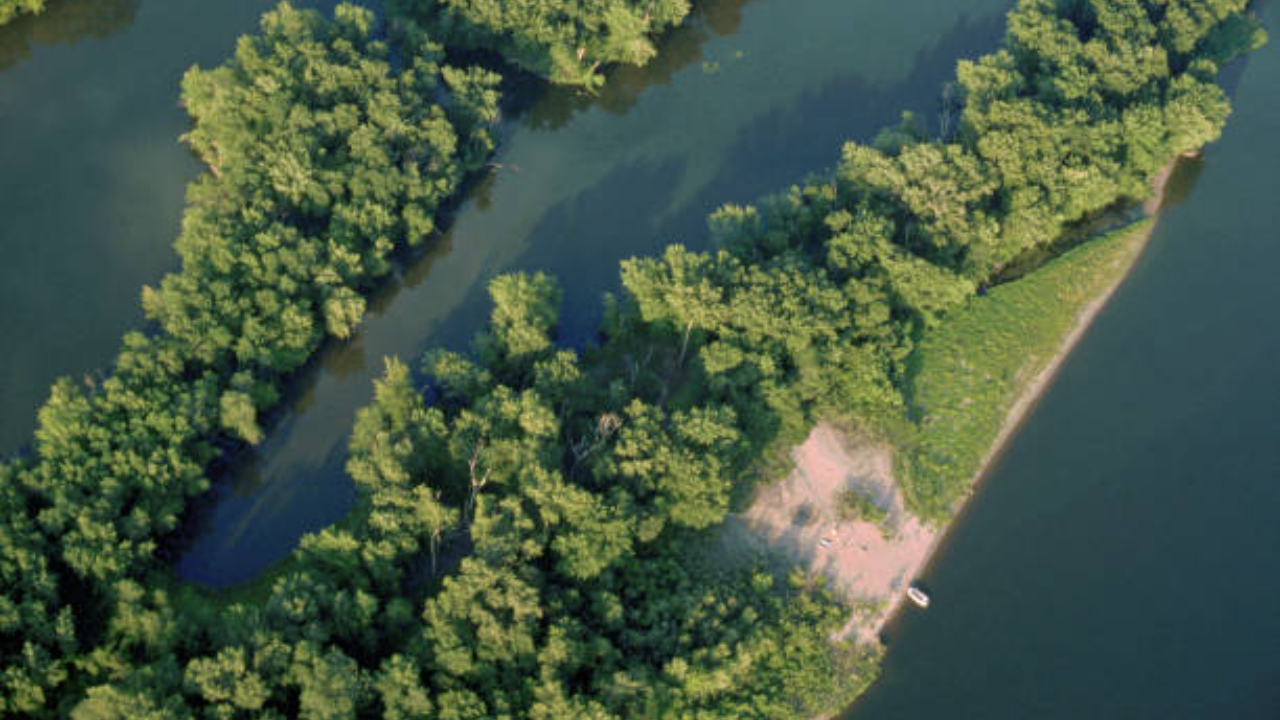
Engineers used 500,000 cubic yards of Mississippi River sand to build 7 islands and restore 270 acres

Read the original at Times of India ↗
Cite

TOI Science Desk. (2026, September 24). Engineers used 500,000 cubic yards of Mississippi River sand to build 7 islands and restore 270 acres. Times of India. https://timesofindia.indiatimes.com/science/nature/engineers-dredged-500000-cubic-yards-of-sand-from-the-mississippi-river-and-used-it-to-build-seven-islands-six-years-later-the-25-million-mcgregor-lake-project-has-restored-270-acres-of-aquatic-habitat-and-protected-22-acres-of-wetlands/articleshow/134451953.cms

Dated when The Aporia collected the article, usually within hours of publication. Check the original for its exact date and byline.

Times of India · collected 2026-09-24 · by TOI Science Desk

Quick Summary

The U.S. Army Corps of Engineers completed a $25 million habitat restoration project at McGregor Lake in Wisconsin using approximately 500,000 cubic yards of sand dredged from the Mississippi River to build seven islands. The project, which began in 2020 and was marked on September 22, improved over 270 acres of aquatic habitat while also restoring floodplain forest and protecting wetlands. Engineers used the dredged material not just for construction but designed it as part of a larger effort to support wildlife by creating new habitats and enhancing existing ones around the lake.
Written by AI on 2026-09-24, from this article's own text only (the story summary below draws on all the coverage).

AI analysis

Story summary

The US Army Corps of Engineers completed a $25 million habitat restoration project at McGregor Lake in Wisconsin, using about 500,000 cubic yards of sand dredged from the Mississippi River. The project began in 2020 and restored more than 270 acres of aquatic habitat by constructing seven islands. Located within the Upper Mississippi River National Wildlife and Fish Refuge near Prairie du Chien, McGregor Lake is a 200-acre backwater lake that supports diverse wildlife. This initiative combined two separate needs: maintaining river navigation channels and restoring ecological habitats. The project was officially marked as completed on September 22 by the US Army Corps of Engineers' St Paul District after six years of work.

Written for “Mississippi River Restoration Project” on 2026-10-31, grounded in this article and the 0 other(s) covering the same event.

Story

📰 Mississippi River Restoration Project
Environment · 1 article(s) covering the same event.

Compared with similar articles

Nothing to compare against. No article is close enough to this one for the pipeline to have linked or judged the pair.
How this article was measured signals, leaning charts, publisher record, byline, topics and claims

Signals How these are calculated →

Claims extracted
33
sentences that state something as happening or true
Uncertain
9%
3 of 33 hedged ("reportedly", "may", "according to")
Leaning
not political
takes no side on a contested political question
Publisher signals
59/100
Times of India's corrections and hedging, across everything collected from it. Not a measure of accuracy.
Outlets on this story
1
Environment
Same framing elsewhere
1
articles that frame the event the way this one does
Analyzed 2026-09-24 · how these are computed

How this is being covered How these are calculated →

Article leaning vs. publisher reliability
Source leaning vs. consistency

Publisher

Times of India · 3750 article(s) · 2 correction(s) detected
Running correction rate · 2 correction(s)

Who wrote this

TOI Science Desk
295 article(s) here · 1 carrying a prediction
🔮 She explored whether an inexpensive device could capture airborne genetic material and support the detection of bacterial pathogens.
🔮 This control may help it maintain its orientation and move along a narrow path without losing its bearings.
🔮 The university says the sculpture will subsequently go on permanent display at its Turner Museum of Glass.
🔮 By bringing together nature, wellness facilities and educational spaces, Winter Garden aimed to create a setting where visitors could exercise, learn about nutrition and gardening, and spend time outdoors.
🔮 Also discovered was a 4,500-year-old humanoid idol, which archaeologists hope will help shed light on the cultural traditions of the region.
🔮 When garlic mustard spreads across the forest floor, other plants may struggle to obtain the resources they need to survive.
🔮 The train delay that could not have happened in 1841 The mystery originated in an account published anonymously in the scientific journal Nature on October 5, 1871.
🔮 A late-night snack may do more than add extra calories to your day.
🔮 The work offers a glimpse of such a future, where living organisms could become an active part of the robotic systems.
🔮 A centuries-old archaeological puzzle at Westminster Abbey in London may finally be nearing a resolution, with new research suggesting that a skeleton discovered inside a Roman stone coffin belonged to a medieval abbot rather than the Roman-era man named on its inscription.
Wire or desk byline, not an individual reporter.
Also by TOI Science Desk
Nothing else under this byline is closely related to this article, so these are simply their most recent.
All 295 articles by TOI Science Desk →

Topics

America Corps Prairie du Chien The US Army Corps of Engineers Wisconsin

Subjects

Corps ORG · 3× Wisconsin GPE · 2× America GPE · 1× Prairie du Chien GPE · 1× St Paul District GPE · 1× The US Army Corps of Engineers ORG · 1× the US Army Corps of Engineers' ORG · 1×

Narrative

The US Army Corps of Engineers has completed a $25 million habitat restoration project at McGregor Lake in Wisconsin, where about 500,000 cubic yards of clean sand dredged from the Mississippi River were used to construct seven islands.
framing: assertive · carried by 1 article(s) · first seen 2026-09-24
🔮 Sand dredged from the river becomes new habitat The project brought together two needs that might otherwise have been treated separately: maintaining the Mississippi River's navigation channel and restoring habitat in one of its backwater lakes.

Claims (33 extracted, 3 hedged)

For years, sand dredged from the Mississippi River was removed to keep one of America's most important waterways navigable. asserted
sand → dredge → waterways
At one restoration site, engineers found another use for that material, building islands. asserted
engineers → find → material
The US Army Corps of Engineers has completed a $25 million habitat restoration project at McGregor Lake in Wisconsin, where about 500,000 cubic yards of clean sand dredged from the Mississippi River were used to construct seven islands. asserted
yards → complete → islands
The project, which began in 2020, has now improved more than 270 acres of aquatic habitat while also restoring floodplain forest and protecting wetlands. asserted
which → begin → wetlands
McGregor Lake is a 200-acre backwater lake located in Pool 10 of the Mississippi River near Prairie du Chien, Wisconsin. asserted
Lake → locate → Chien
It lies within the Upper Mississippi River National Wildlife and Fish Refuge, an area that supports a wide range of aquatic and terrestrial wildlife. asserted
that → lie → wildlife
The completed project was marked by the US Army Corps of Engineers' St Paul District on September 22, following six years of restoration work. asserted
project → complete → work
Sand dredged from the river becomes new habitat The project brought together two needs that might otherwise have been treated separately: maintaining the Mississippi River's navigation channel and restoring habitat in one of its backwater lakes. uncertain
that → dredge → lakes
Dredging is routinely carried out in the river to maintain navigation. asserted
Dredging → carry → navigation
At McGregor Lake, engineers reused approximately 500,000 cubic yards of clean river sand generated through that process to create seven islands. asserted
engineers → reuse → islands
The islands were not simply piles of dredged material. asserted
islands → dredge → material
They were designed as part of a larger habitat restoration effort, with material from additional dredging placed on top to provide suitable ground for vegetation. asserted
They → design → vegetation
Engineers also dredged 35 acres of backwater fisheries habitat. asserted
Engineers → dredge → habitat
The deeper areas created through this work provide overwintering habitat for fish, while the dredged material was reused on the islands. asserted
material → create → islands
The result was a project in which material removed to maintain the river's navigation channel was redirected into a new landscape intended to support wildlife. asserted
material → remove → wildlife
Seven islands, rock structures and shoreline work The seven newly constructed islands are one of several components of the restoration. asserted
islands → construct → restoration
The Corps also built five rock features and stabilised more than one mile of shoreline. asserted
Corps → build → shoreline
These measures were designed to reduce erosion and protect aquatic and terrestrial habitat around the lake. asserted
measures → design → lake
According to the Corps, the overall project improved more than 270 acres of aquatic habitat, enhanced more than 45 acres of floodplain forest and protected 22 acres of wetlands. uncertain
project → accord → wetlands
The work was particularly focused on improving conditions for backwater fish species and encouraging the growth of both emergent and submerged aquatic vegetation. asserted
work → focus → vegetation
McGregor Lake's location within the Mississippi River floodplain makes these habitats important beyond the lake itself. asserted
habitats → make → lake
The surrounding river corridor supports migrating songbirds as well as nesting bald eagles, herons, kingfishers and other bird species. asserted
corridor → surround → songbirds
Why McGregor Lake needed intervention asserted
Lake → need → intervention
They provide comparatively sheltered environments where fish can feed, reproduce and survive seasonal conditions. asserted
fish → provide → conditions
Over time, however, erosion and changes in the lake's habitat can reduce the quality and variety of these environments. asserted
erosion → reduce → environments
The restoration project was designed to address several of those problems at once. asserted
project → design → problems
Increasing aquatic vegetation provides additional cover and habitat for fish and other wildlife, while the new islands and floodplain forest areas create additional terrestrial habitat. asserted
islands → increase → habitat
Shoreline stabilisation is also intended to limit erosion that can otherwise degrade habitat and alter the shape and depth of backwater areas. asserted
that → intend → areas
The Corps said the project was designed to increase the age and species diversity of self-sustaining floodplain forests while protecting aquatic and terrestrial habitat by reducing erosion. asserted
project → say → erosion
A six-year restoration project Construction began in 2020 and continued through 2026, with the project now reaching completion after six years. asserted
project → begin → years
The work was carried out as part of the Upper Mississippi River Restoration programme, a federal initiative focused on improving habitat and monitoring resources along the river. asserted
work → carry → river
The programme has been operating for four decades and has completed more than 62 habitat projects benefiting approximately 120,000 acres between Minneapolis and St Louis, according to the Corps. uncertain
programme → operate → Corps
McGregor Lake is therefore part of a much larger effort to balance the Mississippi River's role as a major transportation route with the ecological needs of its surrounding wetlands, backwaters and forests. asserted
Lake → balance → wetlands

💬Give feedback
🕘History 🎫Support