Photo via Times of India

New California amoeba sets heat record for complex life at 145°F

Read the original at Times of India ↗
Cite

TOI Science Desk. (2026, September 24). New California amoeba sets heat record for complex life at 145°F. Times of India. https://timesofindia.indiatimes.com/science/discovery/scientists-found-a-new-amoeba-in-californias-lassen-volcanic-national-park-that-can-reproduce-at-145f-stay-active-at-147f-and-recover-after-five-minutes-at-158f-setting-a-new-heat-record-for-complex-life/articleshow/134457302.cms

Dated when The Aporia collected the article, usually within hours of publication. Check the original for its exact date and byline.

Times of India · collected 2026-09-24 · by TOI Science Desk

Quick Summary

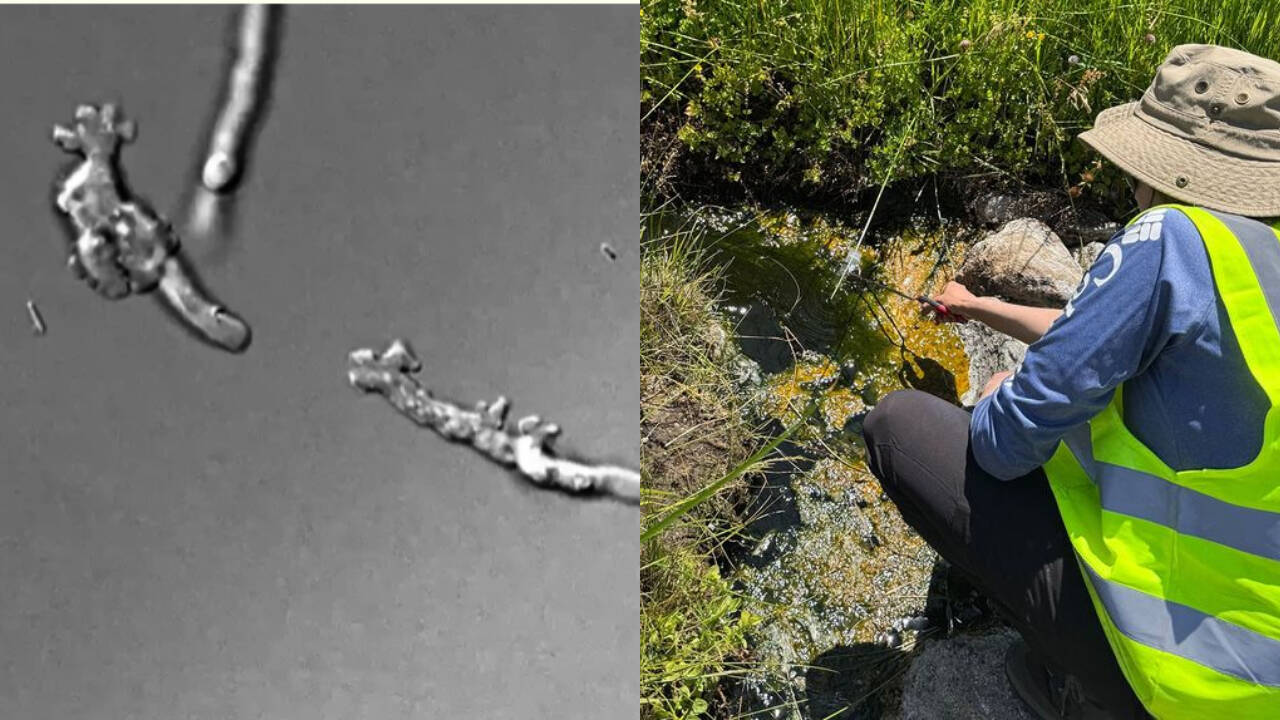
Scientists have discovered a new amoeba in California’s Lassen Volcanic National Park that can survive and reproduce at extremely high temperatures, setting a new record for complex life. Named Incendiamoeba cascadensis, this organism thrives at 145°F (63°C) and remains active up to 147°F (64°C), recovering after brief exposure to 158°F (70°C). The study published in Cell challenges previous assumptions about the upper temperature limit for eukaryotic life, which was thought to be around 140°F (60°C) based on earlier findings. Researchers found that I. cascadensis employs unique genetic strategies to protect its cellular structures under extreme heat conditions.
Written by AI on 2026-09-24, from this article's own text only (the story summary below draws on all the coverage).

AI analysis

Story summary

In California’s Lassen Volcanic National Park, scientists have discovered an amoeba, named Incendiamoeba cascadensis or the fire amoeba, which can survive extreme heat. This amoeba sets a new record for complex life forms by reproducing at temperatures as high as 145°F (63°C) and remaining active up to 147°F (64°C). The organism’s resilience extends further, as it can recover after being exposed to 158°F (70°C) for five minutes. This discovery challenges previous assumptions about the survival limits of cells with intricate internal structures and highlights the adaptability of complex life in extreme environments. Published in Cell, these findings expand our understanding of eukaryotic tolerance levels, a group that includes plant and animal cells.

Written for “Heat Record For Complex Life” on 2026-11-02, grounded in this article and the 0 other(s) covering the same event.

Story

📰 Heat Record For Complex Life
Science · 1 article(s) covering the same event.

Compared with similar articles

This article reads unscored and hedges 17% of its claims. Each row says how that neighbour differs.
NPR
Hedges 5 of 45 claims Outlet record 60/100
“While both articles discuss a fire amoeba, they do not describe the same specific incident. Article A provides general information about studying extremophile organisms and does not mention a specific temperature record or location like Lassen Volcanic National Park.”
How this article was measured signals, leaning charts, publisher record, byline, topics and claims

Signals How these are calculated →

Claims extracted
36
sentences that state something as happening or true
Uncertain
17%
6 of 36 hedged ("reportedly", "may", "according to")
Leaning
not political
takes no side on a contested political question
Publisher signals
59/100
Times of India's corrections and hedging, across everything collected from it. Not a measure of accuracy.
Outlets on this story
1
Science
Same framing elsewhere
1
articles that frame the event the way this one does
Analyzed 2026-09-24 · how these are computed

How this is being covered How these are calculated →

Article leaning vs. publisher reliability
Source leaning vs. consistency

Publisher

Times of India · 3922 article(s) · 3 correction(s) detected
Running correction rate · 3 correction(s)

Who wrote this

TOI Science Desk
306 article(s) here · 1 carrying a prediction
🔮 “Normally, my job is quite monotonous, so I wanted to create something that would entertain people, turning my ‘serious’ job into something fun,” he said in a Guinness World Records news release.
🔮 The subsequent collision between the two galaxy clusters may then have compressed the cloud or re-energised its particles, causing it to shine more brightly in radio wavelengths once again.
🔮 The mathematicians at the University of California, Davis, argue that the answer may already lie within Einstein’s own equations and that an invisible form of energy may not be needed at all.
🔮 The work will be carried out by the West Tennessee River Basin Authority, which is preparing a plan to restore the river and the land around it.
🔮 Cornell University scientists have developed genetically engineered tomato plants that turn red-purple when nitrogen becomes scarce, giving farmers a visible warning that crops may need fertiliser.
🔮 By studying these crystals and other mineral grains, scientists could establish the meteorite's age and identify later changes caused by water.
🔮 Centuries later, bronze objects found in Scandinavia would preserve chemical signatures consistent with the metals produced at this Spanish site, offering evidence of connections that may have crossed much of Europe.
🔮 Deposited impurities and staining may also have contributed, while low temperatures and humidity could cause the fabric to crack.
🔮 Two male king cobras meeting during the breeding season may engage in a prolonged contest, using their bodies to wrestle for control rather than relying on the venomous strikes associated with these snakes.
🔮 The project could offer a new way to build more affordable and sustainable homes across Canada.
Wire or desk byline, not an individual reporter.
Also by TOI Science Desk
Nothing else under this byline is closely related to this article, so these are simply their most recent.
All 306 articles by TOI Science Desk →

Topics

California Cell NASA

Subjects

NASA ORG · 4× California GPE · 1× Cell ORG · 1×

Narrative

Hidden in geothermal waters, a newly identified amoeba is pushing the known limits of how much heat complex life can tolerate, challenging long-held assumptions about the survival of cells with intricate internal structures, states an online report by NASA.
framing: assertive · carried by 1 article(s) · first seen 2026-09-24
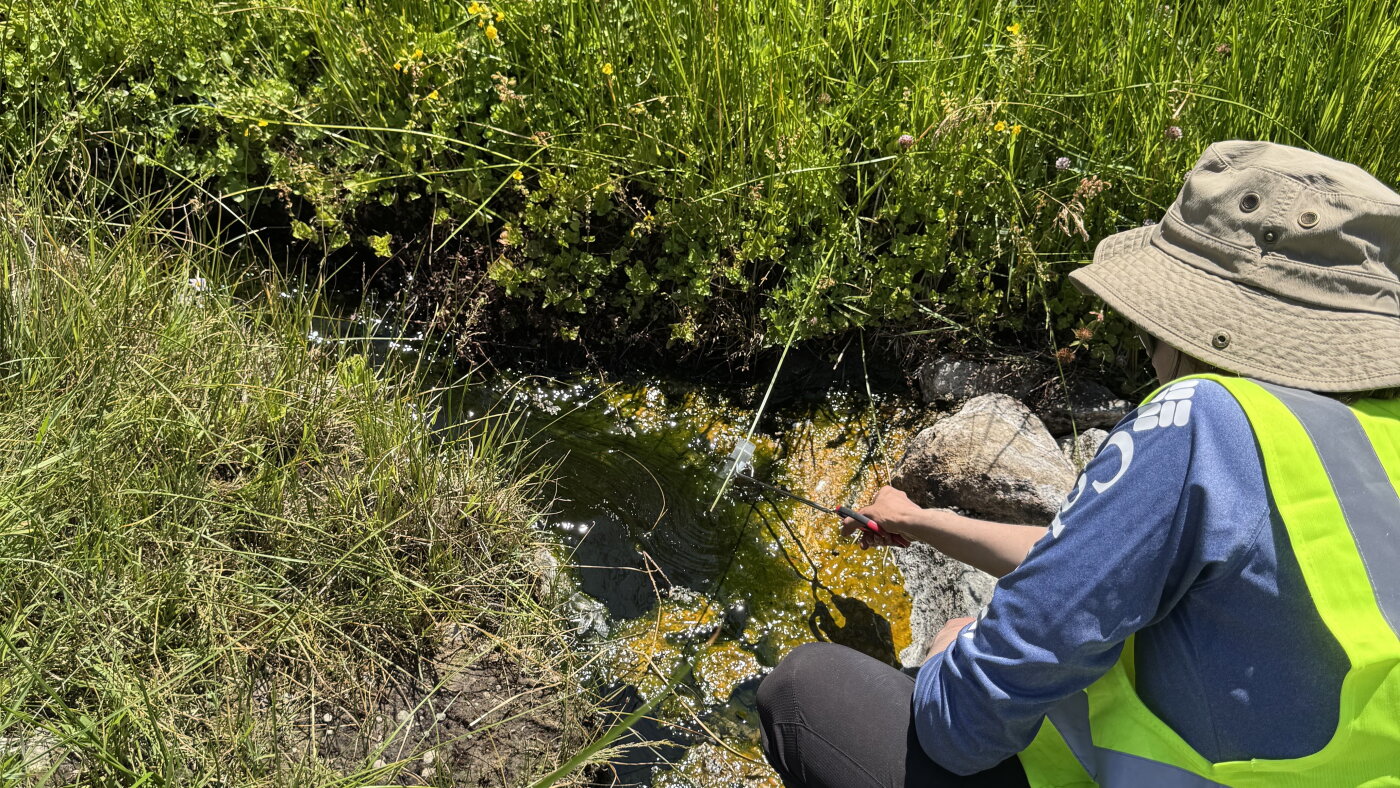
🔮 In the steaming pools of California’s Lassen Volcanic National Park, life has found a way to thrive where most cells would begin to fall apart.
2026-09-24 · Times of India
New California amoeba sets heat record for complex life at 145°F · assertive framing

Claims (36 extracted, 6 hedged)

In the steaming pools of California’s Lassen Volcanic National Park, life has found a way to thrive where most cells would begin to fall apart. asserted
cells → steam → way
Hidden in geothermal waters, a newly identified amoeba is pushing the known limits of how much heat complex life can tolerate, challenging long-held assumptions about the survival of cells with intricate internal structures, states an online report by NASA. asserted
report → hide → NASA
The organism, named Incendiamoeba cascadensis and informally known as the fire amoeba, can reproduce at temperatures reaching 145°F (63°C), states the NASA website. asserted
website → name → F
It remains active at 147°F (64°C), moving through the scorching water in search of food. asserted
It → remain → food
Researchers also found that it can recover after being exposed to 158°F (70°C) for five minutes. asserted
it → find → minutes
The findings, published in Cell, establish a new upper temperature record for known eukaryotes. asserted
findings → publish → eukaryotes
According to NASA, the discovery is particularly striking because I. cascadensis is a eukaryote, a group whose cells are far more structurally complex than those of bacteria and archaea. uncertain
cells → accord → bacteria
Eukaryotic cells contain a nucleus that protects genetic material along with membrane-bound structures such as mitochondria and the endoplasmic reticulum. asserted
that → contain → mitochondria
Those internal components perform essential jobs but can also create vulnerabilities under extreme conditions, the report adds. asserted
report → perform → conditions
Heat can cause proteins to lose their proper structure, damage DNA and destabilize cell membranes. asserted
proteins → cause → membranes
Researchers had previously suggested that the membranes surrounding eukaryotic organelles could not remain stable above about 144°F (62°C). uncertain
membranes → suggest → °
As per the report, before its discovery, the upper temperature limit for eukaryotic life was about 140°F (60°C), based on a handful of heat-tolerant fungi and red algae. asserted
limit → base → fungi
The new organism demonstrates that at least one type of complex cell can function at significantly higher temperatures. asserted
type → demonstrate → temperatures
Built for a hostile environment To understand how the amoeba manages such intense heat, the research team sequenced its genome and examined which genes became more active at different temperatures. asserted
genes → build → temperatures
The results revealed several potential survival strategies. asserted
results → reveal → strategies
Some genes help protect and stabilize DNA, while others are involved in sensing changes in the surrounding environment. asserted
others → help → environment
At elevated temperatures, genes associated with maintaining the correct folding of proteins became more active. asserted
genes → elevate → proteins
The researchers also identified proteins with unusually high positive surface charges. asserted
researchers → identify → charges
Similar characteristics have been observed in proteins produced by heat-loving bacteria and archaea, suggesting that some of the molecular strategies used to withstand extreme heat may cross the boundaries between very different branches of life. uncertain
some → observe → life
The amoeba stops reproducing once temperatures rise above 145°F, but it can continue moving at slightly higher temperatures. asserted
it → stop → temperatures
Its ability to recover after a brief exposure to 158°F adds another layer to its unusual heat tolerance. asserted
ability → recover → tolerance
What makes an extremophile? asserted
What → make → extremophile
As per NASA, organisms capable of thriving under environmental conditions that would be lethal to most life are known as extremophiles. asserted
that → thrive → extremophiles
Those adapted specifically to extreme heat are called thermophiles. asserted
Those → adapt → heat
For an organism to qualify as a true heat-loving thermophile, it must be able to carry out essential activities such as growing, feeding, moving and reproducing above 113°F (45°C). asserted
it → qualify → F
Much of what scientists know about life in extreme heat comes from bacteria and archaea. asserted
scientists → know → bacteria
Their comparatively simple cellular organization is thought to make them better suited to environments where heat, acidity, radiation or other stresses can damage delicate cellular machinery. asserted
heat → think → machinery
Eukaryotes were considered more vulnerable because their cells contain numerous membrane-bound components. asserted
cells → consider → components
The fire amoeba suggests that this complexity does not necessarily impose such a strict temperature ceiling. uncertain
complexity → suggest → ceiling
Clues for the search beyond Earth The discovery also has implications far beyond Lassen Volcanic National Park. asserted
discovery → have → Park
Astrobiologists study extremophiles to understand the physical and chemical boundaries within which life can survive. asserted
life → study → which
Those limits can help scientists determine which environments on other worlds might potentially support life. uncertain
environments → help → life
The researchers found another intriguing clue while comparing the amoeba’s genetic information with environmental DNA collected from geothermal sites around the world. asserted
researchers → find → world
Related sequences appeared in samples from places including New Zealand and Yellowstone National Park. asserted
sequences → appear → Zealand
That raises the possibility that I. cascadensis is not an isolated oddity. asserted
cascadensis → raise → possibility
Similar heat-tolerant amoebas could be living in geothermal environments elsewhere, waiting to be identified. uncertain
amoebas → live → environments

💬Give feedback
🕘History 🎫Support