Photo via Times of India

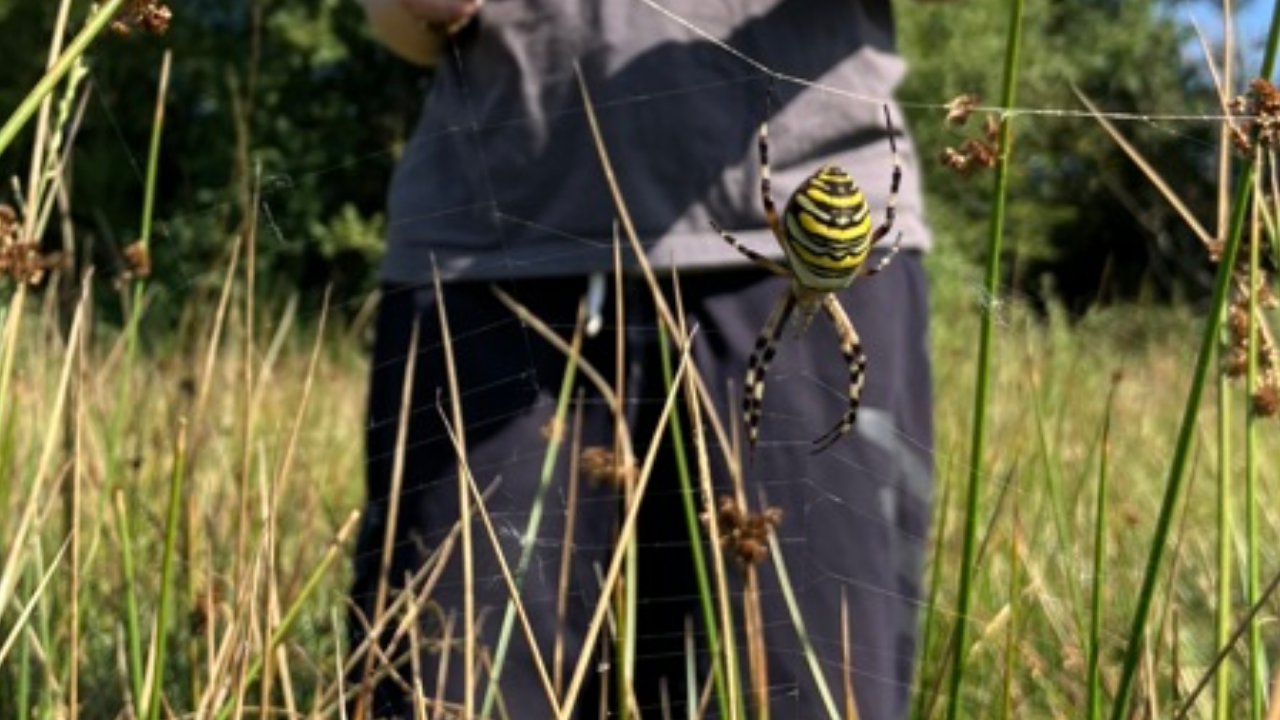
Wasp spider spotted in Cheshire for first time; Chester Zoo says species is moving north

Read the original at Times of India ↗
Cite

TOI Science Desk. (2026, September 24). Wasp spider spotted in Cheshire for first time; Chester Zoo says species is moving north. Times of India. https://timesofindia.indiatimes.com/science/wildlife/a-brightly-striped-wasp-spider-has-been-recorded-in-cheshire-for-the-first-time-chester-zoo-says-the-harmless-species-is-moving-north-as-warming-reshapes-where-british-wildlife-can-survive/articleshow/134457479.cms

Dated when The Aporia collected the article, usually within hours of publication. Check the original for its exact date and byline.

Times of India · collected 2026-09-24 · by TOI Science Desk

Quick Summary

Chester Zoo in Cheshire recently recorded the first sighting of a wasp spider (Argiope bruennichi) in the area during a biodiversity survey. This discovery marks the northward expansion of the species in Britain, which has been moving towards cooler regions due to warming climates since its initial UK sighting in 1922. The spider, named "Wendy," is distinctive for its yellow-and-black markings and builds elaborate webs featuring white silk bands. Chester Zoo attributes this shift to changing environmental conditions that are making northern areas more hospitable for the species traditionally found in southern England.
Written by AI on 2026-09-24, from this article's own text only (the story summary below draws on all the coverage).

AI analysis

Story summary

A wasp spider, named "Wendy," has been spotted for the first time in Cheshire by Chester Zoo staff. The sighting was confirmed by an expert from the British Arachnological Society, marking it as a significant event in local biodiversity records. The spider, *Argiope bruennichi*, is known for its distinctive yellow-and-black markings and has been expanding its range northward due to changing climate conditions. Chester Zoo conservationists found Wendy during a biodiversity survey conducted with RECORD, Cheshire’s environmental records center, indicating that the species' migration could be an early signal of broader ecological shifts in response to warmer temperatures.

Written for “Wasp Spider Invasive Species Movement” on 2026-11-02, grounded in this article and the 0 other(s) covering the same event.

Story

📰 Wasp Spider Invasive Species Movement
Environment · 1 article(s) covering the same event.

Compared with similar articles

Nothing to compare against. No article is close enough to this one for the pipeline to have linked or judged the pair.
How this article was measured signals, leaning charts, publisher record, byline, topics and claims

Signals How these are calculated →

Claims extracted
46
sentences that state something as happening or true
Uncertain
7%
3 of 46 hedged ("reportedly", "may", "according to")
Leaning
not political
takes no side on a contested political question
Publisher signals
59/100
Times of India's corrections and hedging, across everything collected from it. Not a measure of accuracy.
Outlets on this story
1
Environment
Same framing elsewhere
1
articles that frame the event the way this one does
Analyzed 2026-09-24 · how these are computed

How this is being covered How these are calculated →

Article leaning vs. publisher reliability
Source leaning vs. consistency

Publisher

Times of India · 3890 article(s) · 2 correction(s) detected
Running correction rate · 2 correction(s)

Who wrote this

TOI Science Desk
299 article(s) here · 1 carrying a prediction
🔮 The work will be carried out by the West Tennessee River Basin Authority, which is preparing a plan to restore the river and the land around it.
🔮 Cornell University scientists have developed genetically engineered tomato plants that turn red-purple when nitrogen becomes scarce, giving farmers a visible warning that crops may need fertiliser.
🔮 By studying these crystals and other mineral grains, scientists could establish the meteorite's age and identify later changes caused by water.
🔮 Centuries later, bronze objects found in Scandinavia would preserve chemical signatures consistent with the metals produced at this Spanish site, offering evidence of connections that may have crossed much of Europe.
🔮 She explored whether an inexpensive device could capture airborne genetic material and support the detection of bacterial pathogens.
🔮 This control may help it maintain its orientation and move along a narrow path without losing its bearings.
🔮 The university says the sculpture will subsequently go on permanent display at its Turner Museum of Glass.
🔮 By bringing together nature, wellness facilities and educational spaces, Winter Garden aimed to create a setting where visitors could exercise, learn about nutrition and gardening, and spend time outdoors.
🔮 Also discovered was a 4,500-year-old humanoid idol, which archaeologists hope will help shed light on the cultural traditions of the region.
🔮 When garlic mustard spreads across the forest floor, other plants may struggle to obtain the resources they need to survive.
Wire or desk byline, not an individual reporter.
Also by TOI Science Desk
Nothing else under this byline is closely related to this article, so these are simply their most recent.
All 299 articles by TOI Science Desk →

Topics

Britain Cheshire Chester Zoo RECORD the British Arachnological Society

Subjects

Chester Zoo ORG · 7× Cheshire GPE · 6× Britain GPE · 4× the British Arachnological Society ORG · 2× British Arachnological Society ORG · 1× East Sussex GPE · 1× RECORD ORG · 1× Rosie Cooper PERSON · 1× Rye ORG · 1× Wendy ORG · 1×

Narrative

Chester Zoo conservationists made the discovery while working with RECORD, Cheshire’s local environmental records centre. The identification was then confirmed by a British Arachnological Society expert, establishing the sighting as the first recorded wasp spider in Cheshire.
framing: assertive · carried by 1 article(s) · first seen 2026-09-24
🔮 As temperatures and seasons change, the places where different plants and animals can survive may change with them.

Claims (46 extracted, 3 hedged)

A striking yellow-and-black spider has turned up in Cheshire for the first time, giving conservationists another glimpse of how Britain’s wildlife is responding to a changing climate. asserted
wildlife → turn → climate
The discovery was made during a biodiversity survey on the Chester Zoo estate, with the finding confirmed by an expert from the British Arachnological Society. asserted
finding → make → Society
According to Chester Zoo, the primary source for the discovery, the spider, nicknamed “Wendy”, is part of a species whose range has been moving northwards as warmer conditions become more common. uncertain
conditions → accord → species
A first record for Cheshire The spider is a wasp spider, Argiope bruennichi, an orb-weaving species recognised for the bold yellow, white and black pattern across the female’s abdomen. asserted
spider → weave → abdomen
Its appearance can make it look more like a wasp than a spider, but the resemblance is only visual. asserted
resemblance → make → spider
The species is harmless to people and is not considered a threat to humans. asserted
species → consider → humans
Wendy was spotted by Rosie Cooper, an estate biodiversity assistant at Chester Zoo, while she was carrying out fieldwork. asserted
she → spot → fieldwork
The discovery happened during a wider survey of plants and wildlife on the zoo’s estate. asserted
discovery → happen → estate
Chester Zoo conservationists made the discovery while working with RECORD, Cheshire’s local environmental records centre. The identification was then confirmed by a British Arachnological Society expert, establishing the sighting as the first recorded wasp spider in Cheshire. asserted
identification → make → Cheshire
The spider itself is relatively large compared with many species commonly seen in Britain. asserted
spider → compare → Britain
Chester Zoo said wasp spiders can measure around 2-3cm across the body and build ornate webs among vegetation. asserted
spiders → say → vegetation
Their webs can also feature a conspicuous vertical band of white silk, a characteristic associated with the species. asserted
webs → feature → species
Why the spider is moving north asserted
spider → move → ?
The species was first recorded in the UK in 1922 at Rye in East Sussex and has since become widespread in southern England. asserted
species → record → England
According to the British Arachnological Society, it is now spreading northwards. uncertain
it → accord → Society
The species needs a prolonged period of warm weather to reproduce successfully, along with relatively mild winters. asserted
species → need → winters
As Britain’s climate changes, conditions suitable for the spider are becoming more common in areas farther north than its traditional range. asserted
conditions → change → range
That makes the Cheshire sighting more than an unusual wildlife encounter. asserted
sighting → make → encounter
It is also an example of how changing environmental conditions can influence where species are able to live. asserted
species → change → ?
Ruby Merriman, Chester Zoo’s estate biodiversity manager, said the species is slowly moving north because parts of its southern European range are warming too quickly for the spiders to remain there in the same way. asserted
spiders → say → way
Chester Zoo described animals shifting their ranges in response to climate change as “climate refugees”. asserted
Zoo → describe → refugees
The movement does not mean that every individual spider has suddenly travelled hundreds of miles north. asserted
spider → mean → miles
Instead, species can gradually expand their range over generations as suitable habitat and climate conditions appear in new places. asserted
habitat → expand → places
What makes the wasp spider distinctive The female wasp spider is particularly easy to recognise. asserted
spider → make → ?
Its abdomen carries the vivid yellow, black and white markings that give the species its common name, while its legs are also striped. asserted
legs → carry → name
Males are considerably smaller and have much less striking colouring. asserted
Males → have → colouring
The spider hunts from the centre of its orb web, where it waits for insects to become trapped. asserted
insects → hunt → web
Grasshoppers and crickets are among its preferred prey, although flies and other insects can also form part of its diet. asserted
flies → prefer → diet
Its life cycle is also closely connected to the seasons. asserted
cycle → connect → seasons
Adults mature around August and September. asserted
Adults → mature → August
After mating, the female produces an egg sac that is attached to vegetation, with the young remaining protected inside until the following spring. asserted
young → mat → spring
Adult females die during autumn. asserted
females → die → autumn
Despite its dramatic appearance, there is little reason for people to be concerned if they encounter one. asserted
they → be → one
Chester Zoo specifically describes the species as completely harmless to humans. asserted
Zoo → describe → humans
The discovery comes from an unusually diverse area of habitat. asserted
discovery → come → habitat
Chester Zoo’s estate covers about 205 hectares, including wet meadows, ponds, reedbeds, grasslands, woodlands, orchards and hedgerows. asserted
estate → cover → meadows
The area supports species including harvest mice, great crested newts and badgers, while barn owls also nest there. asserted
owls → support → mice
For conservationists, the arrival of the wasp spider therefore fits into a much wider picture. asserted
arrival → fit → picture
Some wildlife species are expanding into areas where conditions have become more suitable, while others face increasing pressure as their established habitats become warmer, drier or otherwise less suitable. asserted
habitats → expand → pressure
Scott Wilson, Chester Zoo’s head of field programmes, said the arrival of Wendy was exciting but also part of a broader trend linked to climate change. asserted
arrival → say → change
…and 6 more, not listed.

💬Give feedback
🕘History 🎫Support