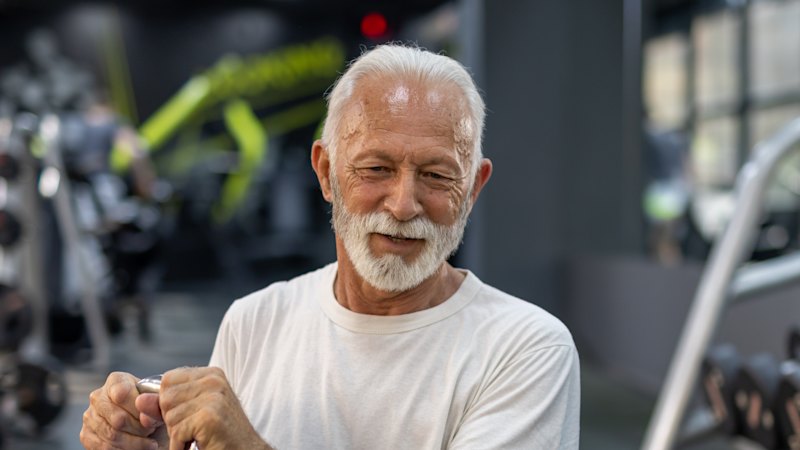
A great workout can be a reminder of everything your body can do.
asserted
body → do → everything
But the next day can be a reminder of the effort it takes to get there.
asserted
it → take → effort
Though feelings like stiffness and soreness typically dissipate within 24 to 72 hours after exercise, they can become more noticeable as you get older.
asserted
you → dissipate → exercise
Dr Asad Siddiqi, chief of rehabilitation medicine at NewYork-Presbyterian Brooklyn Methodist Hospital, says that when you’re younger, you may recover from exercise without a second thought.
uncertain
you → say → thought
But as you age, he said, you may need to be more intentional and do “a bit of maintenance” to keep your body ready for working out or playing sports.
uncertain
body → age → sports
We asked experts about why exercise recovery can take longer as you get older and when to consider adjusting your routine.
asserted
you → ask → routine
How your muscles respond to stress
asserted
muscles → respond → stress
When you exercise, you apply stress to your body and force it to adapt so it can respond to similar situations in the future, Siddiqi says.
asserted
Siddiqi → exercise → future
That adaptation happens as your body remodels and regenerates muscle.
asserted
body → happen → muscle
Researchers believe that this recovery process can feel longer in older people for two reasons: because they can be more susceptible to muscle damage caused by exercise and slower to regenerate muscle in response.
asserted
they → believe → response
Muscle mass generally starts to decline in your 30s, and the composition of your muscles also changes over time.
asserted
composition → start → time
Older adults lose more fast-twitch muscle fibres – responsible for force and power – than slow-twitch ones, which support endurance activities.
asserted
which → lose → activities
Some researchers believe that leaves older adults more susceptible to more stress on fewer fibres.
asserted
that → believe → fibres
Chronic inflammation can increase with age (which scientists call inflammaging) and could impede your muscles’ ability to regenerate.
uncertain
scientists → increase → ability
Christopher Hurst, an exercise physiologist at Newcastle University in England, says that while these changes probably influence how you recover from exercise as you age, it’s hard to know how much of an effect each one has.
asserted
one → say → effect
Some researchers think that prolonged recovery could be less of a direct consequence of biological ageing and more a result of changing activity levels as people get older.
uncertain
people → think → levels
Many people are less active over time, which can also lead to muscle loss.
asserted
which → lead → loss
Modifying your workouts
asserted
Modifying → modify → workouts
If your recovery is consistently taking longer than in the past or if you’re feeling tired and performing worse than you’re used to, consider dialling back the intensity of your workouts.
asserted
you → take → workouts
Hurst says you can try reducing the number of times you work a specific muscle group during strength training, for example, or doing shorter, more frequent workouts.
asserted
you → say → workouts
But it’s important to keep moving as you age, rather than getting caught in a cycle of exercising less, the experts say.
asserted
experts → ’ → cycle
Making sure you’re hydrating and getting enough protein are also important steps if you’re noticing you’re more tired than usual, says Kelyssa Hall, an exercise physiologist at the Hospital for Special Surgery in New York.
asserted
Hall → make → York
Older adults can have a reduced thirst response compared with when they were younger.
asserted
they → have → response
Muscles also become less efficient at using protein from your diet as you age, she says, so you should try to consume protein throughout the day.
asserted
you → become → day
If you have health conditions that are making your usual routine painful, Siddiqi recommends considering alternative activities if necessary.
asserted
Siddiqi → have → activities
Hall says that lasting soreness or aggravation of an old injury can be signs you should consider a lower-impact form of movement.
asserted
you → say → movement
But sometimes, modifying your routine can mean adding a complementary activity, rather than subtracting anything, Siddiqi says.
asserted
Siddiqi → modify → anything
If running or biking are your only forms of exercise, for example, building muscle through strength training can help you prevent injuries.
asserted
you → build → injuries
How to focus your workouts as you age
It is recommended that Australian adults do muscle-strengthening activities on two or more days per week, and moderate- to vigorous-intensity activities for 30 minutes or more on most days.
asserted
adults → focus → days
Adults over 65 should aim for those same guidelines, Hall says, to the extent that you can, considering your medical history.
asserted
you → aim → history
Keep in mind, she adds, that what feels like moderate-intensity exercise may be different now compared with when you were younger, and you should consult a doctor before starting a new routine.
uncertain
you → keep → routine
As you get older, balance and mobility exercises are especially important to reduce your risk of falls, Siddiqi says.
asserted
Siddiqi → get → falls
Weight-bearing exercise can help you maintain bone density and protect you from fractures.
asserted
you → bear → fractures
Giving your body time to rest – between exercises and in the days afterward – is crucial for avoiding overtraining as you age, Hurst says.
asserted
Hurst → give → overtraining
Because many factors affect how long you’ll need to feel ready for another workout, from medication to the quality of your sleep the night before, don’t worry too much if you need an extra recovery day.
asserted
you → affect → day
“Sometimes people forget that obviously we have to be in the gym and do the exercise, but really all the physiological magic happens when you recover,” he says.
asserted
he → forget → exercise
 The Aporia