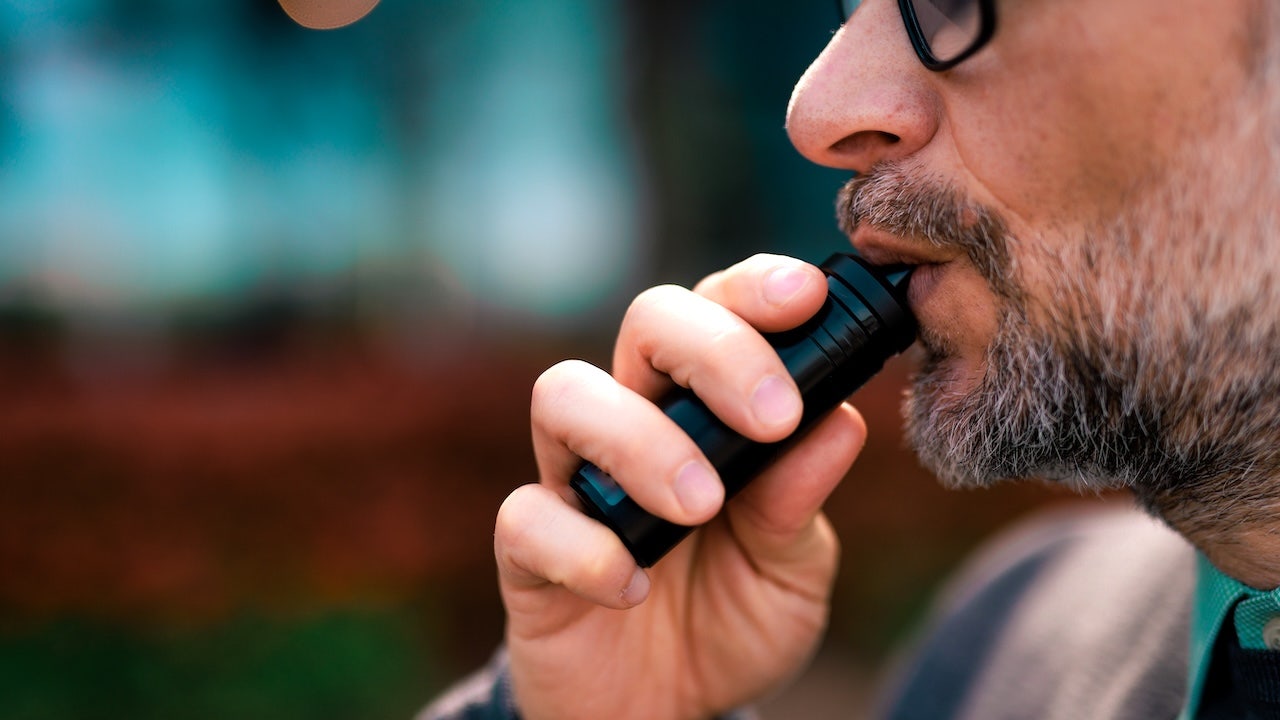
Recent data from Action on Smoking and Health (ASH) shows that some smokers and dual users who stop vaping opt for traditional tobacco products instead, a shift that addiction specialists say may be driven by nicotine dependence and the challenges of withdrawal.
uncertain
specialists → show → withdrawal
Trent Carter, a board-certified nurse practitioner and CEO of Renew Health — a behavioral and mental health practice based in New Mexico — said that while the shift from vapes back to cigarettes might seem counterintuitive, there are behavioral reasons some users make the switch.
uncertain
users → certify → switch
“Vaping can become constant throughout the day, whereas a cigarette is more of a defined episode,” Carter told Fox News Digital.
asserted
Carter → become → Digital
“Subconsciously, you may not even realize that you’re constantly vaping throughout the day, whereas [with] cigarettes you feel like you’re more in control because you have to think about it.
uncertain
you → realize → it
You [have] to go outside, you [have] to light it up.
asserted
you → have → it
Unlike cigarettes, vaping can be done throughout the day and often indoors.
asserted
vaping → do → day
That easy access can lead to more nicotine use and reinforce the hand-to-mouth habit, according to the expert.
uncertain
access → lead → expert
High potency, severe withdrawal
E-cigarettes can be highly addictive because of the way they deliver nicotine.
asserted
they → deliver → nicotine
Many vaping devices use highly concentrated nicotine salts, allowing users to inhale large doses with each puff compared to traditional cigarettes.
asserted
users → use → cigarettes
“If you’re consuming a large amount with every single puff … it’s going to be harder to stop when compared to a lower dose,” Carter said.
asserted
Carter → consume → dose
Nicotine dependence alters brain chemistry by stimulating neurotransmitters like dopamine that govern mood and pleasure, according to Cleveland Clinic.
uncertain
that → alter → Clinic
When someone abruptly cuts off high-volume intake, it can trigger rapid withdrawal symptoms, ranging from intense cravings and irritability to severe sleep disturbances and brain fog.
asserted
it → cut → disturbances
Because high-potency vapes drive up physical tolerance, standard quitting aids — like over-the-counter patches or nicotine gum — can sometimes feel inadequate to a user seeking immediate relief.
asserted
aids → drive → relief
“While a patch or gum could definitely help with the nicotine cravings, if you’re not addressing the behavioral aspect of it, then you’re really falling short,” Carter said.
uncertain
Carter → help → it
Start your day with all you need to know
Morning Report delivers the latest news, videos, photos and more.
asserted
Report → start → news
“You’re leaving a huge component of why they may be smoking — whether it’s because of anxiety or even insomnia during the day.”
uncertain
it → leave → day
False sense of security
When e-cigarettes first hit the market, early public messaging framed them as a healthier, doctor-approved alternative to smoking, which gave many consumers a false sense of security about how difficult it would be to drop the habit, according to Carter.
“If you’re being told something is safe or doctor-approved, we tend to feel we’re making the right choice,” Carter said.
uncertain
Carter → hit → choice
“While traditional cigarettes have toxins that e-cigarettes do not, if your daily consumption of nicotine becomes much higher, we find ourselves in a nasty cycle.
asserted
we → have → cycle
You got rid of the toxins, but now you’re consuming much more nicotine.”
asserted
you → rid → nicotine
The elevated chemical intake carries a physical and mental toll, Carter cautioned.
asserted
Carter → carry → toll
Heavy, uninterrupted nicotine ingestion can trigger blood pressure spikes, elevated heart rates, sleep disruption and heightened anxiety.
asserted
ingestion → trigger → spikes
Breaking the dependency loop
For people trying to quit vaping, health providers warn that switching to cigarettes reintroduces harmful toxins, tar and carbon monoxide.
asserted
switching → break → toxins
Instead of switching between vaping and cigarettes, addiction specialists recommend medically supervised strategies that combine behavioral therapy with gradual nicotine reduction.
asserted
that → switch → reduction
“The goal shouldn’t be to find another way to consume nicotine,” Carter said.
asserted
Carter → find → nicotine
“The goal should be to treat the dependence itself.”
asserted
goal → treat → dependence
“It’s not trading one for the other, but finding the underlying cause and addressing that head-on — that’s how someone truly takes steps in the right direction.”
asserted
someone → trade → direction
For those struggling to exit the cycle, Carter advises building self-awareness and immediately consulting a licensed addiction or mental health professional who can recommend a personalized recovery plan.
asserted
who → struggle → plan
 The Aporia