— The Canadian government is using at least 1,600 Chinese-made drones across more than a dozen public service departments with varying security protocols, documents tabled in Parliament show.
asserted
documents → use → Parliament
The RCMP is the biggest user by far with 1,027 of the drones, but says it has avoided using them in national security operations and will look elsewhere as it prepares to use hundreds of millions of dollars in upcoming funding to expand its fleet.
asserted
it → say → fleet
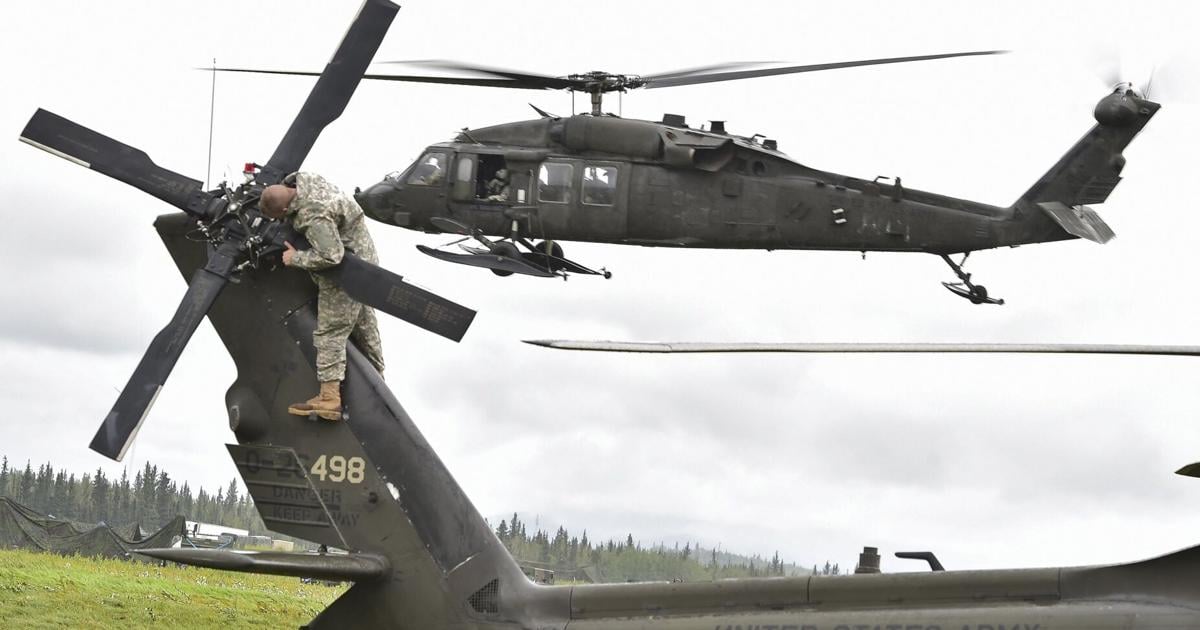
That’s according to RCMP Commissioner Michael Duheme, who suggested Thursday that the Mounties could even replace their border patrol Black Hawk helicopters with drones as the force develops its arsenal.
uncertain
force → accord → arsenal
Chinese-made drones reportedly make up the vast majority of the RCMP’s fleet, although they are only used for its local contract policing.
uncertain
they → make → policing
That excludes federal policing matters like border operations, joint investigations with the United States, protective services for foreign visitations and emergency responses involving “sensitive tactics or protected locations,” according to the documents shared in response to a Conservative MP’s query about the use of Chinese-made drones and security protocols around them.
uncertain
That → exclude → them
“We’re limiting the use of Chinese drones to things that are non-national security in nature,” Duheme told reporters in Ottawa.
asserted
Duheme → limit → Ottawa
The numbers released this week reveal some of the Canadian government’s use of drones, just weeks after Prime Minister Mark Carney declared the Canadian military needed to expand its fleet of around 2,000 with millions more.
asserted
military → release → millions
Agencies like the Canadian Security Intelligence Service and Communications Security Establishment Canada would not provide numbers regarding the use of Chinese-made drones, citing national security grounds.
asserted
Agencies → provide → grounds
Several top users noted security measures like limited network connectivity and restricted collection and access to data through encryption.
asserted
users → note → encryption
They include Fisheries and Oceans Canada with its 287 Chinese-made drones and National Research Council Canada, which operates 70 of the drones for research and testing.
asserted
which → include → research
The Canada Border Services Agency said it has six Chinese-made drones that “do not have data cards and are not connected to any networks.”
asserted
that → say → networks
Correctional Service Canada owns 12 drones that it uses with “conditions,” such as erasing their memory after each use.
asserted
it → own → use
It said it consulted independent reports that showed no “critical vulnerabilities, hidden back doors, or evidence of unauthorized data transmissions in relation to the devices being manufactured in China.
asserted
that → say → China
But a few departments had limited specific screening measures.
asserted
departments → limit → measures
Parks Canada did not provide an answer because the numbers are not centrally tracked and getting them would take too long, though it noted it “has not conducted security assessments specifically focused on drones manufactured in China.”
asserted
it → provide → China
Environment and Climate Change Canada said it owns 76 of the drones, and had done no specific “formal security assessment” for any of them.
asserted
it → say → them
The Transportation Safety Board of Canada has 21 drones used to document accidents, but any photo taken is considered “unclassified imagery and is not considered protected information.”
asserted
photo → have → accidents
Public Safety Minister Gary Anandasangaree told the Star Thursday “there’s probably some work to do” on developing a uniform security approach.
asserted
Anandasangaree → tell → approach
Wesley Wark, a national security and intelligence expert at the Centre for International Governance Innovation, told the Star he “would not hit the panic button on any of this.”
asserted
he → tell → this
“It is no surprise that there are multiple users across the federal government of drones, for many different purposes,” he wrote in an email.
asserted
he → be → email
“Most of the models listed are essentially hobbyist drones (most quadcopters), purchased off the shelf.
asserted
Most → list → shelf
It’s a market long dominated by Chinese manufacturers, especially DJI, globally and in North America.
asserted
It → ’ → America
Those drones are commonly used because they are “low cost and reliable,” said Wark.
asserted
Wark → use → ?
“For uses outside those touching on national security, Chinese drones are probably the ticket,” he said.
asserted
he → touch → security
“For there to be a genuine concern a drone has to have a sensor system (most will be optical), data collection and storage capacity and data transmission.”
asserted
most → have → system
The Ontario government brought in restrictions on Chinese-made drones in May, including banning them for “highly sensitive” Ontario Provincial Police operations, and is phasing out their broader use.
“Under current Chinese law, companies incorporated in China may be required to disclose data, even if that data is stored outside the country,” the province said at the time.
uncertain
province → bring → time
“This raises security concerns about Chinese-made drones, which could possibly access or store sensitive information.”
uncertain
which → raise → information
The RCMP procured at least 60 drones and borrowed 40 more from the military with unknown origins after the Canadian government committed to giving it nearly $700 million more over the coming years as part of a plan to beef up border security in response to U.S. President Donald Trump’s tariff threats after his 2024 election victory.
asserted
government → procure → victory
While it works on buying more drones, the RCMP has chartered three ex-U.S. military Black Hawk helicopters, although not without controversy.
asserted
RCMP → work → controversy
Some critics have questioned the effectiveness of the limited helicopter fleet, and the Black Hawks are at the centre of industry tensions over complicated regulatory hurdles in Canada.
asserted
Hawks → question → Canada
The RCMP collided head-on with those regulations earlier this summer after it grounded one of its Black Hawk just 10 days into its contract because it was not eligible to do border work in Canada.
asserted
it → collide → Canada
It has since cancelled that contract.
asserted
It → cancel → contract
Duheme said that while the RCMP has gotten good use out of those Black Hawks, it is assessing their long-term use.
asserted
it → say → use
“We’re also developing a drone capability, and we’re piloting certain initiatives in Alberta that has drones that could be patrolling the border for 12 hours, 24 hours a day,” he said.
uncertain
he → develop → hours
“So that’s one of the things we want to look at.”
asserted
we → ’ → things
 The Aporia