Photo via The Sydney Morning Herald

Think you brush your teeth well? Chances are, you’re doing it wrong

Read the original at The Sydney Morning Herald ↗
Cite

Power, J. (2026, September 25). Think you brush your teeth well? Chances are, you’re doing it wrong. The Sydney Morning Herald. https://www.smh.com.au/national/think-you-brush-your-teeth-well-chances-are-you-re-doing-it-wrong-20260925-p60rek.html?ref=rss&utm_medium=rss&utm_source=rss_feed

Dated when The Aporia collected the article, usually within hours of publication. Check the original for its exact date and byline.

The Sydney Morning Herald · collected 2026-09-25 · by Julie Power

Quick Summary

A retired periodontist warns that most people do not effectively clean their teeth despite regular brushing. Research involving 111 students showed that even when trying their best, participants did not improve their technique beyond what they normally do and often brushed too hard, damaging gums instead of removing plaque. About 30% of Australian adults suffer from moderate to severe gum disease due to ineffective brushing techniques, highlighting the importance of proper dental hygiene for overall health.
Written by AI on 2026-09-25, from this article's own text only (the story summary below draws on all the coverage).

AI analysis

Story summary

A retired periodontist from Australia revealed that most people do not brush their teeth correctly, even though it is a daily habit for nearly everyone. In research involving 111 students, participants were asked to brush their teeth either as usual or to the best of their ability. Those who tried harder brushed longer and more vigorously but did not achieve better plaque removal; in fact, brushing too hard can damage gums. According to Andrew Terry, a senior lecturer at the School of Dentistry at the University of Sydney, about 30 percent of Australian adults suffer from moderate to severe gum disease due to improper brushing techniques. Dr Adrian Webster, an AIHW spokesperson, emphasized that without proper oral health, a person’s quality of life is compromised, affecting their ability to eat, speak, and socialize comfortably.

Written for “Dental Hygiene Mistakes” on 2026-11-03, grounded in this article and the 0 other(s) covering the same event.

Story

📰 Dental Hygiene Mistakes
Health · 1 article(s) covering the same event.

Compared with similar articles

This article reads unscored and hedges 0% of its claims. Each row says how that neighbour differs.
The Sydney Morning Herald
Outlet record 61/100
“The articles discuss similar themes but do not describe the same specific incident or occurrence.”
How this article was measured signals, leaning charts, publisher record, byline, topics and claims

Signals How these are calculated →

Claims extracted
44
sentences that state something as happening or true
Uncertain
0%
0 of 44 hedged ("reportedly", "may", "according to")
Leaning
not political
takes no side on a contested political question
Publisher signals
61/100
The Sydney Morning Herald's corrections and hedging, across everything collected from it. Not a measure of accuracy.
Outlets on this story
1
Health
Same framing elsewhere
1
articles that frame the event the way this one does
Analyzed 2026-09-25 · how these are computed

How this is being covered How these are calculated →

Article leaning vs. publisher reliability
Source leaning vs. consistency

Publisher

The Sydney Morning Herald · 5874 article(s) · 15 correction(s) detected
Running correction rate · 15 correction(s)

Who wrote this

Julie Power
9 article(s) here · 1 carrying a prediction
🔮 The discoveries by the University of Sydney’s digital archaeologist Dr Jacob Bongers have raised hopes that hundreds – maybe thousands – of ancient sites could be identified across the vast UNESCO site, which is about the same size as Lebanon.
🔮 Overture, dim the lights: billionaire Gretel Packer will bring glamour back to Sydney’s Kings Cross and Potts Point, announcing detailed plans on Monday to revitalise the heritage-listed art deco Metro/Minerva Theatre.
🔮 Inspired by the influential Italian movement Memphis design, which was started by Ettore Sottsass in the 1980s – and has nothing but exuberance in common with Elvis Presley’s Memphis, Tennessee – Capra’s home and art will be celebrated in talks and a new exhibition, Memphis Fairfield, opening in November.
🔮 Samarasinghe was refused bail and will face court on Sunday.
🔮 “There are potentially thousands of children [like Joiner] born of war who have been neglected by the United States and Australia,” said historian Dr Victoria Grieves Williams, who developed an Australian Research Council project looking into such cases.
🔮 Only someone standing right next to the windows could see “the full drama of Sydney Harbour in front of them”, Morel said.
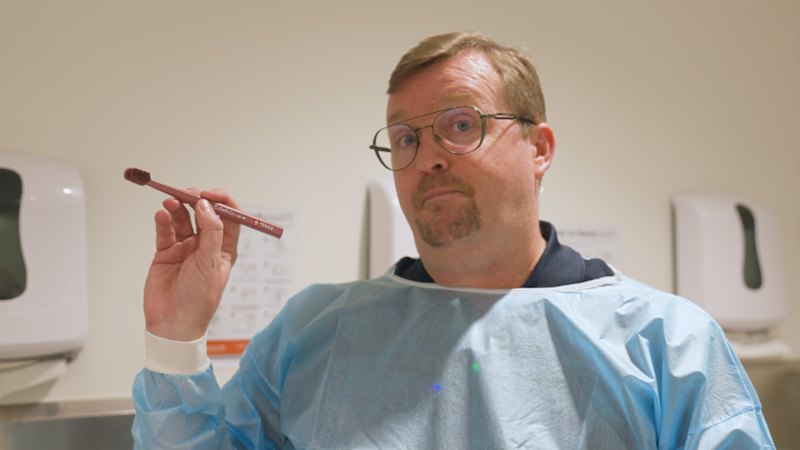
🔮 His parting message – and he wouldn’t let me use his name – was telling me about research that proved what he had discovered in a lifetime in the profession.
Also by Julie Power
Nothing else under this byline is closely related to this article, so these are simply their most recent.
All 9 articles by Julie Power →

Topics

Australia Australian Sydney University the School of Dentistry the University of Sydney

Subjects

Terry PERSON · 3× AIHW ORG · 1× Andrew Terry PERSON · 1× Australia GPE · 1× Australian NORP · 1× Sydney University ORG · 1× the Australian Institute of Health and Welfare ORG · 1× the School of Dentistry ORG · 1× the University of Sydney ORG · 1×

Narrative

’Angelee Murdoch, oral health therapist AIHW spokesperson Dr Adrian Webster said that without good oral health “a person’s general quality of life and the ability to eat, speak and socialise is compromised, resulting in pain, discomfort and embarrassment”.
framing: assertive · carried by 1 article(s) · first seen 2026-09-25
🔮 His parting message – and he wouldn’t let me use his name – was telling me about research that proved what he had discovered in a lifetime in the profession.
2026-09-25 · The Sydney Morning Herald
Think you brush your teeth well? Chances are, you’re doing it wrong · assertive framing

Claims (44 extracted, 0 hedged)

Brushing your teeth is boring, a periodontist confessed before he retired after nearly 60 years of showing patients like me how to do it to avoid gum disease that can affect overall health. asserted
that → brush → health
His parting message – and he wouldn’t let me use his name – was telling me about research that proved what he had discovered in a lifetime in the profession. asserted
he → let → profession
Most of us are lousy at cleaning our teeth. asserted
Most → clean → teeth
In research replicated around the world, 111 students were asked to brush their teeth to the “best of their ability” or brush their teeth “as usual”. asserted
students → replicate → teeth
Those who did it to the best of their ability brushed for longer but didn’t do it better. asserted
who → do → it
They also brushed harder, which was not only ineffective at removing the plaque that accumulates in our mouths, it can also damage the gums. asserted
it → brush → gums
Researchers say there is hardly any health behaviour performed by such a large proportion of the world’s population as regularly as cleaning your teeth. asserted
Researchers → say → teeth
That’s a big win for health. asserted
That → ’ → health
Andrew Terry, a senior lecturer teaching dentists and oral health therapists at the School of Dentistry at the University of Sydney, says about 30 per cent of Australian adults have moderate to severe gum disease caused by poor and ineffective brushing. asserted
cent → teach → brushing
Some people don’t know how to do it properly, and most people lack time. asserted
people → know → time
The cost of dental treatment is high in Australia and the public system is overwhelmed, making it difficult to get help or a lesson. asserted
it → overwhelm → help
“Many people have never been shown what to do,” Terry said. asserted
Terry → show → what
“Even the advertisements from dental companies in the 1980s and 1990s did not depict accurately how to do it properly.” asserted
advertisements → depict → it
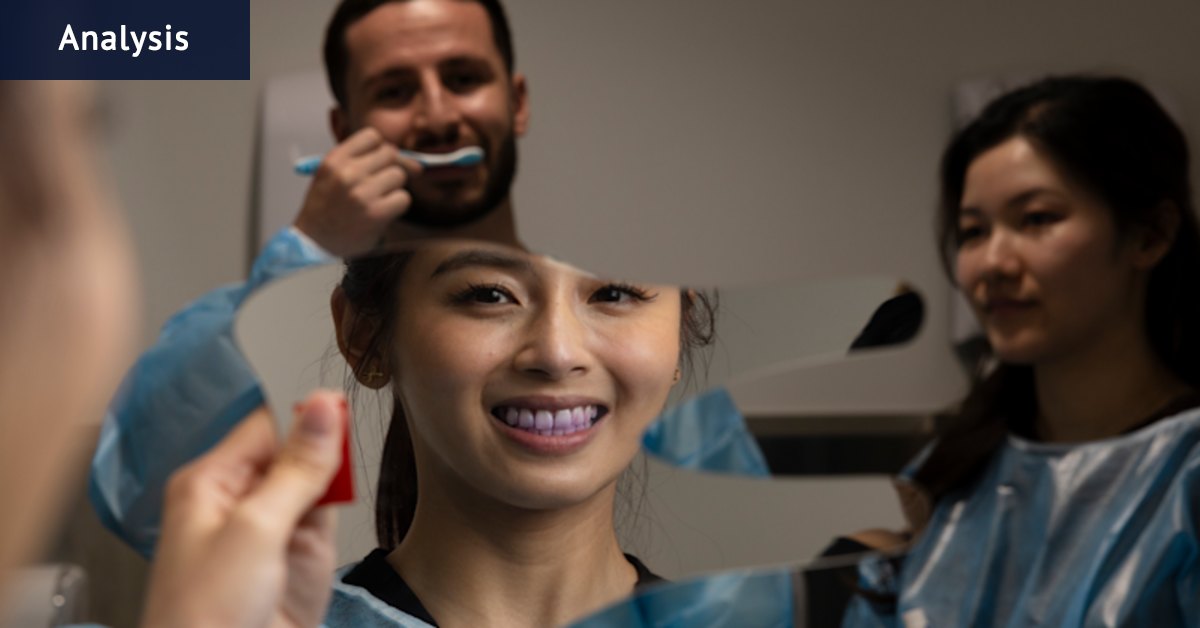
To show the plaque build-up, after brushing teeth in the morning, by 6pm, young oral health therapists with beautifully cared-for teeth who work in private practice and at Sydney University with Terry used disclosing tablets. asserted
who → show → tablets
Within 30 seconds in the mouth, these tablets highlight new plaque in pink, and where it is old and harder to remove, purple. asserted
it → highlight → pink
Even those with the best and whitest teeth who’d brushed that morning had a pink tinge. asserted
who → brush → tinge
Terry said that oral health experts’ new goal was putting the mouth back into health: “The mouth is connected to the rest of the body.” asserted
mouth → say → body
Sickness in one part of the body affects the mouth, and vice versa. asserted
Sickness → affect → mouth
Anaerobic bacteria in the mouth have been linked to osteoporosis, premature birth in women and diabetes. asserted
bacteria → link → women
“Where someone has died of a heart attack, and they’ve actually analysed the clot contained in the actual blood vessel, they’ve found oral bacteria from gum disease in these areas,” he said. asserted
he → die → areas
Teeth-brushing 101 If you use a manual brush: Err on the side of a gentle brush with a small head. asserted
you → use → head
If using an electric brush, the approach will depend on the type. asserted
approach → use → type
The problem is not the time spent brushing teeth, or the number of times a day that someone brushes their teeth, but other factors. asserted
someone → spend → teeth
Some brush with a sawing horizontal motion, pushing too hard. asserted
Some → brush → motion
Others use a hard brush that can damage the gums, and many miss the inside of the gums. asserted
many → use → gums
In another study, young adults were asked to clean their teeth in front of a camera. asserted
adults → ask → camera
Videos showed that most of them scrubbed, which is not recommended. asserted
which → show → them
Many people brushed by sawing from side to side (not recommended). asserted
people → brush → side
“This is a remarkable and disturbing result,” the researchers said. asserted
researchers → say → ?
Everyone overestimated their oral cleanliness by twofold. asserted
Everyone → overestimate → twofold
Another study found that parents said their children brushed twice a day, exaggerating what really happened. asserted
what → find → ?
An oral health report last month by the Australian Institute of Health and Welfare (AIHW) found 43 per cent of all children aged five to 14 had a moderate accumulation of plaque. asserted
cent → find → plaque
One in 10 adults had missing teeth and other dental problems, and one in 25 aged over 15 years of age had lost all their natural teeth. asserted
one → have → teeth
‘I never brush my teeth in the bathroom. asserted
I → brush → bathroom
It’s boring. asserted
It → ’ → ?
’Angelee Murdoch, oral health therapist AIHW spokesperson Dr Adrian Webster said that without good oral health “a person’s general quality of life and the ability to eat, speak and socialise is compromised, resulting in pain, discomfort and embarrassment”. asserted
quality → say → pain
The four oral health therapists who participated in this masthead’s test using disclosing tablets said that most people brushed poorly and too quickly. asserted
people → participate → tablets
- Audrey Wong said teenagers brush for about 30 seconds – “very, very quickly”. asserted
teenagers → say → seconds
- Cindy Tran said: “There’s clearly a lot of plaque that I can see left behind in the mouth that’s contributing to dental disease like gingivitis, periodontitis, cavities, dental caries.” asserted
that → say → gingivitis
- Angelee Murdoch didn’t really care where her patients brushed their teeth, preferring them to do it when they had three minutes while watching television, listening to music or walking around. asserted
they → care → music
…and 4 more, not listed.

💬Give feedback
🕘History 🎫Support