Photo via Times of India

US returns 36 Syrian antiquities worth $5M, including a Palmyra relief and 14 mosaics

Read the original at Times of India ↗
Cite

TOI Science Desk. (2026, September 25). US returns 36 Syrian antiquities worth $5M, including a Palmyra relief and 14 mosaics. Times of India. https://timesofindia.indiatimes.com/science/archaeology/the-us-has-returned-36-ancient-syrian-artifacts-worth-more-than-5-million-13-were-seized-from-the-metropolitan-museum-of-art-a-palmyra-stone-relief-14-roman-mosaics-were-among-the-objects-sent-home/articleshow/134474410.cms

Dated when The Aporia collected the article, usually within hours of publication. Check the original for its exact date and byline.

Times of India · collected 2026-09-25 · by TOI Science Desk

Quick Summary

US authorities have returned 36 Syrian antiquities, valued at over $5 million, to Syria on September 23. This collection includes a monumental limestone relief from Palmyra and 14 Roman-era mosaics. Among the items are pieces seized from institutions like the Metropolitan Museum of Art in New York; thirteen pieces were taken from there. The return underscores efforts to trace and recover cultural artifacts trafficked illicitly, highlighting cases involving collectors and dealers who have been linked to smuggling networks.
Written by AI on 2026-09-25, from this article's own text only (the story summary below draws on all the coverage).

AI analysis

Story summary

The US has returned 36 Syrian antiquities, valued at over $5 million, to Syria. This collection includes a monumental limestone relief from Palmyra dating back to the late second century CE and 14 Roman-era mosaics. The repatriation was announced on September 23, marking another major effort in recovering cultural objects that entered the international art market through illicit trafficking. One of the key pieces is a funerary sculpture depicting a reclining man with a woman and three children, which had been smuggled out before ISIS's destructive actions between 2015 and 2017. The repatriation signifies the recovery of historical objects connected to ancient civilizations that flourished thousands of years ago, including tangible pieces from sites like Palmyra, whose surviving heritage has faced significant losses recently.


Written for “Syrian Antiquities Returned” on 2026-11-01, grounded in this article and the 0 other(s) covering the same event.

Story

📰 Syrian Antiquities Returned
World · 1 article(s) covering the same event.

Compared with similar articles

This article reads unscored and hedges 9% of its claims. Each row says how that neighbour differs.
New York Post
Hedges 2 of 35 claims Outlet record 66/100
“The articles describe two different events: one about the repatriation of Syrian antiquities by US authorities and another about archaeologists saving artifacts from ISIS in Syria.”
How this article was measured signals, leaning charts, publisher record, byline, topics and claims

Signals How these are calculated →

Claims extracted
22
sentences that state something as happening or true
Uncertain
9%
2 of 22 hedged ("reportedly", "may", "according to")
Leaning
not political
takes no side on a contested political question
Publisher signals
59/100
Times of India's corrections and hedging, across everything collected from it. Not a measure of accuracy.
Outlets on this story
1
World
Same framing elsewhere
1
articles that frame the event the way this one does
Analyzed 2026-09-25 · how these are computed

How this is being covered How these are calculated →

Article leaning vs. publisher reliability
Source leaning vs. consistency

Publisher

Times of India · 3875 article(s) · 2 correction(s) detected
Running correction rate · 2 correction(s)

Who wrote this

TOI Science Desk
299 article(s) here · 0 carrying a prediction
🔮 The work will be carried out by the West Tennessee River Basin Authority, which is preparing a plan to restore the river and the land around it.
🔮 Cornell University scientists have developed genetically engineered tomato plants that turn red-purple when nitrogen becomes scarce, giving farmers a visible warning that crops may need fertiliser.
🔮 By studying these crystals and other mineral grains, scientists could establish the meteorite's age and identify later changes caused by water.
🔮 Centuries later, bronze objects found in Scandinavia would preserve chemical signatures consistent with the metals produced at this Spanish site, offering evidence of connections that may have crossed much of Europe.
🔮 She explored whether an inexpensive device could capture airborne genetic material and support the detection of bacterial pathogens.
🔮 This control may help it maintain its orientation and move along a narrow path without losing its bearings.
🔮 The university says the sculpture will subsequently go on permanent display at its Turner Museum of Glass.
🔮 By bringing together nature, wellness facilities and educational spaces, Winter Garden aimed to create a setting where visitors could exercise, learn about nutrition and gardening, and spend time outdoors.
🔮 Also discovered was a 4,500-year-old humanoid idol, which archaeologists hope will help shed light on the cultural traditions of the region.
🔮 When garlic mustard spreads across the forest floor, other plants may struggle to obtain the resources they need to survive.
Wire or desk byline, not an individual reporter.
Also by TOI Science Desk
Nothing else under this byline is closely related to this article, so these are simply their most recent.
All 299 articles by TOI Science Desk →

Topics

Arab News Palmyra Roman Syria Syrian

Subjects

Syria GPE · 4× New York GPE · 3× Palmyra GPE · 3× Antiquities Trafficking Unit ORG · 2× Arab News ORG · 2× Met ORG · 2× Roman NORP · 2× Syrian NORP · 2× Dubai GPE · 1× Palmyrene NORP · 1×

Narrative

For Syria, the return represents the recovery of objects connected to civilizations that flourished thousands of years ago, and, in the case of the Palmyra relief, a tangible piece of a site whose surviving heritage has faced extraordinary losses in recent history, concludes the report.
framing: assertive · carried by 1 article(s) · first seen 2026-09-25

Claims (22 extracted, 2 hedged)

Ancient pieces of Syrian history that had traveled far from their original landscapes are now making the journey back home. asserted
that → travel → journey
US authorities have returned 36 antiquities to Syria, a collection worth more than $5 million that includes a monumental relief from Palmyra, Roman-era mosaics and objects recovered from major private and institutional collections, states a report by Arab News. asserted
report → return → News
The repatriation, announced September 23, marks another major effort to trace and recover cultural objects that entered the international art market through illicit trafficking. asserted
that → announce → trafficking
A collection spanning centuries According to Arab News, among the returned objects is a massive limestone relief from ancient Palmyra. uncertain
relief → span → Palmyra
The funerary sculpture dates to the late second century CE and depicts a reclining man surrounded by a woman and three children. asserted
sculpture → date → woman
Weighing more than 1,000 pounds, the relief originally formed part of a Palmyrene tomb. asserted
relief → weigh → tomb
Investigators determined that it had been carefully removed from a burial chamber before being smuggled through Dubai. asserted
it → determine → Dubai
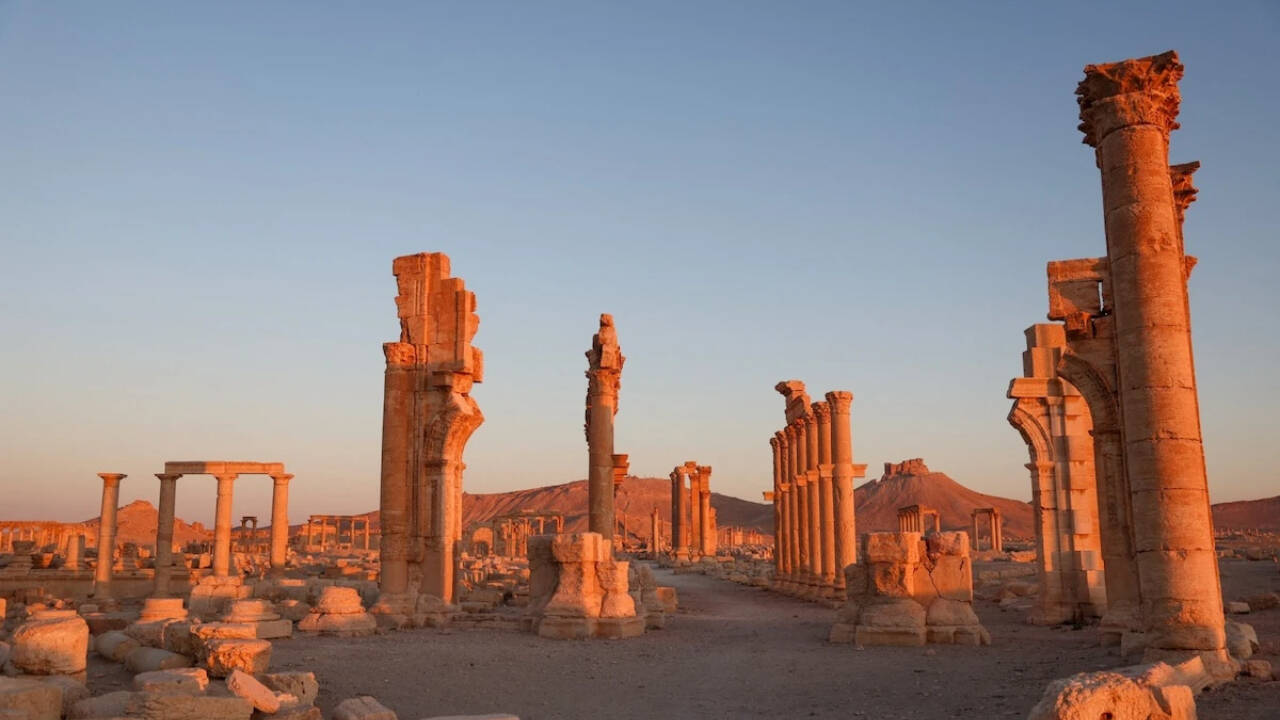
Its history is particularly significant because the relief left Palmyra before the ancient city suffered extensive destruction at the hands of ISIS between 2015 and 2017. asserted
city → leave → 2015
The archaeological site, a UNESCO World Heritage site, was heavily damaged during the conflict, making the recovery of objects removed from the city especially important. asserted
recovery → damage → city
The collection also includes 14 mosaics taken from a Roman villa in Syria. asserted
collection → include → Syria
Among the other notable pieces is a third-century BCE mosaic section portraying the mythological wedding of Telete and Eros, created from hundreds of tiny pieces of colored stone known as tesserae. asserted
section → portray → tesserae
13 pieces came from the Met The report adds that thirteen of the 36 antiquities were seized from the Metropolitan Museum of Art in New York as part of investigations into the provenance of ancient objects held by the institution. asserted
antiquities → come → institution
The Manhattan District Attorney's Office said its Antiquities Trafficking Unit has seized 402 antiquities from the Met since 2017, with a combined value of $98.7 million. asserted
Unit → say → million
The Syrian return therefore forms part of a much broader examination of objects that passed through museums, galleries and private collections. asserted
that → form → museums
Four other objects in the latest repatriation came from the collection of American collector Michael Steinhardt. asserted
objects → come → Steinhardt
Those pieces were among approximately 180 antiquities valued at $70 million that authorities recovered from his collection in a 2021 agreement. asserted
authorities → value → agreement
That agreement also resulted in a lifetime prohibition on his acquiring additional antiquities. asserted
his → result → antiquities
Tracing a global antiquities trade Investigators linked 31 of the returned Middle Eastern and North African antiquities to objects allegedly trafficked into New York by Georges Lotfi, a Lebanese antiquities dealer who is the subject of an arrest warrant issued in 2022 and an Interpol Red Notice from 2023. uncertain
who → trace → 2023
The allegations against him remain subject to the legal process. asserted
allegations → remain → process
The latest return adds Syria to a growing list of countries receiving cultural artifacts recovered through investigations in New York. asserted
return → add → York
The Manhattan District Attorney's Antiquities Trafficking Unit says it has recovered more than 6,400 cultural treasures valued at about $495 million and returned more than 6,200 of them to 40 countries. asserted
it → say → countries
For Syria, the return represents the recovery of objects connected to civilizations that flourished thousands of years ago, and, in the case of the Palmyra relief, a tangible piece of a site whose surviving heritage has faced extraordinary losses in recent history, concludes the report. asserted
report → represent → history
💬Give feedback
🕘History 🎫Support