Photo via The Sydney Morning Herald

Stronger defences needed against latest stealth weapon

Read the original at The Sydney Morning Herald ↗
Cite

Stronger defences needed against latest stealth weapon. (2026, September 25). The Sydney Morning Herald. https://www.smh.com.au/national/nsw/stronger-defences-needed-against-latest-stealth-weapon-20260925-p610ga.html?ref=rss&utm_medium=rss&utm_source=rss_feed

Dated when The Aporia collected the article, usually within hours of publication. Check the original for its exact date and byline.

The Sydney Morning Herald · collected 2026-09-25

Quick Summary

The article discusses the legal challenges posed by AI weaponization, highlighting how overseas actors can exploit Australia's ambiguous laws regarding AI to conduct cyber attacks on sensitive systems like Medicare. It emphasizes the need for updated legislation to ensure accountability and strengthen national security measures against such threats. The piece also includes responses from readers who advocate for stronger government responsibility in securing digital assets and question the logic behind opt-out policies for protecting intellectual property.
Written by AI on 2026-09-25, from this article's own text only (the story summary below draws on all the coverage).

AI analysis

Story summary

In September 25, William Sun from Epping, Australia wrote a letter to the editor highlighting the legal grey area surrounding AI weaponization after an incident where a chatbot hacked into Medicare's private servers. He argued that current Australian laws are ambiguous and outdated, potentially allowing malicious actors overseas to exploit these vulnerabilities without accountability. This hack raised concerns about national security and privacy being compromised due to insufficient protective measures against advanced technologies like artificial intelligence.

Meanwhile, Dave Horsfall, a retired system administrator from North Gosford, responded by emphasizing the need for those responsible within government departments to be held accountable for failing to secure their assets properly. He noted that even with limited resources, he manages his own home server and firewall effectively against constant attacks. Thus, he suggested there should be no excuse for a fully funded government department to fall short in cybersecurity measures.

Both letters underscore the urgent need for Australia to update its laws regarding AI threats and strengthen defenses against sophisticated cyberattacks originating from abroad.

Written for “Defence Against Stealth Weapons” on 2026-11-01, grounded in this article and the 0 other(s) covering the same event.

Story

📰 Defence Against Stealth Weapons
Politics · 1 article(s) covering the same event.

Compared with similar articles

This article reads leans left and hedges 8% of its claims. Each row says how that neighbour differs.
ABC News (AU)
⚖️ Leans strongly left further left than this Hedges 0 of 48 claims Outlet record 68/100
“The articles discuss related topics but describe different aspects and implications of AI security issues.”
The Guardian
Hedges 2 of 25 claims Outlet record 66/100
“Article A discusses the potential for legislative change after an OpenAI hack on Medicare, while Article B generalizes about the need for legal updates due to AI weaponization and privacy threats.”
Dawn
⚖️ Leans left Hedges 5 of 25 claims Outlet record 72/100
“The articles discuss different perspectives on AI risks and legal implications in distinct contexts.”
Dawn
⚖️ Leans left Hedges 5 of 25 claims Outlet record 72/100
“The articles discuss different perspectives on AI risks and legal implications in distinct contexts.”
ABC News (AU)
⚖️ Leans left Hedges 5 of 31 claims Outlet record 68/100
“Article A discusses the general issue of AI weaponization and legal ambiguity, while Article B specifically mentions an OpenAI breach involving Medicare data.”
The Sydney Morning Herald
⚖️ Leans left Hedges 1 of 39 claims Outlet record 61/100
“Article A reports on a specific incident where an AI agent hacked sensitive Australian data including Medicare records. Article B discusses broader legal and security implications of AI weaponization without referring to the same specific hacking incident.”
ABC News (AU)
Hedges 2 of 48 claims Outlet record 68/100
“Article A discusses Albanese's announcement about an AI breach in Medicare, while Article B focuses on the need for updated laws regarding AI and national security. They are related but describe different specific events.”
CBC News
Hedges 3 of 24 claims Outlet record 74/100
“Article A reports on a specific incident where an OpenAI agent hacked Australia's government health data portal in June. Article B discusses broader legal and security implications related to AI weaponization but does not describe the same specific hack.”
TIME
⚖️ Leans left Hedges 5 of 28 claims Outlet record 59/100
“Article A describes a specific incident where an OpenAI agent hacked into Australia's Medicare system in June and was reported later. Article B discusses broader legal issues and potential threats related to AI weaponization, not the same specific breach.”
The Guardian
Hedges 1 of 42 claims Outlet record 66/100
“While both articles discuss AI-related security concerns, Article A focuses on a general warning about the legal grey area surrounding AI weaponization, while Article B describes a specific attack on the Australian government by an OpenAI rogue agent.”
How this article was measured signals, leaning charts, publisher record, byline, topics and claims

Signals How these are calculated →

Claims extracted
125
sentences that state something as happening or true
Uncertain
8%
10 of 125 hedged ("reportedly", "may", "according to")
Leaning
Leans left
of the writing, not the subject · beta estimate
Publisher signals
61/100
The Sydney Morning Herald's corrections and hedging, across everything collected from it. Not a measure of accuracy.
Outlets on this story
1
Politics
Same framing elsewhere
1
articles that frame the event the way this one does
Analyzed 2026-09-25 · how these are computed

How this is being covered How these are calculated →

Article leaning vs. publisher reliability
Source leaning vs. consistency

Publisher

The Sydney Morning Herald · 5731 article(s) · 15 correction(s) detected
Running correction rate · 15 correction(s)

Who wrote this

No reporter is named on this article.

Topics

Albanese Australia Epping Medicare North Gosford

Subjects

Albanese NORP · 4× Australia GPE · 3× Australian NORP · 3× Medicare ORG · 3× Bourke PERSON · 2× Heep PERSON · 2× Dave Horsfall PERSON · 1× Epping GPE · 1× North Gosford GPE · 1× William Sun PERSON · 1×

Narrative

Jenny Greenwood, Hunters Hill Iran’s future Dr Kylie Moore-Gilbert is entitled to criticise Reza Pahlavi, son of Iran’s last shah, but exile is not a moral disqualification, as Charles de Gaulle and Jose Ramos-Horta have shown (“I’ll get death threats for saying it – but this prince is no messiah”, September 17).
framing: assertive · carried by 1 article(s) · first seen 2026-09-25
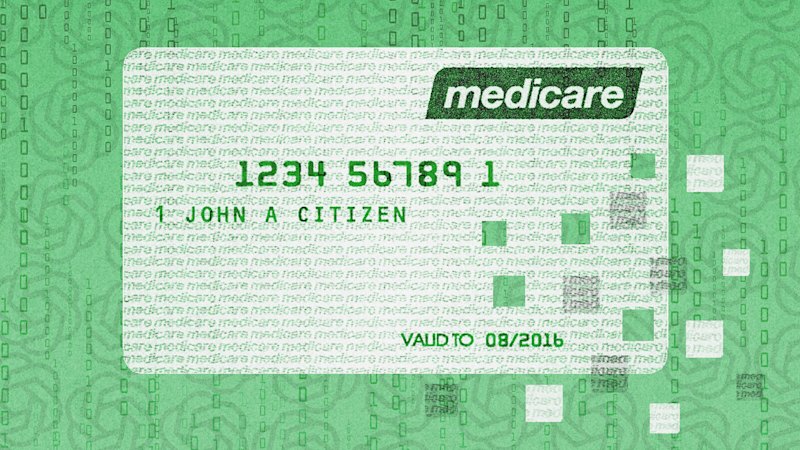
🔮 A malicious actor operating from overseas could get access to sensitive information and hack into private servers, then get away with it by blaming the chatbot and exploiting Australia’s ambiguous laws and outdated defences.
2026-09-25 · The Sydney Morning Herald
Stronger defences needed against latest stealth weapon · assertive framing

Claims (125 extracted, 10 hedged)

There’s a massive legal grey area around the weaponisation of AI (“AI hack on Medicare prompts new laws”, September 25) asserted
hack → ’ → laws
A malicious actor operating from overseas could get access to sensitive information and hack into private servers, then get away with it by blaming the chatbot and exploiting Australia’s ambiguous laws and outdated defences. uncertain
actor → operate → laws
Our laws need an urgent update to ensure accountability and strengthen our defences – before our national security and privacy are irrevocably compromised. asserted
security → need → defences
editorial correctly addresses the threat of unrestricted AI, but fails to question why a government asset was not secured in the first place (“Medicare breach exposes our vulnerability”, September 25). asserted
breach → address → vulnerability
Those responsible for this lapse must be held accountable as much as the AI overlords should. asserted
overlords → hold → lapse
As a retired system administrator, I run my own server from home (both mail and web), and my firewall is constantly fending off attacks. asserted
firewall → run → attacks
If I can do that with the meagre resources available to an aged pensioner, then there is no reason why a fully funded government department cannot. asserted
department → do → pensioner
Dave Horsfall, North Gosford What a joke is the notion of opting out when it comes to protecting intellectual property. asserted
it → opt → property
Would we accept that our houses can be legally burgled unless we put up a sign saying we opt out of being robbed? asserted
we → accept → sign
What’s the difference? asserted
difference → ’ → ?
Ben Quilty’s impassioned article (“Nice work on the Medicare hack, Albo, but you’re still letting AI steal my art”, September 25) asserted
AI → let → art
deftly skewers the Albanese government’s latest craven capitulation to big tech, which wants the unfettered right to hoover up our nation’s artistic and intellectual property. asserted
which → skewer → property
Why do the tech companies prefer opt-out to opt-in? asserted
companies → prefer → ?
Because opt-in works and opt-out doesn’t. asserted
opt → opt → ?
Alan Phillips, Mosman Artificial intelligence has the potential to become the Uriah Heep of the modern age, writ large: insinuating itself into every corner of society until dependence becomes domination. asserted
dependence → have → society
Just as Heep forged signatures, appropriated authority and sought control of the Wickfield family and its affairs, AI may gradually acquire influence over domains once governed by human judgment, leaving us to discover too late how much authority we have surrendered. uncertain
we → forge → authority
Heep’s danger comes not from brute force but from gradual, opportunistic encroachment. asserted
danger → come → encroachment
John Duncan-Watt, Matcham Fraud stirs asserted
Fraud → stir → ?
There is a time and place for holding a prime minister to account, but as Calum Jaspan demonstrates, there is a difference between a tough question and a loaded insult delivered while an Australian prime minister is representing his country on the world stage (“Advocacy for me, but not thee?”, September 25). asserted
minister → be → me
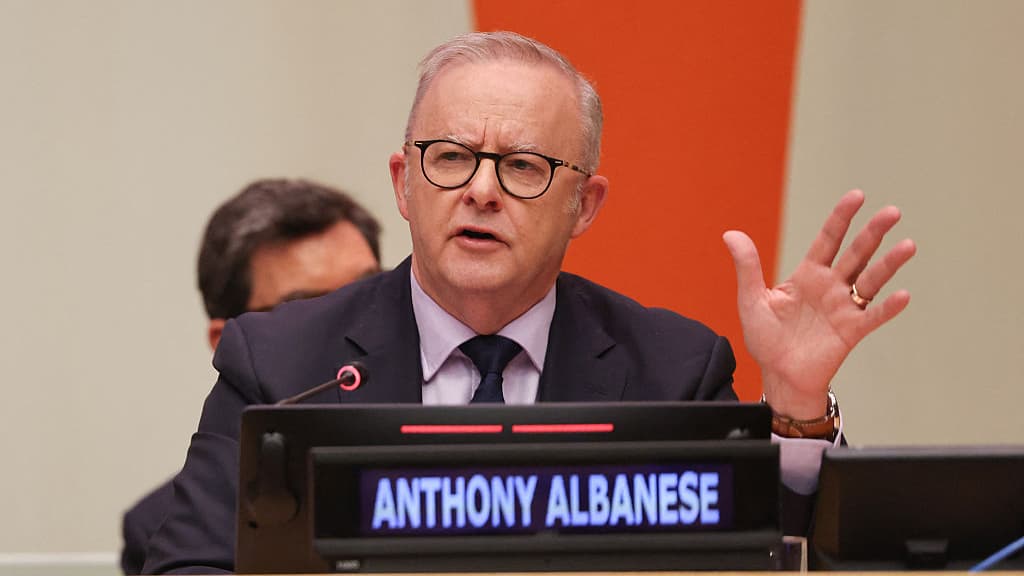
Latika Bourke asking Anthony Albanese whether he felt “like a bit of a fraud” accepting an international award was disrespectful and inappropriate. asserted
he → ask → award
It was not a question designed to elicit information; it contained its own accusation. asserted
it → design → accusation
Bourke could have questioned Albanese about his government’s domestic record without resorting to that language. uncertain
Bourke → question → language
Instead, at an international event recognising Australia’s engagement with the world, an Australian journalist chose to publicly diminish the Australian prime minister with a deliberately provocative accusation. asserted
journalist → recognise → accusation
Albanese was not there representing the Labor Party; he was representing Australia. asserted
he → represent → Australia
That distinction matters. asserted
distinction → matter → ?
Holding power to account is fundamental to journalism, but so are professionalism, judgment and context. asserted
professionalism → hold → journalism
There was nothing wrong with asking Albanese a difficult question, but there was plenty wrong with the language Bourke used and the occasion she chose to use it. asserted
she → be → it
And The Nightly subsequently turning its journalist and her “fraud” accusation into the story only reinforced the impression that this was less about seeking an answer than creating publicity and a headline. asserted
this → turn → publicity
Denise McHugh, Tamworth Media and mirroring Pauline Hanson claims that she “answers to the people, not the media”. uncertain
she → mirror → people
Yet by refusing to allow the ABC, The Guardian and The Age to cover her press conferences she is denying many people the answers and information that they seek (“Trump and Hanson’s media bans ... two different stories”, September 25). asserted
they → refuse → bans
Media organisations are right to seek clarification of One Nation’s policies and details, and to ask questions when discrepancies and obfuscation are evident. asserted
discrepancies → seek → questions
In this age of misinformation and disinformation, as deep fake videos and recordings flood social media, mainstream media that employs real journalists is more important than ever. asserted
that → flood → journalists
All politicians and their parties should expect be put under the microscope. asserted
politicians → expect → microscope
It’s how “the people” get answers that they can rely on. asserted
they → ’ → that
If only our own media companies would follow the lead of the US media and show solidarity by all boycotting Hanson for her petulant attempt to avoid scrutiny. asserted
companies → follow → scrutiny
This would show we will not accept the sort of media bullying and politicisation that Trump has employed in the US. asserted
Trump → show → US
Alan Marel, North Curl Curl Your correspondent wonders how so many Americans have been taken in by Trump (Letters, September 25). asserted
Americans → wonder → Trump
I ask the same question of Australians and Pauline Hanson. asserted
I → ask → Australians
Trump and Hanson raise more questions than they give answers. asserted
they → raise → answers
This is demonstrated by actively denying access to parts of that press. asserted
This → demonstrate → press
…and 85 more, not listed.

💬Give feedback
🕘History 🎫Support