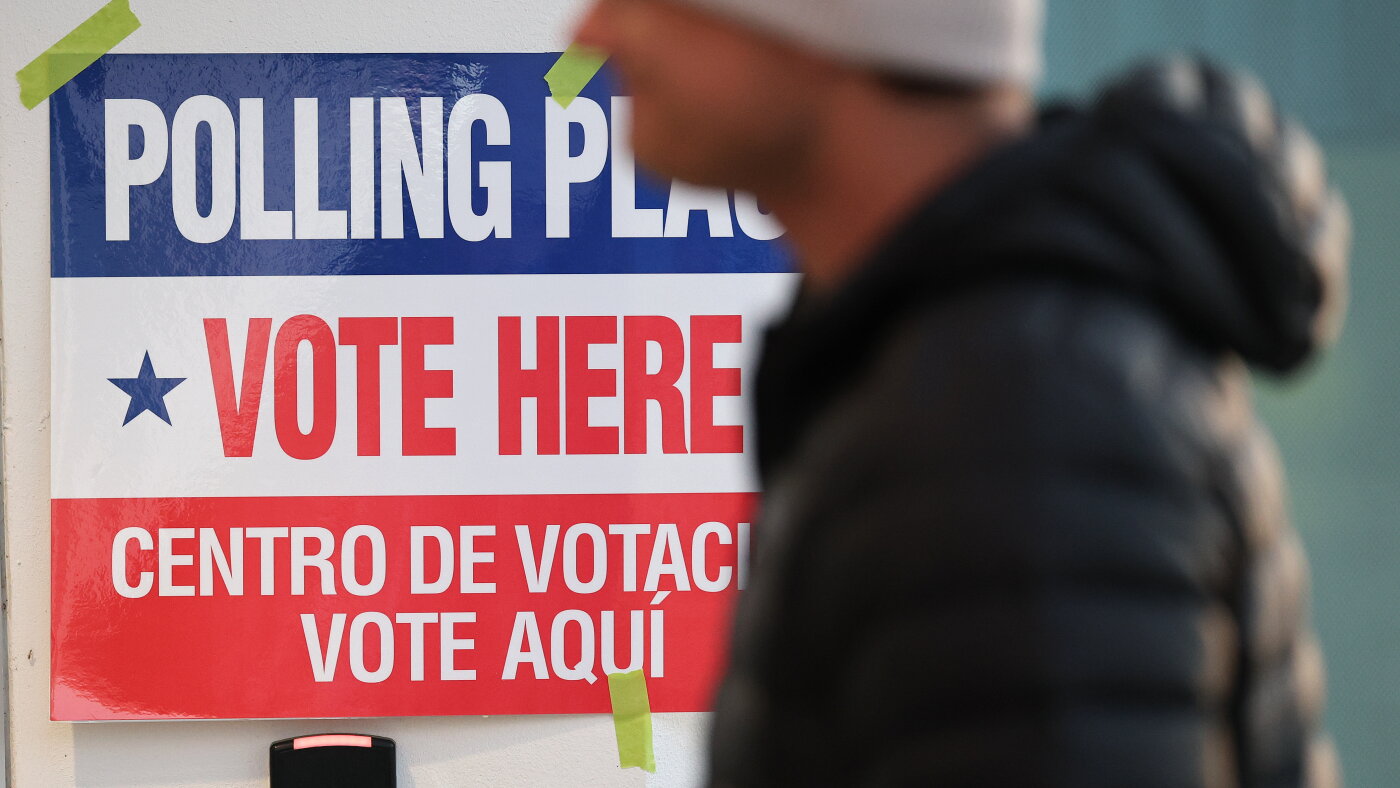
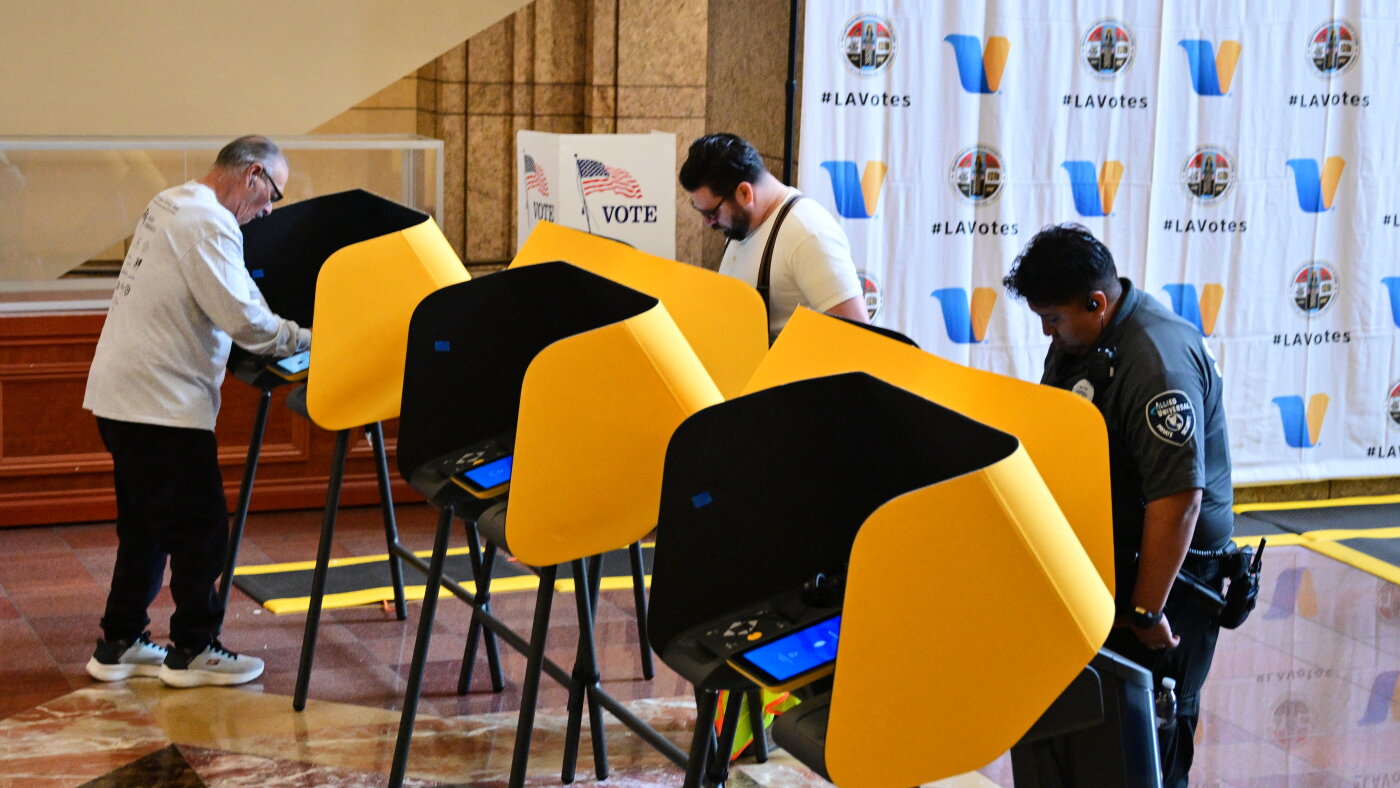
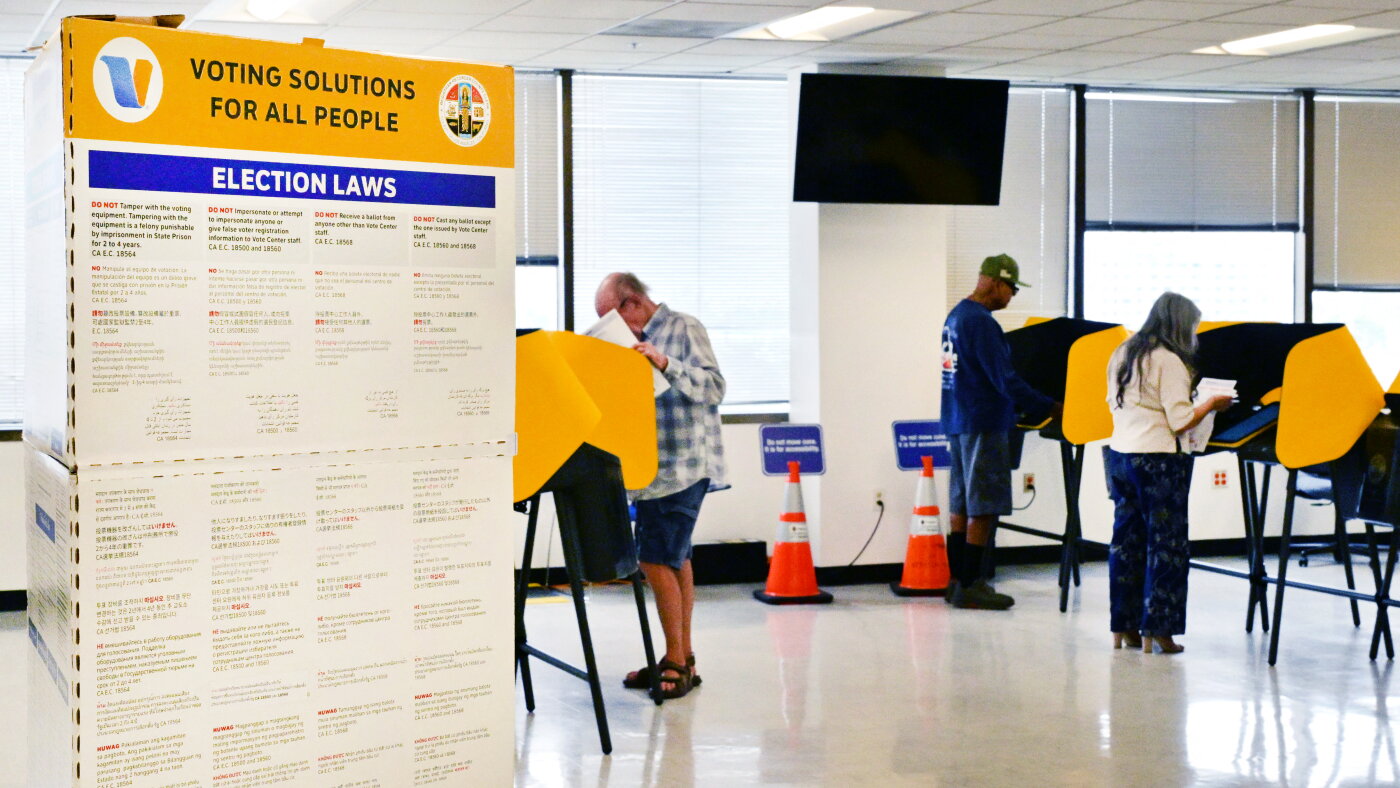
Americans are confused and worried about elections.
asserted
Americans → confuse → elections
Will that impact turnout?
asserted
that → impact → turnout
Take this summer's back and forth over President Trump's executive order to restrict mail voting, which bounced around the courts until it was ultimately halted by the Supreme Court last week.
asserted
it → take → Court
In the end, no mail voting rules have actually changed.
asserted
rules → change → end
But across the country this midterm year, local officials say they're hearing from voters confused by the process — and worried about potential federal interference in the election.
asserted
they → say → election
"'How is this going to work?
asserted
this → go → ?
How are you going to make sure my ballot is counted?
asserted
ballot → go → ?
How am I going to get my ballot?' — I'm hearing all of these things," said Carly Koppes, a local Republican voting official in Weld County, Colo.
asserted
Koppes → go → County
When asked how this cycle compares to previous elections she's overseen, Koppes didn't hesitate.
asserted
Koppes → ask → elections
"This is my 22nd year [running elections]," she said.
asserted
she → run → elections
Fewer than 50% of voters say they expect the midterms to be "free and fair elections," according to polling this month by the University of California San Diego, although a new NPR/PBS News/Marist survey did find that three-fourths of voters trust their own state and local officials to run a fair election.
uncertain
fourths → say → election
The polls also zoom in on two particular areas of concern.
asserted
polls → zoom → concern
Four in 10 voters say they expect federal immigration enforcement agents to be present at polling places in their area, according to the UC San Diego survey, despite federal law banning armed federal troops from election sites.
uncertain
agents → say → sites
And after the Supreme Court ruling against Trump's mail ballot proposal, the NPR/PBS News/Marist poll found a 13 percentage point drop in voters who expect mail ballots to be delivered on time, over just the past two years.
asserted
ballots → find → years
A separate poll, commissioned by the Partnership for Large Election Jurisdictions, also found that 62% of respondents said they were worried "legal or political disputes over election rules could affect whether their own ballot is counted this year.
uncertain
ballot → commission → rules
"
All of that has cast a cloud over this election year in ways that many voters can't even fully articulate, said Stephanie Thomas, Connecticut's Democratic secretary of state.
asserted
Thomas → cast → state
"Grandmothers approach me concerned, and I say, 'What are you concerned about?'
asserted
you → approach → What
And they say, 'I don't know.
asserted
I → say → ?
I just feel afraid that something might happen,'" Thomas told NPR, during an event this summer hosted by the Center for Election Innovation & Research.
uncertain
Thomas → feel → Innovation
In response, voting officials say they're trying to thread the needle of engaging with voters about their fears, while at the same time reassuring them that laws are in place that protect them, and that officials have game-planned for various scenarios.
asserted
officials → say → scenarios
"From time to time, it's appropriate to sound the alarm, but you don't want to be alarmist," Steve Simon, Minnesota's Democratic secretary of state, said at that same CEIR event.
asserted
Simon → sound → event
"That's the balance we're trying to strike."
asserted
we → try → ?
Simon said his state's high-profile confrontations with federal immigration authorities this year are "still a fresh wound," so many voters there are worried what the federal government might be planning this fall too.
uncertain
government → say → what
"I want to be honest about what could be coming," said Simon.
uncertain
Simon → want → ?
"But I always add very quickly that I think some of these scenarios are unlikely and that if they were to come to pass, we feel good about the laws and the tools and the partnership and the resolve that we have in Minnesota to overcome those challenges.
asserted
we → add → challenges
Midterm election turnout already lags behind presidential election years.
asserted
turnout → lag → years
The obvious question now is whether that turnout gap will be intensified by all these voter concerns.
asserted
gap → intensify → concerns
But Lauren Prather, a political science professor at UC San Diego, said it's actually not so simple.
asserted
it → say → Diego
"One of the unresolved relationships in political science right now is between confidence in elections and turnout," Prather said during a media briefing about UC San Diego's recent polling.
asserted
Prather → say → polling
"We don't have good evidence — in the U.S. or in other countries — about whether people that trust the elections less end up turning out less.
asserted
that → have → elections
It's sort of intuitive that that would be the case, but we don't have good systematic evidence on that.
asserted
we → have → that
"
Recent election cycles have been among the highest-turnout contests in American history, Prather noted, despite Trump driving the rise of election denialism and persistent doubts about election reliability.
asserted
Trump → note → reliability
Loading...
"Despite the fact that there's a lot of distrust out there, both sides still see elections as winnable," Brendan Nyhan, a Dartmouth College political scientist who researches the health of U.S. democracy, said during the same briefing.
asserted
who → be → briefing
In some cases, threats to people's ability to cast a ballot can spur higher turnout, as different communities and political groups rally to mobilize in response.
asserted
communities → cast → response
"It's possible that on net the effect is zero or even positive," Nyhan said.
asserted
Nyhan → say → net
"But that doesn't mean it's healthy for democracy for people to fear that they will be disenfranchised.
asserted
they → mean → ?
"
Because even if people push through their concerns to vote, Nyhan said, for a democracy to function, people also have to trust the results after elections are completed.
asserted
elections → push → results
"The distrust … creates a kind of dry tinder for elites who want to challenge the election results and undermine their legitimacy," Nyhan said.
asserted
Nyhan → create → legitimacy
"The fact that we're in this position means we're vulnerable."
asserted
we → mean → position
 The Aporia