A routine infrastructure project in Oceanside, California, has led to an unexpected discovery from deep beneath the ground: fossilised bones that may have belonged to a huge hoofed mammal that lived as long as 45 million years ago.
uncertain
that → lead → mammal
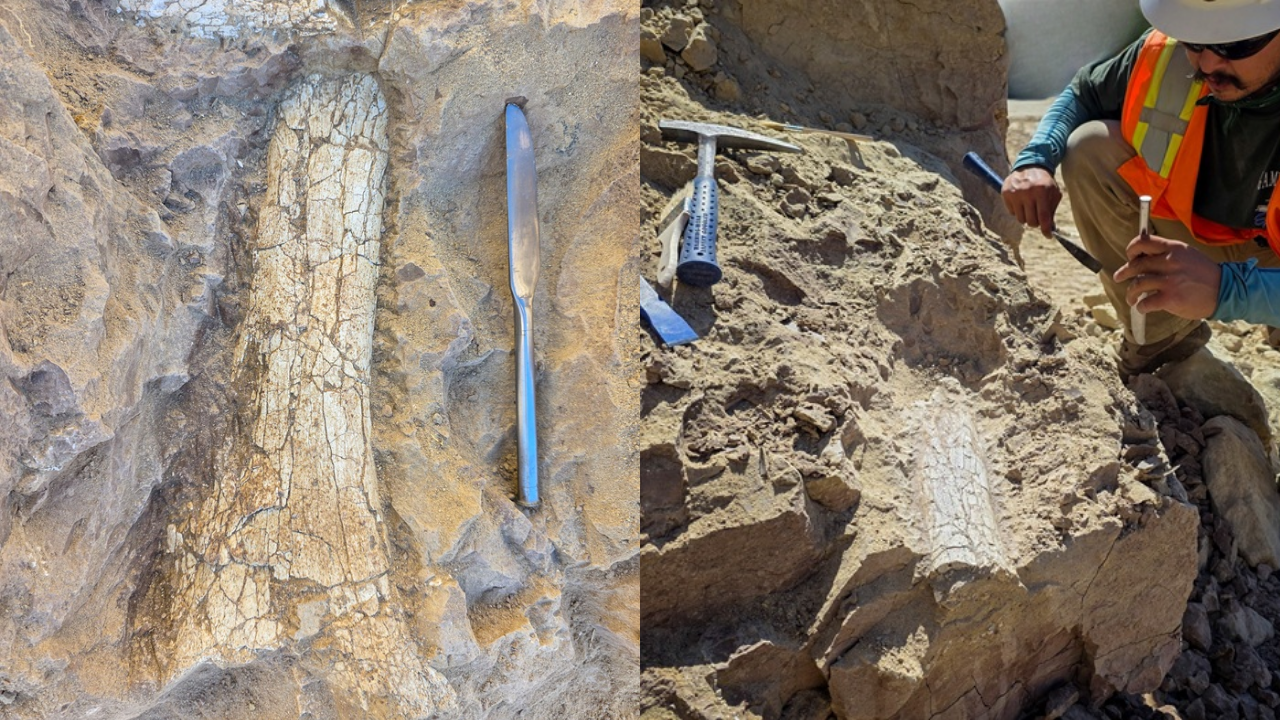
According to the City of Oceanside, which announced the discovery, crews uncovered several limb bones, ribs and other fragments about 12 feet below the surface.
uncertain
crews → accord → surface
Paleontologists believe the remains could belong to a prehistoric animal known as a “thunder beast”; another possibility is a creature known as a “swamp rhino”.
uncertain
possibility → believe → rhino
Researchers are now studying the fossils to determine the animal's exact identity.
asserted
Researchers → study → identity
Fossils emerge during routine construction
asserted
Fossils → emerge → construction
The discovery was made recently while crews were carrying out excavation for a city infrastructure project in Oceanside, about 40 miles north of San Diego.
asserted
crews → make → Diego
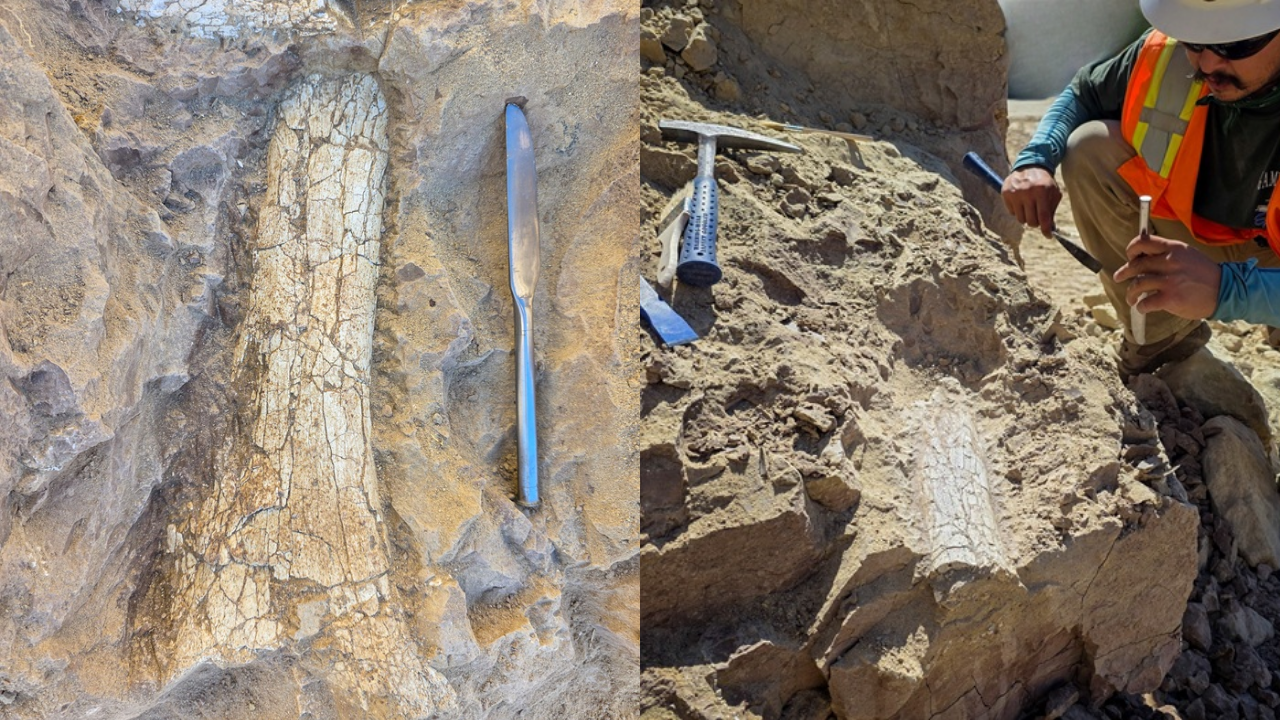
Workers digging roughly 12 feet below the surface came across several fossilised bones embedded in hardened sedimentary rock.
asserted
Workers → dig → rock
The remains included multiple limb bones, ribs and numerous other bones and fragments.
asserted
remains → include → bones
Their size and shape suggested to paleontologists that they belonged to a large hoofed mammal that lived in the region during the Eocene Epoch.
uncertain
that → suggest → Epoch
The fossils were found in what the City of Oceanside describes as “Member C of the Santiago Formation,” a thick sequence of sedimentary rock in northwestern San Diego County.
asserted
City → find → County
The formation dates to a period when the landscape of present-day Southern California was very different from what it is today.
asserted
it → date → California
Rather than stopping construction entirely, the discovery prompted paleontologists to secure the area and carefully excavate the remains.
asserted
discovery → stop → remains
Seven days of careful excavation
Joseph El Adli, a paleontologist who was monitoring the construction site, recognised the importance of the discovery and led additional excavation work.
asserted
who → monitor → work
According to the City of Oceanside, El Adli's team spent seven days exposing the fossils from beneath several tons of hardened mudstone and sandstone.
uncertain
team → accord → mudstone
The bones were then placed inside a protective plaster field jacket so they could be transported safely to an off-site laboratory for further preparation.
uncertain
they → place → preparation
The fossils are still encased in rock, meaning researchers have not yet been able to examine every part of the specimens.
asserted
researchers → encase → specimens
That is also why the precise identity of the animal remains uncertain.
asserted
identity → remain → animal
The exact location of the discovery is not disclosed yet, citing public safety concerns and the need to protect the site.
asserted
location → disclose → site
Based on the size and shape of the recovered bones, El Adli believes the animal could belong to one of two groups of extinct mammals.
uncertain
animal → base → mammals
One possibility is a Titanothere, commonly referred to as a “thunder beast”.
asserted
possibility → refer → beast
These were large, hoofed mammals that lived in North America during the Eocene.
asserted
that → live → Eocene
They were members of the extinct brontothere group and could reach considerable sizes.
uncertain
They → reach → sizes
The second possibility is an Amynodon, sometimes described as a “swamp rhino”.
asserted
possibility → describe → rhino
They belonged to an extinct group of large-bodied mammals and are thought to have had adaptations associated with life around wetlands.
asserted
They → belong → wetlands
At this stage, paleontologists have not confirmed which of the two animals the Oceanside fossils represent.
asserted
fossils → confirm → animals
Further preparation and examination of the bones should help narrow down their identity.
asserted
preparation → help → identity
A glimpse into ancient Oceanside
The fossils provide a window into a period when the landscape around present-day Oceanside was home to very different animals and environments.
asserted
landscape → provide → animals
Officials said the mammal lived on ancient floodplains roughly 40 million to 45 million years ago.
asserted
mammal → say → floodplains
The rocks surrounding the remains belong to the Eocene-aged Santiago Formation and fall within the Uintan North American Land Mammal Age.
asserted
rocks → surround → Age
The find also adds to evidence that the region contains significant fossil deposits.
asserted
region → add → deposits
According to the Los Angeles Times, other fossils have previously been recovered from the Santiago Formation, including remains of early saber-toothed carnivores and primates.
uncertain
fossils → accord → carnivores
Modern construction has also uncovered fossils elsewhere in Southern California, demonstrating how buried geological deposits can sometimes remain hidden until excavation reaches them.
What happens to the fossils next?
The recovered specimens are expected to undergo further preparation and scientific examination once researchers remove more of the surrounding rock.
asserted
researchers → uncover → rock
The additional work could reveal features that distinguish a thunder beast from a swamp rhino and provide more information about the animal's size and biology.
uncertain
that → reveal → size
The researchers will also be able to determine whether the fragments belong to a single individual.
asserted
fragments → determine → individual
The City of Oceanside said the specimens are ultimately expected to become part of a museum collection, where they can be preserved and made available to scientists and the public for further study.
asserted
they → say → study
For now, the discovery remains a scientific mystery.
asserted
discovery → remain → ?
What began as a routine excavation 12 feet beneath an Oceanside construction project has instead uncovered bones from an animal that may have walked across Southern California's ancient floodplains tens of millions of years ago.
uncertain
that → begin → years
Further examination of the fossils will determine whether the long-buried remains belonged to a “thunder beast”, a swamp rhino or another prehistoric mammal.
asserted
remains → determine → beast
 The Aporia