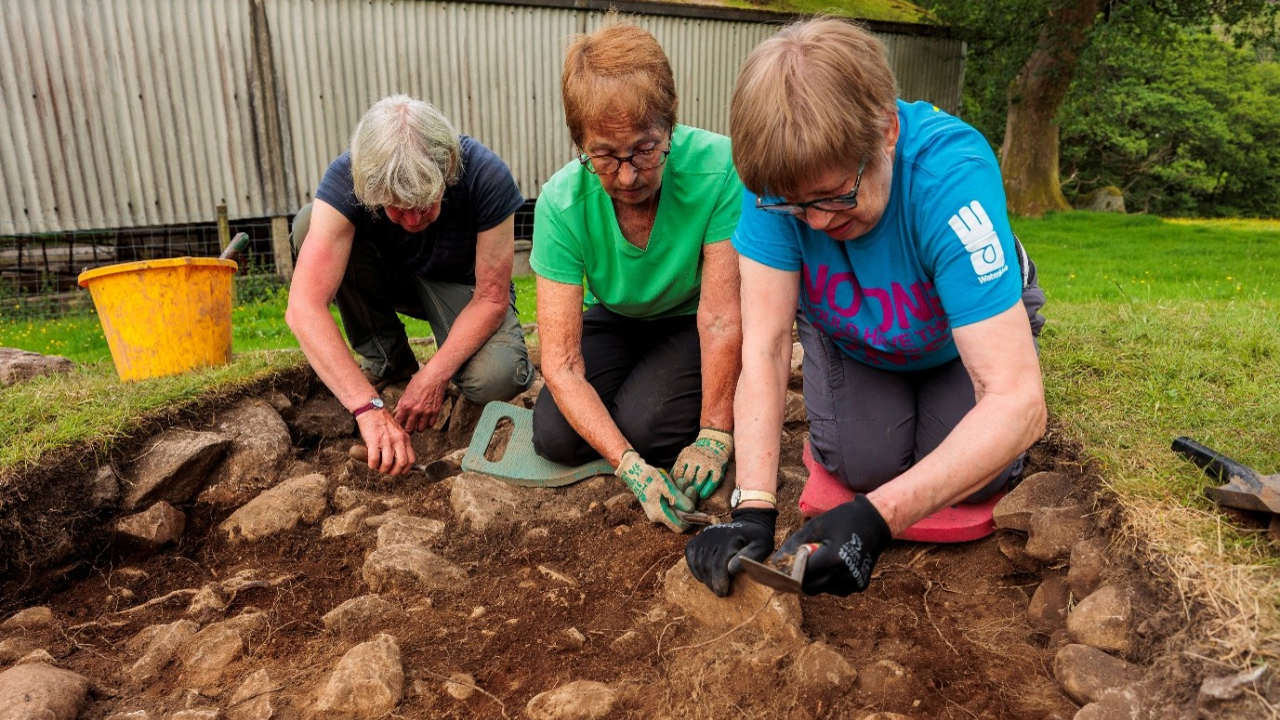
Photo via Times of India

Volunteers reveal 2,000-year-old Iron Age settlement in England's Lake District

Read the original at Times of India ↗
Cite

TOI World Desk. (2026, September 25). Volunteers reveal 2,000-year-old Iron Age settlement in England's Lake District. Times of India. https://timesofindia.indiatimes.com/world/uk/volunteers-reveal-2000-year-old-iron-age-deepdale-bridge-settlement-in-englands-lake-district-revealing-roundhouses-occupied-into-the-roman-era/articleshow/134482003.cms

Dated when The Aporia collected the article, usually within hours of publication. Check the original for its exact date and byline.

Times of India · collected 2026-09-25 · by TOI World Desk

Quick Summary

Volunteers discovered a 2,000-year-old Iron Age settlement called Deepdale Bridge Settlement in England's Lake District. The excavation revealed several roundhouses and enclosures with livestock areas, providing rare insights into ancient farming communities. Radiocarbon dating of charcoal samples indicated the site was occupied between 76 to 216 AD during the transition from the late Iron Age to the Roman period. Marnie Calvert, a historic environment assistant, highlighted the volunteers' significant role in uncovering important historical evidence about life in the Lake District during this era.
Written by AI on 2026-09-25, from this article's own text only (the story summary below draws on all the coverage).

AI analysis

Story summary

In April 2024, 25 volunteers uncovered an Iron Age settlement in the Deepdale valley of the Lake District National Park, a rare find known as the Deepdale Bridge Settlement. The survey, which began in 2024 and involved 150 sites, was supported by landowners Jimmy and Chris Brown, the Lake District National Park Authority, and Eden Heritage. Archaeologists found several hut circles, remnants of roundhouses, and small enclosures surrounded by a rubble bank, where ancient communities lived, cooked together, and kept livestock. Martin Railton, an archaeological consultant for Eden Heritage, noted that little is known about the people who inhabited this area in prehistory, highlighting the significance of this discovery in shedding light on other settlements likely from the same period. This excavation marks one of the few archaeologically investigated enclosed settlements in the Lake District with confirmed occupation dates, significantly contributing to understanding the region's ancient history.

Written for “Ancient Settlement Discovery England” on 2026-11-01, grounded in this article and the 0 other(s) covering the same event.

Story

📰 Ancient Settlement Discovery England
Science · 1 article(s) covering the same event.

Compared with similar articles

Nothing to compare against. No article is close enough to this one for the pipeline to have linked or judged the pair.
How this article was measured signals, leaning charts, publisher record, byline, topics and claims

Signals How these are calculated →

Claims extracted
16
sentences that state something as happening or true
Uncertain
6%
1 of 16 hedged ("reportedly", "may", "according to")
Leaning
not political
takes no side on a contested political question
Publisher signals
59/100
Times of India's corrections and hedging, across everything collected from it. Not a measure of accuracy.
Outlets on this story
1
Science
Same framing elsewhere
1
articles that frame the event the way this one does
Analyzed 2026-09-25 · how these are computed

How this is being covered How these are calculated →

Article leaning vs. publisher reliability
Source leaning vs. consistency

Publisher

Times of India · 3858 article(s) · 2 correction(s) detected
Running correction rate · 2 correction(s)

Who wrote this

TOI World Desk
1289 article(s) here · 1 carrying a prediction
🔮 She took it home, made it a bed of flowers and expected it wouldn’t last the day.
2026-11-01 · assertive framing · Injured queen bumblebee becomes an online sensation
🔮 He also moved animals between pens and took flammable materials out of the way so the flames would not spread.
🔮 The neighbours rejected those proposals but remained willing to discuss a sale.
🔮 A long-serving kennel worker who spent 34 years caring for prize-winning Airedale terriers has taken his late employer’s son to court over her £1.1m estate, arguing that the £100,000 left to him in her will was not enough to secure his future.
🔮 At first, Kim could not understand what was troubling the animal.
🔮 As an ambassador, Lopez would mentor Latina entrepreneurs, promote financial literacy and encourage pathways toward greater financial independence.
🔮 For 39 years, Marilyn Hampton worked as a custodian at a school district in Texas, US, cleaning buildings and helping children whenever she could.
🔮 In September 2021, they signed a written agreement explaining how their money would be handled.
🔮 The neighbours sought court-ordered access to Bosco’s land so they could inspect it and gather evidence for their claims.
🔮 What might appear to be an extraordinary endurance challenge is also a personal statement about the possibilities that can emerge after a life-changing accident.
Wire or desk byline, not an individual reporter.
Also by TOI World Desk
Nothing else under this byline is closely related to this article, so these are simply their most recent.
All 1289 articles by TOI World Desk →

Topics

Eden Heritage the Lake District National Park Authority

Subjects

the Lake District National Park Authority ORG · 3× Eden Heritage ORG · 2× Martin Railton PERSON · 2× Chris Brown PERSON · 1× Jimmy PERSON · 1× Marnie Calvert PERSON · 1× Siriol Hinchcliffe PERSON · 1×

Narrative

Martin Railton, archaeological consultant for Eden Heritage and volunteer leader, said, "We know surprisingly little about the people who lived here and farmed the landscape in prehistory," adding that the investigation would help shed light on several other settlements likely dating to the same period.
framing: assertive · carried by 1 article(s) · first seen 2026-09-25
🔮 According to the Lake District National Park Authority, the settlement comprises several hut circles, the remains of roundhouses, and small enclosures surrounded by a rubble bank, where ancient communities would have lived, cooked together and kept livestock.

Claims (16 extracted, 1 hedged)

A group of 25 dedicated volunteers has revealed a rare Iron Age settlement in the Deepdale valley of the Lake District National Park. asserted
group → reveal → Park
The find, known as the Deepdale Bridge Settlement, emerged as part of a wider survey of 150 sites in the valley that began in 2024, carried out with support from landowners Jimmy and Chris Brown, the Lake District National Park Authority, and Eden Heritage. asserted
that → know → landowners
Here's what the volunteers found, and what it reveals about life in the ancient Lake District. asserted
it → find → District
25 volunteers uncover the Deepdale Bridge Settlement asserted
volunteers → uncover → Settlement
According to the Lake District National Park Authority, the settlement comprises several hut circles, the remains of roundhouses, and small enclosures surrounded by a rubble bank, where ancient communities would have lived, cooked together and kept livestock. uncertain
communities → accord → livestock
Very few native enclosed settlements of this kind have been archaeologically investigated in the Lake District, and even fewer have confirmed occupation dates, making the excavation a significant contribution to understanding the region's ancient historical landscape. asserted
excavation → enclose → landscape
Marnie Calvert, Graduate Historic Environment Assistant, credited the volunteers directly, saying their dedication, enthusiasm and hard work had been at the heart of this excavation uncovering important new evidence of life in the later prehistoric Lake District. asserted
dedication → credit → District
What the roundhouse and enclosure revealed One trench dug during the excavation revealed the remains of a timber doorway leading into the roundhouse, along with internal dividers and a cobbled yard outside that was probably used to hold animals. asserted
that → reveal → animals
The roundhouse had also been altered throughout its life, demonstrating the continual use and reuse of the settlement over time. asserted
roundhouse → alter → time
Evidence of spelt wheat and barley points to an active farming community living in the Deepdale landscape into the Roman period, suggesting the settlement remained in use as communities adapted to changing conditions. asserted
communities → point → conditions
Martin Railton along with the volunteers (Image: Lake District National Park) Radiocarbon dating the settlement's occupation Charcoal recovered from the soil was radiocarbon dated, revealing that the roundhouse was occupied between 76 and 216 AD. asserted
roundhouse → recover → 76
The enclosure bank was constructed between 40 BC and 118 AD. asserted
bank → construct → BC
Together, the dates indicate that the settlement was in use across the transition from the late Iron Age into the Roman period. asserted
settlement → indicate → period
Martin Railton, archaeological consultant for Eden Heritage and volunteer leader, said, "We know surprisingly little about the people who lived here and farmed the landscape in prehistory," adding that the investigation would help shed light on several other settlements likely dating to the same period. asserted
investigation → say → period
What's next for Lake District archaeology volunteers Volunteer Siriol Hinchcliffe reflected on the project, telling the Lake District National Park Authority, "Our team of volunteers have spent two years surveying in the valley and being able to excavate to further our knowledge is great." asserted
being → reflect → knowledge
With the potential to uncover much more about the region's ancient history, volunteers are now preparing for a 2026 excavation at Lanthwaite Green near Crummock Water. asserted
volunteers → uncover → Water
💬Give feedback
🕘History 🎫Support