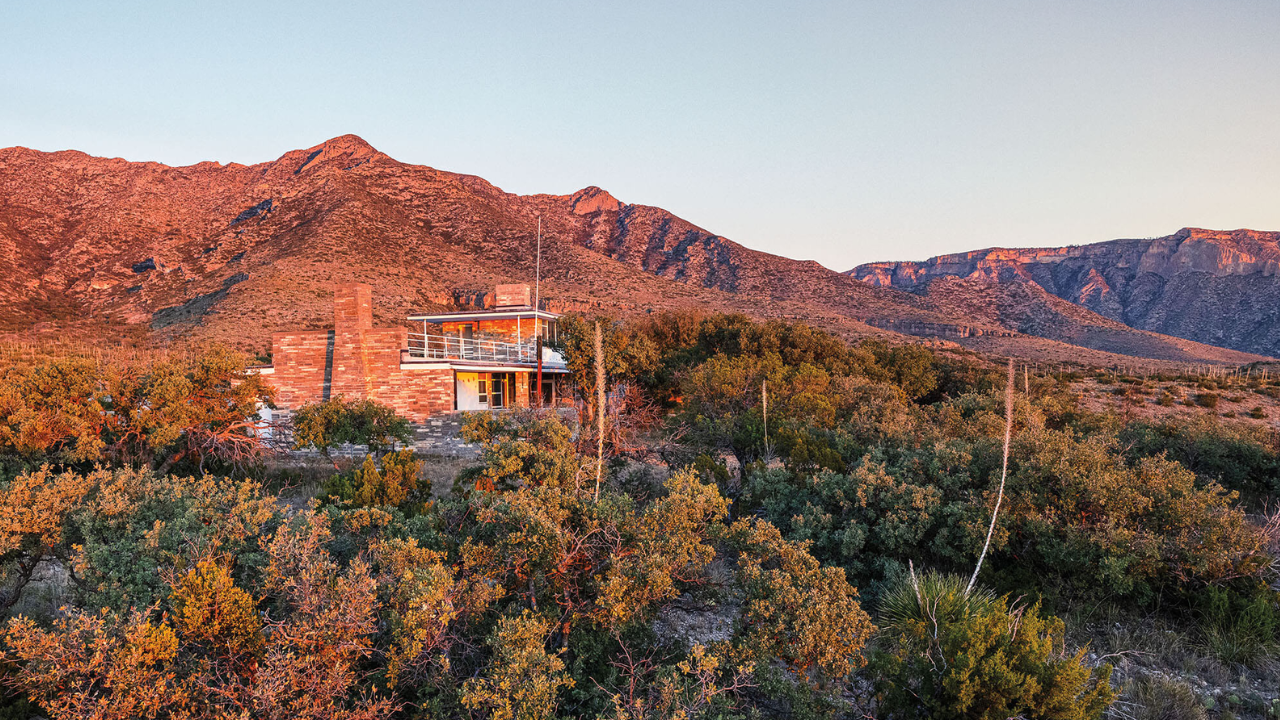
In 1921, Texas oil geologist Wallace Pratt travelled into a remote, wind-swept oasis in West Texas and fell in love with its tall limestone walls and bright autumn colours.
asserted
Pratt → travel → walls
Thirty-eight years later, his long love for McKittrick Canyon helped change the future of Texas conservation.
asserted
love → help → conservation
Pratt gave his home and thousands of acres to the federal government, creating the core of what would become Guadalupe Mountains National Park.
asserted
what → give → core
First encounter with a hidden oasis
Pratt was working as an oil geologist for Humble Oil Company when he first visited the region.
asserted
he → work → region
He was on a business trip in 1921 when an associate, Judge Drane, introduced him to the Guadalupe Mountains.
asserted
associate → introduce → Mountains
Pratt was soon given a chance to see McKittrick Canyon, which was described to him as “the most beautiful spot in Texas.”
asserted
which → give → Texas
According to National Park Service history records, he was deeply impressed by both the scenery and the geology.
uncertain
he → accord → scenery
The canyon cuts through part of the ancient Capitan Reef, a huge fossil reef formed about 265 million years ago.
asserted
canyon → cut → Reef
The reef developed when this part of Texas was covered by a tropical sea.
asserted
part → develop → sea
For Pratt, who spent his career studying rocks and underground formations, the canyon was both a scientific treasure and a peaceful place to escape.
asserted
canyon → spend → rocks
Pratt soon decided to buy land there.
asserted
Pratt → decide → land
He and two business partners purchased ranch property in the area.
asserted
He → purchase → area
By 1930, Pratt had bought the remaining interests from his original partners and continued adding land, including the lower part and mouth of McKittrick Canyon.
asserted
Pratt → buy → Canyon
He called the property Manzanital Ranch.
asserted
He → call → property
Building in the desert wilderness
By 1931, Pratt and his wife, Pearl Stuckey, had built a small stone cabin inside McKittrick Canyon.
asserted
Pratt → build → Canyon
The cabin was designed by architect John Staubs and built during the winter of 1931 to 1932.
asserted
cabin → design → 1932
Made from local stone, it became the Pratt family's summer home.
asserted
it → make → stone
The cabin was beautiful but its location had problems.
asserted
location → have → problems
The narrow canyon could be hit by strong floods and bad weather.
uncertain
canyon → hit → floods
Pratt began looking for a safer site on higher ground.
asserted
Pratt → begin → ground
After Pearl died in 1940, Pratt married Iris Calderhead in 1941.
asserted
Pratt → die → 1941
Calderhead was a prominent supporter of the women's suffrage movement and had been involved with the National Woman's Party.
asserted
Calderhead → involve → Party
Soon after their marriage, the couple began planning a second home outside the canyon.
asserted
couple → begin → canyon
They chose a site southeast of the canyon mouth.
asserted
They → choose → mouth
The New York City architecture firm Milliken & Bevin designed the house.
asserted
firm → design → house
Planning began in 1941, construction started in 1942, and the house was completed by 1943.
asserted
house → begin → 1943
The unusual home became known as “Ship on the Desert” because its long shape and modern design made it look like an oil tanker.
asserted
it → know → tanker
It used local limestone and large areas of glass to connect the house with the surrounding landscape.
asserted
It → use → landscape
The National Park Service describes it as an early example of modernist architecture in the remote West Texas region.
asserted
Service → describe → region
The house also reflected the lives of both owners.
asserted
house → reflect → owners
An oil tanker, the Wallace E. Pratt, had been named after him in 1937.
asserted
tanker → name → 1937
A bright purple front door was a nod to Iris Pratt's work for women's suffrage, since purple was one of the colours linked to the suffrage movement and the National Woman's Party.
asserted
purple → link → movement
A landmark gift to the nation
Wallace and Iris Pratt lived at Ship on the Desert for about fifteen years.
asserted
Wallace → live → years
The house had no telephone or television during their years of occupation, but the family enjoyed the wide desert views and sunsets from the property.
asserted
family → have → property
Although the Pratts were officially retired by 1945, Wallace continued to work from an office in Carlsbad, New Mexico.
asserted
Wallace → retire → Carlsbad
He often flew his small plane from a private runway near the house to his office.
asserted
He → fly → office
The family also operated Manzanital Ranch from the property, and Pratt's children and grandchildren often visited during the 1940s and 1950s.
asserted
children → operate → 1940s
By the early 1960s, the Pratts moved to Tucson, Arizona, as Iris's health declined and the couple needed better access to medical care.
asserted
couple → move → care
Pratt had already begun thinking about the future of his land.
asserted
Pratt → begin → land
He wanted McKittrick Canyon and the Guadalupe Mountains to remain protected.
asserted
Canyon → want → ?
…and 23 more, not listed.
 The Aporia