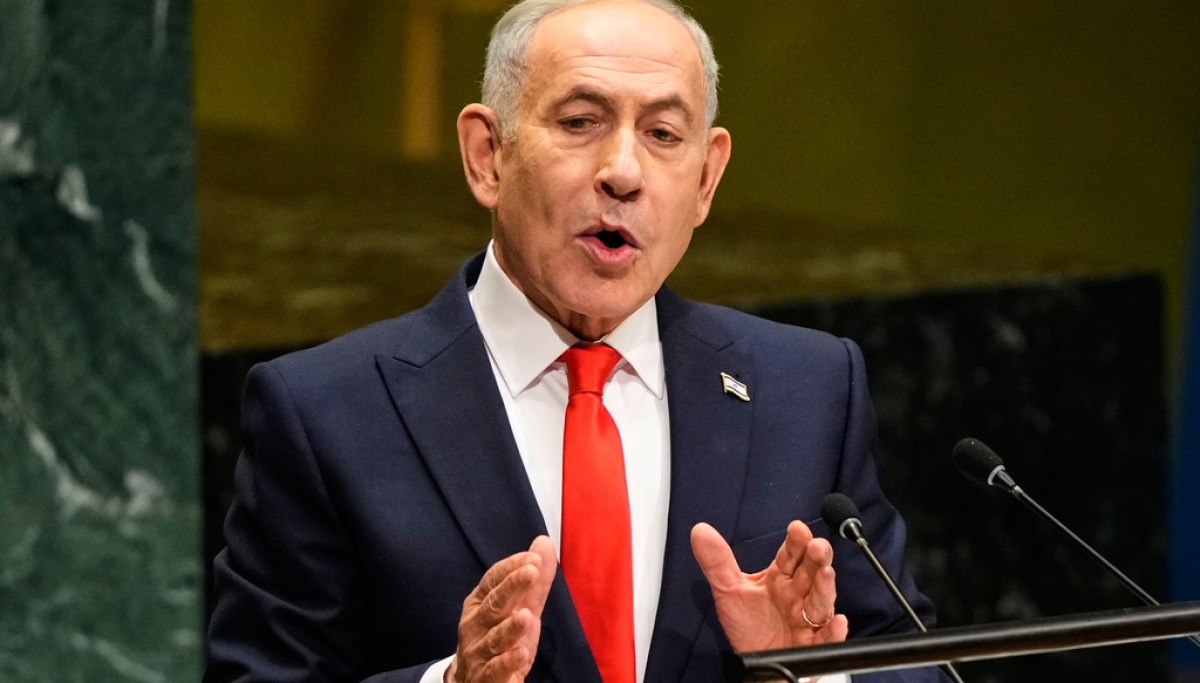
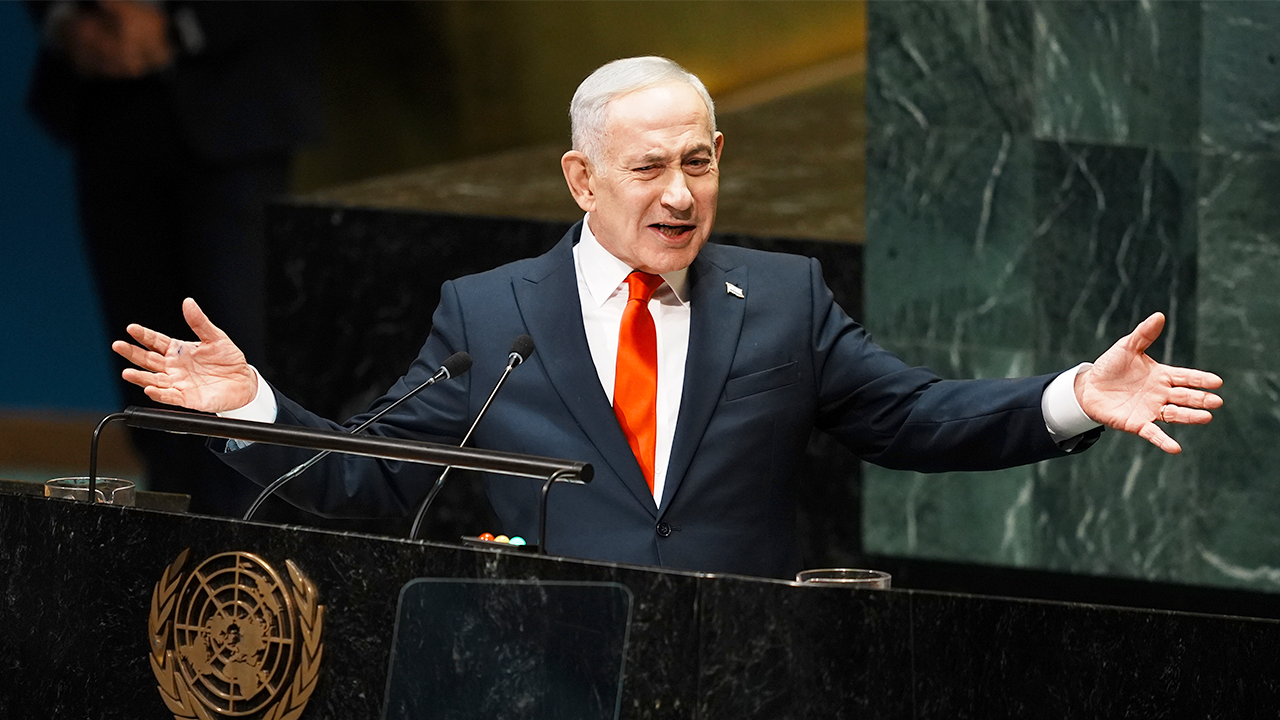
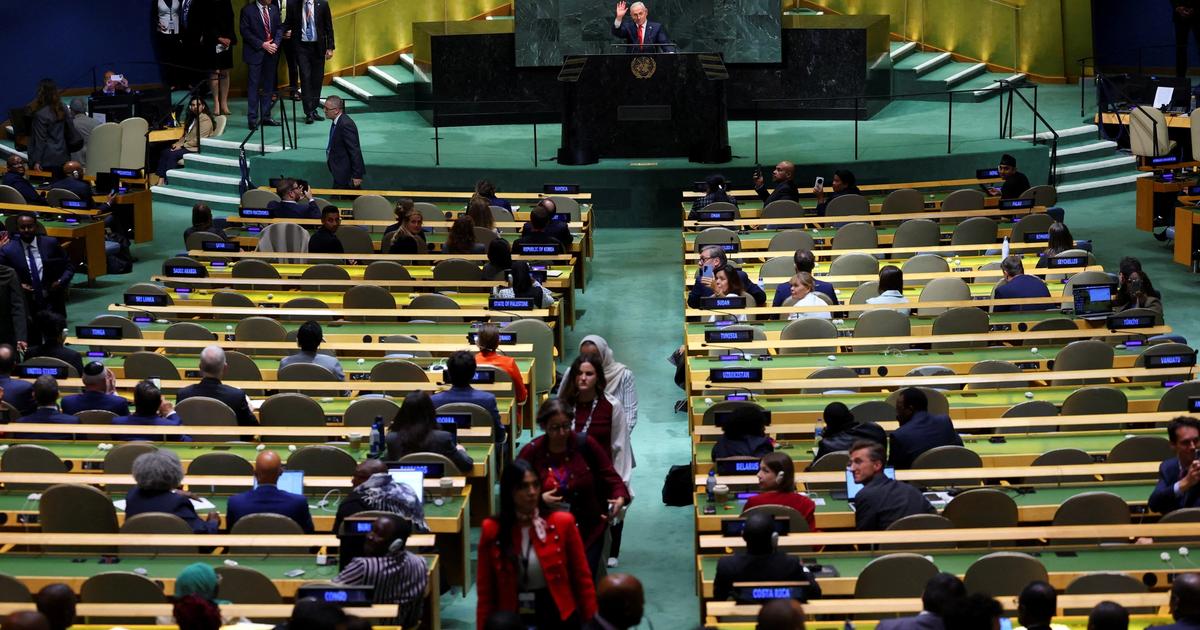
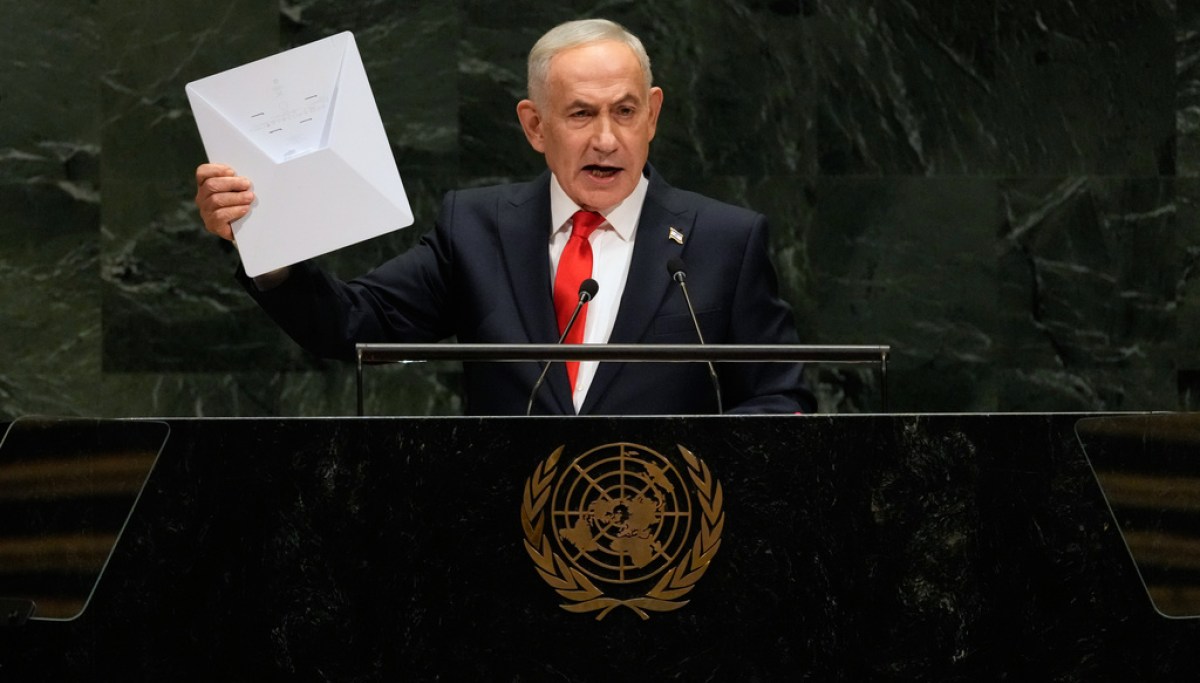
Photo via Washington Examiner

‘Oct. 7 was horrific, but…’: Why the UN walked out before Netanyahu said a word

Read the original at Washington Examiner ↗
Cite

Blitz, A. (2026, September 25). ‘Oct. 7 was horrific, but…’: Why the UN walked out before Netanyahu said a word. Washington Examiner. https://www.washingtonexaminer.com/op-eds/4742555/netanyahu-un-walkout-october-7-double-standard/

Dated when The Aporia collected the article, usually within hours of publication. Check the original for its exact date and byline.

Washington Examiner · collected 2026-09-25 · by Arie Blitz

Quick Summary

On October 7, during Israeli Prime Minister Benjamin Netanyahu's speech at the United Nations General Assembly, many diplomats walked out before he even began to speak. This occurred amid a pattern where international criticism often acknowledges Hamas’s attack on Israel as horrific but pivots quickly to focus heavily on subsequent actions by Israel in Gaza. The article highlights how this shift in discourse tends to minimize the context of initial events and disproportionately scrutinizes Israel's response.
Written by AI on 2026-09-25, from this article's own text only (the story summary below draws on all the coverage).

AI analysis

Story summary

Benjamin Netanyahu, the Israeli Prime Minister, addressed the UN General Assembly on September 26, 2026, despite facing significant criticism and protests from both within and outside the assembly hall. Netanyahu accused New York City Mayor Zohran Mamdani of supporting Hamas terrorists and called him a war criminal, threatening to expose Mamdani during his speech at the UN. Mamdani had previously vowed to arrest Netanyahu if he visited New York but later admitted that he lacked the authority to do so.

Netanyahu's appearance came amid growing international condemnation over alleged Israeli war crimes in Gaza and the occupied West Bank. Over 70 countries boycotted Netanyahu’s speech, staging a walkout during his address to highlight their disapproval. However, according to Israel’s UN ambassador Danny Danon, more than 100 delegations actually stayed in the room.

The incident underscores Netanyahu's political isolation as he faces an upcoming election in October 2026 and declining support for Israel among US voters. Polls indicate a loss of faith in Netanyahu domestically, with sixty percent of Americans now having an unfavorable view of Israel compared to forty-two percent in 2022. Meanwhile, Israeli forces continued controversial actions such as dropping "skunk water" on Palestinians in Gaza and demolishing homes in the West Bank.

Written for “Netanyahu's UN Speech Controversy” on 2026-11-01, grounded in this article and the 54 other(s) covering the same event.

Story

📰 Netanyahu's UN Speech Controversy
Politics · 55 article(s) covering the same event. Compare every outlet's account →

Compared with similar articles

This article reads leans left and hedges 7% of its claims. Each row says how that neighbour differs.
Fox News
Hedges 2 of 39 claims Outlet record 69/100
Semafor
⚖️ Leans right further right than this Hedges 1 of 5 claims Outlet record 60/100
Washington Examiner
⚖️ Leans strongly right further right than this Hedges 4 of 61 claims Outlet record 70/100
Al Jazeera
⚖️ Leans strongly left further left than this Hedges 8 of 43 claims Outlet record 60/100
Al Jazeera
⚖️ Leans left Hedges 0 of 3 claims Outlet record 60/100
Washington Examiner
Hedges 5 of 56 claims Outlet record 70/100
BBC News
⚖️ Leans left Hedges 2 of 9 claims Outlet record 68/100
The Globe and Mail
Hedges 0 of 2 claims Outlet record 52/100
The Guardian
⚖️ Leans right further right than this Hedges 0 of 3 claims Outlet record 66/100
Dawn
⚖️ Leans left Hedges 4 of 44 claims Outlet record 72/100
How this article was measured signals, leaning charts, publisher record, byline, topics and claims

Signals How these are calculated →

Claims extracted
45
sentences that state something as happening or true
Uncertain
7%
3 of 45 hedged ("reportedly", "may", "according to")
Leaning
Leans left
of the writing, not the subject · beta estimate
Publisher signals
70/100
Washington Examiner's corrections and hedging, across everything collected from it. Not a measure of accuracy.
Outlets on this story
55
Politics
Same framing elsewhere
1
articles that frame the event the way this one does
Analyzed 2026-09-25 · how these are computed

How this is being covered How these are calculated →

Article leaning vs. publisher reliability
Source leaning vs. consistency

Publisher

Washington Examiner · 3895 article(s) · 7 correction(s) detected
Running correction rate · 7 correction(s)

Who wrote this

Arie Blitz
9 article(s) here · 1 carrying a prediction
🔮 “I was trying to save my own life, but I knew I could not let all those people die.”
🔮 A president may consider judicial philosophy when choosing a nominee.
🔮 Consider the film’s most explosive claim: that approval was once given for a strike expected to kill 500 civilians to eliminate one Hamas target.
🔮 Game theory asks a simple question: When one player changes the rewards and penalties, how will the others respond?
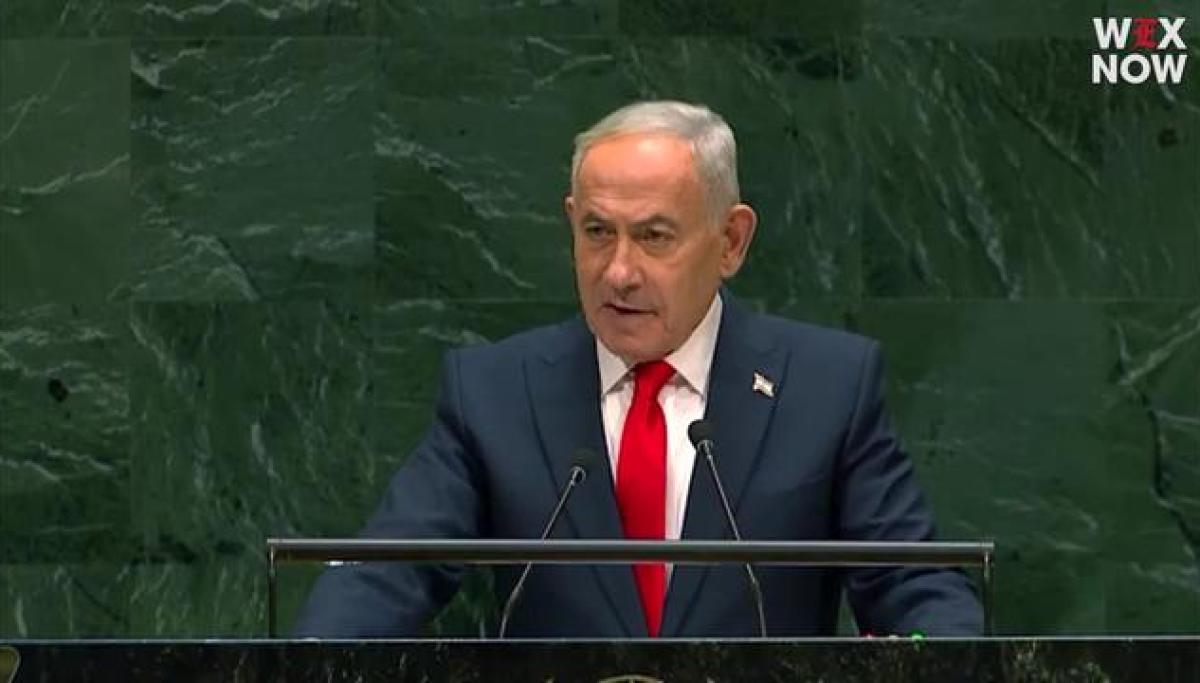
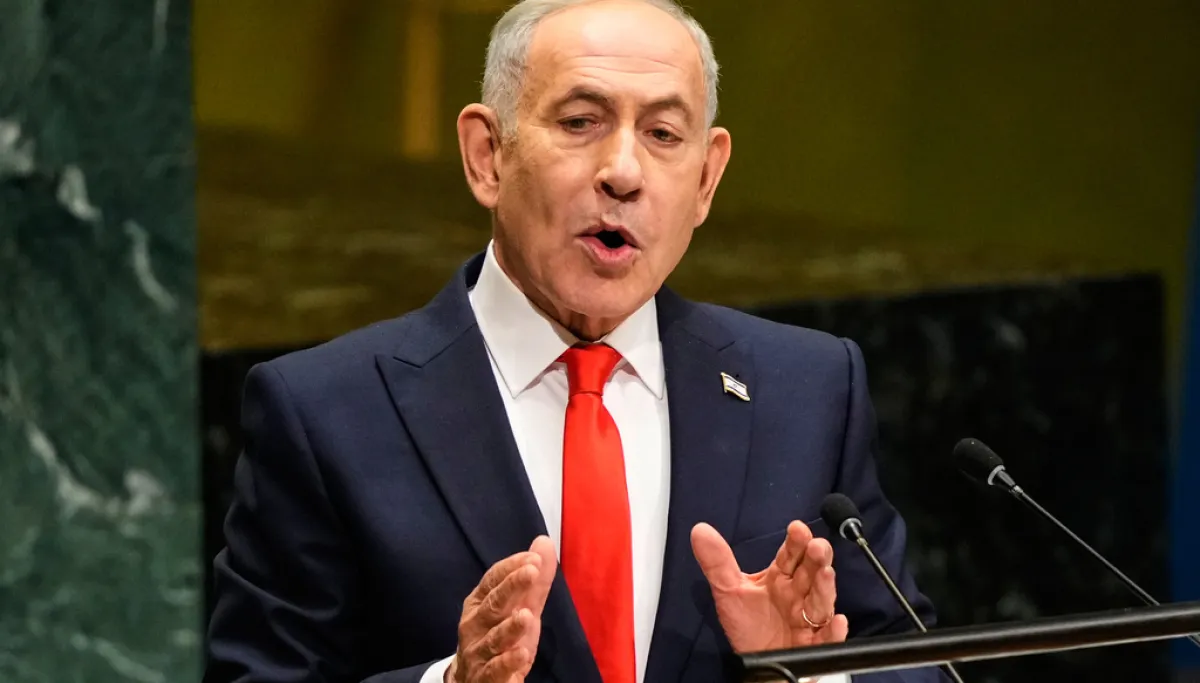
🔮 Before Israeli Prime Minister Benjamin Netanyahu could make Israel’s case to the United Nations on Thursday, scores of diplomats got up and left.
🔮 His explanation was not that the images were unverifiable or that publication would endanger the hostages.
🔮 There was also reason to believe Hamas understood that Oct. 7 would be fought not only with guns and rockets, but with images.
Also by Arie Blitz
Nothing else under this byline is closely related to this article, so these are simply their most recent.
All 9 articles by Arie Blitz →

Topics

Gaza Hamas Israel Israeli the United Nations

Subjects

Israel GPE · 13× Hamas ORG · 9× Gaza GPE · 6× Netanyahu PERSON · 4× Palestinian NORP · 4× Israeli NORP · 3× Azaiza PERSON · 2× Jewish NORP · 2× Palestinians NORP · 2× the United Nations ORG · 2×

Narrative

Palestinian civilians’ suffering does not become irrelevant because Hamas helped create the battlefield on which those civilians were endangered. But Hamas cannot become a footnote while Israel’s response becomes the entire story. That is where Guterres’s own warning this week becomes especially important.
framing: assertive · carried by 1 article(s) · first seen 2026-09-25
🔮 Before Israeli Prime Minister Benjamin Netanyahu could make Israel’s case to the United Nations on Thursday, scores of diplomats got up and left.
2026-09-25 · Washington Examiner
‘Oct. 7 was horrific, but…’: Why the UN walked out before Netanyahu said a word · assertive framing

Claims (45 extracted, 3 hedged)

Before Israeli Prime Minister Benjamin Netanyahu could make Israel’s case to the United Nations on Thursday, scores of diplomats got up and left. uncertain
scores → make → diplomats
They did not walk out after hearing his defense of Israel’s conduct in Gaza. asserted
They → walk → Gaza
They walked out before hearing it. asserted
They → walk → it
For nearly three years, a familiar formula has accompanied much of the world’s criticism of Israel: “Oct. 7 was horrific, but …” The atrocity is acknowledged. asserted
atrocity → accompany → Israel
Hamas is condemned. asserted
Hamas → condemn → ?
Sympathy is expressed for the hostages. asserted
Sympathy → express → hostages
Then comes the pivot, and Oct. 7 gradually recedes from the moral calculation of everything that followed. asserted
that → come → everything
Ed Sheeran offered a revealing example last weekend. asserted
Sheeran → offer → example
At a Philadelphia concert, he called the Hamas attack “horrific” and said it “compounded centuries of Jewish pain.” asserted
it → call → pain
Then came the pivot: What was happening in Gaza, he said, was “catastrophic and unjustifiable and disproportionate.” asserted
he → come → Gaza
This week, the same rhetorical structure reached the United Nations. asserted
structure → reach → Nations
Secretary-General Antonio Guterres called Oct. 7 an “abhorrent” terrorist attack. asserted
Guterres → call → Oct.
His next words were: “What followed was an onslaught on Palestinians in Gaza,” with killing and destruction on a scale unlike anything he had witnessed as secretary-general. asserted
he → follow → general
Israeli military decisions and government policies should be scrutinized. asserted
decisions → scrutinize → ?
Israelis themselves have been scrutinizing them, loudly and relentlessly, throughout the war. asserted
Israelis → scrutinize → war
But something peculiar happens when acknowledging Oct. 7 becomes almost ceremonial. asserted
becomes → happen → Oct.
Establish that you understand Jewish suffering. asserted
you → establish → suffering
Then comes the “but.” asserted
but → come → ?
Everything before it can become less context than a disclaimer — a few words establishing a faux balance before the argument returns almost entirely to Israel. asserted
argument → become → Israel
Netanyahu came to the General Assembly determined to put Oct. 7 back into the discussion. asserted
Netanyahu → come → discussion
He recounted the massacre and the hostages, defended Israel’s conduct of the war, and argued that Israel had gone to extraordinary lengths to protect Palestinian civilians. asserted
Israel → recount → civilians
Those claims do not settle the debate over Israel’s conduct. uncertain
claims → settle → conduct
They are arguments to be tested, not accepted merely because Netanyahu made them. asserted
Netanyahu → test → them
But some of the underlying facts cannot simply disappear. asserted
some → underlie → facts
In a Washington Examiner op-ed published the morning of Netanyahu’s speech, I wrote about Palestinian photojournalist Motaz Azaiza, once celebrated by Time magazine as Gaza’s “eyes and ears.” asserted
I → publish → eyes
Azaiza acknowledged that he filmed Palestinians beating Israeli hostages after they were brought into Gaza on Oct. 7, then withheld the footage because, he said, he feared Israel could identify and target the people shown. uncertain
Israel → acknowledge → people
Hours later, Netanyahu invoked the same episode from the U.N. podium. asserted
Netanyahu → invoke → podium
Azaiza’s account does not make Gazans collectively responsible for Hamas. asserted
Gazans → make → Hamas
But rejecting collective guilt does not require ignoring evidence of individual participation. asserted
rejecting → reject → participation
An independent U.N. Commission of Inquiry verified evidence that civilians from Gaza entered Israel and joined militants in attacks at Nir Oz, Be’eri and the Nova music festival. asserted
civilians → verify → Oz
In several cases, it concluded on reasonable grounds that they were not members of Palestinian armed groups but civilians directly participating in the hostilities. asserted
they → conclude → hostilities
The moral distinction matters: A civilian population cannot be held responsible for the crimes of Hamas. asserted
population → matter → Hamas
But neither should the label “civilian” erase what particular individuals actually did. asserted
individuals → erase → what
Hamas’s conduct afterward matters, too: its extensive tunnel network and its operations amid civilian infrastructure in densely populated Gaza. asserted
conduct → matter → Gaza
None of that gives Israel an unlimited license. asserted
None → give → license
The laws of war apply to Israel regardless of Hamas’s violations. asserted
laws → apply → violations
Palestinian civilians’ suffering does not become irrelevant because Hamas helped create the battlefield on which those civilians were endangered. But Hamas cannot become a footnote while Israel’s response becomes the entire story. That is where Guterres’s own warning this week becomes especially important. asserted
warning → become → which
The U.N. Charter, he told the General Assembly, must be defended “without double standards.” asserted
he → tell → standards
But “without double standards” is an empty slogan if the secretary-general himself applies one standard to Israel and another to everyone else. asserted
general → apply → everyone
That does not mean insulating Netanyahu or his government from criticism. asserted
That → mean → criticism
…and 5 more, not listed.

💬Give feedback
🕘History 🎫Support