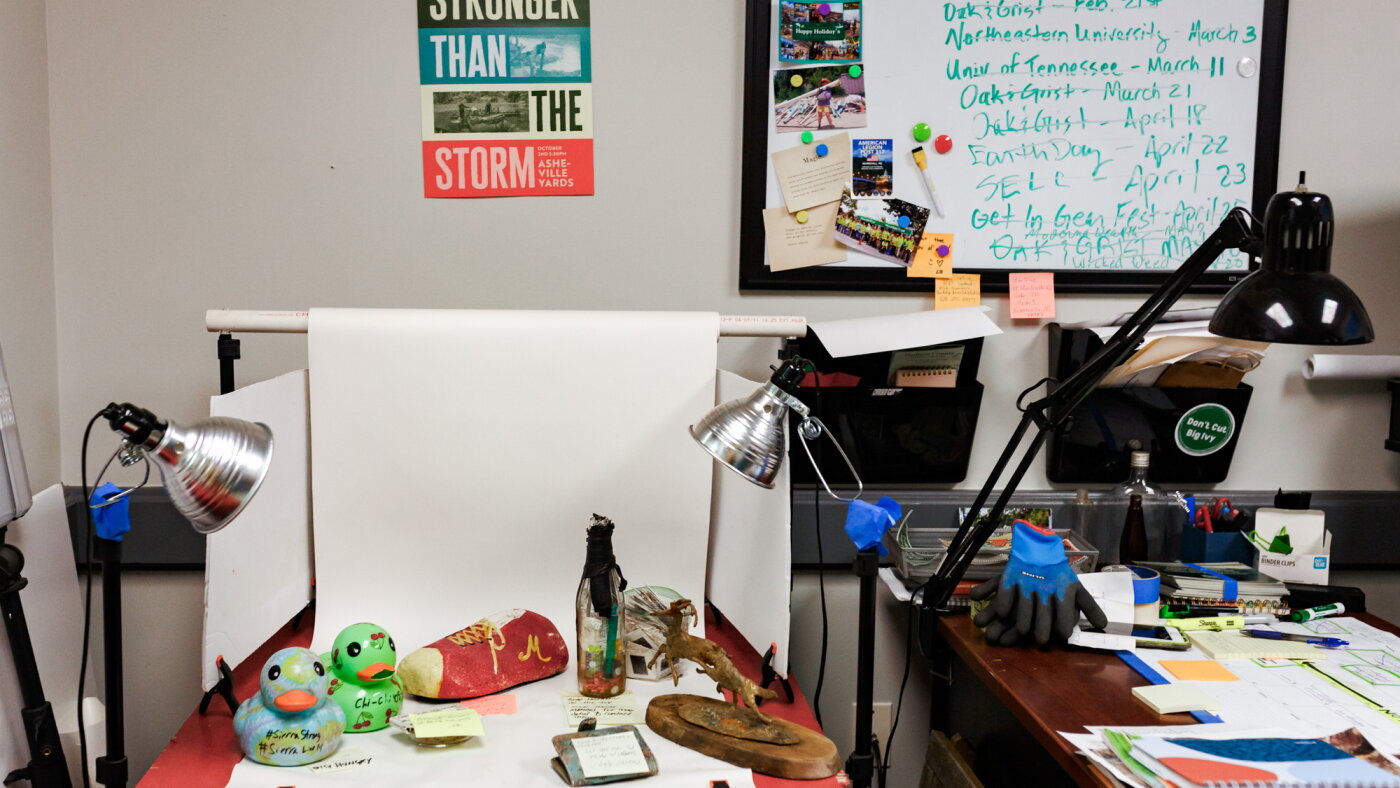
Years after storms, clean-up crews meticulously separate the sentimental from the wreckage
Two years after Hurricane Helene, piles of debris linger in Jeannine Robertson's front yard in western North Carolina.
asserted
piles → clean → Carolina
"There was a big water hole, and [my grandchildren] were in the water all the time when they were here," Robertson says, choking up as she points at a shallow and shady tributary of the Cane River, which runs near the house in Yancey County, N.C. "I mean, this is where generations have done this."
asserted
generations → be → this
Debris remains scattered along the banks and in the sandy river bottom.
asserted
Debris → scatter → bottom
"It is so heartbreaking," she says.
asserted
she → say → ?
"[To see] something that you've watched for so many years be a safe haven, and it's just cluttered with parts of people's homes."
asserted
it → see → homes
In late September 2024, Hurricane Helene dumped more than 30 inches of rain in some parts of Western North Carolina, setting off massive flash floods and landslides that killed at least 250 people in multiple states and damaged or destroyed tens of thousands of buildings.
asserted
that → dump → buildings
Millions of tons of debris were strewn over thousands of square miles.
asserted
Millions → strew → miles
After two years and more than $600 million dollars in public spending, crews still regularly pull scrap metal, PVC pipes and other trash out of the waterways.
asserted
crews → pull → waterways
Western North Carolina's jagged and mountainous terrain makes that work even more difficult.
asserted
work → make → ?
In one section of the Toe River, crews relied on helicopters to haul away golf carts and trailer frames from the riverbed.
asserted
crews → rely → riverbed
Such massive and costly cleanup efforts are increasingly common across the U.S. as climate change drives more intense weather disasters.
asserted
change → drive → disasters
Nationwide, the Federal Emergency Management Agency (FEMA) has spent more than $37 billion on debris removal in the last 25 years, according to publicly available FEMA records analyzed by NPR.
uncertain
Agency → spend → NPR
As debris cleanup becomes a troubling reality for more and more disaster survivors, there's a growing network of people who reunite people with lost objects in places like California, Texas and Arkansas, where disasters have destroyed thousands of homes.
asserted
disasters → become → homes
Across the country, people are digging through rubble, mud and ash to find photographs, jewelry, stuffed animals, quilts and old yard signs, and return precious items to survivors.
asserted
people → dig → survivors
'Something more than just a ring'
For many volunteers, it's a sacred act to clean items, restore them, and work to reunite them with their original owners.
asserted
it → clean → owners
"When we call it debris, we box it up; we contain it in this idea that it's discardable.
asserted
it → call → idea
And some of it is," says Dondi Persyn, who runs the volunteer network, FOUND on the Guadalupe River.
asserted
who → say → River
But she maintains that, "there is a space for humanity in the midst of disaster."
asserted
she → maintain → disaster
Persyn lives near the shore of the Guadalupe River in Texas, where in 2025, flash floods claimed 136 lives and countless possessions.
asserted
floods → live → lives
This summer, the river flooded again, bringing another wave of death and loss.
asserted
river → flood → death
Her volunteer network has collected more than 10,000 items – and returned around 8,000, including an heirloom ring that belonged to someone's great-grandmother.
asserted
that → collect → grandmother
"The fact that it even survived changes the story of the person who received it back," she says.
asserted
she → survive → it
"Because it survived and she survived.
asserted
she → survive → ?
And it becomes symbolic.
asserted
it → become → ?
It becomes something more than just a ring.
asserted
It → become → ring
"
Millions of pounds of debris, hiding treasures
asserted
Millions → hide → treasures
In Western North Carolina, the post-Helene cleanup has been professionalized.
asserted
cleanup → professionalize → Carolina
The nonprofit MountainTrue runs the largest ongoing cleanup effort with nearly 100 employees pulling debris out of rivers every day.
asserted
employees → run → rivers
Since the 2024 storm, the group has cleaned up more than 5.7 million pounds from hundreds of miles of waterways.
asserted
group → clean → waterways
"We're nowhere near done," says the group's operations director Jon Stamper.
asserted
director → do → ?
"There are still sections of river that we haven't been able to access."
asserted
we → be → that
In North Carolina, the state legislature has allocated at least $20 million for debris removal work since Hurricane Helene.
asserted
legislature → allocate → Helene
Many of the people who work for MountainTrue are former professional river guides, who turned to cleanup work after Hurricane Helene devastated the local recreation economy.
asserted
Helene → work → economy
Their experience working in boats in remote watersheds, and their ability to work while wet and cold, make them very effective at debris cleanup work, says Stamper.
asserted
Stamper → work → work
"It's useful anytime you're on the water, understanding the flow and dangers and things," says Michael Crooks, who has worked as a professional raft guide for decades and now works on a debris removal team.
asserted
who → understand → team
Even trained professionals can't always recover everything that was swept away in a flood.
asserted
that → train → flood
That's particularly true in areas that are remote or dangerous for cleanup crews to access.
asserted
crews → access → areas
The cleanup challenges in Western North Carolina are echoed in other flood-prone parts of the country, where flood debris pollutes ecosystems.
asserted
debris → echo → ecosystems
For example, coastal homes that are destroyed by flooding often send large debris into the ocean, where it is impossible to clean up.
asserted
it → destroy → ocean
"You're talking about very large and, in some cases, hazardous building debris.
asserted
You → talk → debris
…and 34 more, not listed.
 The Aporia