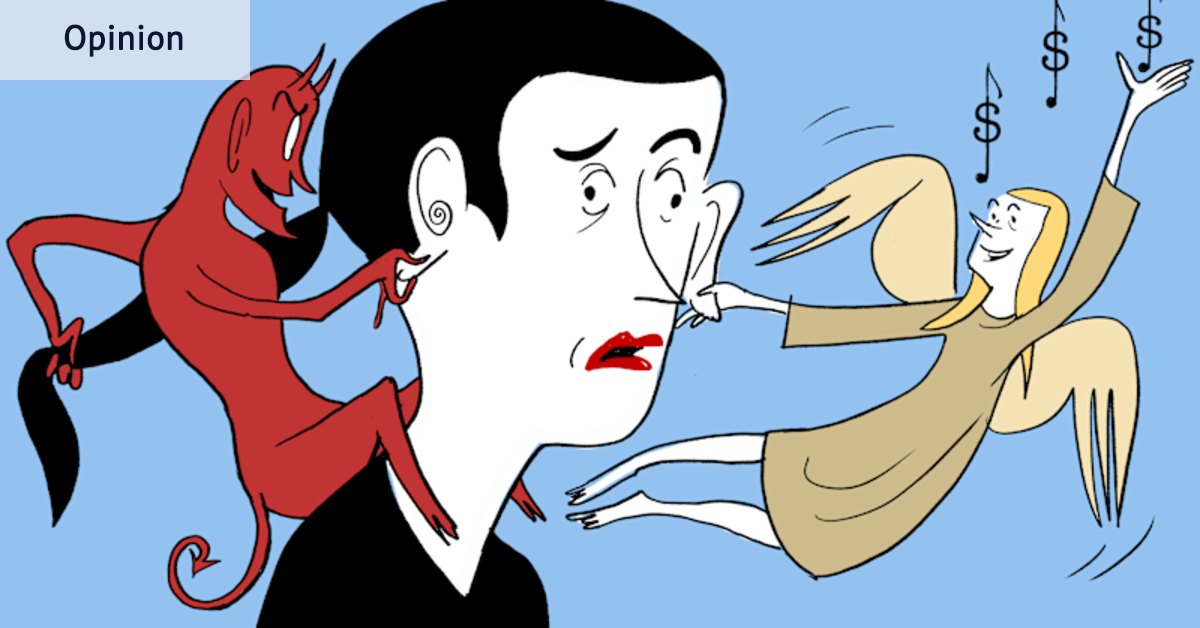
Managing money well can be, well, confusing.
asserted
Managing → manage → money
And how are many of us are solving such issues these days with the help of artificial intelligence “buddies”.
asserted
many → solve → buddies
Heck, I even have friends who use AI to draft replies to tricky text messages from their mum.
asserted
who → have → mum
So is it any surprise that more than three million Australians are already using AI to help manage their financial activity, with the highest number – 25 per cent – among Gen Z Australians, says a new Understanding Modern Australia report.
asserted
report → use → Australians
Not that we necessarily – thank goodness – trust it.
asserted
we → thank → it
The report, by life insurer TAL with McCrindle, found only 22 per cent of us feel comfortable using AI to help make major financial decisions and only 20 per cent trust AI to recommend a financial product suited to their needs.
asserted
cent → find → needs
So, I thought I’d try an experiment: I asked AI the pitfalls of asking AI for money advice – and whoa.
asserted
I → think → advice
In an emphatic “computer-says-no”, here are the 10 reasons the AI gave me not to use it – and how I might.
uncertain
I → say → it
(I’ve grouped them where AI doubled and even tripled down.)
asserted
AI → group → them
‘An LLM’s training data has a cut-off, and even with web search, it can miss nuance, fail to update thresholds, blend outdated and current rules without flagging the difference.
asserted
it → have → difference
No care and no responsibility does not make for the ideal economic confidante.
asserted
care → make → confidante
The rules and requirements to give financial advice in Australia are strict.
asserted
rules → give → Australia
AI is not bound by any of them.
asserted
AI → bind → them
The education needed is also now extensive (part of why the profession is shrinking).
asserted
profession → need → ?
But, mainly, a licensed financial adviser is bound by law to act in your best interest.
asserted
adviser → bind → interest
In the candid confession, AI said: “An LLM has no such obligation and no licence that can be revoked if it gets things wrong.”
asserted
things → say → obligation
2. Regulatory grey zone
You need an Australian Financial Services Licence to give personal financial advice – it’s illegal otherwise.
asserted
it → need → advice
Reputable AI tools build in disclaimers and stick to general information rather than personal advice.
asserted
tools → build → advice
But how do you even tell the difference when it’s – you know – you asking?
3, 4 and 5.
asserted
you → tell → difference
Generic, one-size-fits-all framing.
asserted
size → fit → all
Variables that factor into smart financial decisions include your age, income, debts, risk tolerance, tax situation, existing assets, super balance, insurance and goals.
asserted
that → factor → age
Does your AI know all of this about you?
asserted
AI → know → you
And, crucially, do you want it to?
asserted
it → want → ?
Where does that data go and how is it stored?
asserted
it → go → ?
“Even if they did, an LLM isn’t verifying any of it or cross-checking for inconsistencies the way a human adviser would,” confides the LLM itself.
asserted
LLM → do → inconsistencies
The advice might just be versions of old financial adages like diversify, pay off debt and invest for the long term.
uncertain
advice → diversify → term
They may not fit with your financial affairs at that moment.
uncertain
They → fit → moment
Legislation changes regularly.
asserted
Legislation → change → ?
Even in the past year, we have seen changes to the first home buyer 5 per cent deposit scheme, an overhaul of capital gains and a ban on negative gearing.
asserted
we → see → gearing
Um, I won’t be trusting AI with any related financial decisions thank you!
asserted
I → trust → you
Old information could easily sink your future.
uncertain
information → sink → future
“An LLM’s training data has a cut-off, and even with web search, it can miss nuance, fail to update thresholds, blend outdated and current rules without flagging the difference.”
asserted
it → have → difference
A false sense of diligence and confident-sounding errors (aka “hallucinations”)
We’ve all encountered this - AI intel that’s slightly insane!
asserted
that → encounter → this
And the danger it poses in complex financial information or advice is: would you even recognise it?
asserted
you → pose → it
AI can look well-reasoned and comprehensive, giving you a sense of security when you should have nothing of the sort.
asserted
you → look → sort
How’s this for candour: “LLMs can state incorrect figures, invent products or rules that don’t exist, or misapply a rule from one country’s system (e.g., US 401k rules) to Australia’s superannuation system, all while sounding authoritative.”
asserted
that → ’ → system
That you might be responding based on your childhood “conditioning” rather than actual conditions?
uncertain
you → respond → conditioning
Or that you might have a different risk tolerance to the questions you are asking?
uncertain
you → have → questions
An AI model can’t possibly do this.
uncertain
model → do → this
Indeed: “An LLM responds to the words in the prompt, not the psychology behind them.”
asserted
LLM → respond → them
…and 13 more, not listed.
 The Aporia