[This is one of the finalists in the 2026 book review contest, written by an ACX reader who will remain anonymous until after voting is done.
asserted
voting → write → reader
I’ll be posting about one of these a week for several months.
asserted
I → post → months
When you’ve read them all, I’ll ask you to vote for a favorite, so remember which ones you liked
asserted
you → read → ones
Book 1: The Singapore Story
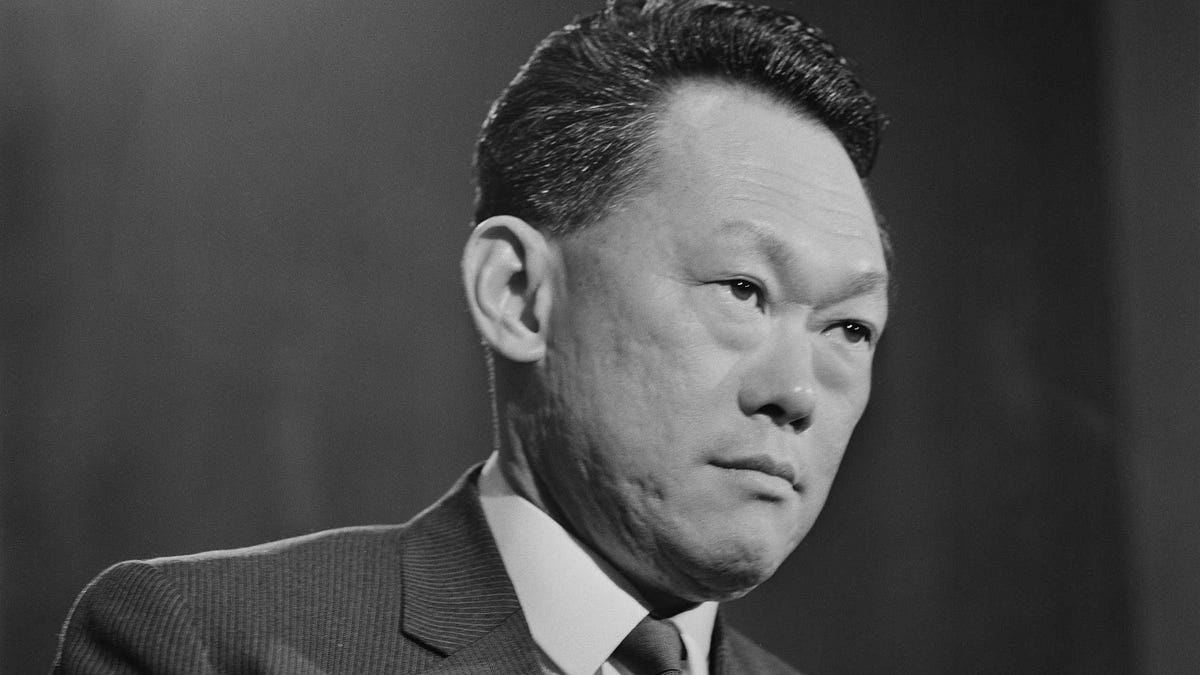
Lee Kuan Yew1 was the Prime minister of Singapore, rationalist folk hero, and one of the few world leaders to successfully become a household name despite not being primarily associated with a major war2.
asserted
Yew1 → become → war2
He was also, as it turns out, a surprisingly compelling writer.
asserted
it → turn → ?
Aside from being interesting for his own sake, he also ended up implicitly producing the closest thing we have to a firsthand account of the fall of the British Empire and rise of the new world order.
asserted
we → end → order
His memoirs are split into two books, each covering roughly half his life.
asserted
memoirs → split → life
The Singapore Story covers his childhood, World War 2 and the Japanese occupation, law school, his legal career and rise in Singaporean politics and Singapore’s independence from the British Empire, joining Malaya to form Malaysia, then leaving Malaysia to finally become Prime Minister of a truly independent country.
asserted
Story → cover → country
Third World to First covers his 25 years running Singapore after independence.
asserted
World → cover → independence
Every good rationalist, from time to time, can’t help but think Hey, if we just put me in charge of the government I would simply pass the good policies and not the bad ones, and the country would thrive.
asserted
country → help → policies
I’d just have to be clear and direct and explain to everyone why these were obviously good and reasonable ideas, they’d understand and go along with them, and our government would be popular and successful forever.
asserted
government → have → them
All of us3 know this isn’t actually that easy, that real-life policy is hard and messy and often unreasonable and our clear bright ideas would struggle when faced with Reality.
asserted
ideas → know → Reality
This couldn’t possibly work in real life.
uncertain
This → work → life
Except that Lee goes ahead and does exactly that.
asserted
Lee → go → that
He passes reasonable, economically-optimal policies and they work out so well that the economy booms and his party keeps winning massive supermajority elections for decades.
asserted
party → pass → decades
When a race riot almost breaks out over malay recruits getting turned out of the army during high unemployment, he calmly shows up, picks up a megaphone and explains to everyone that this is all a misunderstanding, there’s no policy against employing malays in the army and they’ll all be processed and get jobs when they come back tomorrow.
asserted
they → break → jobs
Everyone understands how reasonable he’s being, calm down, and sort things out the next day.
asserted
he → understand → things
At another point he handles chinese-malay tensions by writing an epic Scott-length blog post giving an epic speech to the Malaysian parliament about how the new Malaysia needs to be less obsessed with zero-sum culture wars and focus on pragmatic economic policy and even the die-hard Malays stand up and clap4.
All of which raises the question: How did he actually do all this?
asserted
he → handle → this
Each book covers a seemingly-impossible task (the first, going from middle-class teenager with no connections to Prime Minister of your own country; the second, taking a third-world island nation with no natural resources into one of the richest countries in the world) that we might do well to learn from.
uncertain
we → cover → that
The book implicitly offers one explanation - just be consistently brilliant, charismatic5, incredibly detail-oriented, honest, hardworking,and pragmatic continuously for decades while also having your share of good luck.
asserted
book → offer → luck
Still, let’s take a look at the details.
asserted
’s → let → details
Before we get to the rationalist power fantasy story, we take a tour through a few different genres.
asserted
we → get → genres
We start with a peaceful coming of age story.
asserted
We → start → story
Lee was born in 1923 in what seems like a typical middle class family for colonial-era Singapore, which is an odd mix of imperial British and a mashup of local cultures.
asserted
which → bear → cultures
He mostly goes by Harry Lee in his earlier years (He dropped the Harry in the late 1950s, except with his British contacts6).
asserted
He → go → contacts6
Some parts of it (like the school system) feel surprisingly normal.
asserted
parts → feel → system
Other parts are, well, this:
“My mother was the eldest child of this union, and when she was married in 1922 at the age of 15, the fortunes of both families were still healthy.
asserted
fortunes → marry → families
She even brought with her, as part of her dowry, a little slave girl whose duty, among other things, was to help bathe her, wash her feet and put on and take off her shoes.
asserted
duty → bring → shoes
Lee doesn’t especially respect his dad, who he considers weak, lazy and unreliable7 and learns his principles from his mother and (maternal) grandfather.
asserted
he → respect → mother
He goes to British-run schools, keeps getting top marks and filtering upwards through the system, and ends up at Raffles college, the college for British-educated local elites in colonial Malaya8.
asserted
He → go → Malaya8
The story then takes a turn to become a school drama.
asserted
story → take → turn
First, Lee needs to get top grades in college for his dream of getting the Queen’s Scholarship to go to Oxbridge, a prestigious opportunity that only one or two students a year can get.
asserted
students → need → that
But, frustratingly, there’s this girl a year above him who keeps outcompeting him with slightly better grades.
asserted
who → ’ → grades
There’s some drama between the Malay and Chinese students and, as an epic debater and naturally take-charge kind of guy, Lee ends up representing the Chinese students on their side of the argument.
asserted
Lee → ’ → argument
Everyone involved in this college dispute shows up again twenty years later as some kind of senior government official or public intellectual negotiating the fate of Southeast Asia.
asserted
Everyone → involve → Asia
World War 2
Then the war breaks out, and we get a wartime story.
asserted
we → break → story
Lee sees the invincible British empire get stomped.
asserted
empire → see → ?
The Japanese cut through Malaya in two months, crushing a British force with twice their numbers and capturing 130,000 British soldiers.
asserted
Japanese → cut → soldiers
The mighty white men of the British empire are helpless, hapless and cowardly, making bad decision after bad decision while completely failing to coordinate or organize a panicked retreat.
asserted
men → make → retreat
By the time the Japanese get to Singapore, it falls almost without a fight.
asserted
it → get → fight
…and 255 more, not listed.
 The Aporia