Photo via Letters from an American

September 25, 2026

Read the original at Letters from an American ↗
Cite

Richardson, H. C. (2026, September 26). September 25, 2026. Letters from an American. https://heathercoxrichardson.substack.com/p/september-25-2026

Dated when The Aporia collected the article, usually within hours of publication. Check the original for its exact date and byline.

Letters from an American · collected 2026-09-26 · by Heather Cox Richardson commentary

Quick Summary

Today is both Dolly Parton Day and National Lobster Day in the United States. The article highlights how Maine’s lobster industry, thriving due to unique oceanic conditions, has recently gained prominence after centuries during which fish, particularly cod, were central to New England’s coastal economy and European settlement. Fisherman John Cabot's 1497 expedition noted abundant cod on the Grand Banks off Newfoundland, with the first recorded landing of Atlantic cod in Europe fetching an equivalent value of around $100 million today. The fish trade was crucial not only economically but also politically; early American leaders demanded continued access to fisheries as part of their independence negotiations with Britain, reflected in the Treaty of Paris signed on September 3, 1783.
Written by AI on 2026-09-26, from this article's own text only (the story summary below draws on all the coverage).

AI analysis

Story summary

September 25, 2026 marks National Lobster Day and Dolly Parton Day. The lobster industry in Maine is celebrated for its cultural and economic significance, although historically it was fish that shaped New England's coastal communities until the mid-twentieth century when lobsters gained prominence. Fish were crucial to English settlement of North America, leading to what scholars call the "Fish Revolution" from 1300 to 1500 CE as European fishermen discovered abundant fishing grounds in the Atlantic, particularly cod, and moved into the Gulf of Maine by 1600. This period was marked by significant economic benefits but also devastating impacts on Indigenous populations due to introduced diseases for which they had no immunity. The Treaty of Paris, ending the Revolutionary War, included an article ensuring American fishermen's rights to fish in traditional grounds off Newfoundland and elsewhere, reflecting the trade’s critical importance to New Englanders.

Written for “National Lobster Day” on 2026-11-04, grounded in this article and the 1 other(s) covering the same event.

Story

📰 National Lobster Day
Entertainment · 2 article(s) covering the same event. See how they differ ↓

Compared with similar articles

This article reads unscored and hedges 0% of its claims. Each row says how that neighbour differs.
Letters from an American
Hedges 0 of 6 claims
How this article was measured signals, leaning charts, publisher record, byline, topics and claims

Signals How these are calculated →

Claims extracted
21
sentences that state something as happening or true
Uncertain
0%
0 of 21 hedged ("reportedly", "may", "according to")
Leaning
not political
takes no side on a contested political question
Publisher signals
not measured
these signals count newsroom corrections; Commentary has none to count
Outlets on this story
2
Entertainment
Same framing elsewhere
1
articles that frame the event the way this one does
Analyzed 2026-09-26 · how these are computed

How this is being covered How these are calculated →

Article leaning vs. publisher reliability
Source leaning vs. consistency

Publisher

Letters from an American · 125 article(s) · 0 correction(s) detected
No corrections detected for this publisher. That may mean careful reporting, or simply that nothing has been checked.

Who wrote this

Heather Cox Richardson
113 article(s) here · 1 carrying a prediction
🔮 We will not know the results of the midterm elections until after the polls close and votes are counted, but early voting and polling suggest this election will see a Democratic wave.
2026-11-03 · assertive framing · November 2, 2026
🔮 They did not explain how such a ballot could be reviewed or how reviewing a ballot would explain if a voter was confused.
2026-11-02 · assertive framing · November 1, 2026
🔮 But that was as far as he went with the Republican plans for a future in which every man, regardless of race, would have the right to the fruits of his own labor.
2026-11-01 · assertive framing · October 31, 2026
🔮 Those voters might not be highly engaged in politics in general, but they cannot miss the country’s rising prices, especially the cost of gasoline and diesel—and the food delivered by vehicles that use them—resulting from Trump’s war on Iran.
2026-10-31 · assertive framing · October 30, 2026
🔮 U.S. officials told the reporters that the government will likely grant them permanent residency later.
2026-10-30 · assertive framing · October 29, 2026
🔮 After losing the election to become Brazil’s president on Sunday, he suggested he would contest the results of the election, and Brazilian authorities asked him to give up his Brazilian passport because he is under investigation for laundering more than $1 billion through an online gambling scheme, and for financial irregularities involving a bank regulators shut down for fraud.
2026-10-29 · assertive framing · October 28, 2026
🔮 Three weeks ago, many observers thought Bolsonaro would win the election.
2026-10-28 · assertive framing · October 27, 2026
🔮 Obama told attendees that El-Sayed is “fighting for change, real change, that will get money out of politics and put money in your pocket” and would “finish the job we started with the Affordable Care Act and guarantee quality, affordable healthcare to every single American.”
2026-10-27 · assertive framing · October 26, 2026
🔮 He promised the new tariffs he intended to impose would create an economic miracle.
2026-10-26 · assertive framing · October 25, 2026
🔮 Consumers rushed to buy them, along with ready-made clothing, beauty products, and cars, all of which the new advertising industry, which grew out of the government propaganda campaigns of World War I, promised would bring them glamor, sophistication, romance, and power.
2026-10-25 · assertive framing · October 24, 2026
Also by Heather Cox Richardson
Politics Chat, November 3, 2026
2026-11-04 · Letters from an American
Politics Chat, November 3, 2026
2026-11-04 · Letters from an American
November 2, 2026
2026-11-03 · Letters from an American
November 1, 2026
2026-11-02 · Letters from an American
Nothing else under this byline is closely related to this article, so these are simply their most recent.
All 113 articles by Heather Cox Richardson →

Topics

English European Maine North American the Fish Revolution

Subjects

English NORP · 2× European NORP · 2× Maine GPE · 2× Newfoundland GPE · 2× British NORP · 1× Italian NORP · 1× John Cabot PERSON · 1× New Englanders NORP · 1× North American NORP · 1× Pilgrims NORP · 1×

Narrative

The third article, which came even before those protecting debts and calling for the return of confiscated property, protected the rights of American fishermen to “take fish of every kind on the Grand Bank, and on all the other banks of Newfoundland; also in the [gulf] of St. Lawrence, and at all other places in the sea, where the inhabitants of both countries used at any time heretofore to fish.”
framing: assertive · carried by 1 article(s) · first seen 2026-09-26
🔮 The Preamble of the document promised that King George III and the United States of America would “forget all past misunderstandings and differences that have unhappily interrupted the good correspondence and friendship which they mutually wish to restore.”
2026-09-26 · Letters from an American
September 25, 2026 · assertive framing

Claims (21 extracted, 0 hedged)

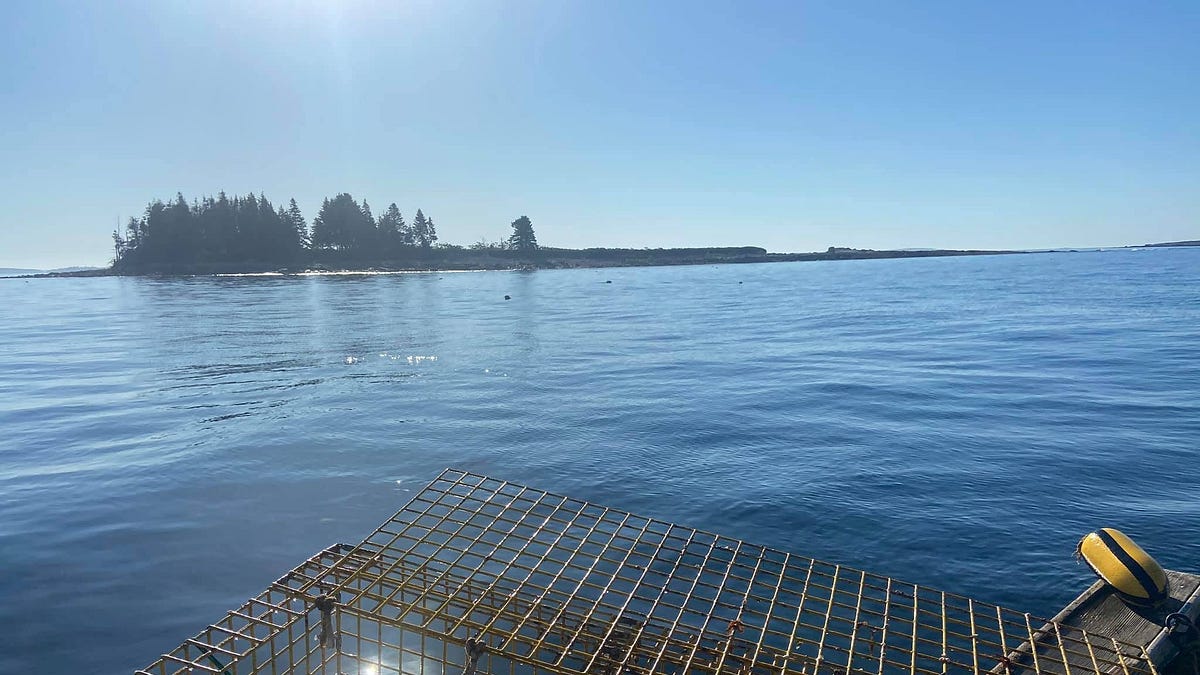
I learned late this afternoon that, in addition to being Dolly Parton Day, today is National Lobster Day, honoring the cultural and economic history of the lobster industry. asserted
today → learn → industry
That industry thrives in Maine because of unique conditions in the water offshore where the cold Labrador Current and the warm Gulf Stream mix over the shallow continental shelf, creating one of the richest habitats for marine life on the planet. asserted
Current → thrive → planet
Until the mid–twentieth century, lobster was considered poor man’s food. asserted
lobster → consider → century
Before then, it was not lobster but fish that shaped society on the coast of New England. asserted
that → shape → England
In the 200 years between 1300 and 1500 CE, fish were a limited resource and brought sky-high prices in Europe. asserted
fish → limit → Europe
As the fish in the North Sea became scarcer in the late 1400s, fishermen and explorers began to push into the Atlantic. asserted
fishermen → become → Atlantic
There, they found such a bonanza of fish in the nutrient-rich water that scholars have called its discovery and the trade it sparked the “Fish Revolution.” asserted
it → find → discovery
Cod, especially, but also haddock and hake, concentrated on the Grand Banks off Newfoundland. asserted
Cod → concentrate → Newfoundland
A member of the crew with Italian John Cabot, who was sailing for the English crown, noted in 1497 that there were so many cod on the Grand Banks that they “can be taken not only with nets but with fishing-baskets.” asserted
they → sail → baskets
In 1502 the first recorded landing of Atlantic cod in Europe fetched £180, equivalent to about £1.2 million in 2016, with a buying power at the time of just shy of £76 million, close to $100 million today. asserted
landing → record → million
Fishing meant big money, and British fishermen were among those who tried their hand in the fog of the Grand Banks, making an annual trip to toss their hooks overboard. asserted
who → mean → hooks
They beheaded and gutted their catch, splitting each fish in half like a book, salted the fish, and then dried them on shore. asserted
They → behead → shore
By 1600 they had moved into the Gulf of Maine, where they landed in places like Monhegan Island and Damariscove, where they dried the fish until they were hard before taking their catch back to Europe. asserted
they → move → Europe
As European fishermen landed in North America, they brought with them European diseases for which the Indigenous populations had no immunities. asserted
populations → land → immunities
The tribes were wiped out, so that when the Pilgrims arrived in 1620—on Cape Cod—they found a land so rich and yet depopulated that they believed God had prepared it for them. asserted
God → wipe → them
The fish trade continued to be so important to New Englanders that almost two centuries later, when their new nation negotiated for its independence, the first thing leaders demanded after independence and national boundaries was continued access to the fisheries. asserted
leaders → continue → fisheries
On September 3, 1783, negotiators signed the Treaty of Paris officially ending the Revolutionary War between Great Britain and the United States. asserted
negotiators → sign → Britain
The Preamble of the document promised that King George III and the United States of America would “forget all past misunderstandings and differences that have unhappily interrupted the good correspondence and friendship which they mutually wish to restore.” asserted
they → promise → which
The first article of the treaty contained the king’s acknowledgment that the thirteen states that made up the new United States were “free, sovereign, and independent.” asserted
that → contain → States
The second article established the boundaries of the new nation. asserted
article → establish → nation
The third article, which came even before those protecting debts and calling for the return of confiscated property, protected the rights of American fishermen to “take fish of every kind on the Grand Bank, and on all the other banks of Newfoundland; also in the [gulf] of St. Lawrence, and at all other places in the sea, where the inhabitants of both countries used at any time heretofore to fish.” asserted
inhabitants → come → time

💬Give feedback
🕘History 🎫Support