Photo via South China Morning Post

Why Pakistan’s endless war on militants fails to break the cycle

Read the original at South China Morning Post ↗
Cite

Hussain, T. (2026, September 26). Why Pakistan’s endless war on militants fails to break the cycle. South China Morning Post. https://www.scmp.com/week-asia/politics/article/3368825/why-pakistans-endless-war-militants-fails-break-cycle?utm_source=rss_feed

Dated when The Aporia collected the article, usually within hours of publication. Check the original for its exact date and byline.

South China Morning Post · collected 2026-09-26 · by Tom Hussain

Quick Summary

The article discusses the ineffectiveness of Pakistan's military campaigns against militants in the country's northwest and southwest provinces. Despite frequent claims of success from the military, these efforts have not brought peace; instead, they result in ongoing violence that kills dozens of security personnel and civilians monthly. Militants use various tactics to challenge state control, while the military responds with counterterrorism operations that primarily focus on eliminating insurgents without achieving a sustainable resolution to the conflict.
Written by AI on 2026-09-26, from this article's own text only (the story summary below draws on all the coverage).

AI analysis

Story summary

In Pakistan, despite frequent military successes and retaliatory strikes against militants, peace remains elusive in the northwestern Khyber Pakhtunkhwa and southwestern Balochistan provinces. Every month, dozens of soldiers, policemen, and civilians are killed in near-daily attacks by insurgents aiming to weaken state authority. These militant groups target security personnel and government officials through various tactics including roadside bombs, suicide attacks, and kidnappings. While the military frequently announces victories over militants, with hundreds claimed as casualties each month, these actions do not seem to curb the cycle of violence or bring lasting stability.

Written for “Pakistan Militant War Cycle” on 2026-10-31, grounded in this article and the 0 other(s) covering the same event.

Story

📰 Pakistan Militant War Cycle
World · 1 article(s) covering the same event.

Compared with similar articles

This article reads leans left and hedges 0% of its claims. Each row says how that neighbour differs.
The Hindu
Hedges 4 of 17 claims Outlet record 60/100
“Article A describes a specific incident of drones being shot down on September 23, 2026, while Article B discusses ongoing militant activity and security challenges in Pakistan without referencing the drone incident.”
Dawn
Hedges 2 of 30 claims Outlet record 72/100
“Article A describes a specific retaliatory action along the Balochistan border on a particular day, while Article B provides a broader analysis of Pakistan's ongoing conflict with militants and does not refer to any specific incident.”
The Hindu
Hedges 2 of 19 claims Outlet record 60/100
“Article A describes a specific border clash on September 24-25, 2026, while Article B discusses broader patterns and ongoing issues of militant attacks in Pakistan without referring to the same incident.”
The Hindu
⚖️ Leans right further right than this Hedges 2 of 12 claims Outlet record 60/100
“The articles describe different events in distinct locations involving different actors and outcomes.”
Dawn
Hedges 4 of 9 claims Outlet record 72/100
“The articles discuss different aspects related to conflicts involving Pakistan and neighboring regions but do not describe the same specific incident.”
Times of India
⚖️ Leans right further right than this Hedges 1 of 19 claims Outlet record 59/100
“The articles discuss different aspects of Pakistan's stance on militant activities; one focuses on internal issues and violence within Pakistan, while the other reports on Pakistan advising Afghanistan's Taliban to abandon their militant mindset.”
Dawn
Hedges 4 of 36 claims Outlet record 72/100
“Article A describes a specific military operation with casualty figures, while Article B provides a broader analysis of ongoing militant activities without mentioning any particular incident.”
Al Jazeera
Hedges 0 of 7 claims Outlet record 60/100
“The articles discuss different aspects of conflict involving Pakistan and its neighbors but do not describe the same specific incident.”
Al Jazeera
Hedges 0 of 3 claims Outlet record 60/100
“Article A discusses ongoing militant attacks in general, while Article B describes a specific suicide bombing that occurred on a particular day.”
South China Morning Post
Hedges 0 of 6 claims Outlet record 64/100
“Article A describes ongoing conflict and insurgent attacks broadly across Khyber Pakhtunkhwa and Balochistan, while Article B details a specific suicide bombing in Dera Ismail Khan district.”
How this article was measured signals, leaning charts, publisher record, byline, topics and claims

Signals How these are calculated →

Claims extracted
4
sentences that state something as happening or true
Uncertain
0%
0 of 4 hedged ("reportedly", "may", "according to")
Leaning
Leans left
of the writing, not the subject · beta estimate
Publisher signals
64/100
South China Morning Post's corrections and hedging, across everything collected from it. Not a measure of accuracy.
Outlets on this story
1
World
Same framing elsewhere
1
articles that frame the event the way this one does
Analyzed 2026-09-26 · how these are computed

How this is being covered How these are calculated →

Article leaning vs. publisher reliability
Source leaning vs. consistency

Publisher

South China Morning Post · 3467 article(s) · 6 correction(s) detected
Running correction rate · 6 correction(s)

Who wrote this

Tom Hussain
11 article(s) here · 0 carrying a prediction
🔮 The four-nation Badr defence pact seeks to shed dependence on Western arms sales and the political strings that come with them Following the signing of the Badr memorandum of understanding in Doha on Wednesday, the four governments separately said they would work towards integrating their defence industries and supply chains to meet military needs.
🔮 Gulf economies accelerate diversification as recession looms over Iran war Even as the region’s economic downturn is expected to worsen, Gulf states are slated to spend tens of billions of dollars on infrastructure 4-MIN READ4-MIN
🔮 Saudi-Iran war risk grows as Riyadh resumes Yemen bombing Backed by Western and regional allies, Riyadh’s renewed campaign against the Houthis threatens to blow Tehran’s proxy war wide open Analysts expect the Houthis to retaliate by intensifying drone and ballistic missile attacks against Saudi Arabia, while Iran’s Revolutionary Guards are expected to supply weapons and targeting intelligence to their partners in so-called Axis of Resistance. Casualties on all sides are also likely to rise as the war widens and draws in more international players.
🔮 Pakistani troops are expected to take over various defensive functions for Saudi Arabia to enable the Middle East country to fight an all-out war aimed at defeating Yemen’s Iran-backed Houthi rebels.
🔮 Trump’s belief that all would be “fine and dandy” contrasted starkly with the suspension of Saudi oil exports from the Red Sea the same day, after drone strikes by Iran-allied Iraqi militias badly damaged the east-west pipeline that had enabled the kingdom to bypass Hormuz since the Iran war erupted on February 28.
🔮 Why the Middle East could be entering a new nuclear age
🔮 Most of the 229 per cent budget increase will fund domestic arms production as Ankara seeks to cut reliance on the West Announcing the plan on Sunday, Vice-President Cevdet Yilmaz said the aim was to ensure Turkey “develops its own technologies in the defence industry, can meet its own needs and produces high added value”.
Also by Tom Hussain
Nothing else under this byline is closely related to this article, so these are simply their most recent.
All 11 articles by Tom Hussain →

Topics

Balochistan Khyber Pakhtunkhwa Pakistan

Subjects

Pakistan GPE · 3× Balochistan GPE · 1× Khyber Pakhtunkhwa GPE · 1×

Narrative

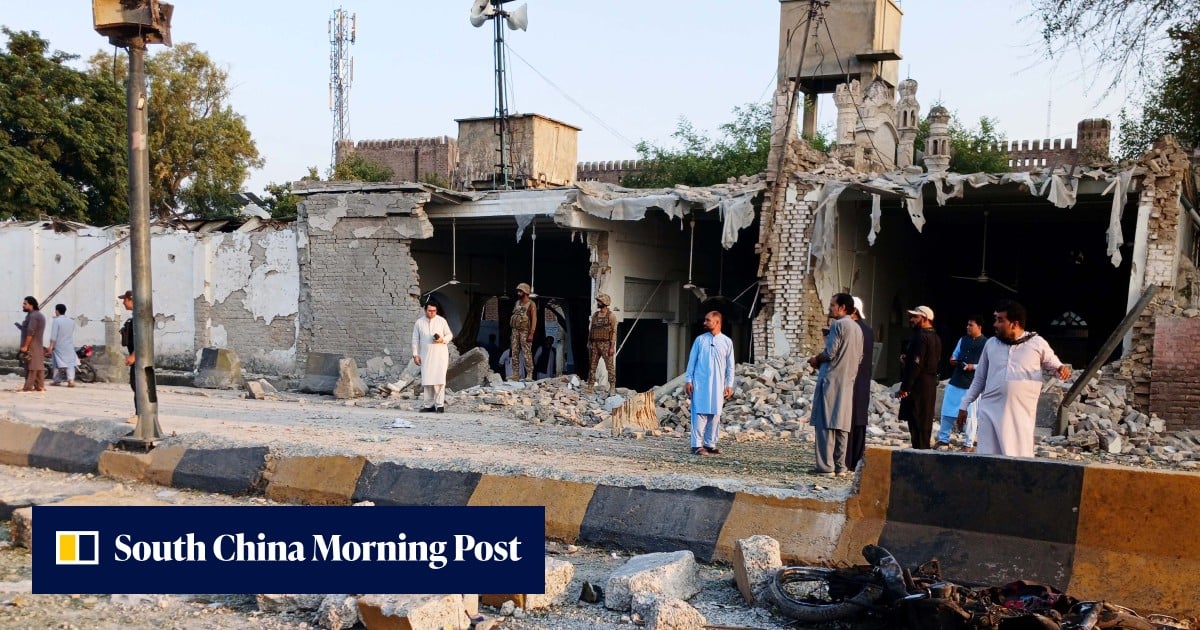
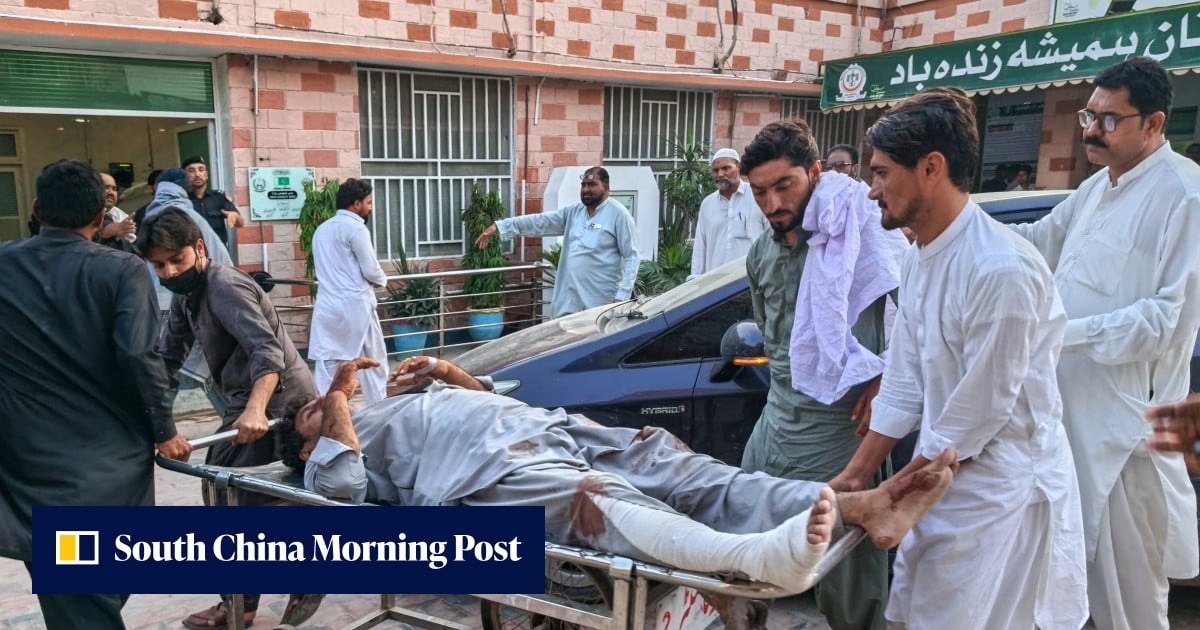
Why Pakistan’s endless war on militants fails to break the cycle Tactical wins and retaliatory strikes have not delivered peace, even as two separate insurgencies appear to be converging Scores of soldiers, policemen and civilians are killed every month in Pakistan’s northwestern Khyber Pakhtunkhwa and southwestern Balochistan provinces, where near-daily attacks on security personnel, government officials and other prominent figures are carried out by militants to undermine the state’s authority and credibility.
framing: assertive · carried by 1 article(s) · first seen 2026-09-26
2026-09-26 · South China Morning Post
Why Pakistan’s endless war on militants fails to break the cycle · assertive framing

Claims (4 extracted, 0 hedged)

Why Pakistan’s endless war on militants fails to break the cycle Tactical wins and retaliatory strikes have not delivered peace, even as two separate insurgencies appear to be converging Scores of soldiers, policemen and civilians are killed every month in Pakistan’s northwestern Khyber Pakhtunkhwa and southwestern Balochistan provinces, where near-daily attacks on security personnel, government officials and other prominent figures are carried out by militants to undermine the state’s authority and credibility. asserted
attacks → fail → authority
Insurgents target patrols, checkpoints, police stations and administrative centres with roadside bombs, explosive-laden drones, coordinated ambushes, suicide attacks, large-scale raids, assassinations and kidnappings. asserted
Insurgents → target → bombs
Pakistan’s military regularly hails the success of its counterterrorism operations, touting the eradication of hundreds of perpetrators each month. asserted
military → hail → perpetrators
Its press releases often read like scoreboards, listing the number of insurgents “sent to hell” – with only a handful surviving to be interrogated. asserted
handful → read → hell
💬Give feedback
🕘History 🎫Support