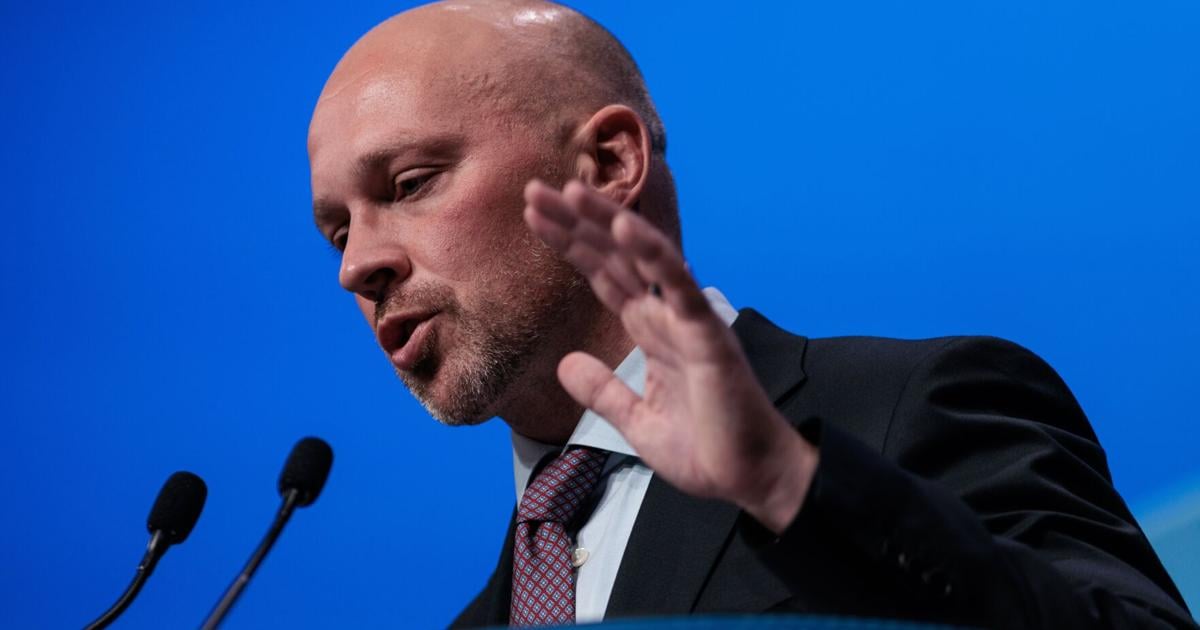
Photo via The Globe and Mail

Ontario’s taxing problem with property owners

Read the original at The Globe and Mail ↗
Cite

Gray, J. (2026, September 26). Ontario’s taxing problem with property owners. The Globe and Mail. https://www.theglobeandmail.com/canada/article-ontarios-taxing-problem-with-property-owners/

Dated when The Aporia collected the article, usually within hours of publication. Check the original for its exact date and byline.

The Globe and Mail · collected 2026-09-26 · by Jeff Gray

Quick Summary

Ontario’s property assessment system has been frozen since 2020 due to the COVID-19 pandemic, causing uncertainty about when it will resume. This freeze means property taxes are based on outdated valuations from January 2016, with some homes seeing a 91% price increase by 2025 across Ontario and 72% in the Greater Toronto Area. Critics argue that lifting the freeze could lead to sudden spikes in property tax bills for those whose properties appreciated more than average, while others have been overpaying all along. Paul Sullivan, a B.C.-based property-tax consultant, calls for transparency around this issue, suggesting it may cause public outrage if addressed.
Written by AI on 2026-09-27, from this article's own text only (the story summary below draws on all the coverage).

AI analysis

Story summary

In 2020, during the peak of the COVID-19 pandemic, Ontario ordered MPAC (Municipal Property Assessment Corp.) to freeze property valuations. This freeze prevented municipalities from updating their property-tax calculations based on current market values, which are typically reassessed every four years. Now, with six years having passed since the initial freeze and other pandemic restrictions lifted, Premier Doug Ford has not reinstated the assessment system. Critics warn that lifting the freeze could lead to significant increases in property taxes for those whose properties have appreciated more than average, causing sticker shock. Meanwhile, some taxpayers with homes or businesses that did not appreciate as much might have overpaid on their property taxes during this period. John Kiru from TABIA (Toronto Association of Business Improvement Areas) fears that a reassessment could harm small storefronts in main-street shopping districts, particularly those near transit stations where land values are high.

Written for “Ontario Property Tax Issues” on 2026-10-31, grounded in this article and the 0 other(s) covering the same event.

Story

📰 Ontario Property Tax Issues
Economy/Business · 1 article(s) covering the same event.

Compared with similar articles

This article reads leans left and hedges 10% of its claims. Each row says how that neighbour differs.
Toronto Star
⚖️ Leans right further right than this Hedges 5 of 52 claims Outlet record 64/100
“The articles discuss different aspects of property tax issues in Toronto and Ontario but do not describe the same specific event.”
How this article was measured signals, leaning charts, publisher record, byline, topics and claims

Signals How these are calculated →

Claims extracted
68
sentences that state something as happening or true
Uncertain
10%
7 of 68 hedged ("reportedly", "may", "according to")
Leaning
Leans left
of the writing, not the subject · beta estimate
Publisher signals
52/100
The Globe and Mail's corrections and hedging, across everything collected from it. Not a measure of accuracy.
Outlets on this story
1
Economy/Business
Same framing elsewhere
1
articles that frame the event the way this one does
Analyzed 2026-09-27 · how these are computed

How this is being covered How these are calculated →

Article leaning vs. publisher reliability
Source leaning vs. consistency

Publisher

The Globe and Mail · 1014 article(s) · 35 correction(s) detected
Running correction rate · 35 correction(s)

Who wrote this

Jeff Gray
14 article(s) here · 1 carrying a prediction
🔮 The Ontario government says its deficit for the current fiscal year is now expected to be $16.9-billion, up from the $13.8-billion it projected in its March budget, as U.S. tariffs and higher oil prices have cut the province’s anticipated economic growth in half.
🔮 Mr. Ford had vowed that his focus as MPPs return would be on measures to cut red tape to boost Ontario’s economy in the face of U.S. tariffs.
🔮 Olivia Chow re-elected Toronto Mayor
2026-10-27 · assertive framing · Five takeaways from Ontario’s municipal elections
🔮 An hour after most polls closed in the Toronto mayoral election, results had yet to be released, after a hard-fought campaign and several polls in recent weeks that showed only a thin margin separating incumbent Olivia Chow from leading challenger Brad Bradford.
🔮 A hard-fought race to lead Toronto between incumbent Mayor Olivia Chow and her leading challenger, east-end city councillor Brad Bradford, comes to an end on Monday, as Torontonians vote in a municipal election that recently published opinion surveys have suggested is too close to call.
🔮 Ontario’s finance minister says he will release a fall economic update next Thursday, while warning that his province will continue to run deficits as it reels from a slower economy strained by U.S. tariffs and rising energy prices caused by the war in Iran.
🔮 “Now it’s up to the rest of Canada to deliver on our commitment to Alberta by building new pipelines, unlocking our natural resources and unleashing the prosperity that will protect the future of Canadians from coast to coast to coast.
2026-10-21 · assertive framing · Premiers welcome separatist loss in Alberta referendum
🔮 “No commercial consideration would ever be required for the Premier, or any political figure, to share their opinion in our editorial pages,” the Postmedia statement reads.
🔮 Every year, the City of Toronto faces a fresh $1-billion-plus shortfall in its operating budget, an issue its main mayoral contenders have all vowed to fix.
2026-10-03 · assertive framing · Toronto’s budget hole looms over mayoral race
🔮 Now, lifting this freeze, critics warn, could have explosive political consequences – but so could leaving it in place.
2026-09-26 · assertive framing · Ontario’s taxing problem with property owners
Also by Jeff Gray
Nothing else under this byline is closely related to this article, so these are simply their most recent.
All 14 articles by Jeff Gray →

Topics

B.C. MPAC Municipal Property Assessment Corp. Ontario Ryan ULC

Subjects

Ontario GPE · 5× MPAC ORG · 4× B.C. GPE · 2× Sullivan PERSON · 2× Doug Ford PERSON · 1× GTA GPE · 1× Municipal Property Assessment Corp. ORG · 1× Paul Sullivan PERSON · 1× Ryan ULC ORG · 1× The Globe and Mail ORG · 1×

Narrative

John Kiru, the executive director of the Toronto Association of Business Improvement Areas (TABIA), says he is skeptical of Mr. Sullivan’s data and fears that a reassessment will harm already struggling storefronts in the city’s main-street shopping districts, such as those on pricey land near transit stations.
framing: assertive · carried by 1 article(s) · first seen 2026-09-27
🔮 Now, lifting this freeze, critics warn, could have explosive political consequences – but so could leaving it in place.
2026-09-27 · The Globe and Mail
Ontario’s taxing problem with property owners · assertive framing

Claims (68 extracted, 7 hedged)

It’s a kind of ticking tax bomb. asserted
It → ’ → bomb
At the height of the COVID-19 emergency in 2020, Ontario ordered the non-profit corporation that reassesses property values across the province to take a pause, freezing the price estimates that municipalities use to calculate property-tax bills. asserted
municipalities → order → bills
As taxpayers know full well, the freeze didn’t stop municipalities from raising their taxes: It just froze the valuations on which those property-tax bills are based, which are normally done in the province every four years. asserted
which → know → province
Six years later, with other pandemic restrictions long gone, the government of Premier Doug Ford never turned its assessment system back on. asserted
government → go → system
Now, lifting this freeze, critics warn, could have explosive political consequences – but so could leaving it in place. uncertain
critics → lift → place
If assessments resumed, property owners with real estate that rose more in value than the average in their communities could face the sticker-shock of higher property-tax bills. But the freeze has also created another problem, experts point out. uncertain
experts → resume → problem
It has meant that other taxpayers, whose homes and businesses didn’t appreciate as quickly, or sank in value, have long been paying more than they otherwise would have – in some cases, thousands of dollars a year more. asserted
they → mean → dollars
Paul Sullivan, a B.C. property-tax consultant, argues it is time to rip off the Band-Aid. asserted
it → argue → Aid
The national tax and advocacy leader for his consulting firm, Ryan ULC, Mr. Sullivan has launched a campaign to lift Ontario’s freeze. asserted
leader → consult → freeze
“I would say that the biggest problem with this issue is education and transparency,” Mr. Sullivan said in an interview. asserted
Sullivan → say → interview
“People just don’t know. asserted
People → know → ?
And if they did know, there would be outrage.” asserted
they → know → ?
Property assessments in Ontario for the municipal tax purposes are conducted by the non-profit Municipal Property Assessment Corp. asserted
assessments → conduct → purposes
Any increase in a property’s value is phased in gradually over four years, before the next assessment. asserted
increase → phase → assessment
MPAC was about to issue a reassessment for 2020, when COVID-19 struck. asserted
MPAC → issue → 2020
This means MPAC’s last estimated values date from January, 2016. asserted
values → mean → January
So Ontario property taxpayers have been paying bills based on that fully-phased-in 2016 value, now a decade out of date, for the past six years. asserted
taxpayers → pay → years
According to data MPAC provided to The Globe and Mail, residential properties across the province saw an estimated average price increase of 91 per cent from 2016 to 2025, with the figure for the GTA at 72 per cent – numbers that have slid back down a bit from large postpandemic spikes. uncertain
that → accord → spikes
MPAC estimates the median increase for commercial properties across the province at 103 per cent. asserted
MPAC → estimate → cent
Other provinces (except for New Brunswick, which put in a one-year freeze this year as it reforms its property-tax system), have their regular reassessment systems running. asserted
systems → put → system
B.C. and Alberta reassess properties every year. asserted
B.C. → reassess → properties
The Association of Municipalities of Ontario, which represents local governments across the province, has long called for a return to normal and suggested in a letter to the Premier in July that reassessments should be done every two years. uncertain
reassessments → represent → July
The Ontario government has said it is consulting on the issue. asserted
it → say → issue
Finance Minister Peter Bethlenfalvy told reporters in June he had no “time frame” on restarting reassessments. asserted
he → tell → reassessments
On Thursday he said the government was still reviewing the issue: “We have gone through a pandemic. asserted
We → say → pandemic
We’re going through a tariff situation. asserted
We → go → situation
We’ve had a lot of uncertainty and what people want is certainty.” asserted
want → have → what
Mr. Ford’s critics note that the Premier regularly boasts of never raising a tax – and they suggest that a return to reassessments might prompt some taxpayers to blame him for their rising bills. uncertain
return → note → bills
Tax experts are quick to point out that a higher assessed value does not necessarily mean a higher property tax bill – that depends on whether your property rose more than the average in your municipality. asserted
property → point → municipality
A reassessment also has no bearing on the taxes you have already paid. asserted
you → have → taxes
And it does not mean your city gets a tax windfall. asserted
city → mean → windfall
It just redistributes the basis for the tax burden differently, across the same taxpayers. asserted
It → redistribute → taxpayers
Those unknowingly paying too much because of the assessment freeze, Mr. Sullivan says, include many homeowners in the east Toronto inner suburb of Scarborough, where real estate prices in some neighbourhoods rose more slowly than elsewhere in the city. asserted
prices → pay → city
His firm’s researchers reviewed the assessments and sales prices of 1,643 detached Scarborough homes that changed hands last year. asserted
that → review → hands
They estimate that 40 per cent were paying more than $1,000 too much in property taxes. asserted
cent → estimate → taxes
The current condo crash has also produced more victims: Across the entire city of Toronto, Mr. Sullivan estimates that half of condo owners – based on 2025 sale prices – were also overpaying. asserted
half → produce → prices
Among businesses, he says, the struggling regional shopping mall is among the worst hit. asserted
mall → say → worst
With the growth of online retail, malls have dramatically faded in value over the past 10 years – and yet are still paying property taxes as though it was 2016. asserted
it → fade → taxes
He also says it’s a similar story for many small retailers on main streets in Toronto, based on data he has pulled from 3,000 commercial sales between 2023 and 2025. asserted
he → say → 2023
Some retailers, Mr. Sullivan calculates, are being overcharged by tens of thousands of dollars. asserted
Sullivan → calculate → dollars
…and 28 more, not listed.

💬Give feedback
🕘History 🎫Support