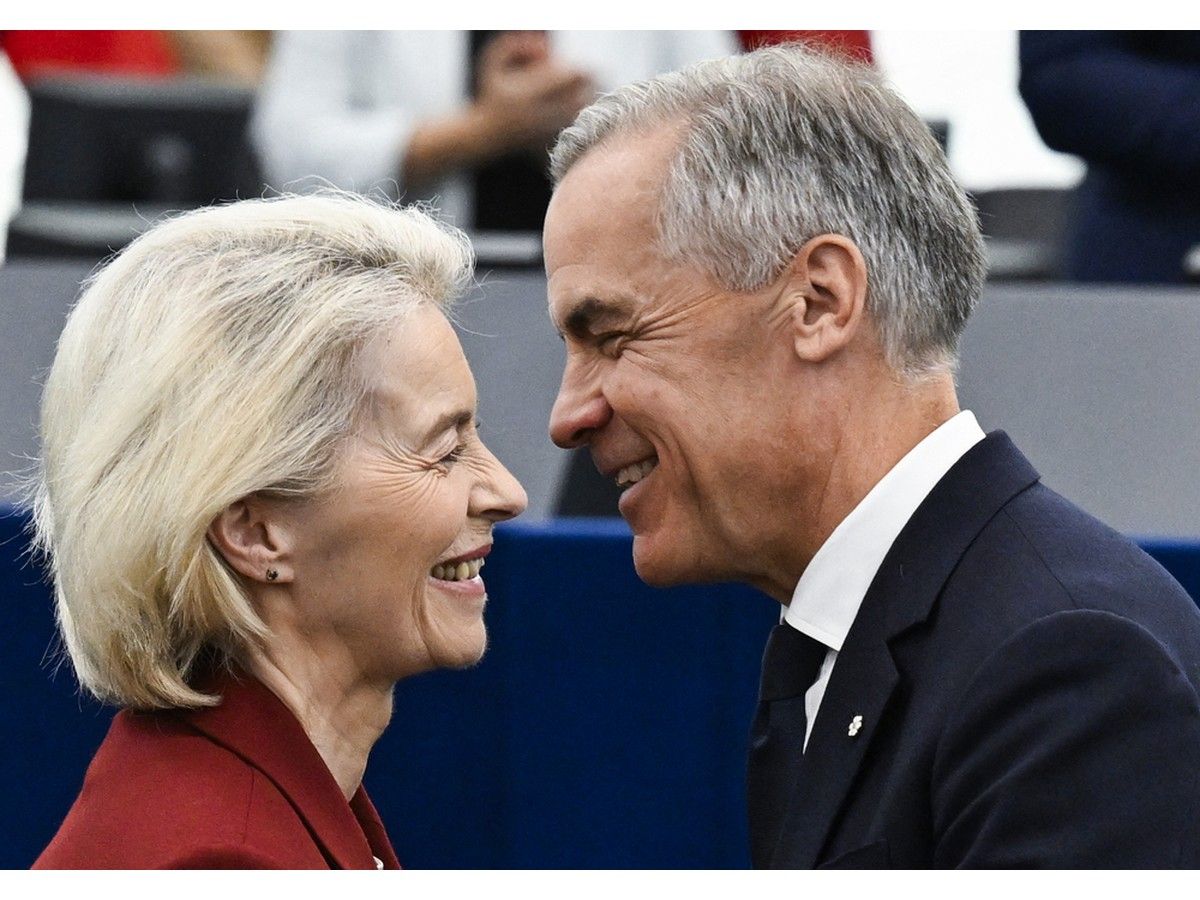
Photo via National Post

Jeremy Geddert: Conservative leadership elections aren’t conservative enough

Read the original at National Post ↗
Cite

Special to National Post. (2026, September 26). Jeremy Geddert: Conservative leadership elections aren’t conservative enough. National Post. https://nationalpost.com/opinion/conservative-leadership-elections-arent-conservative-enough

Dated when The Aporia collected the article, usually within hours of publication. Check the original for its exact date and byline.

National Post · collected 2026-09-26 · by Special to National Post analysis

Quick Summary

Jeremy Geddert argues that Canada's Conservative Party leadership elections should be controlled by the party caucus rather than the broader membership, claiming this aligns with conservative principles and responsible government. He contends that allowing members to hire leaders while leaving firing them to the caucus creates a dysfunctional dual system, undermining accountability. Geddert advocates for a return to the Westminster model where parliamentary caucuses exclusively manage both hiring and firing of political leadership.
Written by AI on 2026-09-26, from this article's own text only (the story summary below draws on all the coverage).

AI analysis

Story summary

Jeremy Geddert argues in the National Post that Canada's Conservative Party leadership elections are not truly conservative because they allow for a disconnect between the party members who select leaders and the caucus which can remove them later. The current system uses multi-round voting to narrow down leadership hopefuls before presenting two finalists to the party membership for their final decision. Geddert contends this arrangement violates the principle of responsible government, a cornerstone of Canada's Westminster system established in the 1840s. He asserts that under true conservative principles, both hiring and firing of leaders should be solely within the purview of the caucus or Parliament, not the broader membership, to maintain accountability and cohesion within governance.

Written for “Canadian Politics Leadership Elections” on 2026-11-02, grounded in this article and the 0 other(s) covering the same event.

Story

📰 Canadian Politics Leadership Elections
Politics · 1 article(s) covering the same event.

Compared with similar articles

This article reads unscored and hedges 13% of its claims. Each row says how that neighbour differs.
CBC News
Hedges 1 of 21 claims Outlet record 74/100
“The articles discuss different events - one about conservative leadership elections in Canada and another about Pierre Poilievre speaking on Canadian unity in Edmonton.”
Toronto Star
⚖️ Leans strongly left Hedges 0 of 36 claims Outlet record 64/100
“The articles discuss different aspects of leadership issues within the Conservative Party, but Article A focuses on the national party's structure and leadership dynamics, while Article B specifically addresses a resignation in the British Columbia Conservative Party.”
Global News
Hedges 0 of 5 claims Outlet record 63/100
“The articles discuss different topics: one critiques leadership elections, while the other reports on a policy announcement by the B.C. Conservatives during an election campaign.”
CBC News
Hedges 0 of 17 claims Outlet record 74/100
“The articles discuss different events related to Canadian politics but do not describe the same specific incident.”
The Globe and Mail
⚖️ Leans right Hedges 4 of 32 claims Outlet record 52/100
“The articles discuss different aspects of conservative leadership in Canada, with Article A focusing on the Conservative Party's leadership election process and its implications for party unity, while Article B specifically addresses Lorne Doerkson's potential long-term role as interim leader within the B.C. Conservatives.”
How this article was measured signals, leaning charts, publisher record, byline, topics and claims

Signals How these are calculated →

Claims extracted
38
sentences that state something as happening or true
Uncertain
13%
5 of 38 hedged ("reportedly", "may", "according to")
Leaning
withheld
no quote in the article backed the model's score
Publisher signals
60/100
National Post's corrections and hedging, across everything collected from it. Not a measure of accuracy.
Outlets on this story
1
Politics
Same framing elsewhere
1
articles that frame the event the way this one does
Analyzed 2026-09-26 · how these are computed

How this is being covered How these are calculated →

Article leaning vs. publisher reliability
Source leaning vs. consistency

Publisher

National Post · 1242 article(s) · 2 correction(s) detected
Running correction rate · 2 correction(s)

Who wrote this

Special to National Post
104 article(s) here · 1 carrying a prediction
🔮 As the incoming B.C. Conservative government prepares to deliver on its promise to repeal the Declaration on the Rights of Indigenous Peoples Act (DRIPA), Grand Chief Stewart Phillip, president of the Union of B.C. Indian Chiefs, stated this week that doing so would be a “declaration of war.”
🔮 Buying through us may earn us a commission, which supports our work.
🔮 Based on a leaked draft “EU-Canada Joint Summit Statement,” much progress is expected to be made at the summit in areas such as defence and security, critical resources and digital research and communications technologies.
🔮 Last month, the Law Society of Ontario (LSO) did not agree to a formal request from 10 lawyers who wished to add to their Annual General Meeting (AGM) agenda a motion that could have revoked accreditation from Toronto Metropolitan University’s (TMU) Lincoln Alexander School of Law.
🔮 Buying through us may earn us a commission, which supports our work.
2026-10-28 · assertive framing · On the map: A new view of renting in Hamilton
🔮 It’s the story of one student, but it could be any student at any North American university.
🔮 Work, save, take a risk, start a company, buy a home, raise a family; the expectation held that effort might lead somewhere and that children could inherit better prospects than their parents.
🔮 Premier Paul St-Pierre Plamondon has vowed to defund the office of the lieutenant governor, said he will seek legal advice on keeping the Crown’s representative out of the opening of the legislature and has promised to cut Quebec’s ties to the monarchy.
🔮 St-Pierre Plamondon will lead a minority government, five seats short of a majority, and has promised to wait until Donald Trump leaves the White House in January 2029 before holding a sovereignty referendum.
🔮 As we wrap up a month of what has the potential to be one of the biggest missteps in British Columbia, or Canadian, political history, it bears examining whether David Eby’s attempt to position himself as a modern day Joseph McCarthy dedicated to rooting out thought criminals from his opposition will be ultimately effective.
Also by Special to National Post
Nothing else under this byline is closely related to this article, so these are simply their most recent.
All 104 articles by Special to National Post →

Topics

Cabinet Canada Canadian Conservative Westminster

Subjects

B.C. Conservatives GPE · 2× Cabinet ORG · 2× Canadian NORP · 2× Conservative NORP · 2× Kerry-Lynne Findlay’s PERSON · 2× Canada GPE · 1× Congress ORG · 1× Justin Trudeau PERSON · 1× Parliament ORG · 1× Westminster ORG · 1×

Narrative

Their caucus uses multi-round voting to whittle down the slate of leadership hopefuls to a first- and second-place finisher, then presents the two finalists to party members for their ultimate decision.
framing: assertive · carried by 1 article(s) · first seen 2026-09-26
🔮 Unlike the American House majority, Liberal MPs could not deflect responsibility for a bad executive to voters.

Claims (38 extracted, 5 hedged)

Kerry-Lynne Findlay’s impossible tightrope act is over, but the chorus of cheers and jeers now moves from the circus ring of caucus to the raucous stage of stunned party members. asserted
chorus → move → members
The Conservative division of labour, where the party membership hires leaders but the caucus fires them, violates the old conservative maxim that you cannot serve two masters. asserted
you → hire → masters
Responsible government rests on two principles that unite the tasks of hiring and firing. asserted
that → rest → hiring
First, Cabinet alone is responsible for governing, because it both introduces spending bills and executes them. asserted
it → govern → them
Unlike a presidential cabinet, Canadian ministers cannot deflect responsibility for bad laws to Congress. asserted
ministers → deflect → Congress
Second, Parliament alone — typically the majority party caucus — is responsible for hiring and firing that governing Cabinet, as Justin Trudeau eventually learned. asserted
Trudeau → hire → Cabinet
Unlike the American House majority, Liberal MPs could not deflect responsibility for a bad executive to voters. uncertain
MPs → deflect → voters
Constitutions do not regulate parties outside government. asserted
Constitutions → regulate → government
But the Westminster ethos still led opposition parties to adopt the same structure: party caucuses hired and fired their leaders. asserted
caucuses → lead → leaders
If responsibility doesn’t seem distinctively conservative, just ask progressives, who generally bristle at the “smoke-filled rooms” of “party insider” caucuses. asserted
who → seem → caucuses
The original Progressive party rode a populist western wave of democratization that may have undermined its own leaders, but impelled both major parties to introduce delegated conventions. uncertain
that → ride → conventions
Later, the populist Canadian Alliance used a one-member-one-vote method to hire the unready Stockwell Day, which produced a short and stormy tenure for both leader and party. asserted
which → use → leader
Yet its democratizing wave effectively pressured all Canadian parties to let members hire and fire party leaders. asserted
members → democratize → leaders
In practice, of course, caucuses could always find ways to fire their leaders. uncertain
caucuses → find → leaders
But nobody seemed to mind having torn up responsible government. asserted
nobody → seem → government
The Cold War was over, democracy had won, and the end of history was nigh. asserted
end → win → history
Even British parties democratized their leadership contests. asserted
parties → democratize → contests
Yet elsewhere, Westminster history continued unabated. asserted
history → continue → ?
For instance, the conservative Australian Liberal Party maintained its closed-door policy, even if no longer smoke-filled. asserted
Party → maintain → policy
In both 2015 and 2018, its governing majority caucus quickly and smoothly replaced its prime ministers, turning upcoming electoral disasters into renewed majorities. asserted
caucus → govern → majorities
Each change put the egg on the face of the leader, not the party. asserted
change → put → leader
Needless to say, B.C. Conservatives can only dream. asserted
Conservatives → say → ?
New Zealand’s National Party preserved the same exemplary method. asserted
Party → preserve → method
Even its Labour rival, keener to indigenize than even the BC NDP, returned in 2021 to the old caucus selection method. asserted
rival → indigenize → method
Even British Conservatives have recently pioneered a clever way to satisfy the demands of 21st-century democracy while re-empowering Tory MPs. asserted
Conservatives → pioneer → MPs
Their caucus uses multi-round voting to whittle down the slate of leadership hopefuls to a first- and second-place finisher, then presents the two finalists to party members for their ultimate decision. asserted
caucus → use → decision
But caucus has pressured two of the last four prime ministerial runners-up to stand down before any such membership vote: after all, they whisper, who wants to lead a caucus that prefers their rival? asserted
that → pressure → rival
A third runner-up, Liz Truss, lasted 49 days as the members’ choice before caucus got its preferred candidate, Rishi Sunak. asserted
caucus → last → candidate
If the B.C. Conservative caucus could have ended Kerry-Lynne Findlay’s tenure after 49 days without having to betray the membership, they might have been the ones pushing for an early election. uncertain
they → end → election
When caucuses hire their own leaders, they can select for governing skill rather than twittering volume. asserted
they → hire → skill
If their preferred choice goes rogue as leader, caucus can threaten to fire them without inflicting on the party a public race at once uncertain, protracted, and divisive. asserted
caucus → prefer → race
Caucus squabbles thus remain in-house and drama-free: no private investigators, few Findlay Files, little time for the embattled leader to purge competent party strategists. asserted
leader → remain → strategists
If (say) Peter Milobar or Caroline Elliott were an obvious caucus-approved leader-in-waiting, the B.C. right might still be united —maybe even under a disciplined Findlay. uncertain
right → approve → Findlay
Canadian Conservatives even have an opening to follow their British counterparts. asserted
Conservatives → have → counterparts
In the name of democratization, the Conservative 2014 Reform Act empowers caucus with several prerogatives over the leader: candidate selection, MP expulsion, choice of chair. asserted
Act → empower → chair
In spite of democratic pressure, most Anglo conservative parties have maintained their responsible conservative approach to leader selection: caucus fires, caucus hires. asserted
parties → maintain → selection
Oddly enough, their electorates have not discarded them as reactionary proto-fascists, but have instead elevated them to government. asserted
electorates → discard → government
Why do Canadian conservatives sabotage both their principles and prospects by forcing their leaders to serve two masters? asserted
conservatives → sabotage → masters

💬Give feedback
🕘History 🎫Support