For some Toronto students, the annual September shuffle will stretch well into October.
asserted
shuffle → stretch → October
Toronto public school students affected by reorganization — the annual provincewide process of balancing elementary class sizes based on enrolment — begin their new classes Monday.
asserted
students → affect → classes
But students in the city’s Catholic schools will move over the coming weeks, up until Oct. 13.
asserted
students → move → Oct.
The Toronto Catholic District School Board says reorganization “is expected to be completed by early October.”
asserted
reorganization → say → October
But according to a memo sent to teachers by their union, students won’t be in new classrooms until Oct. 13, after the Thanksgiving long weekend.
uncertain
students → accord → weekend
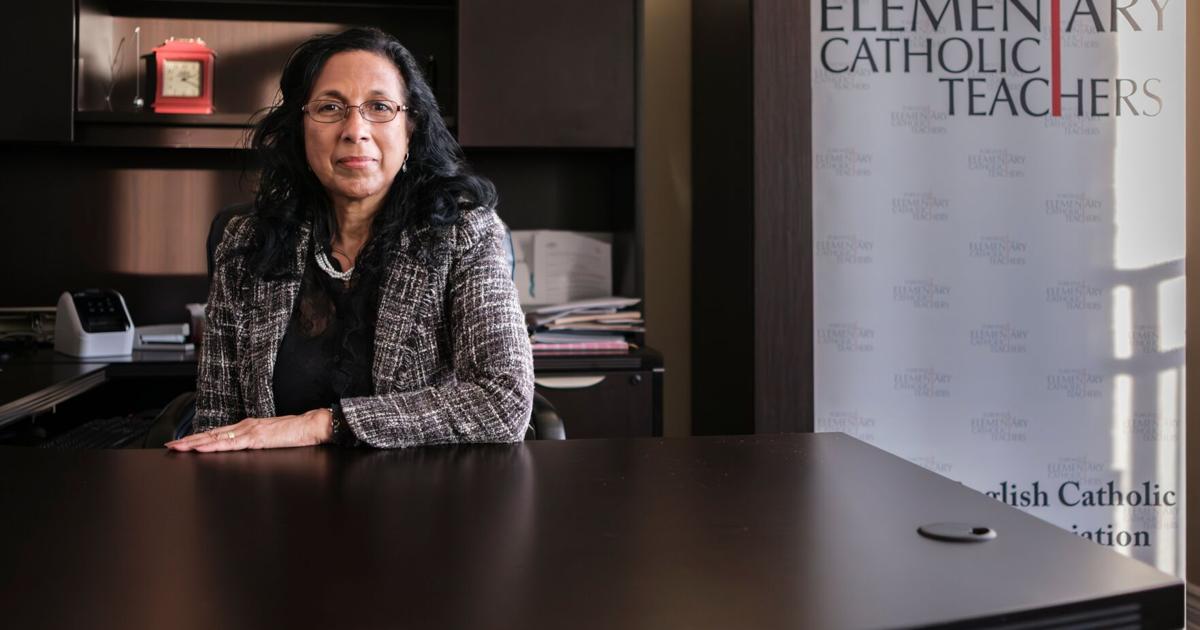
“This disruption, we know, is going to cause a lot of stress on students, teachers and parents,” said Deborah Karam, president of the Toronto Elementary Catholic Teachers.
asserted
Karam → know → Teachers
“Reorganization is a reality and if we could try to make it earlier we would — this was a unique year ...
uncertain
this → try → it
We started (the academic year) late and a lot of factors brought us to this Oct. 13 deadline.”
asserted
lot → start → deadline
The timeline for reorganization differs board to board because procedures are negotiated into each board’s collective agreement.
asserted
procedures → differ → agreement
At the TCDSB, the collective agreement requires a series of steps before students can move, including school-level consultations, surplus declarations and giving affected teachers time to find and accept a new position — a process that results in a later shuffle.
asserted
that → require → shuffle
In a statement to the Star, the TCDSB said the timeline “reflects the later Sept. 8 start to the school year, an increase of students above our projections and plans, and ensures alignment with our collective agreement and ministry requirements.
asserted
timeline → say → agreement
On Friday, it emailed parents to say that “schools will make any necessary changes as enrolment numbers are finalized in the weeks ahead” and principals would reach out if their children are affected.
asserted
children → email → weeks
Annual process seems more disruptive than usual, as staff work to bring class sizes in line with provincial requirements.
asserted
staff → seem → requirements
Annual process seems more disruptive than usual, as staff work to bring class sizes in line with provincial requirements.
asserted
staff → seem → requirements
Meanwhile, the Toronto District School Board notified parents Friday whether their child would be affected by reorganization, with students moving into their new classes on Monday.
asserted
students → notify → Monday
(Students affected in the York and Peel public boards also move to new classes next week.)
asserted
Students → affect → classes
Boards say plans are in place to support affected schools and students, ease transition and minimize disruptions to learning.
asserted
plans → say → learning
After last year’s widespread reorganization prompted an outcry from TDSB parents, the public board says this year’s shuffle is less extensive.
asserted
shuffle → prompt → parents
“Significantly fewer schools are impacted by reorganization this year thanks to more precise enrolment projections and the flexibility of staffing adjustments being made over the summer,” said a TDSB spokesperson.
asserted
spokesperson → impact → summer
What teachers say about the reorganization
Nigel Barriffe, president of the Elementary Teachers of Toronto, which represents teachers in the public board, says reorganization is upsetting for both students and staff, especially teachers deemed surplus to their school who transfer.
asserted
who → say → school
“Children don’t get those first weeks of school back,” he said.
asserted
he → get → school
“Teachers are trying to build relationships and establish stable classrooms, and then we turn around and reorganize classes and move teachers because the system wasn’t properly staffed from the beginning.
asserted
system → try → beginning
That disruption has a real impact on students, families and educators.”
asserted
disruption → have → students
At the city’s Catholic board — where enrolment has jumped by more than 1,000 kids this year — an elementary teacher says shuffling classes into mid-October “will be a major upheaval for the students and their families.”
asserted
shuffling → jump → students
The teacher, who requested anonymity because she isn’t authorized to speak by her employer, said her split-grade class is being reorganized into a straight grade.
asserted
class → request → grade
She has already spent hundreds of dollars on grade-specific resources and materials no longer needed as she won’t be teaching that grade.
asserted
she → spend → grade
“Now I will need to buy new duotangs, photocopy new packages, reorganize my classroom, and sort through the work already completed,” she said.
asserted
she → need → work
“What is hardest is the time and care already invested in this class.
asserted
is → invest → class
I have taught our routines and expectations, begun building relationships with students and parents, and held curriculum night ...
asserted
I → teach → students
I will essentially be starting over with students from another classroom.”
asserted
I → start → classroom
Another TCDSB teacher said she can’t remember a shuffle happening so late into the academic year — last year, the TCDSB’s move date was Oct 1.
asserted
date → say → year
“Reorg should happen within the first week or two into school — this is crazy,” she said, also on condition her name not be published.
asserted
name → happen → condition
A third TCDSB teacher says the late reorganization interferes with “our ability to set a schedule for special education students and remedial reading programs if students and classes are shifted.
asserted
students → say → students
It means reorganizing entire schedules.”
asserted
It → mean → schedules
In Ontario, kindergarten classes must average no more than 26 students, with a cap of 29, though up to 10 per cent of a board’s kindergarten classes can reach 32 under specific conditions.
asserted
cent → average → conditions
In grades 1-3, at least 90 per cent of classes must have 20 students or fewer, with the remainder capped at 23.
asserted
remainder → have → 23
For grades 4-8, there is no strict cap on individual class sizes, but boards must maintain a board-wide average of 24.5 students.
asserted
boards → be → students
In the spring, boards plan their staffing needs for the next year based on projected enrolment, but that can change as families move or choose other schools.
asserted
families → plan → schools
With provincial funding tied to enrolment, boards verify how many kids actually show up in September, conducting a formal headcount mid-month.
asserted
kids → tie → headcount
That snapshot can trigger reorganization as boards adjust class sizes to meet requirements.
asserted
boards → trigger → requirements
…and 2 more, not listed.
 The Aporia