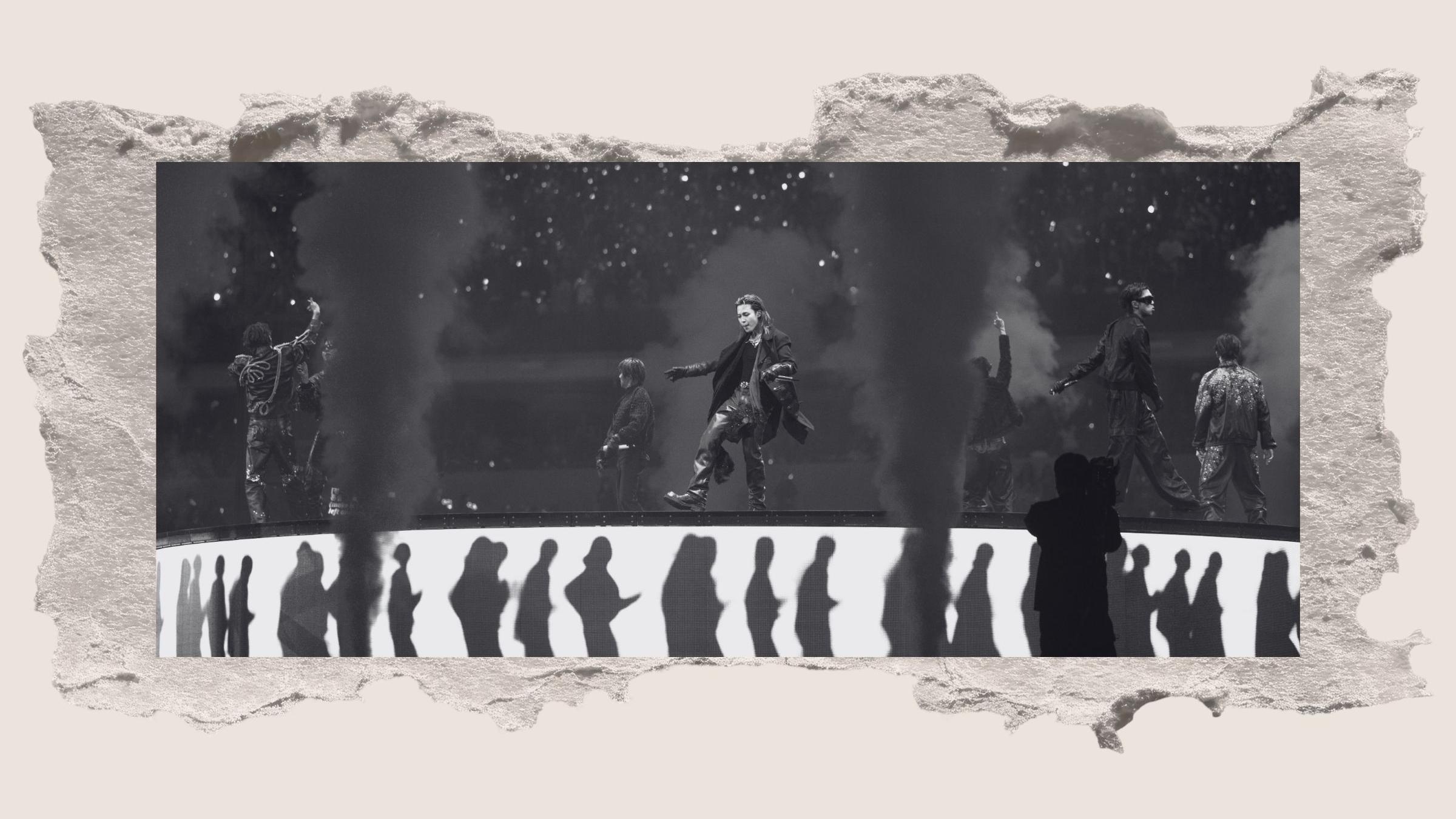
In 2009, I moved to Middletown, Conn. from Seoul, South Korea to study ethnomusicology.
asserted
I → move → ethnomusicology
At the time, I admittedly did not listen to K-pop, seeing it as largely teen pop, though I would soon realize how limited my view was.
asserted
view → listen → pop
Over the next decade, as the genre became increasingly visible in the United States, it reshaped not only how American audiences encountered Korean popular music, but also how I understood its global significance.
asserted
I → become → significance
That shift is still unfolding, and recent events have raised new questions about how K-pop is categorized and recognized within the American music industry.
asserted
pop → unfold → industry
Those questions came into particularly sharp relief early this summer, when the Recording Academy announced a new category, Best Asian Pop Music Performance, for the 2027 Grammy Awards.
asserted
Academy → come → Awards
In response, the world’s biggest boy band, BTS, announced that they would not submit their music for Grammy consideration.
asserted
they → announce → consideration
The decision sparked heated debates among K-pop fans around the world, some of whom feared that the new category would sideline Asian artists by placing them in a separate “Asian Pop” category while reducing their chances of recognition in the Grammys’ prestigious General Fields awards.
asserted
category → spark → awards
Recording Academy CEO Harvey Mason Jr. clarified that “The Asian Pop category was created to celebrate the depth, diversity, and extraordinary growth of pop artistry coming out of Asia,” and that submitting music in a genre category would not exclude an artist from also submitting and being considered for Record of the Year, Album of the Year, and Song of the Year.
asserted
submitting → clarify → Year
This controversy raises important questions.
asserted
controversy → raise → questions
Does it risk creating a new form of segregation?
asserted
it → risk → segregation
Or can it provide greater visibility for Asian artists in American mainstream media?
asserted
it → provide → media
The first music cassette tape that I bought as a Korean kid living in Seoul in the 1990s was Mariah Carey’s compilation album, #1’s.
asserted
I → buy → 1990s
Well into the 2000s, listening to Western pop was considered “cool” in South Korea.
asserted
listening → listen → Korea
Koreans certainly listened to gayo, or Korean popular music, although Western pop often carried a different kind of cultural prestige.
asserted
pop → listen → prestige
Western pop was typically described as more “intellectual,” “authentic,” and “meaningful.”
asserted
pop → describe → ?
Radio DJs and music critics did not hesitate to encourage young Koreans to listen to more Western pop rather than gayo.
asserted
DJs → hesitate → gayo
The cultural hierarchy between Western and Korean popular music was shaped by South Korea’s postwar political and military relationship with the United States.
asserted
hierarchy → shape → States
South Korea’s commercial recording industry began to take shape in the early 20th century through the activities of Japanese and American record companies.
asserted
industry → begin → companies
Following liberation from Japanese colonial rule from 1910 to 1945, and the division of the peninsula, South Korea came increasingly under U.S. political and military influence.
asserted
Korea → follow → influence
In the years following the Korean War in the 1950s, the Eighth U.S. Army shows became an important site for the development of South Korean popular music, employing hundreds of Korean entertainers to perform American popular music and other forms of entertainment for U.S. soldiers.
asserted
shows → follow → soldiers
Korean performers would listen to the American Forces Korea Network (AFKN), transcribe music they heard on the radio, and memorize the latest American songs for performances at military bases.
asserted
they → listen → bases
For decades afterward, imported albums, AFKN, and MTV remained important sources through which Korean musicians and audiences encountered new musical trends from the United States.
asserted
musicians → import → States
U.S. military, media, and commercial networks became powerful channels through which American popular music entered South Korea and shaped the development of its contemporary popular music industry.
asserted
music → become → industry
Indeed, American pop was long considered more prestigious and trendier than Korean pop—until K-pop began to command international recognition of its own.
asserted
pop → consider → own
The K-pop universe
K-pop refers primarily to music performed by artists known as “idols,” whose careers are developed and managed by entertainment companies.
asserted
careers → refer → companies
This integrated system was first established in 1995 by Lee Soo Man, founder and producer of SM Entertainment, to bring artist recruitment, talent management, and music and visual production under one roof.
asserted
system → integrate → roof
Inspired by Motown’s Fordist model of music production and Japan’s idol industry, Lee developed a cultural industry in which idols could grow into professional artists and, eventually, entrepreneurs themselves.
uncertain
idols → inspire → artists
Shortly after I moved to the U.S., I began encountering more and more American fans who asked me if I knew acts like Girls’ Generation or BIGBANG.
asserted
I → move → Generation
These fans introduced me to the world of K-pop, and I gradually stopped listening to American pop.
asserted
I → introduce → pop
Around the same time, Korean music critics lamented that younger Koreans were no longer listening to Western pop as they once had.
asserted
they → lament → pop
Over the last decade, I have met hundreds of American K-pop fans as a K-pop ethnographer.
asserted
I → meet → ethnographer
My first question is always the same: “Why do you like K-pop?”
asserted
you → like → pop
The question carries an assumption: “If K-pop is merely a copy of American pop, as some critics dismissively claim, why listen to the replica rather than the original?”
uncertain
critics → carry → replica
Their responses were surprisingly similar, as if they had compared notes.
asserted
they → compare → notes
According to these fans, while American pop stars sang “too much about sex, drugs, and parties,” K-pop offered “dreams, fantasies, and self-growth,” often through elaborate alternative “universes” in which idols developed distinct personas and narratives.
uncertain
idols → accord → personas
This idea of “universe” was first systematically introduced to K-pop in 2012, when SM Entertainment debuted EXO as extraterrestrial beings from “EXO Planet,” each endowed with a supernatural power.
asserted
each → introduce → power
Since then, world-building has become increasingly intertwined with K-pop’s integration of music, dance, costume, stage design, fashion, beauty, digital media, and more recently, virtual idols and AI production, making K-pop an increasingly audiovisual, narrative, and participatory cultural form for audiences worldwide.
asserted
pop → intertwine → audiences
Parallel to the fantasy world presented on stage and through mass media, entertainment companies—especially those with smaller budgets and limited access to traditional media networks—began to use online platforms to communicate with fans by revealing more down-to-earth, behind-the-scenes moments.
asserted
companies → present → moments
BTS became one of the most prominent examples through its YouTube series BANGTAN BOMB, which captured offstage moments that portrayed the members as humble, playful, and hardworking.
asserted
that → become → members
Fans, in turn, voluntarily created subtitles in multiple languages, helping introduce BTS to international audiences and expand its global fanbase.
asserted
Fans → create → fanbase
…and 45 more, not listed.
 The Aporia