Photo via CBS News

The story behind the first CIA officers in Afghanistan after 9/11

Read the original at CBS News ↗
Cite

Gazis, O. (2026, September 26). The story behind the first CIA officers in Afghanistan after 9/11. CBS News. https://www.cbsnews.com/news/first-cia-officers-in-afghanistan-9-11-russian-helicopter/

Dated when The Aporia collected the article, usually within hours of publication. Check the original for its exact date and byline.

CBS News · collected 2026-09-26 · by Olivia Gazis

Quick Summary

On September 26, 2001, seven CIA officers code-named JAWBREAKER flew into the Panjshir Valley in an ex-Soviet Mi-17 helicopter just 15 days after the 9/11 attacks to gather intelligence and prepare for U.S. military action against al-Qaeda and the Taliban. The mission involved establishing ties with the Northern Alliance, a key ally at the time. The same aircraft is now displayed at CIA headquarters in Virginia as part of its restoration for the anniversary.
Written by AI on 2026-09-26, from this article's own text only (the story summary below draws on all the coverage).

AI analysis

Story summary

Twenty-five years ago, on Sept. 26, 2001, seven CIA officers, code-named JAWBREAKER, landed in the Panjshir Valley of Afghanistan just 15 days after the 9/11 attacks. They arrived by a Soviet-designed Mi-17 helicopter carrying millions of dollars to enlist and equip Afghan allies against al-Qaeda and the Taliban. This mission was pivotal for gathering intelligence and preparing alliances before the U.S. campaign began, including bolstering ties with the Northern Alliance after its leader Ahmad Shah Massoud's assassination just days prior to 9/11. The Mi-17 helicopter that carried them is now displayed at CIA headquarters in Langley, Virginia, where it has undergone extensive restoration ahead of this anniversary.

Written for “CIA Officers In Afghanistan Post 9_11” on 2026-11-03, grounded in this article and the 1 other(s) covering the same event.

Story

📰 CIA Officers In Afghanistan Post 9_11
Politics · 2 article(s) covering the same event. See how they differ ↓

Compared with similar articles

This article reads unscored and hedges 1% of its claims. Each row says how that neighbour differs.
CBS News
Hedges 0 of 2 claims Outlet record 66/100
How this article was measured signals, leaning charts, publisher record, byline, topics and claims

Signals How these are calculated →

Claims extracted
68
sentences that state something as happening or true
Uncertain
1%
1 of 68 hedged ("reportedly", "may", "according to")
Leaning
not political
takes no side on a contested political question
Publisher signals
66/100
CBS News's corrections and hedging, across everything collected from it. Not a measure of accuracy.
Outlets on this story
2
Politics
Same framing elsewhere
1
articles that frame the event the way this one does
Analyzed 2026-09-26 · how these are computed

How this is being covered How these are calculated →

Article leaning vs. publisher reliability
Source leaning vs. consistency

Publisher

CBS News · 4487 article(s) · 6 correction(s) detected
Running correction rate · 6 correction(s)

Who wrote this

Olivia Gazis
11 article(s) here · 1 carrying a prediction
🔮 Commissioned by Sen. Jeanne Shaheen of New Hampshire, the committee's top Democrat, the report describes a systematic reversal of policies Mr. Trump once supported, warning that the changes may be weakening American influence abroad and putting women's lives at risk. "Supporting women and girls is not separate from advancing American interests — it is how we prevent conflict, strengthen our partners and compete," Shaheen said in a statement to CBS News.
🔮 The memo, which was issued as the Trump administration weighs resuming military strikes against Iran, does not identify specific targets or countries where the alleged plots are underway, or indicate whether attacks may be imminent.
🔮 Fr. Joseph Coleman feared he would never again see his father, Stephen Hubbard, when they had a brief phone conversation last year while Hubbard was in a Russian prison.
🔮 Hubbard, who is in poor health, was expected to be flown to Texas for treatment at a military hospital.
🔮 The alerts, issued Sunday by U.S. embassies in Saudi Arabia, Bahrain, Qatar, the United Arab Emirates and several other countries, warned that hostilities could rapidly and without warning spread beyond areas already affected by the fighting.
🔮 It is unclear whether the complaint against Moawad will result in formal proceedings.
🔮 "Either the ICC will end its threats, or we will end the ICC," Secretary of State Marco Rubio said in a statement announcing the measures.
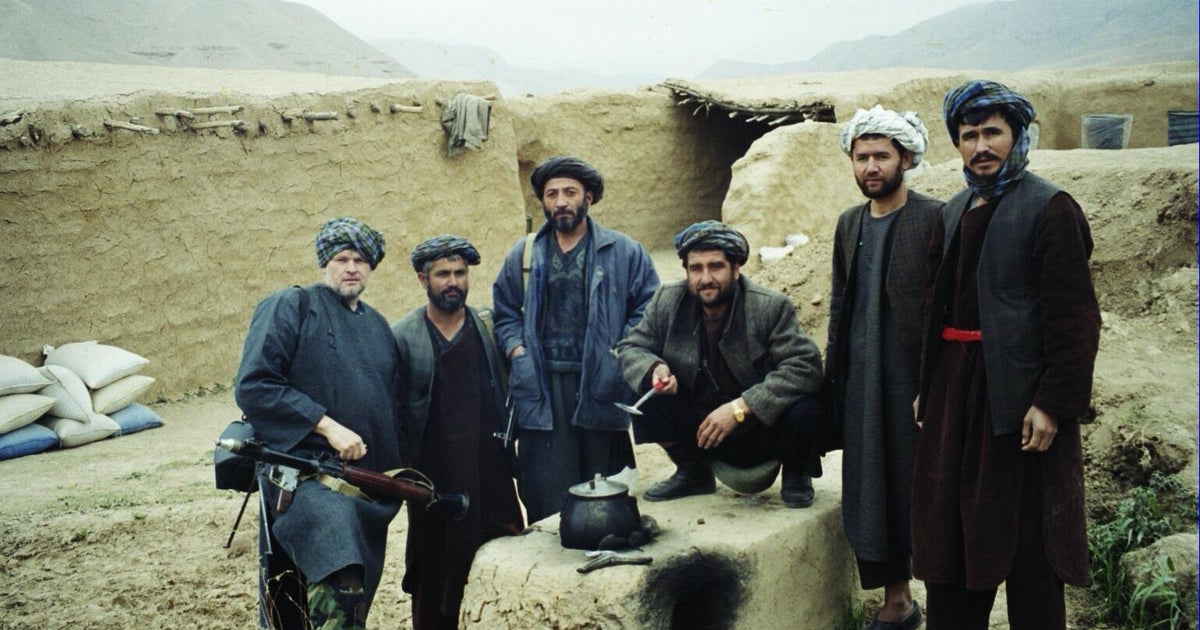
🔮 Twenty-five years ago, a Soviet-designed helicopter crossed the mountains of Afghanistan carrying the first CIA officers sent into the country after on Sept. 11, 2001, marking the opening move in the U.S. response that would soon become .The seven-man CIA team, code-named JAWBREAKER, landed in the Panjshir Valley on Sept. 26, 2001, just 15 days after the attacks, carrying millions of dollars in cash intended to help enlist and equip Afghan allies.
🔮 The purpose of CIA Director John Ratcliffe's visit to Moscow this week was to warn Russia not to attack NATO member states, according to multiple people familiar with the matter, amid U.S. intelligence assessments that Russia could try to test NATO.
🔮 Peskov told reporters Putin was briefed on the talks, but he said it was too soon to predict whether the intelligence officials' meeting might help get bilateral U.S.-Russian relations out of what he called a "deep crisis" more than four and a half years into Russia's war on Ukraine.
Also by Olivia Gazis
Nothing else under this byline is closely related to this article, so these are simply their most recent.
All 11 articles by Olivia Gazis →

Topics

Afghanistan CIA Soviet U.S. the Mi-17

Subjects

CIA ORG · 8× Afghanistan GPE · 6× Tyson PERSON · 5× Taliban ORG · 4× JAWBREAKER PERSON · 3× Soviet NORP · 3× Team Alpha ORG · 3× al-Qaeda ORG · 3× Afghan NORP · 2× U.S. GPE · 2×

Narrative

Twenty-five years ago, a Soviet-designed helicopter crossed the mountains of Afghanistan carrying the first CIA officers sent into the country after on Sept. 11, 2001, marking the opening move in the U.S. response that would soon become .The seven-man CIA team, code-named JAWBREAKER, landed in the Panjshir Valley on Sept. 26, 2001, just 15 days after the attacks, carrying millions of dollars in cash intended to help enlist and equip Afghan allies.
framing: assertive · carried by 1 article(s) · first seen 2026-09-26
🔮 Twenty-five years ago, a Soviet-designed helicopter crossed the mountains of Afghanistan carrying the first CIA officers sent into the country after on Sept. 11, 2001, marking the opening move in the U.S. response that would soon become .The seven-man CIA team, code-named JAWBREAKER, landed in the Panjshir Valley on Sept. 26, 2001, just 15 days after the attacks, carrying millions of dollars in cash intended to help enlist and equip Afghan allies.
2026-09-26 · CBS News
The story behind the first CIA officers in Afghanistan after 9/11 · assertive framing

Claims (68 extracted, 1 hedged)

Twenty-five years ago, a Soviet-designed helicopter crossed the mountains of Afghanistan carrying the first CIA officers sent into the country after on Sept. 11, 2001, marking the opening move in the U.S. response that would soon become .The seven-man CIA team, code-named JAWBREAKER, landed in the Panjshir Valley on Sept. 26, 2001, just 15 days after the attacks, carrying millions of dollars in cash intended to help enlist and equip Afghan allies. asserted
that → design → allies
Their mission was to gather intelligence and prepare the ground for the looming U.S. campaign against al-Qaeda and the Taliban — including by shoring up ties with the Northern Alliance, whose military leader, Ahmad Shah Massoud, had been assassinated by al-Qaeda operatives just two days before 9/11. asserted
leader → gather → 9/11
The Mi-17 that carried them there is now on display at CIA headquarters in Langley, Virginia, where it has undergone an extensive restoration ahead of the anniversary. asserted
it → carry → anniversary
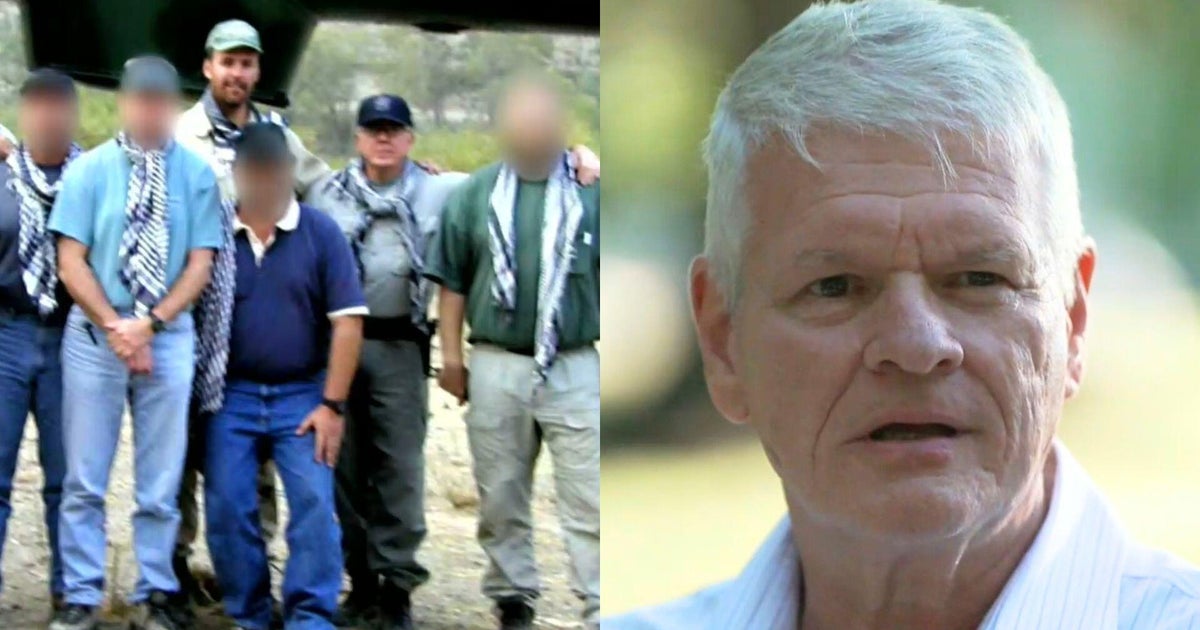
Former CIA officer David Tyson followed JAWBREAKER into Afghanistan weeks later as a member of Team Alpha, and remembers flying aboard the same aircraft before the war. " asserted
Tyson → follow → war
It was shaking a lot, fuel was leaking, very noisy, and I didn't know if it was airworthy," Tyson told CBS News in an interview, "but I was assured by the pilots it was a good bird." asserted
it → shake → pilots
A helicopter built to blend in The CIA acquired the Mi-17 in the 1990s, calculating that its Soviet origins would be an advantage in the region. asserted
origins → build → region
"The Northern Alliance and the Taliban both used Mi-17s," CIA historian Rob Byer told CBS News. asserted
Byer → use → News
"The big reason we got an Mi-17 rather than flying in a Blackhawk is because it blends in," Byer said. asserted
Byer → get → Blackhawk
"And when you're going behind enemy lines, you'd like to blend in as much as you can." asserted
you → go → lines
It could also handle the punishing altitude. uncertain
It → handle → altitude
To reach the Panjshir Valley, JAWBREAKER had to cross the Anjuman Pass, which rises roughly 14,500 feet above sea level. asserted
which → reach → level
"The Mi-17 is one of the few helicopters that can actually make it over that pass," Byer said. asserted
Byer → make → pass
The aircraft had no transponder to identify it to American warplanes, leaving its crew to improvise. asserted
aircraft → have → crew
They painted "USA" and an American flag across the tops of its stabilizers, visible to friendly pilots overhead but concealed from enemy eyes on the ground. asserted
They → paint → ground
With no blue paint available, the crew left the flag unfinished. asserted
crew → leave → flag
And in a reminder of the attacks that had brought them there, they gave the helicopter the call sign "9-11-01." asserted
they → bring → sign
The Mi-17 would go on to fly more than 300 missions in Afghanistan, remaining in service until 2012. asserted
Mi-17 → go → 2012
Team Alpha goes to war asserted
Alpha → go → war
Tyson was a CIA case officer based in Central Asia who was steeped in local languages, including Uzbek, Turkmen and Russian. asserted
who → base → Uzbek
On Sept. 11, 2001, he was on a flight to the United Kingdom for a meeting related to the CIA's efforts to recover Stinger missiles that had remained in Afghanistan, many of which were sent there in a U.S.-backed initiative during the Soviet war. asserted
many → relate → war
Soon after he landed, he began planning his return, realizing his expertise would likely take him to Afghanistan. asserted
expertise → land → Afghanistan
"I knew that I would be involved given my languages and experience and so forth and where I was based in Central Asia," Tyson recalled. asserted
Tyson → know → Asia
On Oct. 17, less than three weeks after JAWBREAKER arrived in the Panjshir Valley, Tyson and the rest of Team Alpha were inserted into a different part of northern Afghanistan, becoming the first Americans sent behind Taliban lines. asserted
Tyson → arrive → lines
Their mission was to work with forces commanded by Uzbek leader Abdul Rashid Dostum as part of the campaign against the Taliban and al-Qaeda. asserted
mission → work → Taliban
"This was something we hadn't done before," Tyson said, describing a mission that involved working with local forces to "basically prosecute a war." His principal role was intelligence and liaison work. asserted
role → do → war
He worked closely with Dostum's Uzbek-speaking forces, helping his team understand the people and environment around them. asserted
team → work → them
The Americans traveled with Afghan fighters on horseback through the mountains, sometimes riding as long as 14 hours a day. asserted
Americans → travel → hours
"The horses were not friendly," Tyson recalled. asserted
Tyson → recall → ?
"They were stallions, they fought between each other, they bit us, they kicked us, they tried to knock us off. asserted
they → fight → us
And the gear, the kit, the saddles were basically wooden frames with carpets thrown on them." asserted
carpets → throw → them
By late November, Taliban forces had collapsed across much of northern Afghanistan. asserted
forces → collapse → Afghanistan
Hundreds of foreign fighters had surrendered and were taken to Qala-i-Jangi, a sprawling 19th-century fortress near Mazar-e-Sharif. asserted
Hundreds → surrender → Sharif
On Nov. 25, Tyson and fellow CIA officer Johnny Micheal "Mike" Spann entered Qala-i-Jangi, where their initial task was to determine who the prisoners were and where they came from. asserted
they → enter → where
"For the most part, they were responding and identifying themselves as al-Qaeda members, people who had given oath of allegiance to bin Laden," Tyson said. asserted
Tyson → respond → Laden
Among the prisoners was John Walker Lindh, a California native who moved to the region in 2000 and joined the Taliban. asserted
who → move → Taliban
Hours into their mission, the prisoners rose up. asserted
prisoners → rise → mission
"There were explosions, gunfire, and a lot of yelling," Tyson recalled. asserted
Tyson → be → yelling
"I started seeing things in what I would call slow motion," he said. asserted
he → start → what
"Things were moving slowly, but almost automatically." asserted
Things → move → ?
At a certain point he heard Spann call his name, and began moving toward his partner through the fighting. asserted
Spann → hear → fighting
…and 28 more, not listed.

💬Give feedback
🕘History 🎫Support