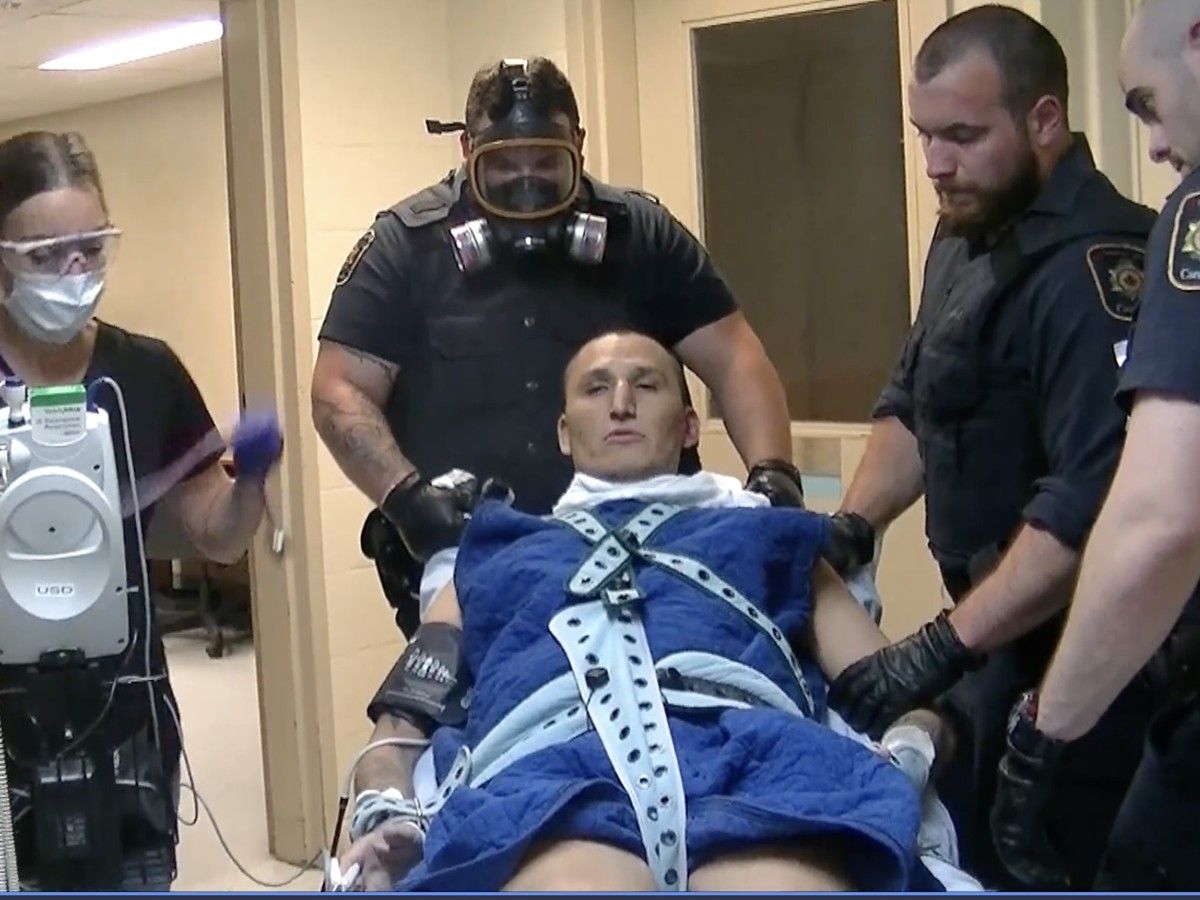
Over the course of half an hour, a hand-held camera follows Joey Toutsaint as prison guards forcibly remove him from a cell, then lead him through a hall, across a yard and into another building.
asserted
guards → hold → building
The camera captures him pleading.
asserted
him → capture → ?
“I’m not going to the observation cell.
asserted
I → go → cell
You guys are making a mistake.
asserted
guys → make → mistake
At one point, he weeps.
asserted
he → weep → point
I give you my word.
asserted
I → give → word
I don’t want to live like this no more.”
asserted
I → want → this
“I recognize you have mental health issues,” an officer says at one point.
asserted
officer → recognize → point
The prison guards lead Toutsaint, wrapped in a blanket after a strip search, into the observation cell.
asserted
guards → lead → cell
“As you can see on camera,” one of the officers says to the person filming before the camera is turned off, “we had some challenges with Mr. Toutsaint and wanting to submit to going into the observation cell.”
asserted
we → see → cell
Observation cells are bare rooms subject to 24/7 surveillance in which prisoners such as Toutsaint are placed, dressed in a sleeveless, untearable smock and sometimes without a blanket or mattress, when they have tried to harm themselves or are suspected of intending to do so.
asserted
they → place → themselves
Another variant on these isolation cells is the “dry cell,” which is similarly bare but lacks plumbing or running water.
asserted
which → lack → plumbing
It’s used when prison staff want someone to excrete something they are suspected of having swallowed or hidden in their body, such as drugs.
asserted
they → use → drugs
Canada does not call these cells solitary confinement.
asserted
Canada → call → ?
But their use meets a definition of solitary under international rules — to which Canada has agreed — that are meant to minimize the use of such isolation.
asserted
that → meet → isolation
What are known as the “Mandela Rules” define solitary confinement as 22 hours a day or more without meaningful human contact, and define prolonged solitary confinement as a period exceeding 15 consecutive days.
asserted
known → know → days
The rules say solitary confinement should only be used “in exceptional cases as a last resort” and should be “prohibited in the case of prisoners with mental or physical disabilities when their conditions would be exacerbated by such measures.
asserted
conditions → say → measures
Yet the use of observation cells and dry cells has been rising, according to data obtained by the Investigative Journalism Bureau through access-to-information requests.
uncertain
use → rise → requests
The number of times Canadian prisons used observation cells rose from 859 in 2018 to 1,316 in 2024 — a 53 per cent increase.
asserted
prisons → use → increase
In total, observation cells were used more than 8,000 times between 2018 and November 2025, CSC data show.
asserted
data → use → 2018
The number of times Canadian prisons used dry cells rose from 160 in 2022 to 291 in 2024 — an 82 per cent increase.
asserted
prisons → use → 2024
Dry cells were used almost 700 times between 2022 and 2024.
asserted
cells → use → 2022
Observation and dry cells can be used for indefinite periods in Canada.
asserted
cells → use → Canada
The prisoner has no immediate means of appeal.
asserted
prisoner → have → appeal
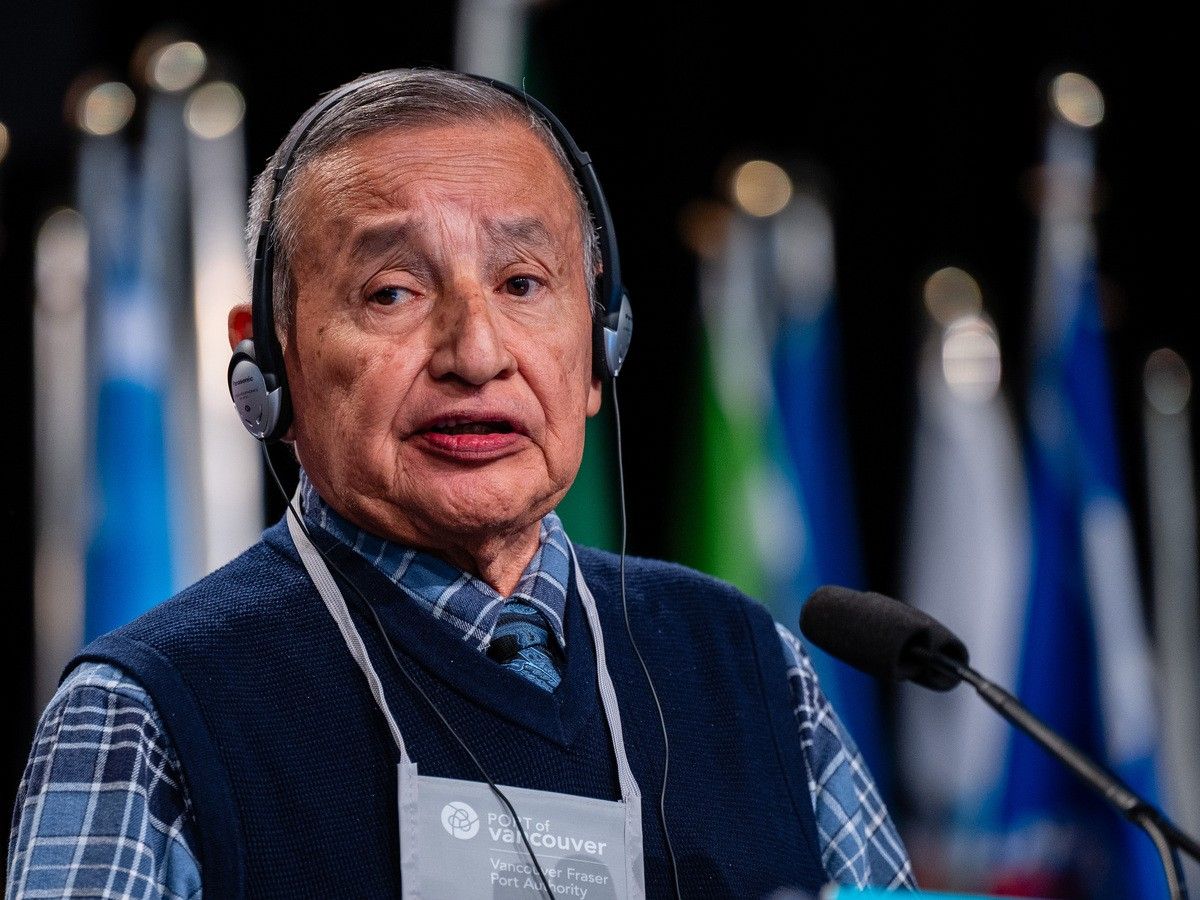
“It doesn’t really matter what the correctional service calls these cells or units or ranges,” former correctional investigator and current Canadian Civil Liberties Association head Howard Sapers said.
asserted
Sapers → matter → cells
“The fact of the matter is they operate like segregation, where people are locked down, locked in their cells, often for 24 hours a day, sometimes for 23 or 22….
asserted
people → operate → 23
“The fact that we don’t have the words ‘solitary confinement’ in our law does not mean that solitary confinement does not, in fact, take place.”
asserted
confinement → mean → place
In observation cells, and in other special sections of prisons reserved for people deemed unsafe in the general population, Sapers says, Canadian federal prisoners are “being dealt (with) in a way that’s off the books, frankly.”
It doesn't really matter what the correctional service calls these cells or units or ranges.
asserted
service → reserve → what
The fact of the matter is they operate like segregation
Howard Sapers, Canadian Civil Liberties Association head
Correctional Service Canada says placements like Toutsaint’s “must be used appropriately, humanely, and with strong oversight” and only “when less restrictive interventions cannot adequately manage an imminent risk of self-harm or suicide.”
asserted
interventions → operate → harm
CSC spokesperson Laurence Côté said prisons conduct health team assessments and case reviews of these placements, but the head of the prison makes the final call.
asserted
head → say → call
Observation cells and dry cells are needed to keep prisons safe, says Frederick Lebeau, president of the federal correctional officers’ union.
asserted
Lebeau → need → union
“When an inmate is acting out and he’s trying to commit suicide, sometimes we’ve got to protect them from themselves.”
asserted
we → act → themselves
While dry cell use could be replaced by tools such as body scanners, he said, observation cells will continue to be necessary “to save lives.”
uncertain
cells → replace → lives
The IJB obtained 53 videos, about five hours’ worth of footage, shot in and around observation cells — videos legal aid organization Prisoners Legal Services obtained through federal Privacy Act requests.
asserted
IJB → obtain → requests
The videos show how the cells are used and the force — tackling and handcuffing, pepper-spraying or tying down — employed to manage prisoners’ behaviour during transportation to and from these cells.
asserted
cells → show → cells
The IJB reviewed the Privacy Act request through which Prisoners Legal Services obtained the videos.
asserted
Services → review → videos
Correctional Service Canada would not comment on their veracity.
asserted
Canada → comment → veracity
Simon Lafortune, a spokesperson for Canada’s public safety minister, Gary Anandasangaree, did not respond to requests for an interview.
asserted
Lafortune → respond → interview
Sometimes we’ve got to protect them from themselves
Frederick Lebeau, president of the federal correctional officers’ union
The IJB found that Indigenous prisoners like Toutsaint are more likely than white people to be put in an observation cell.
asserted
prisoners → get → cell
The number of Indigenous men placed in observation cells annually more than doubled between 2018 and 2024, to 674 from 284, a period during which the number of white men placed in observation cells increased by about 5.6 per cent, to 397 from 376.
asserted
number → place → 376
…and 36 more, not listed.
 The Aporia