Photo via Toronto Star

'We're not giving up': Beset by climate change, island nations act as conscience of a warming world

Read the original at Toronto Star ↗
Cite

Delgado, A. L., & Borenstein, S. (2026, September 26). 'We're not giving up': Beset by climate change, island nations act as conscience of a warming world. Toronto Star. https://www.thestar.com/news/world/we-re-not-giving-up-beset-by-climate-change-island-nations-act-as-conscience-of-a-warming-world/article_b8036bed-70f3-58aa-b595-964f1139c4c8.html

Dated when The Aporia collected the article, usually within hours of publication. Check the original for its exact date and byline.

Toronto Star · collected 2026-09-26 · by Anton L. Delgado, Seth Borenstein

Quick Summary

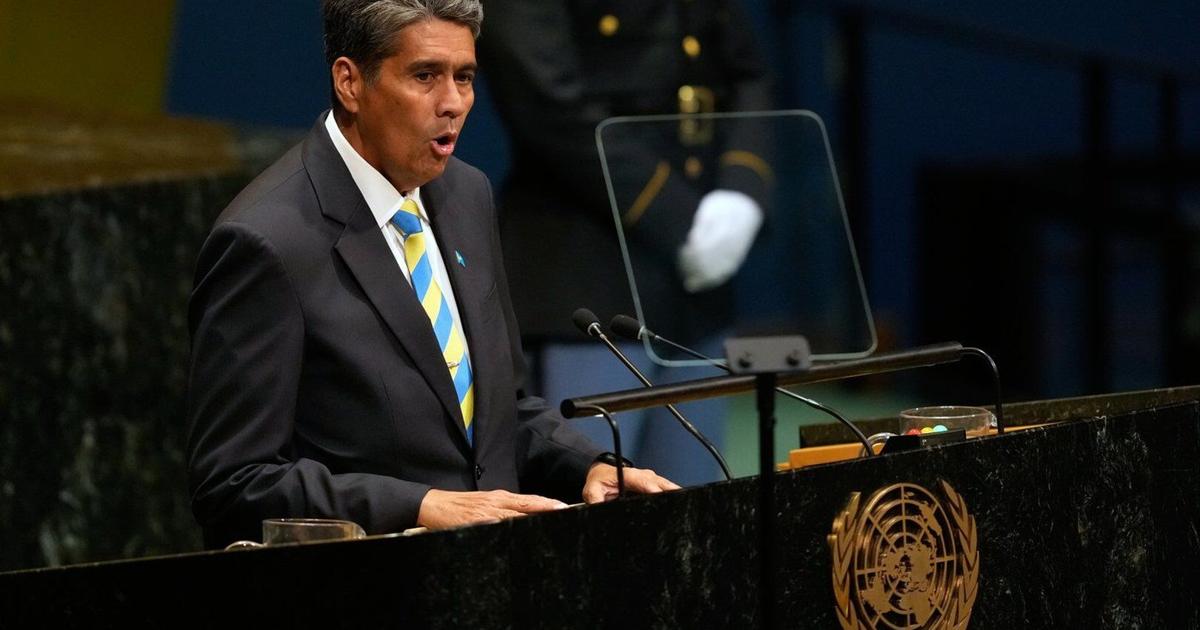
Palau President Surangel Samuel Whipps Jr. describes the devastating impact of rising sea levels on his country’s Helen Island, where two-thirds of the land has vanished due to climate change. At the United Nations General Assembly, small island nations are advocating for more aggressive action against carbon pollution despite feeling marginalized in global discussions. These countries, which represent less than 1% of the world's population and a minuscule fraction of its emissions, emphasize that limiting global warming to 1.5 degrees Celsius is critical for their survival, as breaching this threshold could lead to irreversible sea level rise.
Written by AI on 2026-09-26, from this article's own text only (the story summary below draws on all the coverage).

AI analysis

Story summary

In 2015, small island nations pushed for and succeeded in tightening the global warming goal from 2 degrees Celsius to 1.5 degrees Celsius since pre-industrial times during climate negotiations leading up to the Paris Agreement. Currently facing severe impacts from climate change, such as rising seas that have submerged parts of Helen Island in Palau, these nations are now emphasizing their role as moral leaders at the United Nations General Assembly. Despite their small size—11 Marshall Islands or about 30 Tuvalus could fit within New York City where the UN is located—these countries are fighting to ensure their voices are heard and urging major powers to take action against carbon pollution before it's too late.

Written for “Climate Change Activism Islands” on 2026-11-02, grounded in this article and the 0 other(s) covering the same event.

Story

📰 Climate Change Activism Islands
Environment · 1 article(s) covering the same event.

Compared with similar articles

This article reads leans strongly left and hedges 5% of its claims. Each row says how that neighbour differs.
Toronto Star
⚖️ Leans left further right than this Hedges 4 of 55 claims Outlet record 64/100
“Article A describes a statement by UN Secretary-General Antonio Guterres regarding sea-level rise and collective action on climate change, while Article B focuses on the personal experience of Palau's president regarding rising seas and their cultural impact.”
How this article was measured signals, leaning charts, publisher record, byline, topics and claims

Signals How these are calculated →

Claims extracted
41
sentences that state something as happening or true
Uncertain
5%
2 of 41 hedged ("reportedly", "may", "according to")
Leaning
Leans strongly left
of the writing, not the subject · beta estimate
Publisher signals
64/100
Toronto Star's corrections and hedging, across everything collected from it. Not a measure of accuracy.
Outlets on this story
1
Environment
Same framing elsewhere
1
articles that frame the event the way this one does
Analyzed 2026-09-26 · how these are computed

How this is being covered How these are calculated →

Article leaning vs. publisher reliability
Source leaning vs. consistency

Publisher

Toronto Star · 11094 article(s) · 28 correction(s) detected
Running correction rate · 28 correction(s)
2026-10-26
Correction
2026-10-24
Correction
2026-10-07
Correction
2026-09-24
Correction

Who wrote this

Anton L. Delgado
6 article(s) here · 1 carrying a prediction
🔮 In the global power game of the United Nations General Assembly, small island states, like Palau, are often on the sidelines, offering moral advice to the mighty who don’t always listen.
🔮 “The growing desire among countries in Southeast Asia to secure reliable energy supplies could bring about another round of coal fever,” said Li Shuo, director of the Asia Society Policy Institute’s China Climate Hub, which “will continue to test the resolve behind the coal moratorium.”
🔮 Subeksha Khadka, a humanitarian and former Miss Nepal International, in an online interview, praised Shah’s speech and echoed the warning: “This time Nepal has been on the target, but it could be anyone.
🔮 “We’re at the possibility that we might lose the Amazon altogether, and once we lose the Amazon, we don’t get it back — the next couple of years are really going to matter,” said Kumar Garg, president of Renaissance Philanthropy, one of the groups steering the new fund.
🔮 BANTEN, Indonesia (AP) — All signs are pointing toward a record-breaking El Nino this year, which experts say may cause severe drought in Asia and other extreme weather across the world, threatening food security for millions of people.
🔮 All signs are pointing toward a record-breaking El Nino this year, which experts say may cause severe drought in Asia and other extreme weather across the world, threatening food security for millions of people.
Also by Anton L. Delgado
Nothing else under this byline is closely related to this article, so these are simply their most recent.
All 6 articles by Anton L. Delgado →
Seth Borenstein
9 article(s) here · 1 carrying a prediction
🔮 So we looked at all of the natural variables we thought could account for it, namely temperature, oxygen supply and food.
🔮 Log in El Niño is set to shape the season ahead with the federal government's official winter outlook and other meteorologists' forecasts pointing to a wetter and warmer few months for the United States, though not necessarily snowier.
🔮 “El Niño and climate change both made this hurricane stronger than it would have otherwise been, but the effect of climate change is even bigger than the one of El Niño,” said climate scientist and study co-author Friederike Otto, who coordinates the international science team behind World Weather Attribution.
🔮 “Since September 20th, when Odalys formed, it’s been berserk,” said Colorado State University researcher Phil Klotzbach, who forecasts and studies storm activity.
🔮 The weakest is a Category 1, with winds of 74-95 mph (120-150 kph) and it will have dangerous winds that produce some damage.
🔮 In the global power game of the United Nations General Assembly, small island states, like Palau, are often on the sidelines, offering moral advice to the mighty who don’t always listen.
🔮 Subeksha Khadka, a humanitarian and former Miss Nepal International, in an online interview, praised Shah’s speech and echoed the warning: “This time Nepal has been on the target, but it could be anyone.
🔮 Armed with a new U.N. science report that warns of a slight but real potential of catastrophic and irreversible harm, U.N. Secretary-General Antonio Guterres kicked off the parade of world leaders speaking at the General Assembly by calling for more oversight of AI, warning in vivid if not ominous terms of what could go wrong.
Also by Seth Borenstein
Nothing else under this byline is closely related to this article, so these are simply their most recent.
All 9 articles by Seth Borenstein →

Topics

Marshall Islands Palau U.N. UNITED NATIONS the United Nations

Subjects

Marshall Islands GPE · 2× Palau GPE · 2× Tuvalu GPE · 2× U.N. ORG · 2× Whipps PERSON · 2× the United Nations ORG · 2× Surangel Samuel Whipps Jr. PERSON · 1× The Associated Press ORG · 1× UNITED NATIONS GPE · 1× the United Nations General Assembly ORG · 1×

Narrative

Warming world imperils small island states In 2015, when the world was on the verge of signing the landmark Paris climate pact, it was small island nations that got the goal to limit global warming tightened from 2 degrees Celsius (3.6 degrees Fahrenheit) to 1.5 degrees (2.7 degrees Fahrenheit) since pre-industrial times.
framing: assertive · carried by 1 article(s) · first seen 2026-09-26
🔮 In the global power game of the United Nations General Assembly, small island states, like Palau, are often on the sidelines, offering moral advice to the mighty who don’t always listen.

Claims (41 extracted, 2 hedged)

When Palau President Surangel Samuel Whipps Jr. recently took his children to his nation’s Helen Island, two-thirds of it was gone. asserted
thirds → take → it
Rising seas caused by climate change had swallowed generational burial grounds, washing away a people’s entire culture and identity. asserted
seas → rise → culture
“For us, it’s devastating,” Whipps told The Associated Press on Friday, 40 years after his previous visit. asserted
Whipps → ’ → visit
“It doesn’t mean we should give up. asserted
we → mean → ?
In the global power game of the United Nations General Assembly, small island states, like Palau, are often on the sidelines, offering moral advice to the mighty who don’t always listen. asserted
who → offer → mighty
Nearly 11 Marshall Islands, or about 30 Tuvalus, could fit inside New York City, where the United Nations is housed. uncertain
Nations → fit → City
Now, some of the little land they do have is disappearing. asserted
they → have → land
“Sometimes,” Whipps said, “you get drowned out.” asserted
you → say → ?
He was referring to unequal power dynamics, but it also applies physically. asserted
it → refer → dynamics
When it comes to climate change, many of the world’s island nations have banded together to be heard better. asserted
many → come → nations
Their voices play the role of a conscience to a warming world, pleading to stop carbon pollution before it’s too late. asserted
it → play → pollution
Warming world imperils small island states In 2015, when the world was on the verge of signing the landmark Paris climate pact, it was small island nations that got the goal to limit global warming tightened from 2 degrees Celsius (3.6 degrees Fahrenheit) to 1.5 degrees (2.7 degrees Fahrenheit) since pre-industrial times. asserted
goal → warm → times
At the time, island nations said it was a matter of survival. asserted
it → say → survival
Now, scientists and the United Nations have conceded that the world is blowing past the 1.5 degrees mark — a temperature averaged over many years — in the next year or two. asserted
world → concede → year
The best hope to keep this from happening permanently is for the world to reduce coal, oil and gas use to zero in coming decades, so that sometime this century, temperatures will go back down below the 1.5 degrees threshold, they said. asserted
they → keep → threshold
“Each fraction of a degree of warming increases the risk of irreversible sea level rise,” said Anna Rasmussen, chief negotiator for the Alliance of Small Island States. asserted
Rasmussen → increase → States
“We absolutely cannot surrender our pursuits of 1.5.” asserted
We → surrender → 1.5
What does breaching 1.5 degrees mean? asserted
breaching → breach → degrees
“Death,” said Joyelle Clarke, environment minister for the Caribbean island nation of Saint Kitts and Nevis, standing outside the U.N. Security Council. asserted
Clarke → say → Council
This is unfair because small islands didn’t cause climate change, Marshall Islands President Hilda Heine said during her speech to the General Assembly on Friday; big industrial nations did. asserted
nations → cause → Friday
“We’ve seen schools destroyed by rising seas, salt water poisoning our wells and disease outbreaks linked to environmental change,” Heine told her fellow leaders. asserted
Heine → see → leaders
“This injustice must be addressed. asserted
injustice → address → ?
Our communities deserve restitution.” asserted
communities → deserve → restitution
Small island states band together at U.N. Earlier this week, the U.N. adopted a resolution that called for small island states to keep sovereignty and marine rights no matter what rising seas do. asserted
seas → band → what
One of the major messages nation after nation gave: Despite rising seas, they are not going anywhere. asserted
they → give → seas
“The survival of our nations cannot be negotiated,” said Adão Soares Barbosa, special envoy on climate affairs for the Southeast Asian island nation of East Timor and chair of the Least Developed Countries Group on Climate Change. asserted
Barbosa → negotiate → Change
“We cannot absorb another year of promises without delivery.” asserted
We → absorb → delivery
Tuvalu Prime Minister Feleti Teo said his country may only have 26 square kilometers (10 square miles) of land, but it’s responsible for 750,000 square kilometers (nearly 290,000 square miles) of oceans. uncertain
it → say → oceans
“Tuvalu’s nationhood is not negotiable,” echoed Teo, who called climate change the “single greatest existential threat” to his country. asserted
who → echo → country
“Our people should never be forced to choose between their homeland and their future.” asserted
people → force → homeland
Marshall Island Foreign Minister Kalani Kaneko said his people “have no other choice but to finally stay home, raise our own people, speak our own language and protect our own identity. asserted
people → say → identity
We’re not giving up.” asserted
We → give → ?
Clarke, from Saint Kitts and Nevis, said the rest of the world doesn’t feel or see what island nations are going through. asserted
nations → say → what
“For many folks that look at the islands in the Caribbean and the Pacific, they see paradise. asserted
they → look → paradise
They see the two-week getaway — sun, sand, sea, adventure,” Clarke said. asserted
Clarke → see → getaway
“The very beaches that you travel thousands of miles for and save up for your holiday, those beaches are disappearing.” asserted
beaches → travel → holiday
Clarke, who also works with her nation’s youth, said “We’re seeing a generation that’s losing hope, that’s constantly facing despair, that are questioning, ‘Why should we care? asserted
we → work → despair
Why should we do anything, when you all don’t care enough, and the world doesn’t care enough, about our future?’ asserted
world → do → future
This issue hits home for Whipps from Palau, who has adult children but no grandchildren. asserted
who → hit → children
“The sad part is, some of the kids, you talk to them, and they don’t want to have kids, because they think, ‘Why do you want to bring them to a world that’s faced with these problems?” he said. asserted
he → talk → problems
…and 1 more, not listed.

💬Give feedback
🕘History 🎫Support