
Photo via CBC News

Trump rejects Iranian proposal to open Strait of Hormuz and end fighting

Read the original at CBC News ↗
Cite

Trump rejects Iranian proposal to open Strait of Hormuz and end fighting. (2026, September 26). CBC News. https://www.cbc.ca/news/world/trump-rejects-iran-proposal-open-strait-of-hormuz-9.7359743?cmp=rss

Dated when The Aporia collected the article, usually within hours of publication. Check the original for its exact date and byline.

CBC News · collected 2026-09-26 · by CBC

Quick Summary

President Trump rejected a proposal from Iran to open the Strait of Hormuz and end regional conflicts, according to remarks made at the White House on Saturday. The proposal was transmitted through Qatari mediators during the UN General Assembly and would have allowed for the reopening of the strategic waterway within seven days if accepted by the U.S., which currently has an economic blockade on Iran. Despite Trump's skepticism about Iran’s willingness to meet his demands, a senior Iranian official stated that Iran would not compromise on its nuclear program or related rights even in negotiations.
Written by AI on 2026-09-26, from this article's own text only (the story summary below draws on all the coverage).

AI analysis

Story summary

As of October 2, 2026, Donald Trump rejected Iran's offer to reopen the Strait of Hormuz within seven days, deeming it "simply not enough." This proposal was made by Iranian President Masoud Pezeshkian in an effort to ease tensions and open dialogue. However, Trump warned that military action against Tehran could resume after the U.S. midterm elections, suggesting ongoing hostility despite Iran's willingness to negotiate. The offer came amidst international pressure for a resolution to the conflict; Russian President Vladimir Putin expressed hope that the strait would reopen, while also noting Russia’s proposal to receive enriched uranium from Iran remains on the table.

The U.S. has imposed new sanctions on Iranian carmakers and rail operators in response to Tehran's threats and actions. In parallel, Trump dismissed previous claims suggesting his administration was preparing to provide significant concessions to Iran, instead emphasizing a strategy focused on economic pressure through sanctions that have severely impacted Iran’s currency, with the rial trading at an unprecedented 2.5 million to the dollar.

The situation remains tense, with multiple international stakeholders advocating for dialogue and peace but facing resistance from both sides, particularly as the U.S. continues its aggressive stance towards Iran despite diplomatic efforts by other nations like Russia. Ed Miliband, UK Foreign Secretary, also met with his Iranian counterpart in New York during the UN General Assembly to discuss reopening the Strait of Hormuz and address threats posed by Iranian-linked groups on British soil. However, Miliband reiterated that Britain will not tolerate any form of intimidation or hostile activity linked to Iran. This complex diplomatic scenario underscores the challenges in achieving a peaceful resolution without further escalation.
Written for “Trump's Iran Policy And Pardons Talks” on 2026-10-31, grounded in this article and the 132 other(s) covering the same event.

Story

📰 Trump's Iran Policy And Pardons Talks
Politics · 133 article(s) covering the same event. See how they differ ↓

Compared with similar articles

This article reads unscored and hedges 12% of its claims. Each row says how that neighbour differs.
The Straits Times
Hedges 3 of 26 claims Outlet record 66/100
South China Morning Post
Hedges 1 of 5 claims Outlet record 64/100
Global News
Hedges 0 of 10 claims Outlet record 63/100
The Hindu
Hedges 4 of 23 claims Outlet record 60/100
Al Jazeera
Hedges 3 of 22 claims Outlet record 60/100
Dawn
Hedges 2 of 19 claims Outlet record 72/100
BBC News
Hedges 1 of 19 claims Outlet record 68/100
The Guardian
Hedges 1 of 20 claims Outlet record 66/100
National Post
⚖️ Leans left Hedges 2 of 27 claims Outlet record 60/100
How this article was measured signals, leaning charts, publisher record, byline, topics and claims

Signals How these are calculated →

Claims extracted
24
sentences that state something as happening or true
Uncertain
12%
3 of 24 hedged ("reportedly", "may", "according to")
Leaning
withheld
no quote in the article backed the model's score
Publisher signals
60/100
CBC News's corrections and hedging, across everything collected from it. Not a measure of accuracy.
Outlets on this story
133
Politics
Same framing elsewhere
1
articles that frame the event the way this one does
Analyzed 2026-09-26 · how these are computed

How this is being covered How these are calculated →

Article leaning vs. publisher reliability
Source leaning vs. consistency

Publisher

CBC News · 764 article(s) · 1 correction(s) detected
Running correction rate · 1 correction(s)

Who wrote this

No reporter is named on this article, beyond the feed's “CBC”.

Topics

Iran Iranian Reuters Tehran U.S.

Subjects

Iran GPE · 13× U.S. GPE · 11× Iranian NORP · 7× Trump PERSON · 7× Tehran GPE · 3× Reuters ORG · 2× Saudi NORP · 2× Donald Trump PERSON · 1× New York GPE · 1× the UN General Assembly ORG · 1×

Narrative

A U.S. official had said earlier that discussions with Iran through mediators were "positive and constructive." Conflict has disrupted oil flows, harmed global economy The Iranians also engaged their Saudi rivals regarding the Strait of Hormuz, underscoring the stakes of a seven-month-old conflict that has disrupted oil flows through a critical shipping lane and taken a toll on the global economy.
framing: assertive · carried by 1 article(s) · first seen 2026-09-26
🔮 A senior Iranian official told Reuters that Iran would show no flexibility over its nuclear program U.S. President Donald Trump said on Saturday he had rejected an Iranian proposal to reopen the Strait of Hormuz and end fighting in the Middle East. Iran raised the initiative at the UN General Assembly in New York, saying it had been transmitted to the Americans via Qatari mediators and that it could reopen the strategic waterway and put an end to hostilities in the region within seven days.

Claims (24 extracted, 3 hedged)

Trump rejects Iranian proposal to open Strait of Hormuz and end fighting asserted
Trump → reject → fighting
A senior Iranian official told Reuters that Iran would show no flexibility over its nuclear program U.S. President Donald Trump said on Saturday he had rejected an Iranian proposal to reopen the Strait of Hormuz and end fighting in the Middle East. Iran raised the initiative at the UN General Assembly in New York, saying it had been transmitted to the Americans via Qatari mediators and that it could reopen the strategic waterway and put an end to hostilities in the region within seven days. uncertain
it → tell → days
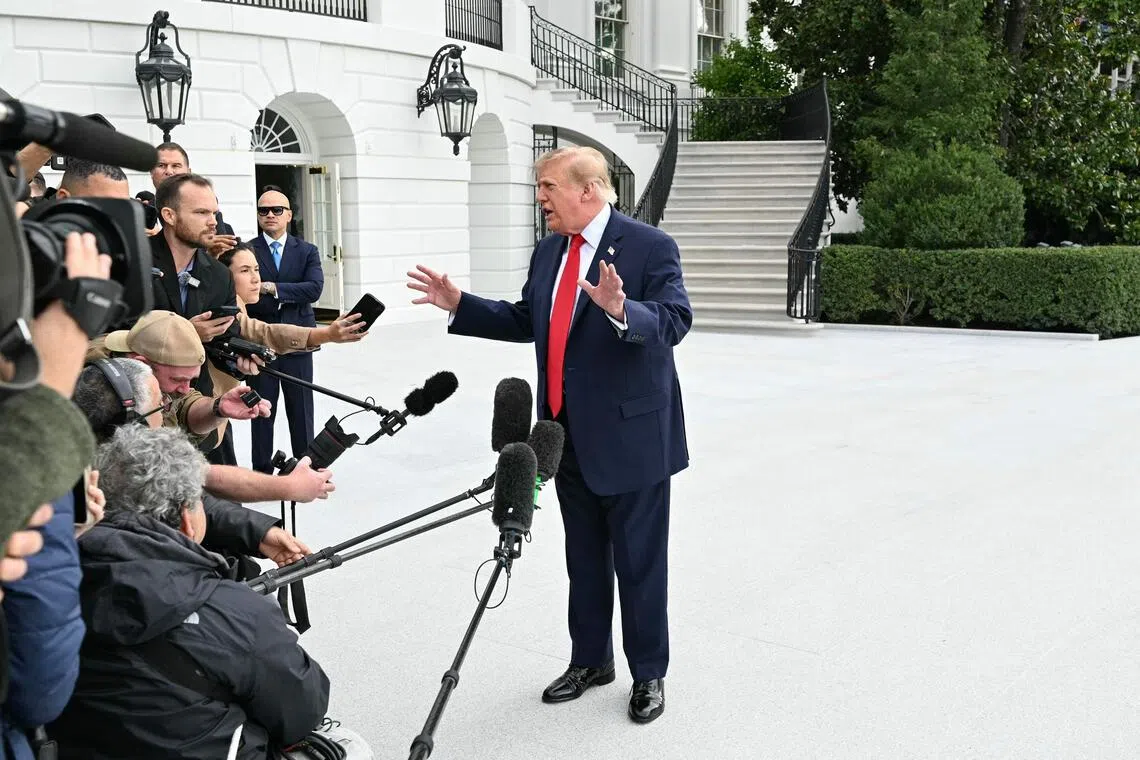
But in comments to reporters at the White House, Trump said: "I reject their proposal.... asserted
I → say → proposal
I rejected their deal. asserted
I → reject → deal
"They want to make a deal to open the Hormuz Strait immediately because they're losing so badly," he said before leaving for Tennessee. asserted
he → want → Tennessee
"We're winning tremendously." asserted
We → win → ?
"They want to make a deal and I think that's fine, I like making a deal, too. asserted
I → want → deal
What they want to do is immediately open the Hormuz Strait ... because they have no money coming in, because they get their money from the Hormuz Strait," Trump said. asserted
Trump → want → Strait
The U.S. has imposed an economic blockade on Iran to put pressure on Tehran to lift its blockade, which has drastically reduced shipping through the strait, even though Trump again asserted that the U.S. had control of the waterway. asserted
U.S. → impose → waterway
The Wall Street Journal first reported that Trump had rejected the Iranian proposal, citing unnamed U.S. officials. asserted
Trump → report → officials
It said Trump was privately skeptical that Iran would meet his demands and had told his staff that he sees a renewed bombing campaign as likely after the November U.S. midterm elections. asserted
he → say → elections
A U.S. official had said earlier that discussions with Iran through mediators were "positive and constructive." Conflict has disrupted oil flows, harmed global economy The Iranians also engaged their Saudi rivals regarding the Strait of Hormuz, underscoring the stakes of a seven-month-old conflict that has disrupted oil flows through a critical shipping lane and taken a toll on the global economy. asserted
that → say → economy
Iranian Foreign Minister Abbas Araghchi told reporters at the United Nations on Friday the proposed deal would trigger a seven-day countdown to reopening the strait and a pause in regional fighting. asserted
deal → tell → fighting
"If there is seriousness on the U.S. side to come to a deal and reopen the Strait of Hormuz, everything is now prepared," Araghchi said. asserted
Araghchi → be → Hormuz
If the U.S. were to agree, the warring parties could start wider talks "on mutually agreed subjects." uncertain
parties → agree → subjects
That could potentially include discussions of Iran's nuclear program. uncertain
That → include → program
Trump has said Tehran must never acquire a nuclear bomb, while a senior Iranian official told Reuters that Iran would show no flexibility over its nuclear program even if the U.S. accepted its peace deal. asserted
U.S. → say → deal
Iran would grant no concessions over its rights, including enriching uranium or shipping its highly enriched uranium out of the country, the official said. asserted
official → grant → country
Iranian President Masoud Pezeshkian, in an interview with the CBS show Face the Nation, said Tehran was ready for talks on its nuclear program and other issues but would not accept "bullying or coercion." asserted
Tehran → say → bullying
"Iran is not seeking war, but will defend itself against pressure, threats and attacks,” Pezeshkian said, adding that it had already agreed that "we're not supposed to develop nuclear weapons." asserted
we → seek → weapons
Previous attempts at diplomacy have failed to end the war, which began on Feb. 28 with U.S. and Israeli attacks. asserted
which → fail → attacks
Since then, the war has alternated between pauses and renewed strikes, killing thousands while degrading Iran's conventional forces and damaging Iran's already ailing economy. asserted
war → alternate → economy
Iran and its allies have retaliated by extending the conflict throughout the region. asserted
Iran → retaliate → region
Iran has struck U.S. allies in the Gulf with drones and missiles while its Houthi allies in Yemen have targeted Saudi interests. asserted
allies → strike → interests
💬Give feedback
🕘History 🎫Support