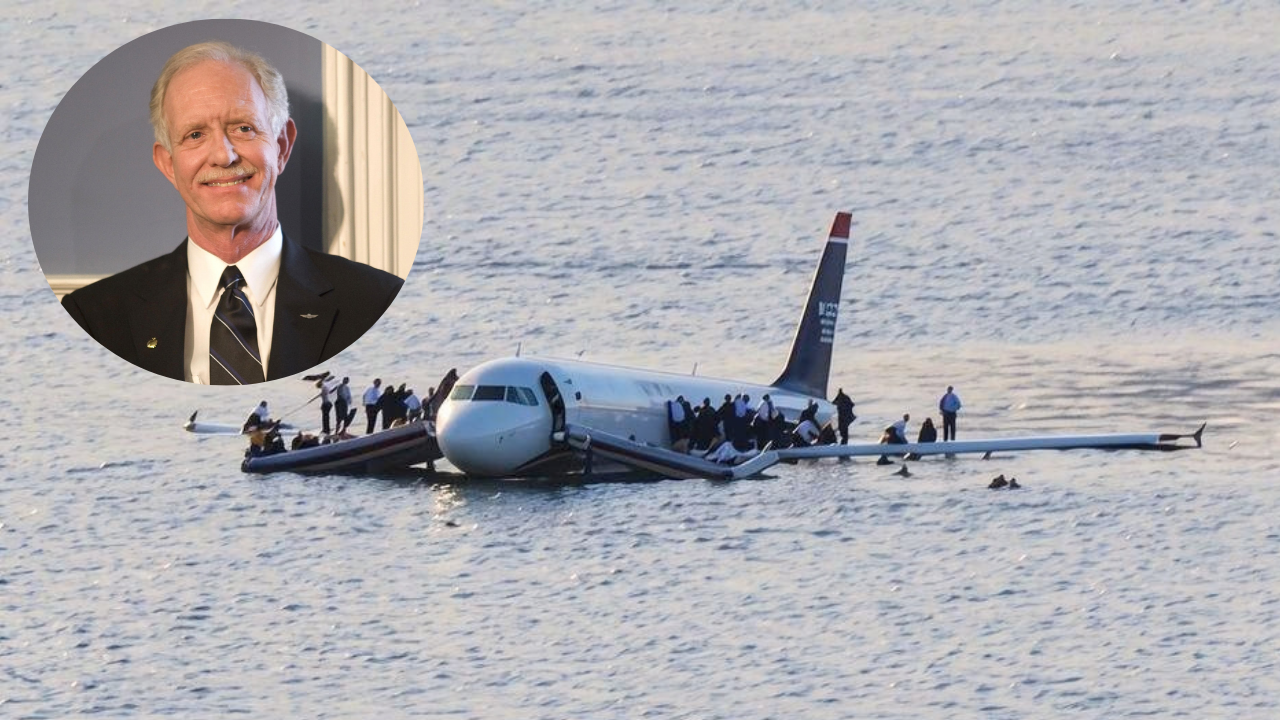
Capt Chesley “Sully” Sullenberger III – the pilot known for safely landing a US Airways flight in New York City’s Hudson River during a 2009 emergency – has been inducted into the US’s National Aviation Hall of Fame, two months after he went public with an Alzheimer’s disease diagnosis.
asserted
he → know → diagnosis
Sullenberger, 75, received the honor during a ceremony held in Washington DC on Thursday, 17 years after he engineered what has become widely known as the Miracle on the Hudson.
asserted
what → receive → Hudson
His actions that day – which saved more than 150 lives – set the stage for him to be inducted alongside the six-member 2026 hall of fame class, including Nasa astronauts and aviation researchers.
asserted
him → save → astronauts
Sullenberger participated in the ceremony remotely by video, saying: “I want to congratulate the other [inductees] on lifetimes of accomplishments.
asserted
I → participate → accomplishments
And I thank you for the honor of enshrinement in the National Aviation Hall of Fame.”
asserted
I → thank → Fame
During his remarks, he recognized that the dramatic events of 2009 – which were eventually the basis of a Tom Hanks movie – played a major role in his enshrinement.
asserted
which → recognize → enshrinement
But he made it a point to say: “My career was much more than one flight.
asserted
career → make → flight
“From a very young age, I knew I wanted to fly airplanes.
asserted
I → know → airplanes
That was the beginning of a lifetime following that dream.
asserted
That → follow → dream
I was so fortunate to spend an entire working lifetime doing something I loved.”
asserted
I → spend → something
A former member of the US air force, Sullenberger was piloting US Airways Flight 1549 on 15 January 2009.
asserted
Sullenberger → pilot → January
The aircraft had departed New York City’s LaGuardia airport en route to Charlotte, North Carolina, carrying 150 passengers and five crew members.
asserted
aircraft → depart → passengers
Not long after takeoff, the aircraft struck a flock of birds, resulting in a total loss of thrust from both engines.
asserted
aircraft → strike → engines
Sullenberger ultimately realized that the plane would not be able to make it back to LaGuardia – so he instead landed the aircraft in the Hudson River.
asserted
he → realize → River
All 155 people aboard survived.
asserted
people → survive → ?
Sullenberger in July disclosed that he had been diagnosed with Alzheimer’s disease, which had given him another way to think about public service.
asserted
which → disclose → service
“This new phase of my life has challenged what it means to be of service,” he said in a statement shared at the time.
asserted
he → challenge → time
“And the answer is to speak up.
asserted
answer → speak → ?
It is my hope that by sharing this, other families living in the shadows with this disease will feel they too can step forward.”
asserted
they → share → disease
Speaking in an interview on Wednesday with the ABC program Good Morning America, Sullenberger described his reaction to learning of the diagnosis.
asserted
Sullenberger → speak → diagnosis
He said he experienced “all those emotions, the shock, the anger, why me?”
asserted
he → say → emotions
“We’re part of this community who are trying to make the best of a bad situation.”
asserted
who → ’re → situation
Figures from the Alzheimer’s Association indicate that about 7.4 million people who are age 65 or older are living with clinical Alzheimer’s dementia.
asserted
who → indicate → dementia
“This is a disease – not a character flaw,” his wife, Lorrie Sullenberger, said on Good Morning America.
asserted
wife → say → America
“I think we need to talk about it more openly, and maybe other people can do the same.”
asserted
people → think → same
 The Aporia