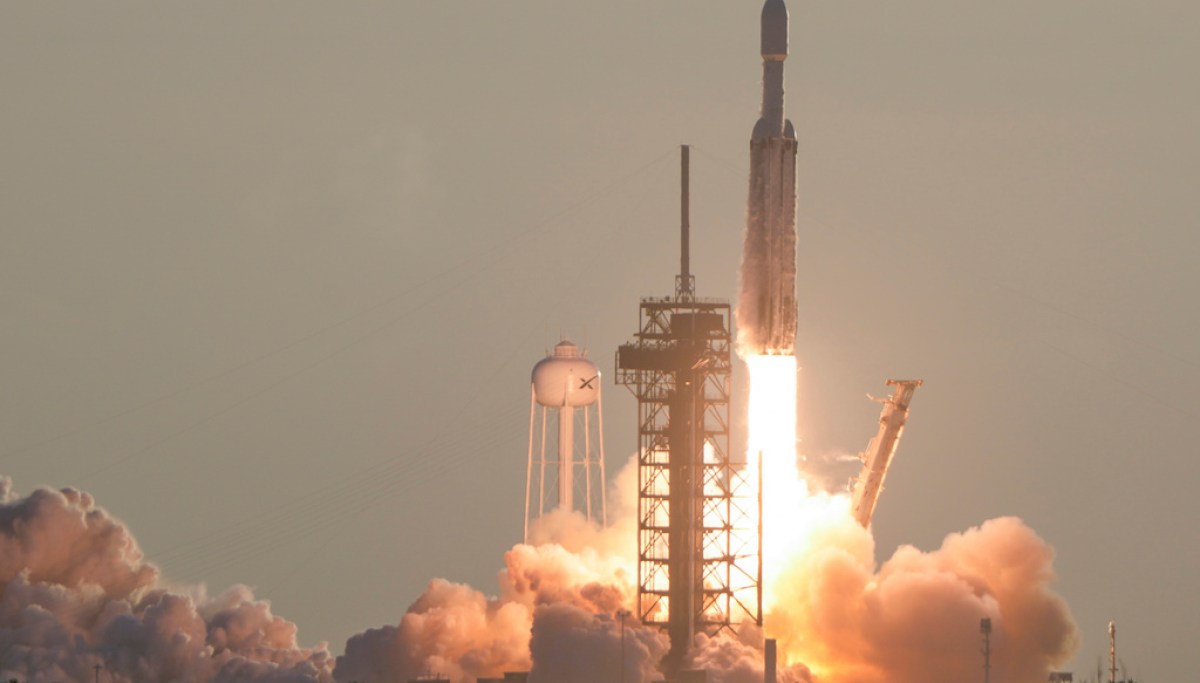
Photo via Washington Examiner

AI’s data center problem could move to space

Read the original at Washington Examiner ↗
Cite

Rowe, R. (2026, September 26). AI’s data center problem could move to space. Washington Examiner. https://www.washingtonexaminer.com/policy/space/4743313/ais-data-center-problem-space/

Dated when The Aporia collected the article, usually within hours of publication. Check the original for its exact date and byline.

Washington Examiner · collected 2026-09-26 · by Rena Rowe

Quick Summary

Google, SpaceX, and several startups are exploring the feasibility of building AI data centers in space to address the environmental and community issues associated with terrestrial data centers. These potential space-based infrastructures would be powered by solar energy and avoid many of the logistical challenges faced on Earth. However, significant engineering hurdles remain, such as cooling systems for managing heat and maintaining operational satellites. Google’s Project Suncatcher plans to launch test satellites next week carrying Tensor Processing Units (TPUs), while SpaceX envisions up to one million satellites functioning as orbital data centers. The federal government is also considering the potential benefits of space-based data centers, with the Pentagon exploring pilot programs for national security applications.
Written by AI on 2026-09-26, from this article's own text only (the story summary below draws on all the coverage).

AI analysis

Story summary

Google, SpaceX, and several startups are investigating the feasibility of building AI-powered data centers in orbit around Earth. These proposed space-based facilities would be powered by solar energy and alleviate some of the challenges faced by current terrestrial data centers, such as water consumption for cooling, land disputes, and conflicts over power grids and noise levels. However, significant hurdles remain, including the complexities involved in constructing, launching, powering, cooling, maintaining, and eventually replacing numerous orbital data centers to rival Earth-based infrastructure. Amit Verma, an electrical engineering professor at Texas A&M University-Kingsville, acknowledged the potential but emphasized the substantial challenges ahead.

Written for “AI Data Center Space Migration” on 2026-11-02, grounded in this article and the 0 other(s) covering the same event.

Story

📰 AI Data Center Space Migration
Technology · 1 article(s) covering the same event.

Compared with similar articles

This article reads unscored and hedges 17% of its claims. Each row says how that neighbour differs.
The Straits Times
⚖️ Leans left Hedges 0 of 2 claims Outlet record 66/100
“The articles discuss different aspects of data center issues related to AI, but do not describe the same specific incident or occurrence.”
Daily Mail
⚖️ Leans left Hedges 3 of 20 claims Outlet record 69/100
“The articles discuss different aspects of AI's impact and infrastructure concerns, not a single specific incident.”
How this article was measured signals, leaning charts, publisher record, byline, topics and claims

Signals How these are calculated →

Claims extracted
70
sentences that state something as happening or true
Uncertain
17%
12 of 70 hedged ("reportedly", "may", "according to")
Leaning
not political
takes no side on a contested political question
Publisher signals
70/100
Washington Examiner's corrections and hedging, across everything collected from it. Not a measure of accuracy.
Outlets on this story
1
Technology
Same framing elsewhere
1
articles that frame the event the way this one does
Analyzed 2026-09-26 · how these are computed

How this is being covered How these are calculated →

Article leaning vs. publisher reliability
Source leaning vs. consistency

Publisher

Washington Examiner · 3907 article(s) · 7 correction(s) detected
Running correction rate · 7 correction(s)

Who wrote this

Rena Rowe
105 article(s) here · 1 carrying a prediction
🔮 President Donald Trump is set to speak at a rally in Daytona Beach, Florida, on Friday at 7 p.m. as he works to shore up Republican support just days before the 2026 midterm elections.
2026-10-30 · assertive framing · WATCH LIVE: Trump holds rally in Daytona Beach
🔮 A federal judge overseeing a legal fight over President Donald Trump’s plans to remake Washington, D.C.’s East Potomac Golf Links said Friday she would investigate whether administration officials misled the court and violated professional ethics rules during the proceedings.
🔮 Gov. Mike Dunleavy (R-AK) has ordered an investigation into whether Alaska Democratic Senate candidate Mary Peltola’s campaign illegally recruited a spoiler candidate to siphon votes from Sen. Dan Sullivan (R-AK), escalating a controversy that could reshape one of the country’s most competitive Senate races days before Election Day.
🔮 President Donald Trump is set to hold a rally on Wednesday in Chillicothe, Ohio, at 7 p.m., less than a week before the 2026 midterm election.
🔮 Federal Reserve Chairman Kevin Warsh is set to announce the central bank’s interest rate decision on Wednesday at 2:30 p.m.
🔮 Secretary of State Marco Rubio is set to campaign with President Donald Trump in Ohio on Thursday, expanding his role on the campaign trail as Republicans travel across the country to shore up support ahead of next week’s midterm elections.
🔮 The ultra-Orthodox Shas party joined the request, citing unusually long lines and warning that voters could be prevented from casting ballots before polls closed.
🔮 Florida Democratic Senate nominee Angie Nixon said that assumptions about racism in the South may be contributing to Democrats’ reluctance to invest in her campaign, arguing that the party has repeatedly underestimated the state’s political potential.
🔮 President Donald Trump is set to hold a rally at 5:30 p.m. Eastern on Thursday in Sioux City, Iowa, to boost GOP candidates ahead of the looming Nov. 3 election.
🔮 Federal Communications Commission Chairman Brendan Carr warned broadcasters against airing fabricated election polls, saying stations could face regulatory scrutiny if they knowingly mislead viewers through false polling data.
Also by Rena Rowe
WATCH LIVE: Trump holds rally in Daytona Beach
2026-10-30 · Washington Examiner
Nothing else under this byline is closely related to this article, so these are simply their most recent.
All 105 articles by Rena Rowe →

Topics

Google Project Suncatcher SpaceX Texas A&M University-Kingsville the Washington Examiner

Subjects

Google ORG · 3× SpaceX ORG · 2× the Washington Examiner ORG · 2× Amit Verma PERSON · 1× Blue Origin ORG · 1× Elon Musk PERSON · 1× Government Accountability Office ORG · 1× Starcloud ORG · 1× Texas A&M University-Kingsville ORG · 1× the Federal Communications Commission ORG · 1×

Narrative

The idea sounds almost tailor-made for an industry facing difficulty growing on Earth: Put the computers where sunlight is abundant, eliminate the need for massive supplies of cooling water, and avoid the local fights over land, power grids, and noise. While computers can certainly run in space, the difficulty comes when companies try to build, launch, power, cool, connect, maintain, and eventually replace enough orbital data centers to make a meaningful dent in the infrastructure being built on Earth.
framing: assertive · carried by 1 article(s) · first seen 2026-09-26
🔮 Google, SpaceX, and a collection of startups are exploring whether the next generation of AI infrastructure could operate in orbit, powered by the sun and freed from many of the constraints that make terrestrial data centers so controversial.
2026-09-26 · Washington Examiner
AI’s data center problem could move to space · assertive framing

Claims (70 extracted, 12 hedged)

For years, the sprawling warehouses powering artificial intelligence have been built on Earth, consuming enormous amounts of electricity and water and running into resistance from the communities where they are located. asserted
they → sprawl → communities
Now, some of the technology industry’s biggest names are looking to the skies. asserted
some → look → skies
Google, SpaceX, and a collection of startups are exploring whether the next generation of AI infrastructure could operate in orbit, powered by the sun and freed from many of the constraints that make terrestrial data centers so controversial. uncertain
centers → explore → constraints
The idea sounds almost tailor-made for an industry facing difficulty growing on Earth: Put the computers where sunlight is abundant, eliminate the need for massive supplies of cooling water, and avoid the local fights over land, power grids, and noise. While computers can certainly run in space, the difficulty comes when companies try to build, launch, power, cool, connect, maintain, and eventually replace enough orbital data centers to make a meaningful dent in the infrastructure being built on Earth. asserted
companies → sound → Earth
“The possibility is of course there,” Amit Verma, an electrical engineering professor at Texas A&M University-Kingsville, told the Washington Examiner. asserted
Verma → tell → Examiner
“The feasibility and sustainability — those are engineering questions that need to be addressed before this becomes a very viable option.” asserted
this → need → ?
Nonetheless, Google’s Project Suncatcher envisions interconnected, solar-powered satellites carrying the company’s Tensor Processing Units, or TPUs, to perform machine-learning workloads in orbit. asserted
Suncatcher → envision → orbit
Google is preparing a prototype mission with its first test satellites expected to launch next week. asserted
satellites → prepare → mission
SpaceX CEO Elon Musk has floated an even more ambitious vision of up to one million satellites functioning as orbital data centers. asserted
Musk → float → centers
Startup Starcloud, meanwhile, has asked the Federal Communications Commission for permission to deploy as many as 88,000 satellites as a distributed data center, while Blue Origin has proposed its own large orbital computing constellation. asserted
Origin → ask → constellation
The federal government is taking the concept seriously, too. asserted
government → take → concept
A Government Accountability Office report published in April identified space-based data centers as a potential way to reduce the resources consumed by data centers on Earth. asserted
report → publish → Earth
Sens. Ted Cruz (R-TX) and John Hickenlooper (D-CO) also introduced legislation in June that would create a Pentagon pilot program to test commercial orbital data centers for national security applications. asserted
that → introduce → applications
That interest comes as the public has bucked data centers being built in their communities, and in some cases, their backyards. asserted
public → come → cases
A September Pew Research Center survey found that 60% of U.S. adults would be uncomfortable with a new data center operating in their area. asserted
% → find → area
Space could theoretically remove some of those local pressures, but at the same time, it introduces an entirely new set of problems. uncertain
it → remove → problems
Space does not come with free cooling One of the most counterintuitive challenges is heat. asserted
One → come → challenges
On Earth, data centers can rely on water-based cooling systems to carry heat away from computing equipment. asserted
centers → rely → equipment
Instead, a spacecraft has to radiate heat into space. asserted
spacecraft → have → space
“A data center capable of running AI models could require tens of megawatts of power,” Verma said. uncertain
Verma → run → power
The more electricity the computers consume, the more waste heat they generate, requiring larger systems to radiate that heat away. asserted
they → consume → heat
Ben Lee, a professor at the University of Pennsylvania who studies computer architecture and sustainable computing, told the Washington Examiner the basic technologies needed to power a spacecraft are well understood. asserted
technologies → study → spacecraft
The difficulty is combining them at the scale required for an AI data center. asserted
difficulty → combine → center
“The techniques that we’ve got for air cooling or liquid cooling data centers through cooling towers and evaporative water loss obviously won’t work in a vacuum,” Lee said. asserted
Lee → get → vacuum
“So we need a strategy for cooling the data centers.” asserted
we → need → centers
Radiation presents another issue. asserted
Radiation → present → issue
Computer chips designed for terrestrial data centers are not built to operate indefinitely in the harsh radiation environment of space. asserted
chips → design → space
“We can’t just take something off the shelf that we’ve designed for terrestrial data centers, launch it into space, and expect it to perform in the same way,” Lee said. asserted
Lee → take → way
Companies can shield hardware or develop radiation-resistant components, but both approaches add complexity, weight or cost. asserted
approaches → shield → complexity
AI hardware is evolving at a pace that is difficult to reconcile with the logistics of orbital infrastructure. asserted
that → evolve → infrastructure
“The technology changes every couple of years,” Verma said. asserted
Verma → change → years
“The GPUs that you have there…will become obsolete in two [or] three years. asserted
you → have → years
They need to be replaced.” asserted
They → need → ?
In a terrestrial data center, replacing an obsolete GPU means sending a truck to the facility, rather than launching more replacement infrastructure into space. asserted
replacing → replace → space
The economics of orbital data centers depend on the cost of getting enormous amounts of hardware into orbit and, additionally, keeping it there. asserted
economics → depend → it
GAO noted that large-scale deployment would require advances not only in computing, cooling, and communications but also in manufacturing and launch capacity. asserted
deployment → note → manufacturing
The agency said some companies envision constellations of thousands of satellites, while projects designed to process data generated in space are substantially closer to technological maturity than massive orbital facilities designed to train AI models. asserted
projects → say → models
Karen Howard, director of science and technology assessment at GAO, told the Washington Examiner the current launch industry is nowhere near the scale that would be required for the largest proposals. asserted
that → tell → proposals
The FAA projects roughly 200 launches in 2026, Howard said, while some orbital data center concepts contemplate tens of thousands, or even millions, of satellites. asserted
concepts → project → satellites
“Even if industry can develop data centers (small or large) for space, it doesn’t have the manufacturing and launch capacity, and related ability to reduce the cost of launch, that would be necessary to meaningfully replace or even significantly supplement Earth-based data centers yet,” Howard said. asserted
Howard → develop → centers
…and 30 more, not listed.

💬Give feedback
🕘History 🎫Support