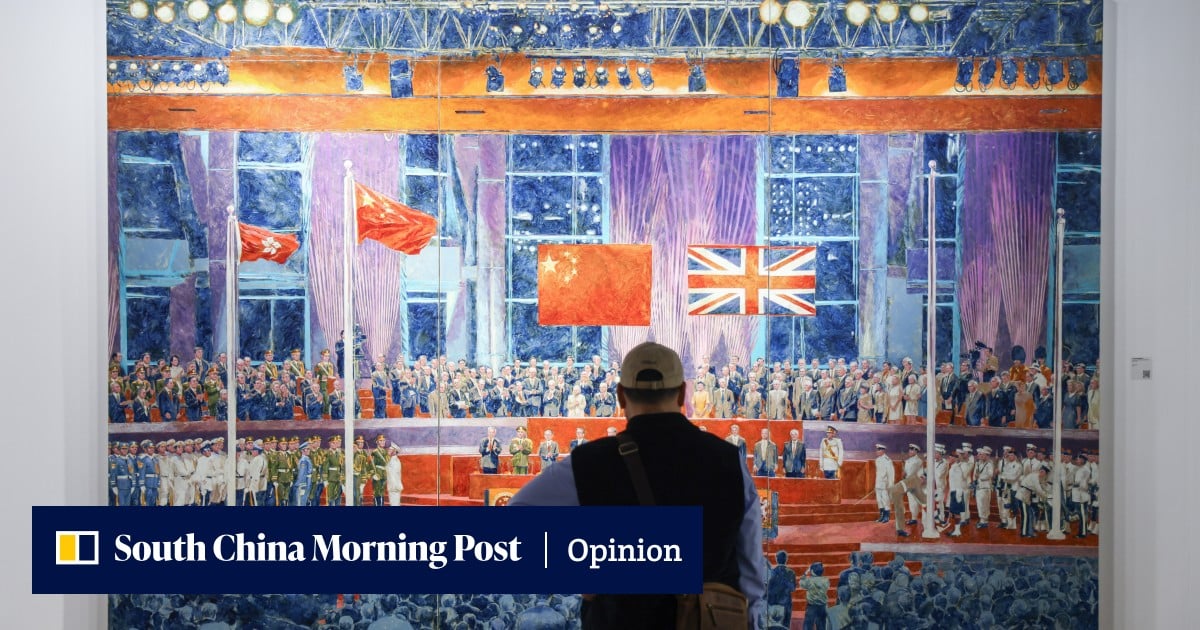
Photo via South China Morning Post

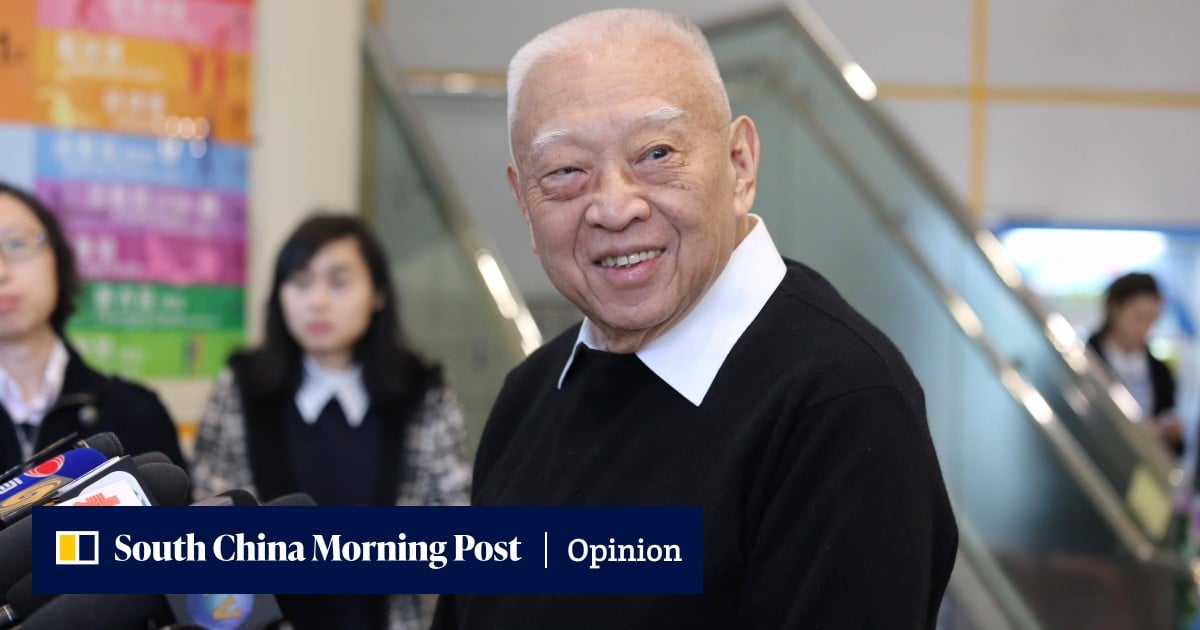
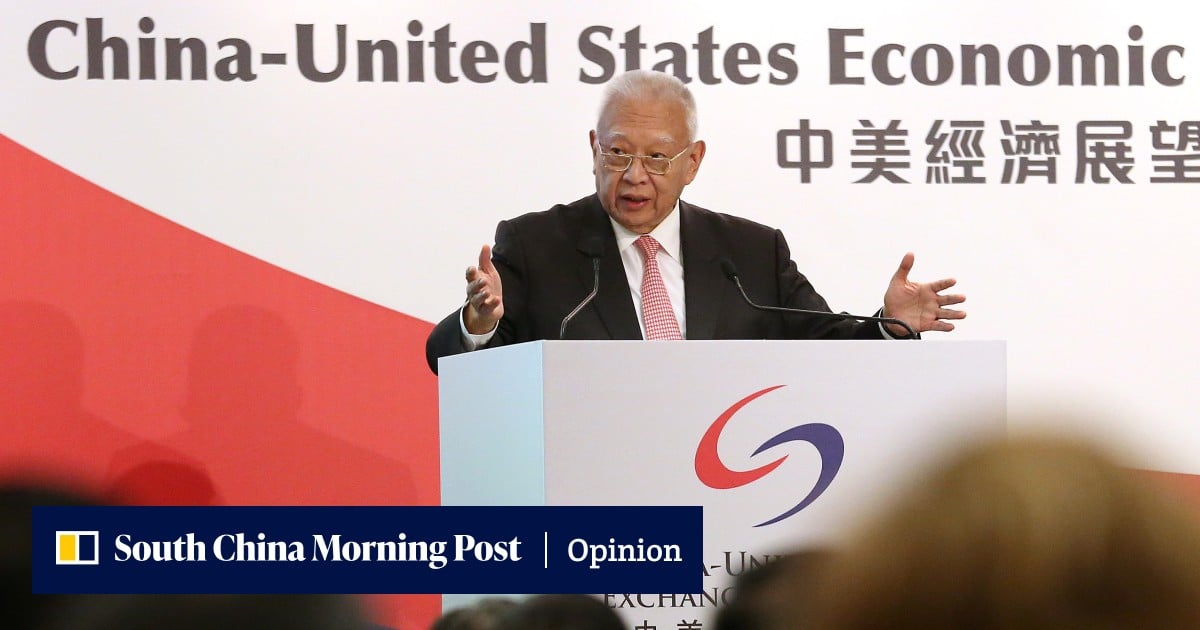
To understand where Hong Kong is going, start with Tung Chee-hwa

Read the original at South China Morning Post ↗
Cite

Xianyue, C. (2026, September 27). To understand where Hong Kong is going, start with Tung Chee-hwa. South China Morning Post. https://www.scmp.com/opinion/hong-kong-opinion/article/3368522/understand-where-hong-kong-going-start-tung-chee-hwa?utm_source=rss_feed

Dated when The Aporia collected the article, usually within hours of publication. Check the original for its exact date and byline.

South China Morning Post · collected 2026-09-27 · by Cheng Xianyue

Quick Summary

Tung Chee-hwa, Hong Kong’s first chief executive after the 1997 handover to China, died on September 8, prompting reflection on his role in shaping post-colonial Hong Kong. The article discusses how Tung’s tenure marked a transition from British colonial rule, which emphasized efficiency and order over democratic accountability, to a period where Hong Kong society began valuing transparency, public participation, and political responsibility alongside policy outcomes.
Written by AI on 2026-09-27, from this article's own text only (the story summary below draws on all the coverage).

AI analysis

Story summary

On September 8, Tung Chee-hwa, Hong Kong's first chief executive after the city was returned to China from British rule in 1997, passed away. His death prompted reflections on the nearly three decades of changes since then. Prior to 1997, Hong Kong under British colonial rule had a highly efficient administrative system focused on order and procedure. However, this era also saw a distinct political structure that differed from modern constitutional systems in terms of public participation and accountability.

Post-1997, Hong Kong's societal transformation included a shift towards greater emphasis on the reasons behind policy decisions and who is responsible for their consequences, indicating an increased desire among citizens for transparency and accountability.
Written for “Hong Kong History Leadership” on 2026-11-03, grounded in this article and the 0 other(s) covering the same event.

Story

📰 Hong Kong History Leadership
Politics · 1 article(s) covering the same event.

Compared with similar articles

This article reads leans left and hedges 12% of its claims. Each row says how that neighbour differs.
South China Morning Post
⚖️ Centre further right than this Hedges 0 of 5 claims Outlet record 63/100
“The articles discuss Tung Chee-hwa's role as Hong Kong’s first chief executive but cover different aspects of his legacy and influence over time.”
South China Morning Post
⚖️ Leans right further right than this Hedges 0 of 8 claims Outlet record 63/100
“While both articles discuss Tung Chee-hwa's death and its significance to Hong Kong's history, they do not clearly describe the same specific incident or time period.”
How this article was measured signals, leaning charts, publisher record, byline, topics and claims

Signals How these are calculated →

Claims extracted
8
sentences that state something as happening or true
Uncertain
12%
1 of 8 hedged ("reportedly", "may", "according to")
Leaning
Leans left
of the writing, not the subject · beta estimate
Publisher signals
63/100
South China Morning Post's corrections and hedging, across everything collected from it. Not a measure of accuracy.
Outlets on this story
1
Politics
Same framing elsewhere
1
articles that frame the event the way this one does
Analyzed 2026-09-27 · how these are computed

How this is being covered How these are calculated →

Article leaning vs. publisher reliability
Source leaning vs. consistency

Publisher

South China Morning Post · 3630 article(s) · 7 correction(s) detected
Running correction rate · 7 correction(s)

Who wrote this

Cheng Xianyue
2 article(s) here · 1 carrying a prediction
🔮 Its next phase could be defined by a different challenge: how to keep cross-border transactions moving when borders matter again.
2026-11-02 · assertive framing · The Apec moment Hong Kong needs to seize
🔮 Citizens increasingly cared not only about whether policies could achieve results, but also why decisions were made, how different views were considered, and who should bear responsibility for consequences.
Also by Cheng Xianyue
The Apec moment Hong Kong needs to seize
2026-11-02 · South China Morning Post
Nothing else under this byline is closely related to this article, so these are simply their most recent.

Topics

British China Hong Kong Hong Kong’s

Subjects

Hong Kong GPE · 3× Hong Kong’s GPE · 3× Tung Chee-hwa PERSON · 2× British NORP · 1× China GPE · 1× Tung PERSON · 1×

Narrative

To understand where Hong Kong is going, start with Tung Chee-hwa To understand Tung is to understand the historical moment in which he stood; Hong Kong’s post-1997 journey started there On September 8, Tung Chee-hwa, Hong Kong’s first chief executive, died.
framing: assertive · carried by 1 article(s) · first seen 2026-09-27
🔮 Citizens increasingly cared not only about whether policies could achieve results, but also why decisions were made, how different views were considered, and who should bear responsibility for consequences.
2026-09-27 · South China Morning Post
To understand where Hong Kong is going, start with Tung Chee-hwa · assertive framing

Claims (8 extracted, 1 hedged)

To understand where Hong Kong is going, start with Tung Chee-hwa To understand Tung is to understand the historical moment in which he stood; Hong Kong’s post-1997 journey started there On September 8, Tung Chee-hwa, Hong Kong’s first chief executive, died. asserted
hwa → understand → September
It prompted reflection, not only on a political figure who once stood at the centre of the city’s public life, but also on nearly three decades of change since its return to China. asserted
who → prompt → China
British colonial rule left Hong Kong with a highly developed administrative system built around efficiency, procedure and order. asserted
rule → leave → efficiency
This administrative tradition became an important part of Hong Kong’s identity. asserted
tradition → become → identity
However, colonial governance also operated under a distinct political structure, where questions of legitimacy, public participation and political accountability were addressed differently from those in modern constitutional systems. asserted
questions → operate → systems
After 1997, Hong Kong entered a new stage. asserted
Kong → enter → stage
It also involved a transformation in how society understood public power. asserted
society → involve → power
Citizens increasingly cared not only about whether policies could achieve results, but also why decisions were made, how different views were considered, and who should bear responsibility for consequences. uncertain
who → care → consequences
💬Give feedback
🕘History 🎫Support