Photo via Times of India

Brazil tested forest seeding; row method stored 155 tonnes biomass in 15 years

Read the original at Times of India ↗
Cite

TOI World Desk. (2026, September 27). Brazil tested forest seeding; row method stored 155 tonnes biomass in 15 years. Times of India. https://timesofindia.indiatimes.com/world/rest-of-world/brazil-restored-river-forests-using-three-seeding-methods-and-planted-seedlings-15-years-later-row-seeding-stored-155-tonnes-of-biomass-per-hectare/articleshow/134498396.cms

Dated when The Aporia collected the article, usually within hours of publication. Check the original for its exact date and byline.

Times of India · collected 2026-09-27 · by TOI World Desk

Quick Summary

Since 2006, researchers in Mato Grosso, Brazil, have been testing five different methods of forest restoration across 75 riparian forest sites over a 15-year period. The study found that the row-seeding method produced the highest aboveground biomass accumulation at about 155 tonnes per hectare, significantly outperforming other techniques such as broadcast seeding and seedling planting. This superior performance was attributed to the mechanical precision of row-seeding, which favors deep-rooted species like Enterolobium timbouva that store more carbon over time compared to surface-dwelling species favored by broadcast seeding methods.
Written by AI on 2026-09-27, from this article's own text only (the story summary below draws on all the coverage).

AI analysis

Story summary

Since 2006, researchers working with Instituto Socioambiental have restored 75 riparian forest sites along a 500km stretch of Mato Grosso, Brazil, using five different approaches. After 15 years, the study published in the Journal of Environmental Management found that row-seeding was notably more effective than other methods for storing carbon above ground. Specifically, row-seeded sites had accumulated roughly 155 tonnes of aboveground biomass per hectare, outperforming broadcast seeding, hole seeding, seedling planting, and natural regeneration. The study tracked the sites in 2017 and again in 2022 as part of a continuous chronosequence, revealing significant differences in carbon storage among restoration methods despite similar local conditions such as soil type and moisture.

Written for “Forest Seeding Experiment Brazil” on 2026-11-03, grounded in this article and the 0 other(s) covering the same event.

Story

📰 Forest Seeding Experiment Brazil
Environment · 1 article(s) covering the same event.

Compared with similar articles

Nothing to compare against. No article is close enough to this one for the pipeline to have linked or judged the pair.
How this article was measured signals, leaning charts, publisher record, byline, topics and claims

Signals How these are calculated →

Claims extracted
18
sentences that state something as happening or true
Uncertain
6%
1 of 18 hedged ("reportedly", "may", "according to")
Leaning
not political
takes no side on a contested political question
Publisher signals
59/100
Times of India's corrections and hedging, across everything collected from it. Not a measure of accuracy.
Outlets on this story
1
Environment
Same framing elsewhere
1
articles that frame the event the way this one does
Analyzed 2026-09-27 · how these are computed

How this is being covered How these are calculated →

Article leaning vs. publisher reliability
Source leaning vs. consistency

Publisher

Times of India · 4006 article(s) · 4 correction(s) detected
Running correction rate · 4 correction(s)

Who wrote this

TOI World Desk
1391 article(s) here · 1 carrying a prediction
🔮 For someone passing through a cemetery, a lantern or a plant might appear to be an ordinary possession.
🔮 A British man’s handwritten will, drafted on the cardboard packaging of a frozen fish box and a mince pie packet, has been ruled valid by the High Court, clearing the way for a diabetes charity to inherit his estate worth approximately £180,000.
🔮 Instead of sweeping past to look for younger animals, they paused, took a closer look, and asked shelter staff if they could meet Herbie in person.
🔮 He realised that it could be one of the fish released as part of the competition.
🔮 When Judge Judy Sheindlin and her daughter Nicole Sheindlin launched Her Honor Mentoring in 2006, it began with a modest group of eight or nine high-school girls and a simple belief: a trusted professional woman could help a young person see a wider future for herself.
🔮 A subsequent report by Hoodline said the event included remarks from Mayor Stephen Tyler Holman, City Manager Darrel Pyle, artist Ken Hall Jr. and Derek Vosten, among others.
🔮 Those allegations could remain in the complaint as background and evidence.
🔮 His application raised a question that had not previously been tested in court on St Helena: could someone acquire government-owned land simply by occupying it for 15 years?
🔮 The restored property will take time to develop into a mature habitat, but the project offers an example of how privately owned agricultural land can contribute to biodiversity recovery.
🔮 The return of these mammals is therefore expected to benefit more than just the animals themselves.
Wire or desk byline, not an individual reporter.
Also by TOI World Desk
Nothing else under this byline is closely related to this article, so these are simply their most recent.
All 1391 articles by TOI World Desk →

Topics

Brazil Canva Mato Grosso the Instituto Socioambiental the Journal of Environmental Management

Subjects

Brazil GPE · 3× Canva ORG · 1× Mato Grosso GPE · 1× the Instituto Socioambiental ORG · 1× the Journal of Environmental Management ORG · 1×

Narrative

A 15-year experiment across 75 riparian forests in Brazil The study ‘ Carbon stocks in riparian forests in the Amazonia-Cerrado transition over 15 years: Effects of restoration methods and edaphoclimatic factors’ tracked 75 sites in the Amazonia-Cerrado transition zone, all previously cleared for cattle pasture, sampling each one in 2017 and again in 2022 as part of a continuous 15-year chronosequence.
framing: assertive · carried by 1 article(s) · first seen 2026-09-27
🔮 Instead, soil carbon was shaped almost entirely by local conditions such as cation exchange capacity, base saturation and moisture, meaning restoration choices that dramatically boost trees overhead may do little to change what's stored underground, a decoupling the researchers say reflects patterns seen elsewhere in tropical forest research.
2026-09-27 · Times of India
Brazil tested forest seeding; row method stored 155 tonnes biomass in 15 years · assertive framing

Claims (18 extracted, 1 hedged)

Since 2006, researchers working with the Instituto Socioambiental have restored 75 riparian forest sites along a 500km stretch of Mato Grosso, Brazil, using five different approaches, three direct seeding techniques (broadcast, hole and row), seedling planting, and natural regeneration. asserted
researchers → work → approaches
Fifteen years on, a study published in the Journal of Environmental Management found the results were far from equal. asserted
results → publish → Management
Row-seeding, in particular, pulled dramatically ahead of every other method for storing carbon above ground. asserted
seeding → pull → ground
Here's how a simple choice in planting technique ended up making such an outsized difference. asserted
choice → end → difference
After 15 years, row-seeded sites had accumulated roughly 155 tonnes of aboveground biomass per hectare, comfortably outpacing broadcast seeding, hole seeding, seedling planting and natural regeneration alike. asserted
sites → seed → seeding
A 15-year experiment across 75 riparian forests in Brazil The study ‘ Carbon stocks in riparian forests in the Amazonia-Cerrado transition over 15 years: Effects of restoration methods and edaphoclimatic factors’ tracked 75 sites in the Amazonia-Cerrado transition zone, all previously cleared for cattle pasture, sampling each one in 2017 and again in 2022 as part of a continuous 15-year chronosequence. asserted
stocks → track → chronosequence
Sites were restored using broadcast-seeding (45 sites), hole-seeding (11), row-seeding (10), seedling planting (4) or natural regeneration (5). asserted
Sites → restore → seeding
By the 15-year mark, row-seeding had produced a mean aboveground biomass of 155.2 tonnes per hectare, roughly double that of broadcast-seeding (80.6 tonnes) and hole-seeding (73.8 tonnes), and well ahead of seedling planting (67.8 tonnes) and even natural regeneration (97.1 tonnes). asserted
seeding → produce → planting
Why row-seeding grew bigger trees than broadcasting or holes The researchers traced row-seeding's advantage to the mechanical precision of the grain drills used to plant it, which buried seeds at a depth well suited to certain long-lived pioneer species. asserted
which → grow → species
Chief among them was Enterolobium timbouva, an oval-seeded tree with substantial energy reserves that can emerge from deeper soil, protected from predators and drying out, and which came to dominate row-seeded sites older than a decade. asserted
which → emerge → decade
By contrast, broadcast-seeding favoured Tachigali vulgaris, a small-seeded species that thrives near the surface but tends to die off within 10 to 20 years, helping explain why broadcast sites' biomass growth slowed over time as that transitory species was replaced. asserted
species → favour → time
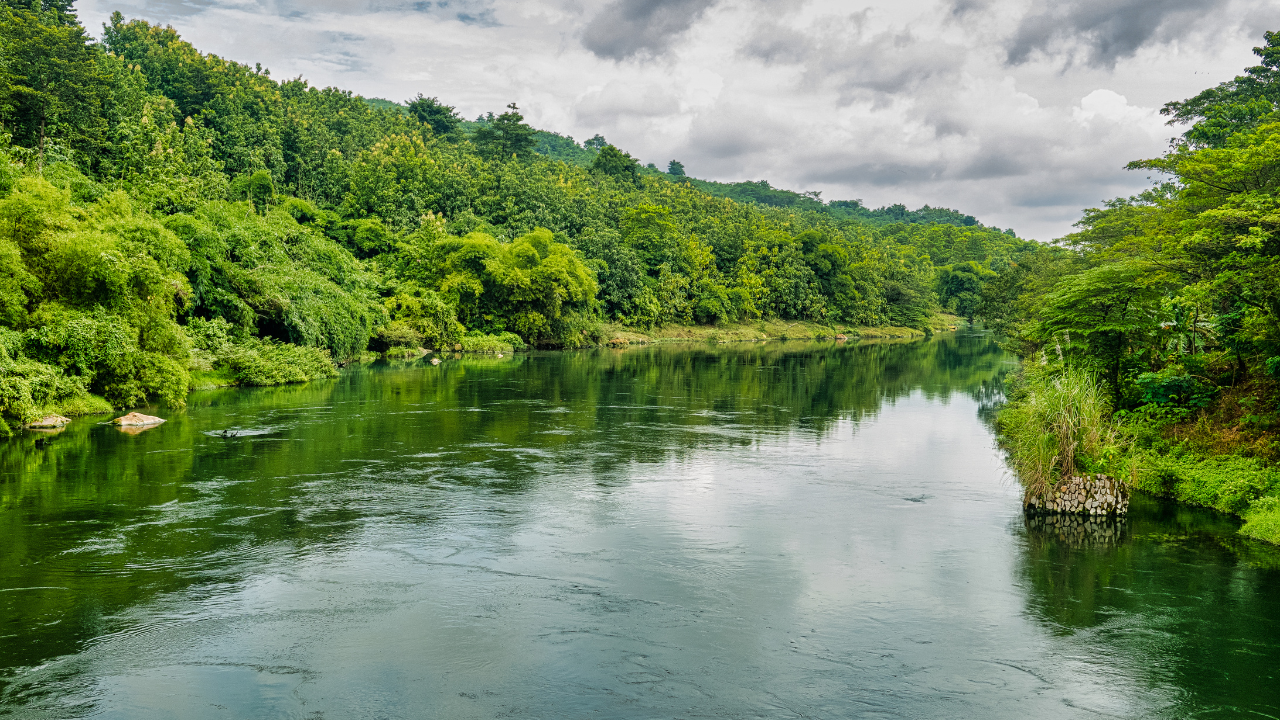
The researchers traced row-seeding's advantage to the mechanical precision (Image: Canva) asserted
researchers → trace → precision
The hidden divide; carbon in trees vs carbon in soil While the trees above ground told a clear story of technique mattering enormously, the carbon stored in the soil beneath told a completely different one. asserted
carbon → tell → one
Soil organic carbon stocks, ranging from 11.4 to 73.5 tonnes per hectare across all sites, showed no meaningful link to a site's age or its restoration method at all. asserted
stocks → range → age
Instead, soil carbon was shaped almost entirely by local conditions such as cation exchange capacity, base saturation and moisture, meaning restoration choices that dramatically boost trees overhead may do little to change what's stored underground, a decoupling the researchers say reflects patterns seen elsewhere in tropical forest research. uncertain
researchers → shape → research
Beyond its ecological edge, row-seeding also came out ahead financially. asserted
seeding → come → edge
It cost roughly $2,442 per hectare to implement, similar to broadcast-seeding (2,451) and was cheaper than hole-seeding ($3,246), yet its far greater carbon capture meant it worked out to just $7.91 per tonne of CO2 sequestered over 15 years, compared with $15.30 for broadcast and $22.10 for hole-seeding. asserted
it → cost → seeding
That makes row-seeding not just the most effective of the three direct-seeding techniques studied, but also one of the more cost-effective restoration strategies documented anywhere in the tropics, well below the roughly $29 per tonne reported for mixed-species tree plantings elsewhere in Brazil. asserted
seeding → make → Brazil

💬Give feedback
🕘History 🎫Support