Photo via Times of India

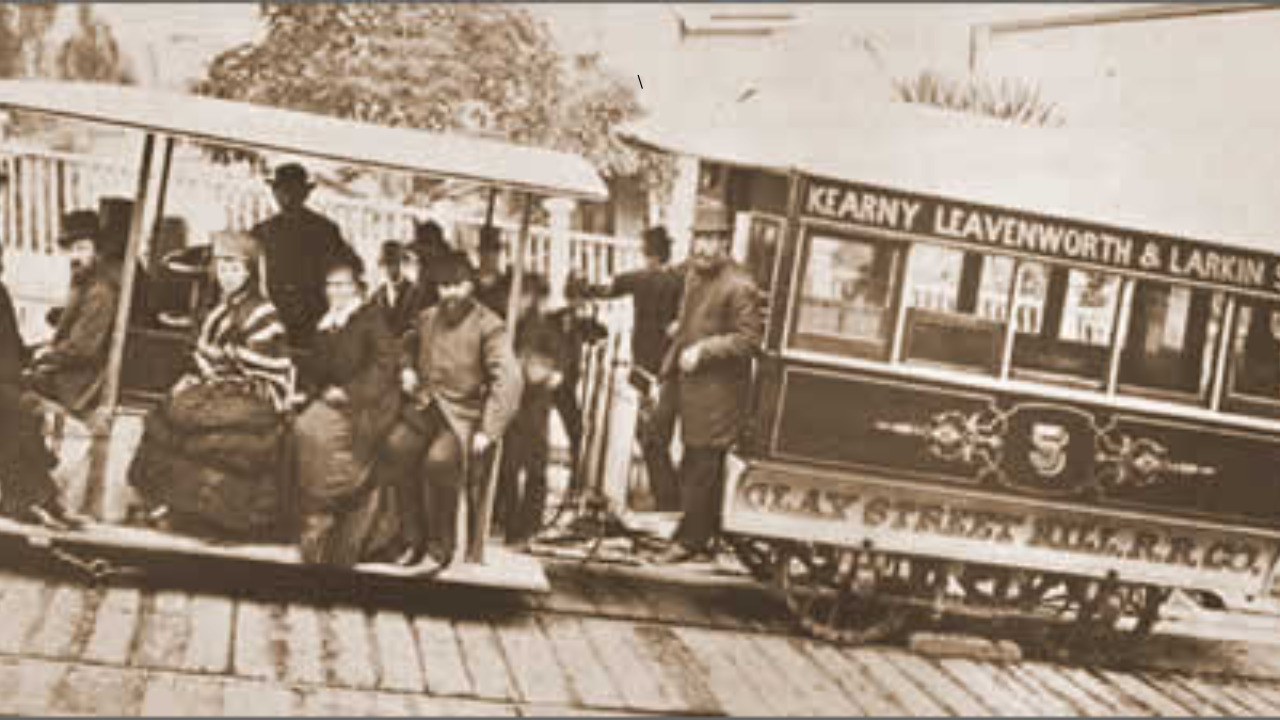
In 1873, Andrew Hallidie tested San Francisco’s first cable car to travel steep hills

Read the original at Times of India ↗
Cite

TOI World Desk. (2026, September 27). In 1873, Andrew Hallidie tested San Francisco’s first cable car to travel steep hills. Times of India. https://timesofindia.indiatimes.com/world/us/in-1873-andrew-hallidie-tested-san-franciscos-first-cable-car-on-clay-street-creating-a-new-way-to-travel-up-the-citys-steep-hills-without-horses/articleshow/134480293.cms

Dated when The Aporia collected the article, usually within hours of publication. Check the original for its exact date and byline.

Times of India · collected 2026-09-27 · by TOI World Desk

Quick Summary

In August 1873, Andrew Smith Hallidie tested San Francisco’s first cable car on Clay Street to demonstrate its ability to travel steep hills where horses struggled. The system used an endless wire rope placed in a tube below the street surface, powered by a stationary engine and controlled by a gripping mechanism that allowed cars to move or stop smoothly. By September 1873, the Clay Street Hill Railroad began public service on a route ascending 307 feet over a 5,197-foot length with a steepest grade of 1 in 6 15/100.
Written by AI on 2026-09-27, from this article's own text only (the story summary below draws on all the coverage).

AI analysis

Story summary

In August 1873, Andrew Smith Hallidie tested San Francisco’s first cable car on Clay Street, using an endless wire rope placed in a tube below the surface of the street. This innovative system addressed the challenge of operating on streets with steep grades where horses struggled to pull cars. The Clay Street Hill Railroad began public service on 1 September 1873 and climbed a hill rising 307 feet above Kearny Street, with its steepest grade being 1 in 6 15/100. This pioneering cable car system used an endless wire rope driven by a stationary engine, which connected to the cars via a gripping mechanism that could be engaged or released by the operator. Following this success, other companies such as the California Street Cable Railroad (in 1878), Geary Street, Park & Ocean Railroad (in 1880), and others rapidly adopted similar technology across San Francisco.

Written for “Cable Car Invention Tested” on 2026-11-03, grounded in this article and the 0 other(s) covering the same event.

Story

📰 Cable Car Invention Tested
Technology · 1 article(s) covering the same event.

Compared with similar articles

Nothing to compare against. No article is close enough to this one for the pipeline to have linked or judged the pair.
How this article was measured signals, leaning charts, publisher record, byline, topics and claims

Signals How these are calculated →

Claims extracted
27
sentences that state something as happening or true
Uncertain
15%
4 of 27 hedged ("reportedly", "may", "according to")
Leaning
not political
takes no side on a contested political question
Publisher signals
59/100
Times of India's corrections and hedging, across everything collected from it. Not a measure of accuracy.
Outlets on this story
1
Technology
Same framing elsewhere
1
articles that frame the event the way this one does
Analyzed 2026-09-27 · how these are computed

How this is being covered How these are calculated →

Article leaning vs. publisher reliability
Source leaning vs. consistency

Publisher

Times of India · 4017 article(s) · 4 correction(s) detected
Running correction rate · 4 correction(s)

Who wrote this

TOI World Desk
1400 article(s) here · 1 carrying a prediction
🔮 As reported by The Salt Lake Tribune, he began considering whether similar infrastructure could work on his Utah property.
🔮 On 30 May 2024, the court held that the transactions qualified as donationes mortis causa, a legal term for gifts made in anticipation of death.
🔮 James Patterson is best known as one of the world’s most successful thriller writers, but his most consequential work may be happening far from the bestseller lists.
🔮 The money will benefit After-School All-Stars, a non-profit organisation that works with children and young people through free after-school programmes.
🔮 Why Richard would rather play outside than watch screens, and what his mother saw in kindergarten
🔮 Commercial Braille embossers can cost more than £1,000 and may be bulky, making them difficult to access for individuals and smaller organisations with limited budgets.
🔮 Mukhtar argued that she could still earn the same base salary as him if she returned to full-time work.
🔮 For someone passing through a cemetery, a lantern or a plant might appear to be an ordinary possession.
🔮 A British man’s handwritten will, drafted on the cardboard packaging of a frozen fish box and a mince pie packet, has been ruled valid by the High Court, clearing the way for a diabetes charity to inherit his estate worth approximately £180,000.
🔮 Instead of sweeping past to look for younger animals, they paused, took a closer look, and asked shelter staff if they could meet Herbie in person.
Wire or desk byline, not an individual reporter.
Also by TOI World Desk
Nothing else under this byline is closely related to this article, so these are simply their most recent.
All 1400 articles by TOI World Desk →

Topics

Kearny San Francisco The Cable Car Museum's The Clay Street Hill Railroad the Cable Car Heritage Museum

Subjects

San Francisco GPE · 5× The Clay Street Hill Railroad ORG · 2× A. S. Hallidie PERSON · 1× Andrew Smith Hallidie PERSON · 1× Hallidie ORG · 1× Kearny GPE · 1× San Francisco’s GPE · 1× The Cable Car Museum's ORG · 1× The Sutter Street Railroad ORG · 1× the Cable Car Heritage Museum ORG · 1×

Narrative

Other companies followed, in including the California Street Cable Railroad in 1878, the Geary Street, Park & Ocean Railroad in 1880, the Presidio & Ferries Railroad in 1882, the Market Street Cable Railway in 1883, the Ferries & Cliff House Railway in 1888 and the Omnibus Railroad & Cable Company in 1889.
framing: assertive · carried by 1 article(s) · first seen 2026-09-27
🔮 The grip could be engaged or released by the person operating the car, allowing the vehicle to move with the cable or stop when the rope was released.

Claims (27 extracted, 4 hedged)

In August 1873, San Francisco tested a new cable railway system designed to operate on streets where horses struggled with steep grades. asserted
horses → test → grades
Andrew Smith Hallidie tested the first cable car on Clay Street on 2 August, using an endless wire rope placed in a tube below the surface of the street. asserted
Hallidie → test → street
The Clay Street Hill Railroad began public service on 1 September 1873. asserted
Railroad → begin → September
Its route climbed a hill rising 307 feet above Kearny Street, with the steepest grade recorded as 1 in 6 15/100. asserted
grade → climb → 15/100
The cable system later spread across San Francisco, while cable cars continued serving steep hills as electric streetcars and buses expanded. asserted
streetcars → spread → hills
How the San Francisco cable car climbed steep hills without horses According to the Cable Car Heritage Museum, a contemporary description by A. S. Hallidie, reproduced by the system, was designed for streets “so steep as to make the use of horses difficult or impossible”. uncertain
use → climb → horses
It used an “endless wire rope placed in a tube below the surface of the ground, between the tracks of a railroad”. asserted
It → use → railroad
A stationary engine kept the rope moving, while a gripping mechanism connected the moving rope to the cars above the street. asserted
mechanism → keep → street
The rope was contained in iron tubes and moved over sheaves along the route. asserted
rope → contain → route
A slot in the upper side of the tube allowed the gripping attachment from the car to reach the moving rope below the street. asserted
attachment → allow → street
The grip could be engaged or released by the person operating the car, allowing the vehicle to move with the cable or stop when the rope was released. uncertain
rope → engage → cable
The source also states that the car could be started more smoothly than by horses and stopped on the road. uncertain
car → state → road
How the 1873 Clay Street cable car covered a 5,197-foot steep incline asserted
car → cover → incline
The Cable Car Museum's reproduced description records that the Clay Street route began at the intersection of Kearny and Clay streets. asserted
route → reproduce → streets
The summit was 307 feet above Kearny Street, while the incline on Clay Street had double track and measured 5,197 feet in length. asserted
incline → have → length
The source records a series of ascending and descending grades along the route, with the steepest grade listed as 1 in 6 15/100. asserted
grade → record → 15/100
The cable system itself used an endless steel wire rope three inches in circumference and 11,000 feet long. asserted
system → use → circumference
It was placed in iron tubes supported by sheaves, while an engine at the engine house drove the grip pulleys that moved the rope. asserted
that → place → rope
The source states that the rope operated for 17½ hours a day at a speed of six miles per hour, with cars starting every five minutes except in the afternoon, when they started every three minutes. asserted
they → state → afternoon
San Francisco’s cable car system expanded to 53 miles by 1883 asserted
system → expand → 1883
The Sutter Street Railroad developed its own version of Hallidie's patented system and began cable service in 1877. asserted
Railroad → develop → 1877
Other companies followed, in including the California Street Cable Railroad in 1878, the Geary Street, Park & Ocean Railroad in 1880, the Presidio & Ferries Railroad in 1882, the Market Street Cable Railway in 1883, the Ferries & Cliff House Railway in 1888 and the Omnibus Railroad & Cable Company in 1889. asserted
companies → follow → 1889
The museum states that San Francisco companies eventually laid 53 miles of track extending from the Ferry Building to the Presidio, Golden Gate Park, the Castro and the Mission. asserted
companies → state → Presidio
Electric streetcars later became the preferred form of city transit because they required only half the investment to build and maintain, could reach more areas and were quicker. uncertain
they → become → areas
However, cable cars remained capable of travelling over San Francisco's steep hills, and some lines were rebuilt. asserted
lines → remain → hills
By 1947, the lower operating costs of buses led Mayor Lapham to call for the removal of the cable car lines. asserted
costs → lead → lines
A public campaign led by Friedel Klussmann and the Citizens' Committee to Save the Cable Cars resulted in Measure 10, which passed and ordered the city to maintain the Powell Street cable car system. asserted
which → lead → system

💬Give feedback
🕘History 🎫Support