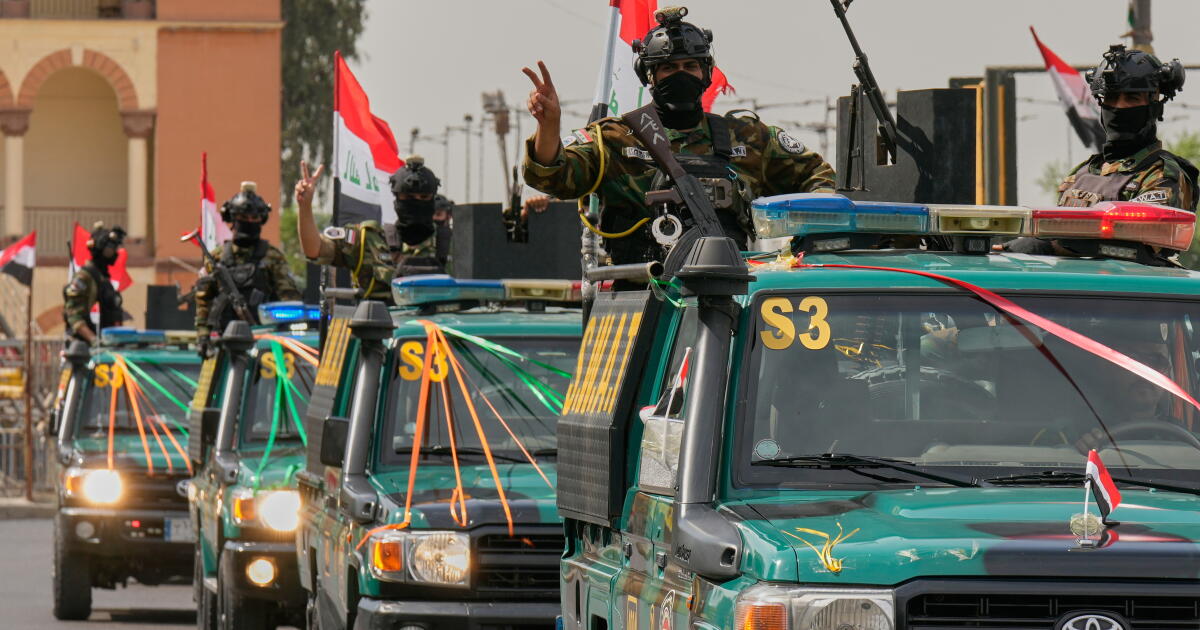
Photo via Los Angeles Times

A new flash point in the Iran war: The narrow strait called the 'Gate of Tears'

Read the original at Los Angeles Times ↗
Cite

Bulos, N. (2026, September 27). A new flash point in the Iran war: The narrow strait called the 'Gate of Tears'. Los Angeles Times. https://www.latimes.com/world-nation/story/2026-09-27/new-flash-point-in-iran-war-narrow-strait-called-gate-of-tears

Dated when The Aporia collected the article, usually within hours of publication. Check the original for its exact date and byline.

Los Angeles Times · collected 2026-09-27 · by Nabih Bulos

Quick Summary

The article discusses the strategic importance of the Bab el-Mandeb Strait in Yemen as a new flash point in the ongoing conflict involving Iran. Recently, Houthi rebels seized control of the Red Sea coast and Perim Island, gaining significant influence over this narrow waterway that connects the Red Sea to the Arabian Sea and Indian Ocean. About 7% of global energy supplies and around 12-15% of all global shipping pass through this strait, making it a crucial route for international trade and maritime security. The capture by Houthi forces could potentially disrupt shipping and escalate tensions further in the region.
Written by AI on 2026-09-27, from this article's own text only (the story summary below draws on all the coverage).

AI analysis

Story summary

In July 2026, the Houthis declared a naval blockade against Saudi Arabia, targeting Saudi-linked shipping and warning commercial vessels of any nationality to avoid calling at Saudi ports. By September, Houthi forces had seized strategic islands around the Bab al-Mandeb Strait, gaining control of Yemen’s Red Sea coast. This move increased their capacity to disrupt maritime traffic through the strait, which is vital for global shipping and connects the Red Sea with the Arabian Sea and Indian Ocean. The legal debate surrounds whether non-state actors in a non-international conflict can legally impose such blockades on neutral vessels; however, the strategic implications are clear as this narrows options for international trade through the already tense Strait of Hormuz.

Written for “Houthi Blockade In Strait Of Hormuz” on 2026-11-01, grounded in this article and the 1 other(s) covering the same event.

Story

📰 Houthi Blockade In Strait Of Hormuz
World · 2 article(s) covering the same event. See how they differ ↓

Compared with similar articles

This article reads leans left and hedges 7% of its claims. Each row says how that neighbour differs.
Al Jazeera
Hedges 0 of 2 claims Outlet record 60/100
“The articles discuss different straits and their strategic importance in relation to Iran's geopolitical situation, rather than the same specific incident or time.”
The Straits Times
⚖️ Leans left Hedges 1 of 11 claims Outlet record 66/100
“The articles describe different aspects of the conflict involving Iran and its regional dynamics; Article A discusses a threat by Iran to expand war to the Indian Ocean, while Article B focuses on the strategic importance of Bab el-Mandeb Strait as a new flash point.”
Daily Mail
Hedges 5 of 36 claims Outlet record 68/100
“The articles discuss different straits: Hormuz in Article A and Bab el-Mandeb in Article B, indicating separate geographical concerns despite both being part of broader tensions with Iran.”
The Houthi blockade Same event
Dawn
⚖️ Leans left Hedges 7 of 40 claims Outlet record 72/100
Al Jazeera
⚖️ Leans left Hedges 7 of 49 claims Outlet record 60/100
“The articles discuss different straits and their strategic importance in the context of Iran's trade routes, with Article A focusing on the Caspian Sea and Strait of Hormuz, while Article B focuses on the Bab el-Mandeb Strait.”
Al Jazeera
Hedges 4 of 36 claims Outlet record 60/100
“Article A discusses the strategic importance of Bab el-Mandeb Strait, while Article B reports on tensions and explosions in the Strait of Hormuz.”
The Hindu
⚖️ Leans left Hedges 2 of 30 claims Outlet record 60/100
“The articles discuss different aspects of the conflict involving Iran but do not describe the same specific incident.”
Washington Examiner
⚖️ Leans strongly right further right than this Hedges 0 of 35 claims Outlet record 70/100
“The articles discuss different straits and their strategic importance but do not describe the same specific incident or occurrence.”
Al Jazeera
⚖️ Leans right further right than this Hedges 10 of 64 claims Outlet record 60/100
“The articles discuss different straits (Bab el-Mandeb and Strait of Hormuz) and distinct aspects of their strategic importance, rather than a single incident.”
BBC News
⚖️ Leans right further right than this Hedges 0 of 5 claims Outlet record 68/100
“Both articles discuss the strategic importance of the Bab al-Mandab Strait but describe different aspects and developments over time, indicating they are not reporting on a single, identical occurrence.”
How this article was measured signals, leaning charts, publisher record, byline, topics and claims

Signals How these are calculated →

Claims extracted
58
sentences that state something as happening or true
Uncertain
7%
4 of 58 hedged ("reportedly", "may", "according to")
Leaning
Leans left
of the writing, not the subject · beta estimate
Publisher signals
95/100
Los Angeles Times's corrections and hedging, across everything collected from it. Not a measure of accuracy.
Outlets on this story
2
World
Same framing elsewhere
1
articles that frame the event the way this one does
Analyzed 2026-09-27 · how these are computed

How this is being covered How these are calculated →

Article leaning vs. publisher reliability
Source leaning vs. consistency

Publisher

Los Angeles Times · 259 article(s) · 0 correction(s) detected
No corrections detected for this publisher. That may mean careful reporting, or simply that nothing has been checked.

Who wrote this

Nabih Bulos
9 article(s) here · 1 carrying a prediction
🔮 The lineup was announced months ago, with top-flight stars in tennis, DJing, comedy and more set to descend on the Saudi capital for a 10-week run of events known as Riyadh Season.
🔮 The operation would continue, he said, “until the country is liberated from the control of terrorist militias.”
🔮 For decades, the relationship between Saudi Arabia and the U.S. has centered on an often-mentioned but rarely tested supposition: If the kingdom were attacked, America would come to its rescue.
🔮 Central Command said the anti-ISIS mission would continue, with the coalition now headquartered in Jordan.
🔮 “You hear so much about Bab el-Mandeb, you’d think we would be like New York, with skyscrapers and money,” said Saleh, a 58-year-old resident who, like all people interviewed here, refused to give their full name to avoid reprisals.
🔮 BEIRUT — It had been one year, eight months and 27 days since Atallah al-Drimly said goodbye to his son that Saturday morning in 2024, when Mahmoud insisted he could no longer stay away from the home he had fled and started walking north toward Gaza City.
🔮 They entered the depots and stole everything they could,” said Umaima Abdul-Rahman Al-Sanusi, one of the museum’s curators, as her eyes scanned a shattered display case.
🔮 The thinking was that with the axis’ “tentacles” weakened, if not vanquished, all that would remain, as Israeli and U.S. officials often said, would be the “head of the octopus” — Iran. But it now appears reports of the axis’ unraveling are exaggerated.
🔮 - Click here to listen to this article - - Iranian officials downplayed the significance of the pressure campaign, and suggested it could shut down all oil exports through the Strait of Hormuz. -
Also by Nabih Bulos
Nothing else under this byline is closely related to this article, so these are simply their most recent.
All 9 articles by Nabih Bulos →

Topics

BAB EL-MANDEB Houthi Houthis Iran Yemen

Subjects

Yemen GPE · 6× Houthis NORP · 5× BAB EL-MANDEB GPE · 4× Iran GPE · 4× Houthi NORP · 3× Emirates ORG · 2× Saleh PERSON · 2× Saudi Arabia GPE · 2× U.S.-Israeli GPE · 2× Yemeni NORP · 2×

Narrative

That war of wills ended with the Emirates ceding control of Bab el-Mandeb — along with the nearby island of Perim, where the Emirates had built a drone airbase — to Saudi Arabia. But this month, control of the Bab el-Mandeb Strait switched once more, when the Houthis, Yemeni rebels backed by Iran, ousted government forces from the waterway in a blitzkrieg in which they seized all of Yemen’s Red Sea coast.
framing: assertive · carried by 1 article(s) · first seen 2026-09-27
🔮 “You hear so much about Bab el-Mandeb, you’d think we would be like New York, with skyscrapers and money,” said Saleh, a 58-year-old resident who, like all people interviewed here, refused to give their full name to avoid reprisals.
2026-09-27 · Los Angeles Times
A new flash point in the Iran war: The narrow strait called the 'Gate of Tears' · assertive framing

Claims (58 extracted, 4 hedged)

A new flash point in the Iran war: The narrow strait called the ‘Gate of Tears’ - Click here to listen to this article - - Houthi rebels’ seizure of Yemen’s Red Sea coast gives them a strategic grip on the Bab el-Mandeb Strait, a vital route for global shipping. asserted
seizure → call → shipping
- With the Strait of Hormuz mostly closed by the U.S.-Israeli war on Iran, Bab el-Mandeb has taken on even greater importance. asserted
Mandeb → close → importance
- Known as the ‘Gate of Tears’ for the dangers of navigating there, the straight links the Red Sea with the Arabian Sea and Indian Ocean. asserted
straight → know → Sea
To visit Bab el-Mandeb is to understand that old adage about looks being deceiving. asserted
looks → visit → adage
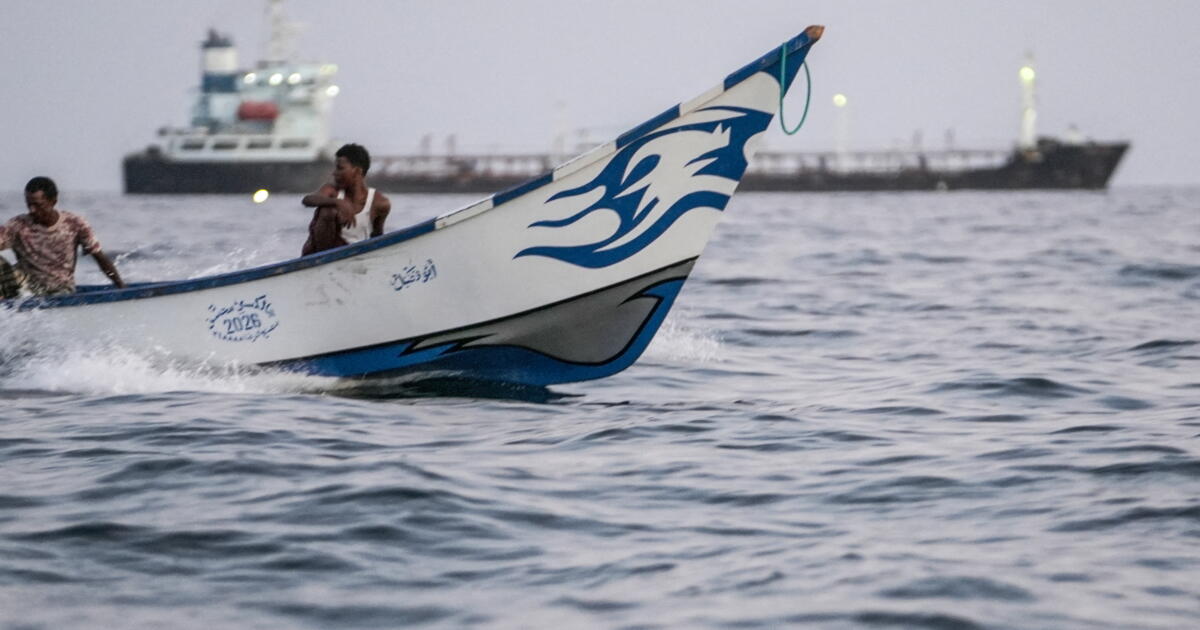
For this humble fishing village in Yemen, a tumbledown grouping of barely-there huts nestled between the water and an imposing mountain range, stands sentinel over one of the world’s most vital waterways. asserted
grouping → nestle → waterways
The village shares its name with the Bab el-Mandeb Strait, the narrow passageway connecting the Red Sea with the Arabian Sea that’s become another flash point in the U.S.-Israeli war on Iran. asserted
that → share → Iran
“You hear so much about Bab el-Mandeb, you’d think we would be like New York, with skyscrapers and money,” said Saleh, a 58-year-old resident who, like all people interviewed here, refused to give their full name to avoid reprisals. asserted
who → hear → reprisals
“So many ships pass near here. asserted
ships → pass → ?
If the Yemeni government knew how to invest in it, we would be rich. asserted
we → know → it
We should be bringing in billions of dollars. asserted
We → bring → dollars
Instead, look around you,” he said, pausing as his gaze took in the sorry-looking boats haphazardly laid on the beach. asserted
gaze → look → beach
“We have nothing.” asserted
We → have → nothing
Saleh was interviewed in January, when Bab el-Mandeb was thrust into the power struggle between Saudi Arabia and the United Arab Emirates, the friendly-but-occasionally-fractious backers of Yemen’s internationally recognized government. asserted
Mandeb → interview → government
That war of wills ended with the Emirates ceding control of Bab el-Mandeb — along with the nearby island of Perim, where the Emirates had built a drone airbase — to Saudi Arabia. But this month, control of the Bab el-Mandeb Strait switched once more, when the Houthis, Yemeni rebels backed by Iran, ousted government forces from the waterway in a blitzkrieg in which they seized all of Yemen’s Red Sea coast. asserted
they → end → coast
The move grants the Houthis a valuable foothold in controlling the Bab el-Mandeb Strait, a ribbon of Red Sea — known as the “Gate of Tears” for the dangers involving its navigation — between Yemen’s coast and Djibouti and Eritrea. asserted
move → grant → coast
About 7% of global energy supplies and around 12% to 15% of all global shipping transit the strait. asserted
% → transit → strait
And in taking Perim Island, which lies in the middle the Red Sea at the strait’s narrowest point (a mere 12½ miles), the Houthis could harass ships with ease. uncertain
Houthis → take → ease
“We don’t need a drone or a missile,” one Houthi commander bragged in a social media video posted from the island. asserted
commander → need → island
Instead, he added, all they had to do was place a few artillery units on Perim’s coast and they would be able to strike any ship crossing the strait. asserted
they → add → strait
The impact of any movement disruption through Bab el-Mandeb wouldn’t be limited to already skittish energy markets: To enter the Suez Canal’s southern entrance, ships must first transit through Bab el-Mandeb, meaning any trouble in the passageway would force freighters to circumnavigate the African continent — adding anywhere from 12 to 21 days to voyages and spiking fuel costs. asserted
trouble → limit → costs
A shipping disaster in 2021 shows how blocking the strait — and thus severing a link to the Mediterranean Sea — could harm global commerce. uncertain
blocking → show → commerce
A container ship in the Suez Canal ran aground and blocked the waterway for six days, delaying the delivery of billions of dollars of goods. asserted
ship → run → goods
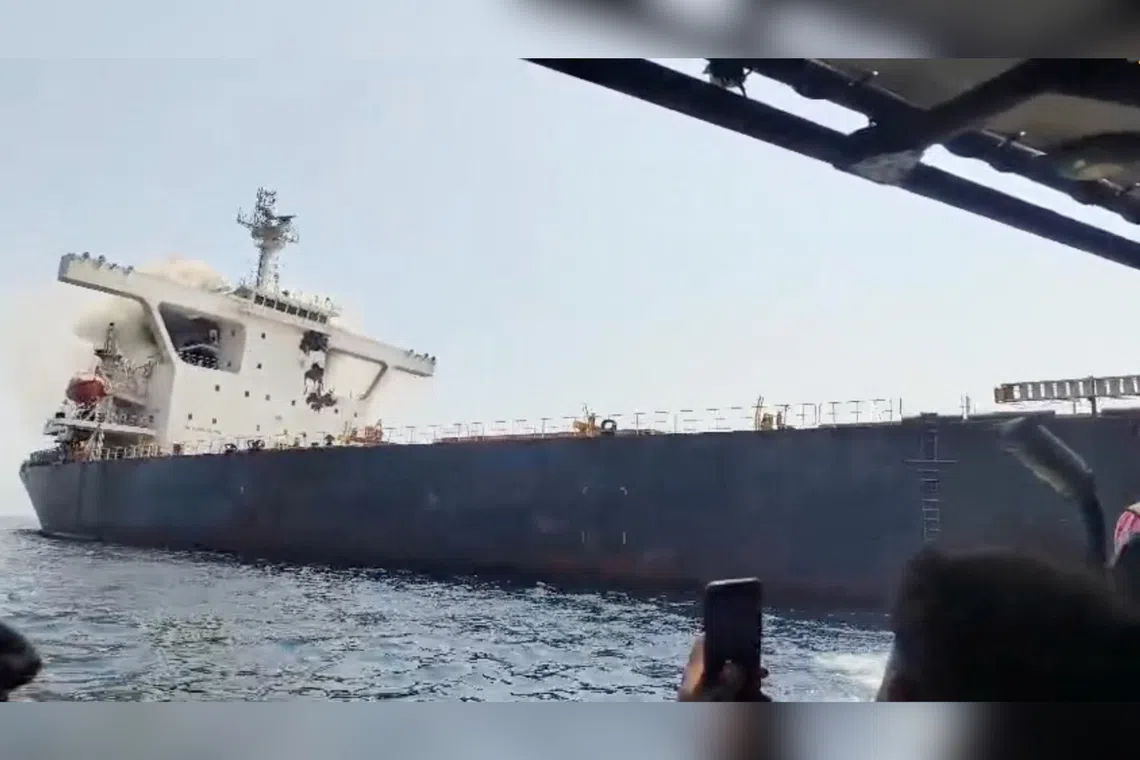
More recently, the Houthis sealed off the Bab el-Mandeb Strait in 2023 to coerce Israel into stopping its campaign in Gaza; that pushed the U.S. to attack the Houthis, before the Trump administration agreed to a ceasefire of its own with the group. asserted
administration → seal → group
These days, the Houthi advance comes at a particularly fraught moment, one in which Bab el-Mandeb has taken on outsize importance. asserted
Mandeb → come → importance
With the Israeli-U.S. war on Iran prompting Tehran to seal the Strait of Hormuz — cutting off the world’s most important energy passageway — Persian Gulf oil powerhouses have been forced to divert crude exports to alternatives, including Bab el-Mandeb. asserted
powerhouses → prompt → Mandeb
That’s especially true for Saudi Arabia, which turned to its East-West pipeline and exports through the Red Sea to sidestep the trouble in Hormuz. asserted
which → ’ → Hormuz
But it’s also the most vulnerable to the Houthi threat. asserted
it → ’ → threat
The Houthis have a long-running animus against the Saudis, which began in 2015, months after the Houthis overran the Yemeni capital of Sanaa in 2014. asserted
Houthis → have → 2014
Saudi Arabia, spooked about the notion of an Iranian ally on its border, led a coalition — with U.S. backing — to dislodge them. asserted
Arabia → spook → them
It started a blockade and a devastating air campaign that persisted until a 2022 truce. asserted
that → start → truce
But in July, the ceasefire broke after the Houthis accused the Saudis of striking Sanaa‘s airport in what appeared to be an attempt to stop Iranian flights from landing there. asserted
what → break → flights
The Houthis began attacking Saudi Arabian oil infrastructure and declared a naval blockade against the kingdom. asserted
Houthis → begin → kingdom
The rebels’ land grab this month stunned Saudi Arabia, which failed to launch airstrikes and stanch the rout of its allied forces from the coast. asserted
which → stun → coast
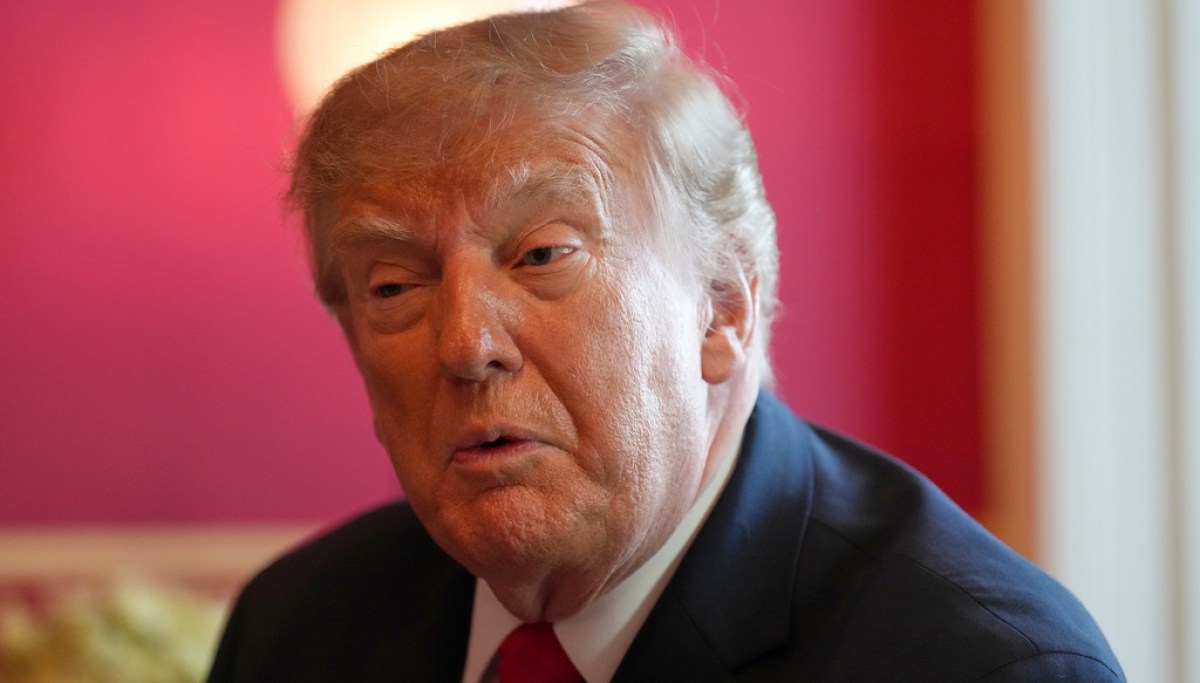
Saudi leaders reportedly reached out to President Trump to push the rebels back, but he appears disinclined to help. uncertain
he → reach → rebels
Still, on Wednesday, U.S. Secretary of State Marco Rubio said, “We have a very strong defense agreement with Saudi Arabia, and we will live up to our commitments in that agreement.” asserted
we → say → agreement
He did not elaborate on what U.S. support that would entail. asserted
that → elaborate → what
On Thursday, Saudi Arabia said its defenses intercepted six ballistic missiles fired by the Houthis towards Taif, a manufacturing center, and Yanbu, a port on the Red Sea. asserted
defenses → say → Sea
It responded with hundreds of strikes on the Houthi-controlled areas in northern Yemen. asserted
It → respond → Yemen
For their part, the Houthis insist they have no plans to attack shipping on the Red Sea and that their blockade applies only to Saudi Arabia — a move calculated to prevent the rise of an international effort to dislodge them. asserted
blockade → insist → them
“They don’t want to attract international military operations,” said Mohammad al-Basha, founder of the Basha Report, a U.S.-based risk advisory. asserted
Basha → want → Report
…and 18 more, not listed.

💬Give feedback
🕘History 🎫Support