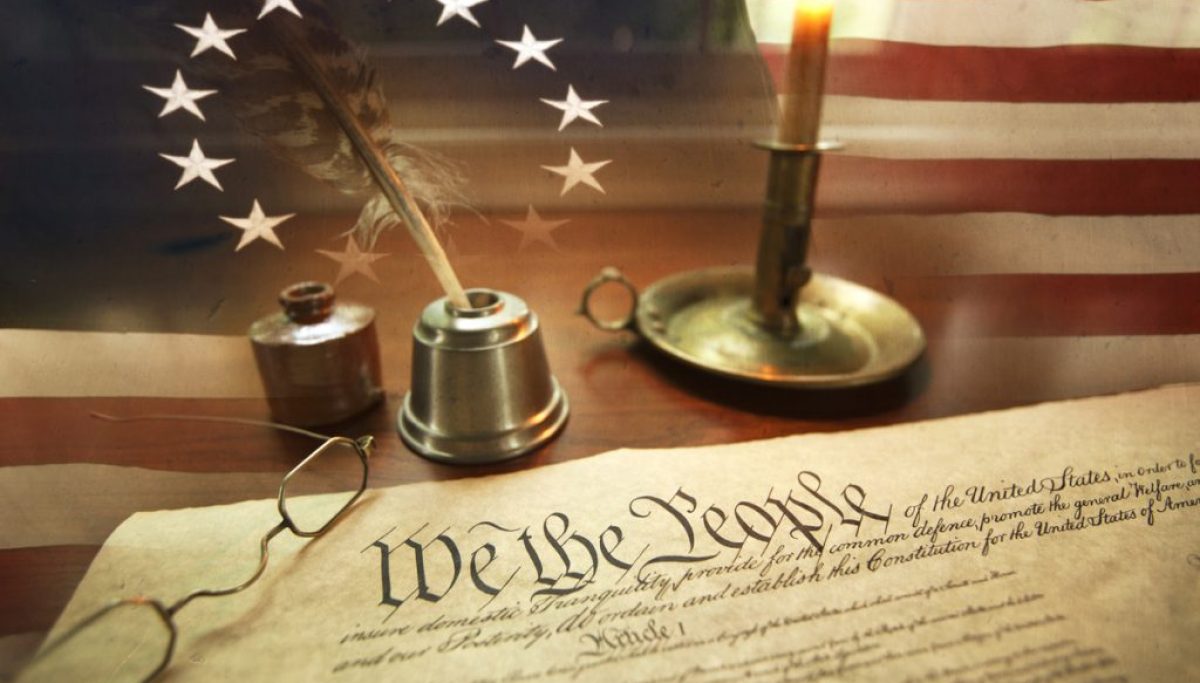
Photo via Washington Examiner

The Constitution won’t save us from our own ignorance

Read the original at Washington Examiner ↗
Cite

Wolfer, S. (2026, September 27). The Constitution won’t save us from our own ignorance. Washington Examiner. https://www.washingtonexaminer.com/op-eds/4740458/civic-education-democracy-constitution/

Dated when The Aporia collected the article, usually within hours of publication. Check the original for its exact date and byline.

Washington Examiner · collected 2026-09-27 · by Steve Wolfer

Quick Summary

The article discusses the concept of self-government in the context of American democracy, emphasizing the importance of popular consent as a mechanism for bridging individual rights with collective governance. It argues that while the Constitution provides structural safeguards like checks and balances, it relies on an informed citizenry to maintain effective democratic processes through a continuous cycle of civic engagement and education. The author highlights the necessity of political education in each generation to ensure the survival of self-governance principles and the peaceful transfer of power.
Written by AI on 2026-09-27, from this article's own text only (the story summary below draws on all the coverage).

AI analysis

Story summary

Americans debate extensively about who should govern but spend less time considering what kind of government they want to maintain. The central answer is self-government, where individuals have equal rights, and political power is exercised with their consent. However, achieving true self-government requires more than just a constitution; it necessitates an ongoing democratic cycle. In this process, citizens choose representatives who create laws, the government implements these laws, and then citizens evaluate the outcomes before voting again in elections. Steve Wolfer argues that for self-government to work effectively, citizens must be capable of distinguishing facts from slogans, recognizing dishonesty, and ensuring honest elections provide a genuine means of accountability. This understanding is crucial because it ensures rights limit what majorities may do, political opponents retain the same rights they claim for themselves, government officials remain subject to law, and the electoral process remains fair.

Written for “American Politics Controversy” on 2026-11-03, grounded in this article and the 0 other(s) covering the same event.

Story

📰 American Politics Controversy
Politics · 1 article(s) covering the same event.

Compared with similar articles

Nothing to compare against. No article is close enough to this one for the pipeline to have linked or judged the pair.
How this article was measured signals, leaning charts, publisher record, byline, topics and claims

Signals How these are calculated →

Claims extracted
33
sentences that state something as happening or true
Uncertain
12%
4 of 33 hedged ("reportedly", "may", "according to")
Leaning
Leans left
of the writing, not the subject · beta estimate
Publisher signals
70/100
Washington Examiner's corrections and hedging, across everything collected from it. Not a measure of accuracy.
Outlets on this story
1
Politics
Same framing elsewhere
1
articles that frame the event the way this one does
Analyzed 2026-09-27 · how these are computed

How this is being covered How these are calculated →

Article leaning vs. publisher reliability
Source leaning vs. consistency

Publisher

Washington Examiner · 3986 article(s) · 7 correction(s) detected
Running correction rate · 7 correction(s)

Who wrote this

Steve Wolfer
1 article(s) here · 1 carrying a prediction
🔮 Citizens need to understand why rights limit what majorities may do, why political opponents retain the same rights they claim for themselves, why government officials must remain subject to law, and why honest elections must provide a genuine means of holding those officials accountable.
2026-09-27 · assertive framing · The Constitution won’t save us from our own ignorance
The only article under this byline in the corpus.

Topics

Americans Constitution The Constitution

Subjects

Americans NORP · 1× Steve Wolfer PERSON · 1×

Narrative

Self-government requires citizens capable of comparing imperfect alternatives, distinguishing facts from slogans, recognizing dishonesty even when it comes from their own side, and choosing the available course that moves government closer to the principles they want it to embody.
framing: assertive · carried by 1 article(s) · first seen 2026-09-27
🔮 Citizens need to understand why rights limit what majorities may do, why political opponents retain the same rights they claim for themselves, why government officials must remain subject to law, and why honest elections must provide a genuine means of holding those officials accountable.
2026-09-27 · Washington Examiner
The Constitution won’t save us from our own ignorance · assertive framing

Claims (33 extracted, 4 hedged)

Americans argue endlessly over who should govern. asserted
who → argue → ?
We spend less time asking the prior question: What kind of government are we trying to preserve? asserted
we → spend → government
Rule by someone else — by a monarch, an oligarchy, a bureaucracy, a party, an ideological elite, or simply whichever faction has accumulated enough power. asserted
faction → accumulate → power
Self-government begins with a different premise: Individuals possess equal rights, government exists to secure those rights, and political power is legitimate only when exercised with the consent of the governed. asserted
power → begin → governed
It requires machinery. asserted
It → require → machinery
The Constitution supplies much of it: limited powers, separation of powers, checks and balances, federalism, and protections for individual rights. asserted
Constitution → supply → rights
But underneath those arrangements lies a continuing process that I call the democratic cycle. asserted
I → lie → that
Citizens choose representatives. asserted
Citizens → choose → representatives
Representatives make laws. asserted
Representatives → make → laws
Government executes those laws. asserted
Government → execute → laws
Citizens experience the results, judge their representatives, and vote again. asserted
Citizens → experience → representatives
They close the loop between governmental power and popular consent. asserted
They → close → power
A self-governing people can make a bad choice, experience its consequences, change its mind, replace its representatives, and choose another course without revolution or violence. asserted
people → govern → revolution
Protected by constitutional limits and individual rights, the democratic cycle allows political error without making every error permanent. asserted
error → protect → error
The Constitution can survive for centuries. asserted
Constitution → survive → centuries
The citizens who operate it cannot. asserted
who → operate → it
Every generation disappears and is replaced by another. asserted
generation → disappear → another
Each new generation enters the world knowing nothing about individual rights, constitutional limits, representative government, or why the peaceful transfer of political power matters. asserted
transfer → enter → power
None of that knowledge is inherited. asserted
None → inherit → knowledge
A competent citizenry must therefore be rebuilt every generation. asserted
citizenry → rebuild → ?
That requires political education — not indoctrination into a party or ideology, but an understanding of the principles and machinery of self-government. asserted
That → require → government
Citizens need to understand why rights limit what majorities may do, why political opponents retain the same rights they claim for themselves, why government officials must remain subject to law, and why honest elections must provide a genuine means of holding those officials accountable. uncertain
officials → need → means
Competence also requires judgment. asserted
Competence → require → judgment
Politics rarely presents us with perfect choices. asserted
Politics → present → choices
Self-government requires citizens capable of comparing imperfect alternatives, distinguishing facts from slogans, recognizing dishonesty even when it comes from their own side, and choosing the available course that moves government closer to the principles they want it to embody. asserted
it → require → principles
Schools have a role. asserted
Schools → have → role
So do parents, historians, journalists, writers, and every institution engaged in serious public debate. asserted
parents → do → debate
A nation that ceases to teach the meaning and mechanics of self-government may retain its constitutional forms for a time. uncertain
that → cease → time
What it cannot retain indefinitely is the substance those forms were designed to protect. asserted
forms → retain → What
The founders could give us a Constitution. uncertain
founders → give → Constitution
They could not give us competent citizens in perpetuity. uncertain
They → give → perpetuity
That task belongs to every generation. asserted
task → belong → generation
Steve Wolfer is the author of The Democratic Cycle: Why Self-Government Is Failing — How to Repair It asserted
Government → fail → It

💬Give feedback
🕘History 🎫Support