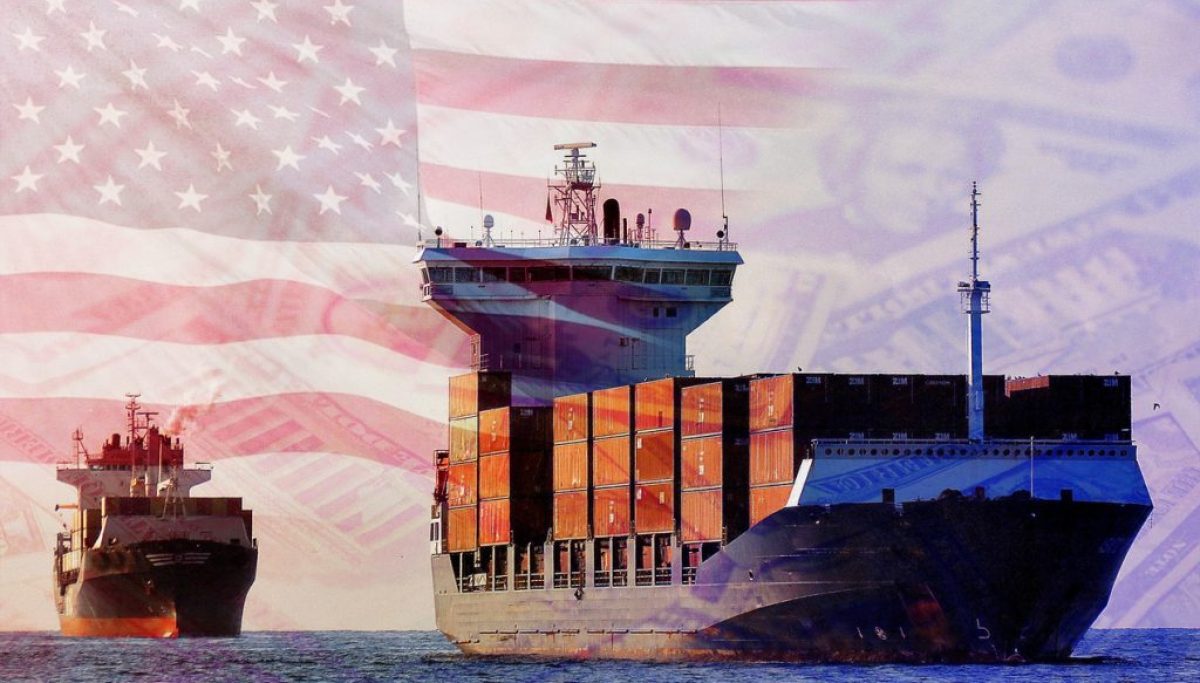
Transportation Secretary Sean Duffy has made commercial-driver safety a major priority, tightening the rules governing non-domiciled commercial driver’s licenses and requiring more reliable verification that foreign-domiciled drivers are legally eligible and qualified to operate enormous commercial vehicles on American highways.
asserted
drivers → make → highways
That raises an important parallel question: If we care about who is operating an 80,000-pound tractor-trailer on an American interstate, shouldn’t we care at least as much about hostile nations that operate massive commercial vessels carrying cargo through America’s ports, rivers, and inland waterways?
asserted
that → raise → ports
The potential consequences of a maritime failure can dwarf those of even a catastrophic highway accident.
asserted
consequences → dwarf → accident
A large oceangoing vessel can weigh tens of thousands of tons and carry enormous quantities of fuel, chemicals, containers, or other cargo.
asserted
vessel → weigh → fuel
A loss of propulsion or steering can threaten bridges, ports, refineries, waterfront communities, and environmentally sensitive waterways.
asserted
loss → threaten → bridges
Americans saw the scale of that risk in Baltimore in 2024, when the 984-foot Singapore-flagged containership Dali lost electrical power, propulsion, and steering and struck the Francis Scott Key Bridge.
asserted
containership → see → Bridge
Six highway workers died, and the bridge collapsed.
asserted
bridge → die → ?
The National Transportation Safety Board eventually determined that a loose electrical connection caused the blackout.
asserted
connection → determine → blackout
But the disaster demonstrated what happens when a massive vessel loses control in a strategically important American harbor.
asserted
vessel → demonstrate → harbor
That is one reason the Jones Act deserves to be understood as more than a century-old shipping regulation.
asserted
Act → deserve → regulation
The law requires vessels carrying merchandise between two U.S. points to be U.S.-built, U.S.-owned, and coastwise-qualified, with U.S.-citizen crewing requirements.
asserted
vessels → require → requirements
It does not prohibit foreign ships from entering American ports.
asserted
It → prohibit → ports
Foreign-flag vessels conduct enormous amounts of international trade with the United States every day, but they cannot make multiple stops at U.S. ports and sail up our inland waterways.
asserted
they → conduct → waterways
The Jones Act reserves domestic point-to-point maritime commerce for American vessels, operators, and crews.
asserted
Act → reserve → vessels
That distinction has important national-security consequences.
asserted
distinction → have → consequences
The Army Corps of Engineers maintains roughly 25,000 miles of navigable channels across the country, including approximately 12,000 miles of commercially active inland and intracoastal waterway system.
asserted
Corps → maintain → system
These waterways reach deeply into the American heartland, connecting ports, agricultural regions, energy facilities, manufacturing centers, and major metropolitan areas.
asserted
waterways → reach → ports
Domestic vessels move through areas containing bridges, pipelines, petroleum facilities, chemical plants, and other critical infrastructure.
But there is a meaningful security difference between permitting foreign vessels to deliver international commerce to American ports and turning routine domestic commerce between American points over to foreign-flagged vessels whose ownership structures, employment systems, and flag-state oversight may be based abroad.
uncertain
structures → move → vessels
Domestic commerce under the Jones Act keeps that activity within a U.S.-flagged maritime system and sustains an American maritime workforce.
asserted
commerce → keep → workforce
That deserves consideration as a homeland security benefit.
asserted
That → deserve → benefit
The larger national security argument concerns something America cannot recreate overnight during a war: shipyards, maritime suppliers, skilled tradespeople, and merchant mariners.
asserted
America → concern → war
Congressional Research Service analysis describes the national-security goals behind the Jones Act as maintaining three things: a U.S.-controlled commercial fleet that can supplement military sealift, an American merchant-mariner workforce capable of crewing reserve military vessels, and domestic shipbuilding and repair capacity.
asserted
that → describe → vessels
That matters because maritime capability is not simply a collection of ships.
asserted
capability → matter → ships
When those capabilities disappear, Congress cannot recreate them by passing an emergency appropriation after a war begins.
asserted
war → disappear → appropriation
The U.S. already faces serious maritime capacity challenges.
asserted
U.S. → face → challenges
CRS reported that the oceangoing Jones Act fleet declined from 181 ships in 2000 to approximately 93, while several specialized vessel categories are absent altogether from the U.S.-built commercial fleet.
asserted
categories → report → fleet
That should make the issue more — not less — important.
asserted
issue → make → ?
The Maritime Administration explicitly identifies domestic shipping laws such as the Jones Act as part of the country’s national-security maritime system.
asserted
Administration → identify → system
MARAD also maintains the Ready Reserve Force and other programs designed to ensure that commercial maritime capabilities can support the War Department during war or national emergencies.
asserted
capabilities → maintain → war
A nation that cannot build, repair, maintain, and crew ships is strategically dependent on nations that can.
asserted
that → build → nations
And in a world in which China has become a dominant global shipbuilder, dependence on overseas maritime capacity is no longer merely an economic question.
asserted
dependence → become → capacity
The trucking comparison is worth considering
Duffy’s Transportation Department recently finalized tighter rules governing non-domiciled commercial licenses.
asserted
Department → consider → licenses
DOT says the changes are intended to verify immigration and employment status more reliably and ensure the fitness of drivers operating commercial vehicles on American roads.
asserted
changes → say → roads
The underlying principle is straightforward: The government has a legitimate interest in knowing who is operating enormous commercial machinery inside the U.S. and whether that person is properly qualified and accountable.
asserted
person → underlie → U.S.
That principle does not suddenly become irrelevant when the vehicle floats.
asserted
vehicle → become → ?
A tractor-trailer accident can close an interstate.
asserted
accident → close → interstate
A major marine casualty can close a port.
asserted
casualty → close → port
A truck can damage a bridge.
asserted
truck → damage → bridge
A vessel weighing tens of thousands of tons can destroy one.
asserted
vessel → weigh → one
A highway accident may spill hundreds of gallons of fuel or hazardous cargo.
uncertain
accident → spill → fuel
…and 8 more, not listed.
 The Aporia