Photo via Global News

Threats to Canada’s North have ‘shifted significantly,’ foreign minister says

Read the original at Global News ↗
Cite

Boutilier, A. (2026, September 27). Threats to Canada’s North have ‘shifted significantly,’ foreign minister says. Global News. https://globalnews.ca/news/12073410/threats-to-canadas-north-have-shifted-significantly-foreign-minister-says/

Dated when The Aporia collected the article, usually within hours of publication. Check the original for its exact date and byline.

Global News · collected 2026-09-27 · by Alex Boutilier

Quick Summary

Canada’s foreign minister, Anita Anand, stated that threats to Canada's Arctic have changed significantly due to geopolitical shifts, particularly Russia’s invasion of Ukraine. Anand highlighted close coordination between Canada and the United States on Arctic security issues during a recent meeting with U.S. Secretary of State Marco Rubio. She also noted increased defence spending by the Canadian government, including plans for new submarines and fighter jets, as well as the opening of consulates in Greenland and planned expansion in Alaska to address these threats. However, polling indicates that residents of Canada’s North view the United States as the greatest threat to their region, surpassing both Russia and China.
Written by AI on 2026-09-27, from this article's own text only (the story summary below draws on all the coverage).

AI analysis

Story summary

Canada's foreign minister, Anita Anand, has highlighted a significant shift in threats to the Arctic, citing Russia's invasion of Ukraine as a major factor. Speaking with The West Block’s Jeff Semple, she emphasized the importance of NATO considering strategic assessments for the North and the Arctic to ensure defense and protection. Anand noted that despite political tensions, Canada and the United States remain closely coordinated on Arctic security and sovereignty issues, evidenced by their participation in recent meetings led by U.S. Secretary of State Marco Rubio. She also referenced Prime Minister Mark Carney’s decision to increase defense spending, which will directly impact northern security measures.

Written for “Canada Arctic Security” on 2026-10-31, grounded in this article and the 0 other(s) covering the same event.

Story

📰 Canada Arctic Security
Politics · 1 article(s) covering the same event.

Compared with similar articles

This article reads unscored and hedges 8% of its claims. Each row says how that neighbour differs.
Global News
Hedges 0 of 7 claims Outlet record 63/100
“The articles describe different events: one is about a press conference following trade and security talks in Ottawa, while the other is about a meeting on Arctic security issues.”
South China Morning Post
Hedges 2 of 6 claims Outlet record 64/100
“The articles discuss related geopolitical shifts in the Arctic but describe different meetings and statements by officials from Canada and the U.S., not a single identical incident.”
Fox News
⚖️ Leans right Hedges 6 of 24 claims Outlet record 69/100
“The articles discuss different geopolitical contexts related to the Arctic but do not describe the same specific incident or occurrence.”
Toronto Star
Hedges 1 of 5 claims Outlet record 64/100
“The articles refer to different occasions: Article A discusses Anand's upcoming speech at the UN, while Article B reports on a recent meeting with U.S. officials regarding Arctic security.”
Washington Examiner
⚖️ Leans strongly right Hedges 0 of 32 claims Outlet record 70/100
“The articles discuss different topics related to Canada's geopolitical situation but describe distinct events.”
How this article was measured signals, leaning charts, publisher record, byline, topics and claims

Signals How these are calculated →

Claims extracted
12
sentences that state something as happening or true
Uncertain
8%
1 of 12 hedged ("reportedly", "may", "according to")
Leaning
withheld
no quote in the article backed the model's score
Publisher signals
63/100
Global News's corrections and hedging, across everything collected from it. Not a measure of accuracy.
Outlets on this story
1
Politics
Same framing elsewhere
1
articles that frame the event the way this one does
Analyzed 2026-09-27 · how these are computed

How this is being covered How these are calculated →

Article leaning vs. publisher reliability
Source leaning vs. consistency

Publisher

Global News · 2606 article(s) · 11 correction(s) detected
Running correction rate · 11 correction(s)

Who wrote this

Alex Boutilier
17 article(s) here · 1 carrying a prediction
🔮 A recent analysis by the Parliamentary Budget Office suggested reaching that target would require “core” defence spending to increase from $95.7 billion in 2030 to $163.7 billion in 2035-36.
🔮 America’s top diplomat in Ottawa appears to be conflating public diplomacy with “foreign interference” as the Republicans brace for what polls suggest could be a bruising in the U.S. midterms.
🔮 While court documents revealed that the RCMP believed Wallin had broken the law and were trying to gather proof of criminal wrongdoing, the police force announced in 2016 that Wallin would not be charged.
🔮 Researchers are McGill’s Media Ecosystem Observatory (MEO) have been keeping tabs on the online discourse around the province’s referendum which will ask, among other questions, if Albertans want a binding provincial vote on independence from Canada.
🔮 The increasing availability of sophisticated drone technology has led the Department of National Defence (DND) to move to take “critical” steps to counter “unauthorized drone activity” that could threaten Canadian military installations.
🔮 Champagne appeared non-committal when asked if Ottawa would extend the ban, which banned foreign investors from buying Canadian residential property and was first enacted in 2022.
🔮 That’s a far cry from the roughly 2,422 foreign agents Public Safety Canada has estimated are active in Canada, raising questions from opposition MPs about how effective the Liberals’ registration scheme will be.
🔮 Few are willing to be more public about it, and that’s their decision.”
🔮 “I would say that the use of counter-drone technology around critical infrastructure is becoming the norm,” Carvin said.
🔮 Anand, who formerly served as minister of national defence under former prime minister Justin Trudeau, pointed to Prime Minister Mark Carney’s decision to ramp up defence spending and the impact that money will have on northern security.
Also by Alex Boutilier
Nothing else under this byline is closely related to this article, so these are simply their most recent.
All 17 articles by Alex Boutilier →

Topics

Canada Canadian Russia Ukraine the United States

Subjects

Canada GPE · 7× Anand PERSON · 5× the United States GPE · 4× Russia GPE · 3× Canadian NORP · 2× NATO ORG · 2× U.S. GPE · 2× Ukraine GPE · 2× Anita Anand PERSON · 1× Foreign Affairs ORG · 1×

Narrative

“So while Canada has Operation Reassurance on the Eastern flank, we cannot forget that NATO, the North Atlantic Treaty Organization, should have a view that is based on a strategic assessment of the North and the Arctic, in order to ensure that we are well defended and protected in terms of the Arctic, not only on the Eastern flank” Anand said.
framing: assertive · carried by 1 article(s) · first seen 2026-09-27
🔮 Anand, who formerly served as minister of national defence under former prime minister Justin Trudeau, pointed to Prime Minister Mark Carney’s decision to ramp up defence spending and the impact that money will have on northern security.

Claims (12 extracted, 1 hedged)

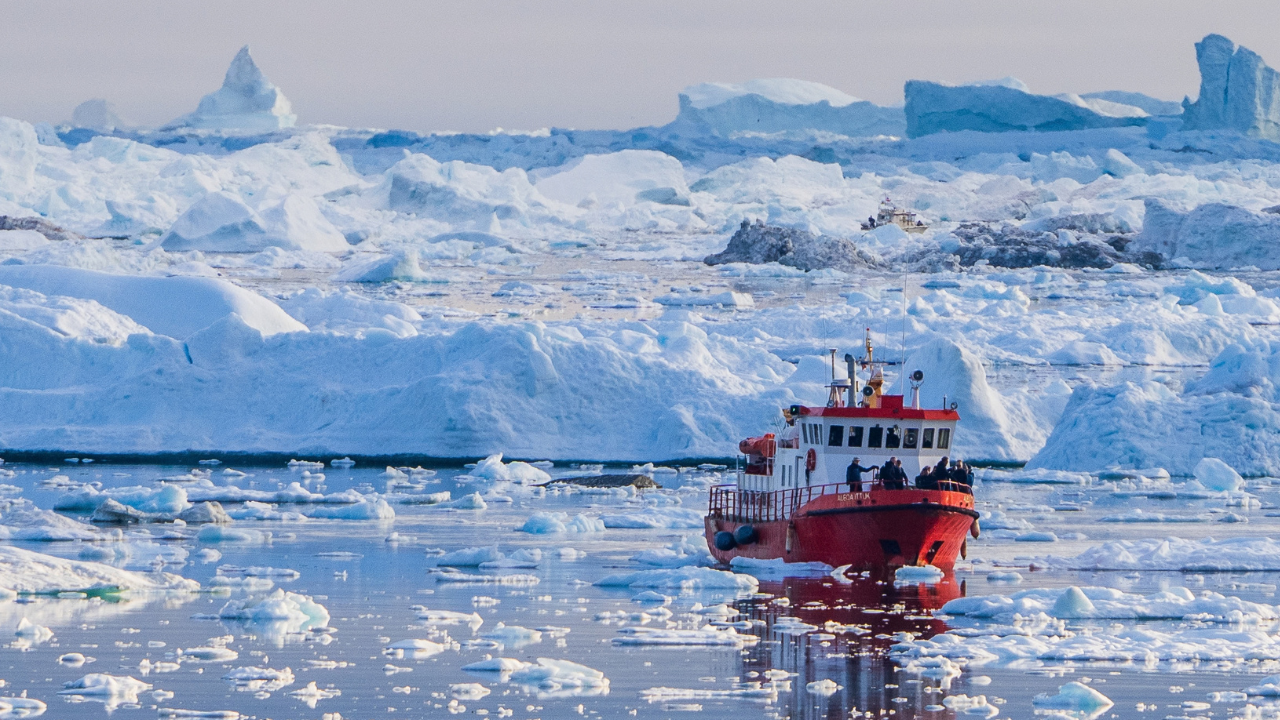
Threats to the Canadian Arctic have “shifted significantly” in recent years amidst Russia’s full-scale invasion of Ukraine and an upended geopolitical order, Canada’s foreign minister says. asserted
minister → shift → Ukraine
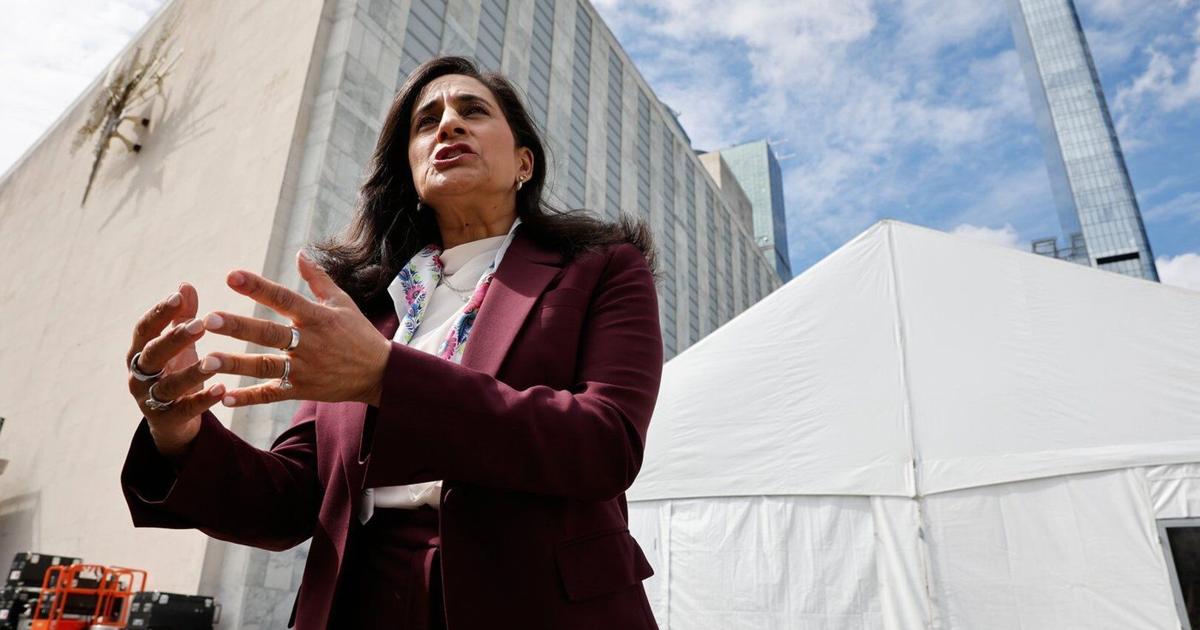
But despite political tensions, Foreign Affairs Minister Anita Anand told The West Block’s Jeff Semple that Canada and the United States remain in close coordination on Arctic security and sovereignty issues. asserted
Canada → tell → issues
Anand said she attended a meeting of Arctic nations convened by U.S. Secretary of State Marco Rubio last week and they “had a frank discussion about the collective need to work together on Arctic security.” asserted
they → say → security
And one of the ongoing dialogues that Secretary Rubio and I have had specifically … is in fact how can Canada and the United States ensure that our shared interests in the Arctic are advocated, are worked on within the confines of multilateral organizations including NATO.” asserted
interests → have → NATO
Anand, who formerly served as minister of national defence under former prime minister Justin Trudeau, pointed to Prime Minister Mark Carney’s decision to ramp up defence spending and the impact that money will have on northern security. asserted
money → serve → security
That includes a massive contract to German company TKMS to build a new fleet of as many as 12 submarines, as well as the federal governments still as-yet finalized decision to buy new fighter jets. asserted
That → include → jets
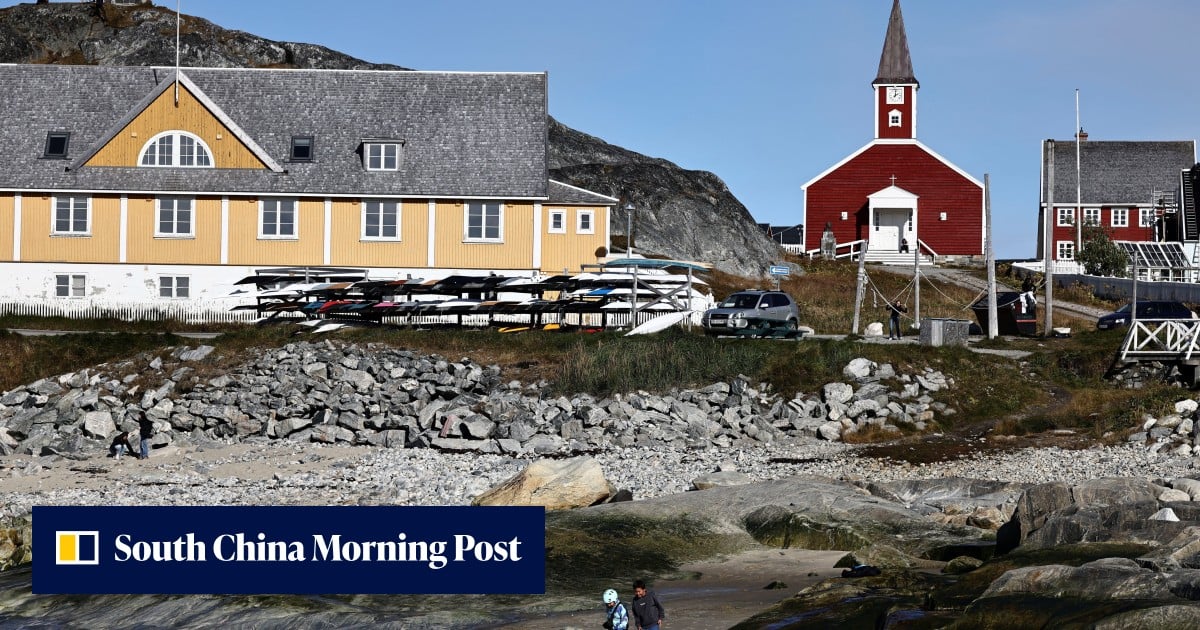
On the diplomatic front, Anand pointed to the newly-opened Canadian consulate in Nuuk, Greenland, and plans to open one in Anchorage, Alaska. asserted
Anand → point → Anchorage
Anand said that Russia’s invasion of Ukraine in 2022 has changed thinking not only of the security environment in Europe, but in the Arctic as well. asserted
invasion → say → Arctic
“So while Canada has Operation Reassurance on the Eastern flank, we cannot forget that NATO, the North Atlantic Treaty Organization, should have a view that is based on a strategic assessment of the North and the Arctic, in order to ensure that we are well defended and protected in terms of the Arctic, not only on the Eastern flank” Anand said. asserted
Anand → have → flank
The threat to Canada’s Arctic maybe be shifting, but so are northerners’ perceptions of Canada’s once-closest ally. asserted
perceptions → shift → ally
Global News reported last week that new polling suggested residents of Canada’s North — including Nunavut, the Northwest Territories, Yukon and Nunavik — view the United States as the greatest threat facing the region. uncertain
residents → report → region
Nearly half of respondents (48 per cent) to a poll for the Observatoire de la politique et la sécurité de l’Arctique (OPSA) saw the U.S. has the greatest threat, followed distantly by Russia (30 per cent) and China (12 per cent). asserted
U.S. → see → Russia

💬Give feedback
🕘History 🎫Support