Photo via The Sydney Morning Herald

Power struggle: The push for Australia’s coal plants to pay to pollute

Read the original at The Sydney Morning Herald ↗
Cite

Toscano, N. (2026, September 27). Power struggle: The push for Australia’s coal plants to pay to pollute. The Sydney Morning Herald. https://www.smh.com.au/business/companies/power-struggle-the-push-for-australia-s-coal-plants-to-pay-to-pollute-20260928-p6107c.html?ref=rss&utm_medium=rss&utm_source=rss_feed

Dated when The Aporia collected the article, usually within hours of publication. Check the original for its exact date and byline.

The Sydney Morning Herald · collected 2026-09-27 · by Nick Toscano

Quick Summary

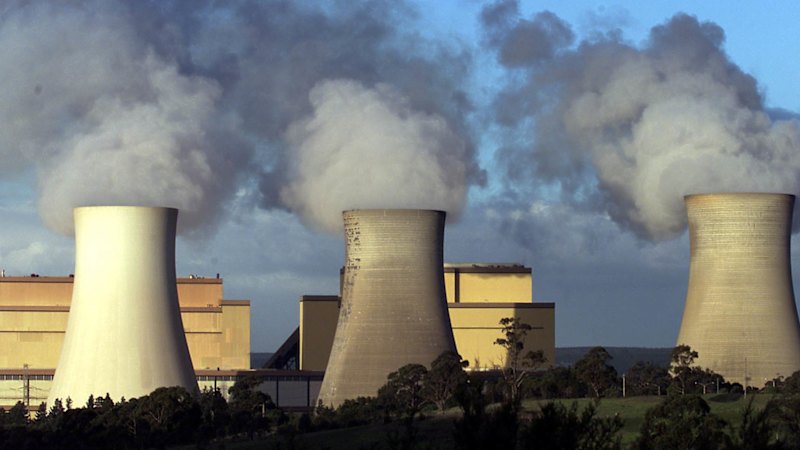
A debate has intensified in Australia over extending the operational life of remaining coal-fired power plants, with environmental advocates pushing for stricter federal pollution laws to enforce earlier closures. Coal currently supplies about half of eastern Australia’s electricity but more than half of existing generators are set to close by 2035 due to high maintenance costs and reliability issues. Conservation groups argue that incorporating these plants into the federal “safeguard mechanism” emissions-reduction policy could compel utilities to adhere to their closure schedules, as failing to do so would mean paying for carbon offsets. Utility companies, however, warn that such a move could jeopardize grid stability given delays in renewable energy development and infrastructure expansion.
Written by AI on 2026-09-27, from this article's own text only (the story summary below draws on all the coverage).

AI analysis

Story summary

Renewable energy leaders in Australia are pushing for stricter federal pollution laws to prevent fossil fuel generators from delaying their closures. Coal currently supplies about half of eastern Australia’s electricity, but more than half of the remaining coal-fired generators are set to close by 2035 due to high maintenance costs and declining reliability. The recent decision to extend the operation of Origin Energy’s Eraring power station in New South Wales by two years until 2029, approved amid concerns about grid stability, has heightened worries that other plants might also seek extensions beyond their scheduled closure dates. Conservation and clean energy advocates warn that shifting coal closure timelines could complicate large-scale investment decisions in renewables and batteries at a critical time for the country's transition to cleaner energy sources.

Written for “Australian Coal Plant Pollution Fees” on 2026-10-30, grounded in this article and the 0 other(s) covering the same event.

Story

📰 Australian Coal Plant Pollution Fees
Environment · 1 article(s) covering the same event.

Compared with similar articles

This article reads leans strongly left and hedges 33% of its claims. Each row says how that neighbour differs.
ABC News (AU)
⚖️ Leans right further right than this Hedges 0 of 9 claims Outlet record 68/100
“The articles describe different events: one about a push for coal plants to pay to pollute and phase out, while the other is about an approval decision extending a major coal mine's operation.”
Daily Mail
⚖️ Leans right further right than this Hedges 0 of 15 claims Outlet record 68/100
“The articles discuss different aspects of Australia's energy policy and do not describe the same specific incident or occurrence.”
The Guardian
Hedges 2 of 20 claims Outlet record 66/100
“The articles discuss different aspects of Australia's shift towards renewable energy and electric vehicles without describing the same specific incident.”
The Guardian
Hedges 4 of 28 claims Outlet record 66/100
“The articles discuss different aspects of coal-related issues in Australia - one about a general push for stricter pollution laws and another about approving a large coal mining project.”
Refinery upgradation plans Different event
Dawn
⚖️ Leans right further right than this Hedges 4 of 39 claims Outlet record 72/100
“The articles discuss different aspects of energy policy and reforms, but do not describe a single specific incident or occurrence.”
How this article was measured signals, leaning charts, publisher record, byline, topics and claims

Signals How these are calculated →

Claims extracted
21
sentences that state something as happening or true
Uncertain
33%
7 of 21 hedged ("reportedly", "may", "according to")
Leaning
Leans strongly left
of the writing, not the subject · beta estimate
Publisher signals
61/100
The Sydney Morning Herald's corrections and hedging, across everything collected from it. Not a measure of accuracy.
Outlets on this story
1
Environment
Same framing elsewhere
1
articles that frame the event the way this one does
Analyzed 2026-09-27 · how these are computed

How this is being covered How these are calculated →

Article leaning vs. publisher reliability
Source leaning vs. consistency

Publisher

The Sydney Morning Herald · 5569 article(s) · 15 correction(s) detected
Running correction rate · 15 correction(s)

Who wrote this

Nick Toscano
15 article(s) here · 1 carrying a prediction
🔮 Mining giant Fortescue Metals Group has warned a protracted stand-off with Beijing over the price of Australia’s biggest export commodity, iron ore, may force it to curtail production at its huge mines across the Pilbara if the deadlock does not break soon.
🔮 “Everyone, regardless of their role or seniority, is expected to meet the standards set by our values,” the spokesperson said.
🔮 Labor last week introduced its long-awaited domestic gas-reservation bill to parliament, which would compel the nation’s largest liquefied natural gas exporters to set aside up 20 per cent of their annual export volumes for local customers from 2028.
🔮 An international mining giant has taken its $38 billion pursuit of Australia’s largest gold producer directly to local investors, offering them the muscle to build a globally competitive gold behemoth and hoping their pressure will help force the board to the negotiating table.
🔮 Worries about the volatile situation in the Middle East are threatening to override hopes that a deal between US President Donald Trump and Russian President Vladimir Putin to partially ease the US ban on Russian diesel could help relieve tightening supplies and lower prices ahead of the US midterm elections.
🔮 The decision to allow a massive NSW coal mine to run until 2045 will be fought in court, legal experts predict, after the High Court struck down a separate approval for failing to grapple with the climate impact of Australian coal being burned in foreign power plants.
🔮 Approval for a major coal mine expansion has been declared invalid by the High Court in a decision that will force NSW planning authorities to reckon with emissions from Australian coal burnt overseas.
🔮 Under the trial, they will be allowed to recover 70 per cent of the costs through regulated charges paid by all electricity consumers on their power bills, with the federal government footing the remainder.
🔮 The war in the Middle East is delivering a huge windfall for Australian gas exporters, as new figures suggest soaring prices could add $23 billion to their combined revenue this year and reverse what was expected to be a period of decline.
🔮 Fuel giant Ampol has struck a deal to acquire one of Australia’s most extensive electric-vehicle charging networks, a move that will more than triple the number of charging bays it owns just as local sales of battery-powered cars surge to record highs.
Also by Nick Toscano
Nothing else under this byline is closely related to this article, so these are simply their most recent.
All 15 articles by Nick Toscano →

Topics

Australia Eraring NSW Origin Energy’s the Climate Council

Subjects

Australia GPE · 2× the Climate Council ORG · 2× Albanese NORP · 1× Chris Bowen PERSON · 1× Energy ORG · 1× EnergyAustralia ORG · 1× Eraring GPE · 1× NSW GPE · 1× Origin Energy’s ORG · 1× The Australian Energy Council ORG · 1×

Narrative

Instead, said Thomas, governments should do more to facilitate the timely exit of coal by encouraging “predictable and durable” market signals, support the rollout of more fast-start gas-fired power stations to plug renewable supply gaps, and enough infrastructure to maintain adequate “system security”, including inertia, to ensure the grid can withstand sudden disturbances and ride through shifts in frequency.
framing: mixed · carried by 1 article(s) · first seen 2026-09-27
🔮 However, a recent decision to extend the operation of Origin Energy’s massive Eraring power station in NSW by another two years – pushing its closure out to 2029 – has intensified concerns that more plants may end up running past their promised exit dates.
2026-09-27 · The Sydney Morning Herald
Power struggle: The push for Australia’s coal plants to pay to pollute · mixed framing

Claims (21 extracted, 7 hedged)

A new fight has erupted over the future of Australia’s remaining coal-fired power stations, as renewable energy leaders push for expanded federal pollution laws to prevent fossil fuel generators from delaying their closures. asserted
leaders → erupt → closures
While coal still supplies about half of eastern Australia’s electricity, its years left powering the grid are numbered. asserted
years → supply → grid
More than half of all remaining coal-fired generators are scheduled to close by 2035 as they near the end of their usable lives, facing soaring maintenance bills and declining reliability. asserted
they → remain → bills
However, a recent decision to extend the operation of Origin Energy’s massive Eraring power station in NSW by another two years – pushing its closure out to 2029 – has intensified concerns that more plants may end up running past their promised exit dates. uncertain
plants → extend → dates
Eraring’s extension was approved amid concerns from energy officials and the state government that the grid was underprepared for its exit without raising the risk of blackouts or price rises. asserted
grid → approve → blackouts
In submissions to the Albanese government, conservation and clean energy advocates warn shifting coal closure timelines could complicate large-scale investment decisions in renewables and batteries at a critical time. uncertain
shifting → warn → time
They are calling for coal and gas plants to be brought into the federal government’s flagship emissions-reduction policy, the “safeguard mechanism” scheme, which requires the nation’s 215 biggest industrial polluters to cut their carbon footprint or offset their emissions by purchasing carbon offsets. asserted
which → call → offsets
Advocacy groups including the Climate Council argue that applying the scheme to coal-fired power stations for each year beyond their current retirement dates would strengthen incentives for operators to adhere to their announced timelines because it would force them to pay for their emissions if they stay open. asserted
they → include → emissions
“Unclear closure timing creates uncertainty about future wholesale prices, which undermines renewable project business cases and lowers renewable investment, leaving projected capacity shortfalls that are then cited to justify coal extensions,” the Climate Council said in a submission. uncertain
Council → create → submission
“The safeguard mechanism can play a role in breaking this cycle.” asserted
mechanism → play → cycle
Currently, grid-connected power generators do not face the same emissions reduction caps as other industrial emitters, as the government pursues different strategies to decarbonise the electricity sector. asserted
government → connect → sector
Energy Minister Chris Bowen launched a review of the safeguard mechanism this year to ensure it remained fit for purpose beyond 2030. asserted
it → launch → 2030
However, the major utilities that own the power stations have issued stark warnings against the proposal. asserted
that → own → proposal
The Australian Energy Council, representing coal plant owners including EnergyAustralia, Origin and AGL, said those advocating for the change failed to recognise the vital system-stability function that coal and gas power stations still provided, particularly amid concerns that the buildout of renewable energy, storage and transmission lines is running behind schedule. asserted
buildout → represent → schedule
“In these circumstances, thermal assets could not be retired from the system without significant reliability impacts, and inclusion in the safeguard would merely result in higher prices without achieving the desired emissions reductions,” Australian Energy Council policy manager Rhys Thomas said. uncertain
Thomas → retire → reductions
The optimal approach to ensure the timely exit of retiring coal plants was “multifaceted”, he added, and including them in the safeguard mechanism in instances where some needed to stay open would push higher electricity costs onto consumers, worsening cost-of-living strain without achieving emissions reductions. asserted
some → ensure → reductions
Instead, said Thomas, governments should do more to facilitate the timely exit of coal by encouraging “predictable and durable” market signals, support the rollout of more fast-start gas-fired power stations to plug renewable supply gaps, and enough infrastructure to maintain adequate “system security”, including inertia, to ensure the grid can withstand sudden disturbances and ride through shifts in frequency. asserted
grid → say → frequency
Experts from the independent Grattan Institute last year calculated that Australia would struggle to meet its current emissions-reduction targets without a constraint on electricity sector emissions, and expanding the safeguard mechanism to coal plants “could solve this problem” without a significant jump in household energy bills. uncertain
expanding → calculate → bills
The think tank’s Bills down, emissions down report found that the $5800 the average household spends each year on gas, electricity and petrol could be cut to less than $2900 in today’s money by 2050, driven by the fall in petrol costs as people switch to electric vehicles, as well as the growing uptake of solar panels and batteries and the ongoing shift from gas stoves and water heaters to electric. uncertain
people → find → electric
Expanding the safeguard mechanism to coal plants may increase the price of electricity from 2030 to 2035, but it would ultimately amount to just $100 a year extra to a household’s overall energy costs by 2050 compared to a scenario without it, the report said. uncertain
report → expand → it
The Business Briefing newsletter delivers major stories, exclusive coverage and expert opinion. asserted
newsletter → deliver → stories

💬Give feedback
🕘History 🎫Support