Photo via Dawn

Building localised AI models

Read the original at Dawn ↗
Cite

Jamal, N. (2026, September 28). Building localised AI models. Dawn. https://www.dawn.com/news/2033093/building-localised-ai-models

Dated when The Aporia collected the article, usually within hours of publication. Check the original for its exact date and byline.

Dawn · collected 2026-09-28 · by Nasir Jamal

Quick Summary

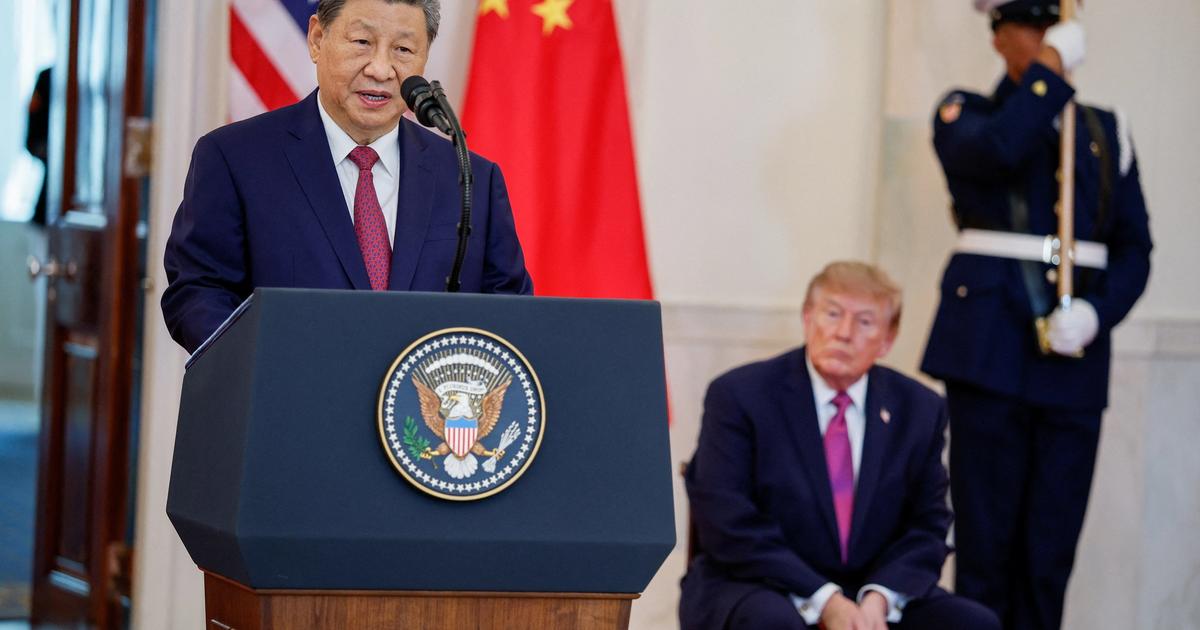
China proposed at the BRICS summit in New Delhi to lead the creation of a BRICS AI open-source community aimed at fostering cooperation in developing large language models, organizing specialized training programs, and building an open ecosystem for participating countries. This initiative aims to lower barriers for developing nations to enter the AI economy by offering accessible models that can be adapted locally, reducing costs and allowing countries like Pakistan to develop applications tailored to their needs without incurring massive development expenses. China's move highlights its growing role in providing alternative pathways to advanced AI technologies, particularly through models such as Qwen and DeepSeek, which offer opportunities for local customization and application in sectors like language services and agriculture.
Written by AI on 2026-09-28, from this article's own text only (the story summary below draws on all the coverage).

AI analysis

Story summary

At the BRICS summit in New Delhi this month, Chinese President Xi Jinping proposed establishing a BRICS AI open-source community. This initiative aims to promote cooperation among member nations in developing large language models, organizing specialized training programs, and creating an inclusive ecosystem accessible to all participating countries. For nations in the Global South, such as Pakistan, Brazil, and India, accessing advanced AI technology is challenging due to high costs associated with building complex models from scratch, which require substantial computing resources, expensive data centers, extensive datasets, and specialized talent. By adopting open-weight models—versions that developers can download, adapt, and customize for specific languages or industries—the initiative could significantly lower these barriers and enhance the technological competitiveness of developing countries in the AI economy.

Written for “Localised AI Models Development” on 2026-11-01, grounded in this article and the 0 other(s) covering the same event.

Story

📰 Localised AI Models Development
Technology · 1 article(s) covering the same event.

Compared with similar articles

This article reads leans strongly left and hedges 23% of its claims. Each row says how that neighbour differs.
The Independent
Hedges 3 of 21 claims Outlet record 59/100
“The articles discuss different aspects of AI development and relations between the US and China but do not describe the same specific incident or meeting.”
Semafor
Hedges 0 of 6 claims Outlet record 60/100
“The articles discuss different events: one about Xi Jinping's call for healthy competition between China and the US during a White House visit, and another about China's proposal at the BRICS summit in New Delhi.”
South China Morning Post
Hedges 0 of 1 claims Outlet record 64/100
“While both articles discuss China's focus on AI, they refer to different aspects and plans related to AI rather than a single specific occurrence.”
How this article was measured signals, leaning charts, publisher record, byline, topics and claims

Signals How these are calculated →

Claims extracted
64
sentences that state something as happening or true
Uncertain
23%
15 of 64 hedged ("reportedly", "may", "according to")
Leaning
Leans strongly left
of the writing, not the subject · beta estimate
Publisher signals
72/100
Dawn's corrections and hedging, across everything collected from it. Not a measure of accuracy.
Outlets on this story
1
Technology
Same framing elsewhere
1
articles that frame the event the way this one does
Analyzed 2026-09-28 · how these are computed

How this is being covered How these are calculated →

Article leaning vs. publisher reliability
Source leaning vs. consistency

Publisher

Dawn · 2540 article(s) · 3 correction(s) detected
Running correction rate · 3 correction(s)

Who wrote this

Nasir Jamal
3 article(s) here · 1 carrying a prediction
🔮 A sharp rise in oil prices, which the Middle East conflict has already caused, could wear it down quickly.
2026-10-13 · assertive framing · Fixing the export challenge
🔮 Washington believes the blockade will exhaust Tehran first.
2026-10-05 · assertive framing · If the war drags on
🔮 Access to capable models, computing power, data and skilled people will increasingly shape national competitiveness.
2026-09-28 · mixed framing · Building localised AI models
Also by Nasir Jamal
Fixing the export challenge
2026-10-13 · Dawn
If the war drags on
2026-10-05 · Dawn
Nothing else under this byline is closely related to this article, so these are simply their most recent.

Topics

BRICS Brazil China New Delhi Pakistan

Subjects

Pakistan GPE · 5× China GPE · 4× BRICS ORG · 2× Brazil GPE · 1× India GPE · 1× New Delhi GPE · 1× Qwen PERSON · 1× Russia GPE · 1× South Africa GPE · 1× Xi Jinping PERSON · 1×

Narrative

It would promote cooperation in developing and applying large language models, organise specialised AI training and build an open ecosystem for participating countries.
framing: mixed · carried by 1 article(s) · first seen 2026-09-28
🔮 Access to capable models, computing power, data and skilled people will increasingly shape national competitiveness.
2026-09-28 · Dawn
Building localised AI models · mixed framing

Claims (64 extracted, 15 hedged)

Artificial intelligence (AI) is moving beyond the realm of technology. asserted
intelligence → move → technology
It is becoming economic infrastructure. asserted
It → become → ?
Access to capable models, computing power, data and skilled people will increasingly shape national competitiveness. asserted
Access → compute → competitiveness
That makes China’s proposal at the BRICS summit in New Delhi earlier this month worth examining. asserted
proposal → make → Delhi
President Xi Jinping has proposed that China lead the creation of a BRICS [Brazil, Russia, India, China, and South Africa] AI open-source community. asserted
China → propose → community
It would promote cooperation in developing and applying large language models, organise specialised AI training and build an open ecosystem for participating countries. asserted
It → promote → countries
For the Global South, this could lower one of the biggest barriers to entering the AI economy. uncertain
this → lower → economy
Building frontier models from scratch requires enormous computing capacity, expensive data centres, vast datasets and specialised talent. asserted
Building → build → capacity
Most developing countries cannot match the investments being made by the world’s largest technology companies. asserted
countries → develop → companies
The strategic objective is to become a builder, adapter and exporter of tech solutions Open-weight models offer another route. asserted
models → become → route
Developers can download, adapt and build on them for particular languages, industries and public services. asserted
Developers → download → languages
This can reduce the cost of experimentation and allow countries to develop applications suited to their own needs. asserted
countries → reduce → needs
China has emerged as a major player in this space. asserted
China → emerge → space
Models such as Qwen, DeepSeek, Kimi and GLM have expanded the range of capable systems available outside the leading Western technology companies. asserted
Models → expand → companies
However, open-weight does not necessarily mean fully open-source. asserted
weight → mean → source
Model weights may be available while training data, development code, or other components remain closed. uncertain
data → remain → ?
The larger opportunity lies beyond models. asserted
opportunity → lie → models
President Xi has also proposed a BRICS digital ecosystem cloud platform, digital-skills training, cooperation in smart manufacturing and an engineer-training alliance. asserted
Xi → propose → manufacturing
These proposals recognise a basic fact: AI adoption depends on infrastructure and people as much as software. asserted
adoption → recognise → software
This is where Pakistan should take a serious interest. asserted
Pakistan → take → interest
Pakistan has a large population, a young workforce and an established IT and IT-enabled services sector. asserted
Pakistan → have → population
The next step is to move towards higher-value AI development, integration and specialised services. asserted
step → move → development
Open models could help the country make that transition without trying to reproduce the enormous costs of frontier AI development. uncertain
country → help → development
Urdu and Pakistan’s regional languages remain poorly served compared with English and several other major languages. asserted
Urdu → remain → English
A Pakistani AI ecosystem could adapt existing models to local languages and build tools for translation, document processing, education and public information. uncertain
ecosystem → adapt → translation
Agriculture provides another practical use. asserted
Agriculture → provide → use
AI systems could combine weather information, crop data, satellite imagery and local knowledge to provide farmers with timely advice. uncertain
systems → combine → advice
Such tools would not replace agricultural experts. asserted
tools → replace → experts
They could extend their reach to communities that have limited access to them. uncertain
that → extend → them
Healthcare and education also offer large potential gains. asserted
Healthcare → offer → gains
AI-assisted systems could help process medical records, support clinical workflows and expand access to basic information. uncertain
systems → assist → information
In education, affordable AI tutors could provide personalised assistance to students while teachers could use the technology to prepare lessons and identify learning gaps. uncertain
teachers → provide → gaps
The public sector should not be overlooked. asserted
sector → overlook → ?
Pakistan’s government generates enormous volumes of regulations, statistics, court documents, administrative records and public information. asserted
government → generate → regulations
AI systems could make these materials easier to search and analyse. uncertain
materials → make → ?
They could also reduce routine administrative work. uncertain
They → reduce → work
Tax administration, for example, could use AI to identify anomalies and improve communication with taxpayers. uncertain
administration → use → taxpayers
Pakistan has struggled to raise productivity and expand exports fast enough to support sustained growth. asserted
Pakistan → struggle → growth
AI offers a chance to sell higher-value digital services to international markets. asserted
AI → offer → markets
Instead of competing mainly on labour costs, Pakistani firms could develop specialised solutions for finance, logistics, agriculture, education, manufacturing and other sectors. uncertain
firms → compete → finance
…and 24 more, not listed.

💬Give feedback
🕘History 🎫Support