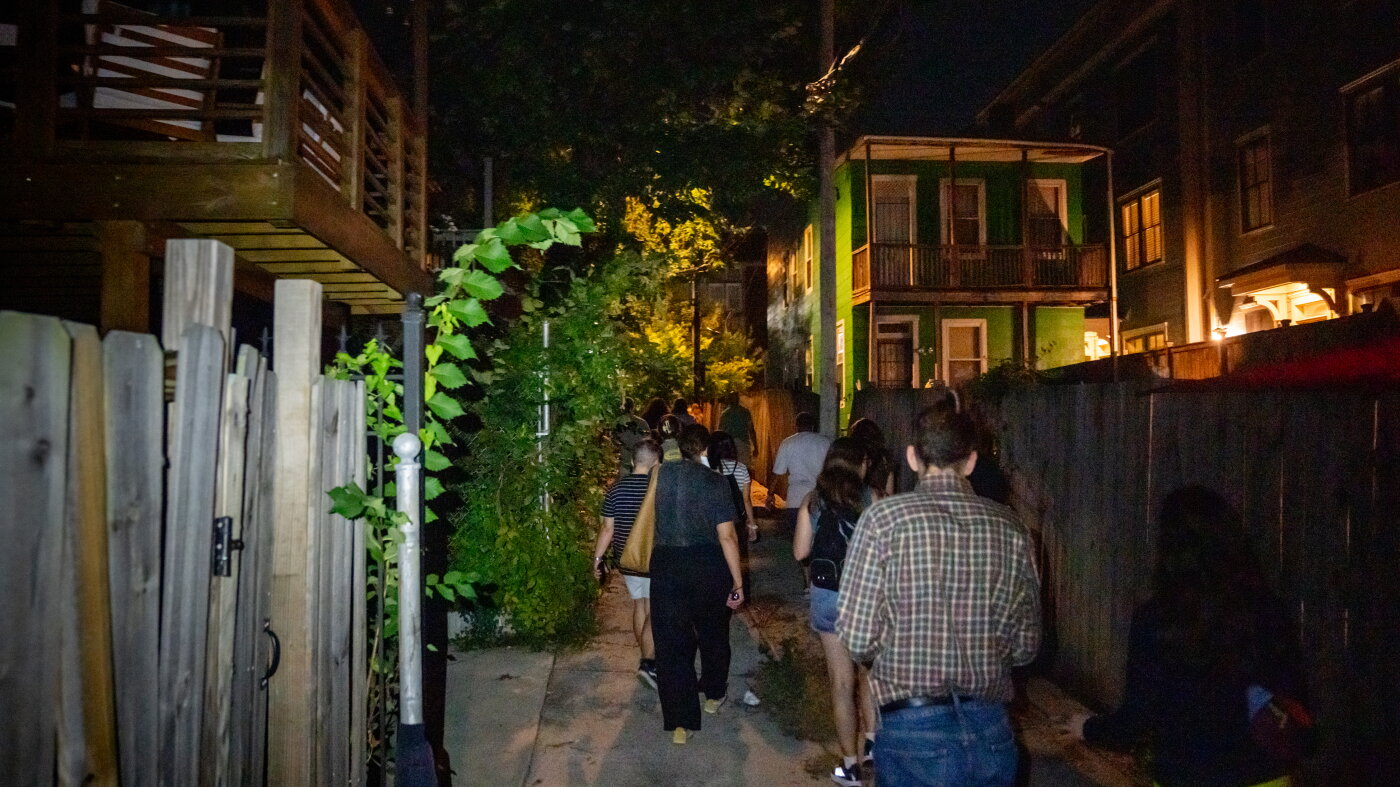
Photo via NPR

How to limit the rat numbers? Train the humans

Read the original at NPR ↗
Cite

Berger, A. (2026, September 28). How to limit the rat numbers? Train the humans. NPR. https://www.npr.org/2026/09/28/nx-s1-5980436/rats-dc-new-york-rangers

Dated when The Aporia collected the article, usually within hours of publication. Check the original for its exact date and byline.

NPR · collected 2026-09-28 · by Ava Berger

Quick Summary

In Washington, D.C., Rat Rangers, volunteers wearing matching t-shirts, are educating residents about preventing rat infestations through better sanitation rather than using poison. Following a 2024 City Wildlife study that found wildlife tested positive for rodenticides, head Rat Rangers Holly Gerberich and Gerard Brown led an educational walk in late September to show participants how improper garbage disposal attracts rats. They emphasize that addressing the human behavior causing rat proliferation is key to reducing rodent populations, noting that sanitation can be more effective than traps or birth control.
Written by AI on 2026-09-28, from this article's own text only (the story summary below draws on all the coverage).

AI analysis

Story summary

In Washington, D.C., a group called Rat Rangers has emerged to tackle the city's rat problem by educating residents rather than relying on poison or traps. After a 2024 City Wildlife study found many animals with blood-clotting issues due to rodenticides, the Rat Rangers began organizing educational tours in September 2024. During these tours, they guide participants through alleys to show how rats thrive in environments created by human waste and neglect. The group advises residents to reduce food waste by composting or using kitchen garbage disposals, ensuring trash is securely stored until pickup, and making sure garbage bins are tightly sealed. Head Rat Ranger Holly Gerberich emphasizes that humans create the conditions for rat infestations; she notes a healthy pair of rats can produce up to 15,000 descendants in one year if left unchecked.

Written for “Rat Control Methods” on 2026-11-03, grounded in this article and the 0 other(s) covering the same event.

Story

📰 Rat Control Methods
Environment · 1 article(s) covering the same event.

Compared with similar articles

Nothing to compare against. No article is close enough to this one for the pipeline to have linked or judged the pair.
How this article was measured signals, leaning charts, publisher record, byline, topics and claims

Signals How these are calculated →

Claims extracted
56
sentences that state something as happening or true
Uncertain
0%
0 of 56 hedged ("reportedly", "may", "according to")
Leaning
Leans left
of the writing, not the subject · beta estimate
Publisher signals
60/100
NPR's corrections and hedging, across everything collected from it. Not a measure of accuracy.
Outlets on this story
1
Environment
Same framing elsewhere
1
articles that frame the event the way this one does
Analyzed 2026-09-28 · how these are computed

How this is being covered How these are calculated →

Article leaning vs. publisher reliability
Source leaning vs. consistency

Publisher

NPR · 1024 article(s) · 3 correction(s) detected
Running correction rate · 3 correction(s)

Who wrote this

Ava Berger
13 article(s) here · 1 carrying a prediction
🔮 The flooding isn't a surprise, he says, pointing to a prediction he and others made in the spring — that if El Niño materialized according to forecasts, southwestern U.S. could see extreme precipitation events through October.
🔮 It does surprise me – I mean, here it's been around all this time," says Mark Cane, who created one of the first models to forecast and predict El Niño.
🔮 On Saturday, grassroot groups across the country will hold over 3,000 "No Kings: Vote Early" marches and other events.
🔮 So far, the Rat Rangers have taken hundreds of residents through D.C.'s labyrinth of alley ways, past rotting garbage and hungry rodents. Will it make a difference?
2026-09-28 · assertive framing · How to limit the rat numbers? Train the humans
🔮 The storm is expected to continue hitting the Jersey Shore, New York City, and Eastern Massachusetts into Sunday, according to NWS.
🔮 The storm is expected to intensify and move slowly north throughout the day, according to the National Weather Service.
🔮 Hurricane Nolo is expected to bring heavy rainfall and potential flooding to Hawaii this weekend, according to the National Hurricane Center.
🔮 He warned other news outlets would follow.
🔮 The Republican-led committee subpoenaed Black to return for a deposition under oath, and to turn over any nondisclosure agreements he signed, including those he may have signed with survivors of Epstein's abuse.
🔮 Both men have already been charged and will be deported following their release from prison.
Also by Ava Berger
Nothing else under this byline is closely related to this article, so these are simply their most recent.
All 13 articles by Ava Berger →

Topics

City Wildlife D.C. WASHINGTON Washington, D.C. the Rat Rangers

Subjects

D.C. GPE · 5× Gerberich PERSON · 3× Auggie PERSON · 2× Auggie Merritt PERSON · 1× City Wildlife ORG · 1× Dennis Merritt PERSON · 1× Gerard Brown PERSON · 1× Holly Gerberich PERSON · 1× WASHINGTON GPE · 1× Washington, D.C. GPE · 1×

Narrative

Their advice is simple — compost or use the kitchen garbage disposal to limit the food waste that is thrown out, put trash in outdoor bins right before pickup and make sure garbage cans are secure.
framing: assertive · carried by 1 article(s) · first seen 2026-09-28
🔮 So far, the Rat Rangers have taken hundreds of residents through D.C.'s labyrinth of alley ways, past rotting garbage and hungry rodents. Will it make a difference?
2026-09-28 · NPR
How to limit the rat numbers? Train the humans · assertive framing

Claims (56 extracted, 0 hedged)

WASHINGTON, D.C. — They creep through dark alleyways, peer behind trash cans and look inside old takeout containers. They're not rats, they're Rat Rangers. asserted
they → creep → containers
These rangers work to educate D.C. residents about ways to prevent rat infestations without using poison. asserted
rangers → work → poison
They organized after a 2024 City Wildlife study showed large numbers of D.C. wildlife with blood-clotting issues tested positive for rodenticides. asserted
numbers → organize → rodenticides
On a weeknight in late September, head Rat Rangers Holly Gerberich and Gerard Brown, wearing matching t-shirts with a rat on the front, lead two dozen D.C. residents down a dimly lit alley. asserted
Gerberich → wear → alley
The group is equipped with head lamps, closed toe-shoes and not nearly enough mosquito spray. asserted
group → equip → lamps
Gerberich, an anthrozoologist, tells the crowd that a healthy pair of healthy brown rats living in a city can produce 15,000 descendants in a single year. asserted
pair → tell → year
But rats aren't really the problem, she says, humans are. asserted
humans → say → ?
"The reason that they're here is because we provide an ideal environment for them," Gerberich says. asserted
Gerberich → provide → them
"How do we make our environment less welcoming to rats?" asserted
environment → make → rats
The answer, she says, is to get humans to understand why they can't leave garbage and waste out for rodents to feast on. asserted
rodents → say → garbage
And the best way to do that is to show people the problem up close. asserted
way → do → problem
The group doesn't have to look very hard for signs of rodents. asserted
group → have → rodents
The alleyway they've ventured down is crowded with overflowing garbage cans. asserted
they → venture → cans
They stop next to a squished bag of dog waste, dinner leftovers and the remnants of a stick of butter. asserted
They → stop → butter
"Sanitation is rodent control, truly," Gerberich explains. asserted
Gerberich → explain → ?
"What we're seeing out there is that individuals have a much bigger role in rat population prevention than they realize." asserted
they → see → prevention
Making the point for her, two long rat tails stick out from the top of a trash can. asserted
tails → make → can
Sensing trouble, one plump rodent makes a run for it: It leaps on top of a sideways bin, then flings itself from can to can, dropping behind a fence and scurrying off in the dark. asserted
It → sense → dark
"I kinda like seeing them," says 13-year-old Auggie Merritt. asserted
Merritt → see → them
"I think it's pretty cool." asserted
it → think → ?
In a quick flash, the second rat scampers away. asserted
rat → scamper → flash
"Oh there's one back there," Auggie whispers. asserted
Auggie → be → ?
"As long as I'm standing over here, I'm OK," says Auggie's dad, Dennis Merritt, laughing while taking a considerable step back. asserted
dad → stand → step
The group peppers the Rat Rangers with dozens of questions. asserted
group → pepper → questions
What do rodenticides do to rats? asserted
rodenticides → do → rats
What if we add snakes to the environment? asserted
we → add → environment
What happened to the rats during COVID-19? asserted
What → happen → COVID-19
Many have empathy for the rats. asserted
Many → have → rats
Zac Wood and his partner Lydia Barker came on the walk because they wanted to learn about alternatives to using pesticides. asserted
they → come → pesticides
(Most rodenticides contain anticoagulants, causing whatever consumes it to painfully bleed to death.) asserted
consumes → contain → death
The couple says they saw rat poison kill a litter of foxes. asserted
poison → say → foxes
"We're animal lovers," says Wood. asserted
Wood → say → ?
"It's not just seeing like the foxes, and the hawks, and the owls, and the animals that everyone loves suffer. asserted
everyone → see → that
I don't want the rats to suffer either." Catrina Valente on the other hand is fed up. asserted
Valente → want → hand
Her backyard has been invaded by rats, making it unlivable. asserted
it → invade → rats
(She has the phone numbers of the city's rat inspectors in her phone.) asserted
She → have → phone
"Rats are on this world like every other animal," Valente said. asserted
Valente → say → animal
"But it's the disease, the uncleanliness, everything – I don't have the sympathy for them." Rats are a public health risk, and the rangers say they want the rats gone too. asserted
rats → have → them
Their focus is on behavioral solutions that do not use rodenticides. asserted
that → use → rodenticides
Their advice is simple — compost or use the kitchen garbage disposal to limit the food waste that is thrown out, put trash in outdoor bins right before pickup and make sure garbage cans are secure. asserted
cans → compost → pickup
…and 16 more, not listed.

💬Give feedback
🕘History 🎫Support