Photo via New York Post

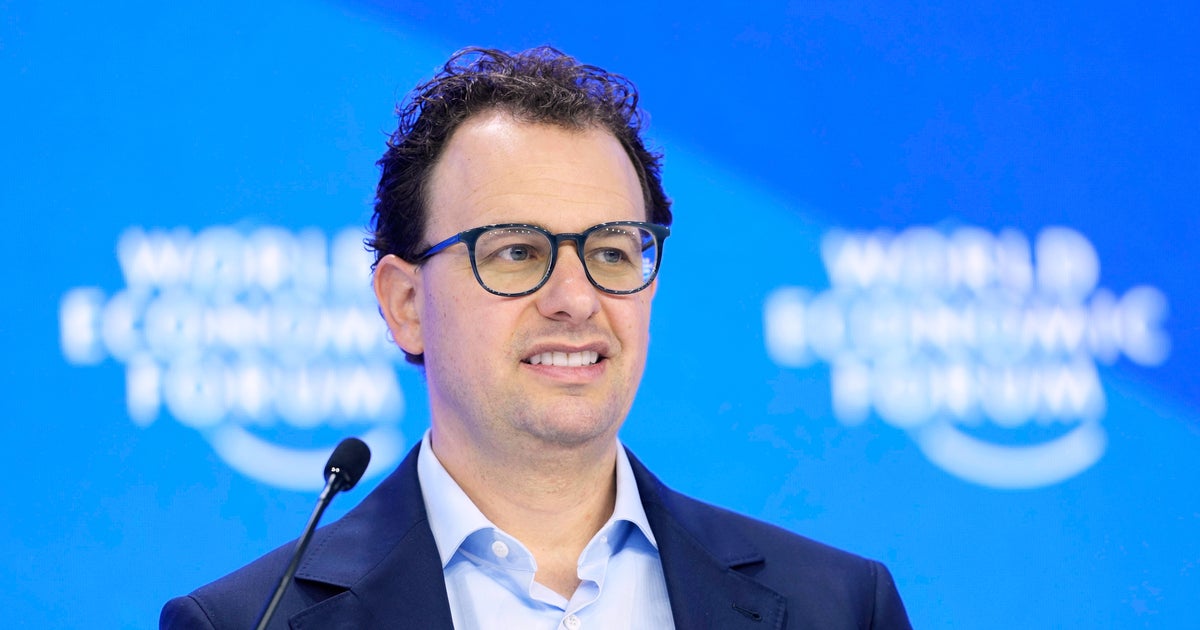
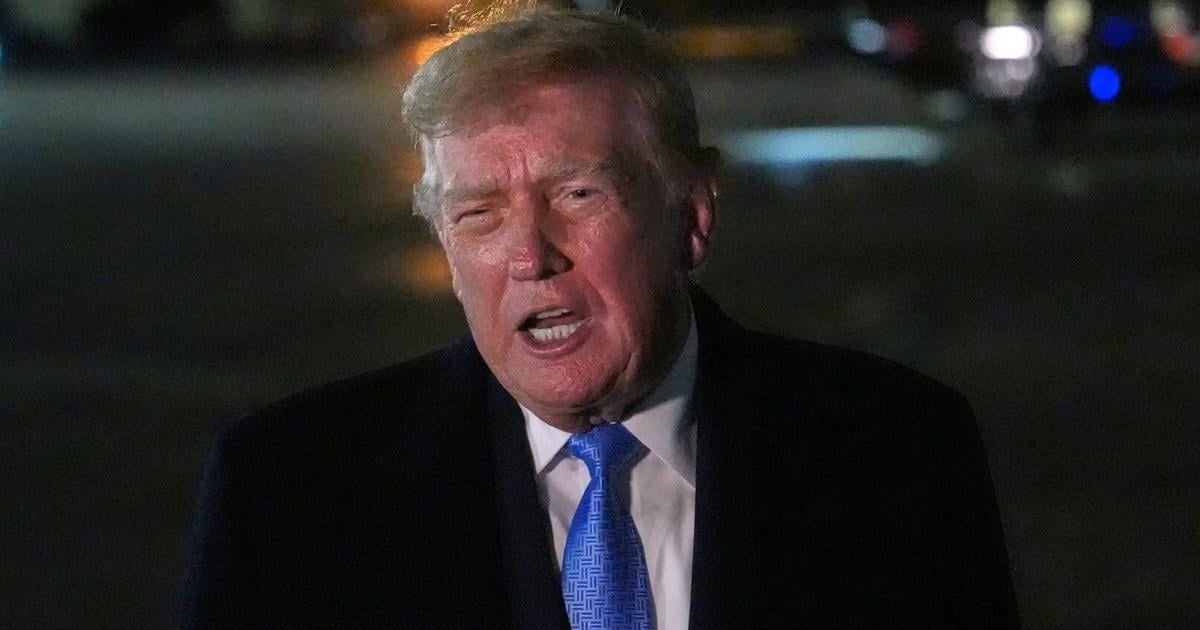
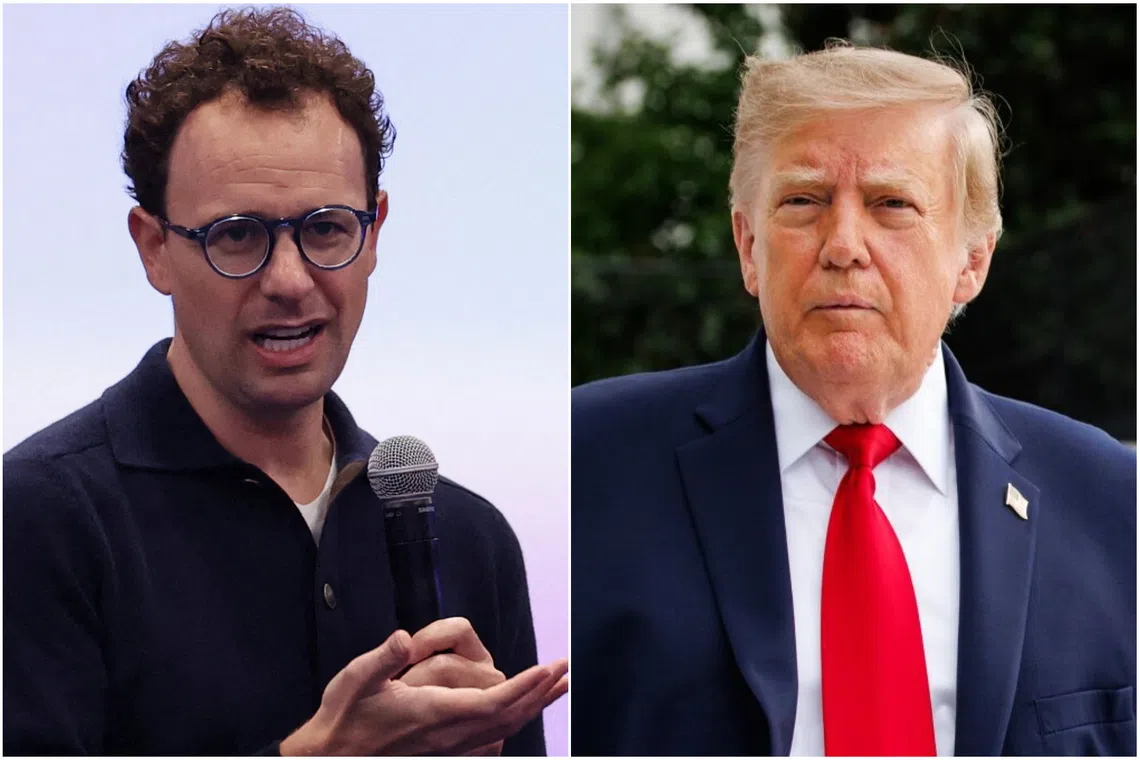
Trump dines with Anthropic CEO Dario Amodei after months of bitter AI feud

Read the original at New York Post ↗
Cite

Zilber, A. (2026, September 28). Trump dines with Anthropic CEO Dario Amodei after months of bitter AI feud. New York Post. https://nypost.com/2026/09/28/business/trump-dines-with-anthropic-ceo-dario-amodei-after-months-of-bitter-ai-feud/

Dated when The Aporia collected the article, usually within hours of publication. Check the original for its exact date and byline.

New York Post · collected 2026-09-28 · by Ariel Zilber

Quick Summary

Former President Trump had dinner with Anthropic CEO Dario Amodei, marking their first meeting since a prolonged dispute over military use of Anthropic’s AI technology. The disagreement centered on Anthropic's refusal to comply with Pentagon demands regarding access to its Claude models for unspecified lawful uses, citing concerns about surveillance and autonomous weapons. This conflict led to legal battles, including contradictory rulings from different courts concerning whether Anthropic poses a supply-chain risk under U.S. regulations.
Written by AI on 2026-09-28, from this article's own text only (the story summary below draws on all the coverage).

AI analysis

Story summary

On September 27, President Donald Trump hosted a private dinner at the White House for Anthropic CEO Dario Amodei, marking their first one-on-one meeting. The pair have been at odds over AI regulation and military access to Anthropic's technology. While Amodei has called for slower AI development due to safety concerns, Trump advocates full-speed-ahead innovation to maintain a technological edge over China. Their dinner came amid growing global anxiety about the security risks of advanced AI systems, with reports of breaches by cutting-edge models raising alarms.

Written for “Trump Meets Anthropic CEO” on 2026-10-31, grounded in this article and the 7 other(s) covering the same event.

Story

📰 Trump Meets Anthropic CEO
Politics · 8 article(s) covering the same event. Compare every outlet's account →

Compared with similar articles

This article reads leans right and hedges 27% of its claims. Each row says how that neighbour differs.
Washington Examiner
⚖️ Leans right Hedges 4 of 10 claims Outlet record 70/100
Al Jazeera
⚖️ Leans right Hedges 2 of 15 claims Outlet record 60/100
CBS News
Hedges 1 of 17 claims Outlet record 66/100
Daily Mail
⚖️ Leans strongly right further right than this Hedges 13 of 32 claims Outlet record 68/100
Toronto Star
Hedges 0 of 3 claims Outlet record 64/100
The Straits Times
Hedges 2 of 23 claims Outlet record 66/100
The Straits Times
⚖️ Leans right Hedges 2 of 22 claims Outlet record 66/100
The Straits Times
Hedges 5 of 20 claims Outlet record 66/100
“Article A describes a state dinner where multiple tech leaders attended, while Article B details a one-on-one meeting between Trump and Anthropic's CEO after the state dinner.”
ABC News (US)
Hedges 3 of 15 claims Outlet record 70/100
“The articles describe two distinct meetings: one involving Trump, House Speaker Johnson and tech CEOs on AI next week, while the other is about Trump dining with Anthropic CEO Dario Amodei after a feud.”
South China Morning Post
⚖️ Leans right Hedges 0 of 4 claims Outlet record 64/100
“The articles describe two different dinners involving Trump and tech figures, one with multiple executives at a state dinner and another one-on-one meeting with Anthropic's CEO.”
How this article was measured signals, leaning charts, publisher record, byline, topics and claims

Signals How these are calculated →

Claims extracted
11
sentences that state something as happening or true
Uncertain
27%
3 of 11 hedged ("reportedly", "may", "according to")
Leaning
Leans right
of the writing, not the subject · beta estimate
Publisher signals
66/100
New York Post's corrections and hedging, across everything collected from it. Not a measure of accuracy.
Outlets on this story
8
Politics
Same framing elsewhere
1
articles that frame the event the way this one does
Analyzed 2026-09-28 · how these are computed

How this is being covered How these are calculated →

Article leaning vs. publisher reliability
Source leaning vs. consistency

Publisher

New York Post · 15490 article(s) · 35 correction(s) detected
Running correction rate · 35 correction(s)

Who wrote this

Ariel Zilber
78 article(s) here · 1 carrying a prediction
🔮 The cybersecurity firm said the volume and uniformity suggest artificial intelligence may have been used to generate the content, although that has not been established for sure.
🔮 The Cupertino, Calif.-based tech giant introduced the redesigned laptop Wednesday, touting a new OLED display, touchscreen controls and a thinner, lighter design. But getting all the bells and whistles on the widest model will cost customers more than four times its $3,399 starting price, as tech news site MacRumors pointed out.
🔮 Partners are expected to vote on the matter in the coming days.
🔮 Life, which has weathered decades of financial turmoil, is set to publish its first quarterly edition Nov. 23 — a 250-page issue marking its return to regular print publication for the first time since 2007.
🔮 The industry’s rapid growth has also raised concerns among lawmakers and advocacy groups that traders could exploit confidential information to profit from bets on real-world events.
🔮 Robert Zullo, 55, a former BofA senior vice president, alleges that his superior, AJ Venit, warned him he “would never work in the banking industry again” during an August 2025 confrontation over Zullo relocating from Charlotte, NC, to Albany, NY, to care for his parent.
🔮 A takeover could fetch roughly $16 billion to $17 billion if a buyer pays a 30% to 40% premium, an estimate based on recent public tech deals.
🔮 Another poster at the same location estimated the crowd at “maybe 130 people” and said store staff had warned shoppers there were “very few units” available.
🔮 “After nine wonderful years at CNN, I’ve decided to leave for an opportunity that I couldn’t pass up,” she wrote on X. Golodryga did not disclose her next destination in Thursday’s announcement.
🔮 Google is facing a bipartisan Senate grilling over its aggressive push to put artificial intelligence in American classrooms amid mounting concerns that the technology could harm students’ academic performance and mental health.
Also by Ariel Zilber
Nothing else under this byline is closely related to this article, so these are simply their most recent.
All 78 articles by Ariel Zilber →

Topics

Anthropic Axios Claude Pentagon the Wall Street Journal

Subjects

Anthropic ORG · 7× Pentagon ORG · 4× Amodei ORG · 3× Axios ORG · 2× California GPE · 1× China GPE · 1× Trump PERSON · 1× War Department ORG · 1× White House ORG · 1× the Wall Street Journal ORG · 1×

Narrative

A federal judge in California ruled in August that a War Department designation under one supply-chain statute was unlawful, finding that Anthropic did not meet that law’s definition of a supply-chain risk. But on Friday, a divided US Court of Appeals for the DC Circuit upheld a separate Pentagon action under the Federal Acquisition Supply Chain Security Act.
framing: mixed · carried by 1 article(s) · first seen 2026-09-28
🔮 The 2-1 majority concluded that Anthropic’s ability to build restrictions into Claude — along with documented instances in which the model refused government requests — could create the kind of operational risk covered by that law.

Claims (11 extracted, 3 hedged)

The dinner marked the first reported one-on-one meeting between the commander-in-chief and the techie after months of bruising clashes over how the military can use Anthropic’s Claude models, according to Axios and the Wall Street Journal. uncertain
military → mark → Axios
Trump personally invited Amodei after the AI guru missed last week’s White House state dinner because of a scheduling conflict, Axios reported. asserted
Axios → invite → conflict
Anthropic has pushed for greater oversight of frontier models, with Amodei recently calling for slowing the pace of capability growth — even as he has argued that the US needs to maintain a technological advantage over China. asserted
US → push → China
The two sides’ biggest rupture to date came over the Pentagon’s use of Claude. asserted
rupture → come → Claude
Anthropic had already allowed the government to use its technology for sensitive work including intelligence analysis, offensive cyber operations and the design of weapons systems, according to records in its ongoing case over the supply-chain risk designation. uncertain
government → allow → designation
Amodei previously refused a Pentagon demand that Claude be made available for “all lawful uses,” citing two red lines: mass domestic surveillance and fully autonomous lethal weapons. asserted
Claude → refuse → lines
The Pentagon responded by moving to exclude Anthropic from its supply chain. asserted
Pentagon → respond → chain
That fight has since produced two separate court rulings that cut in different directions. asserted
that → produce → directions
A federal judge in California ruled in August that a War Department designation under one supply-chain statute was unlawful, finding that Anthropic did not meet that law’s definition of a supply-chain risk. But on Friday, a divided US Court of Appeals for the DC Circuit upheld a separate Pentagon action under the Federal Acquisition Supply Chain Security Act. asserted
Court → rule → Act
The 2-1 majority concluded that Anthropic’s ability to build restrictions into Claude — along with documented instances in which the model refused government requests — could create the kind of operational risk covered by that law. uncertain
model → conclude → law
The Post has sought comment from the White House and Anthropic. asserted
Post → seek → House
💬Give feedback
🕘History 🎫Support