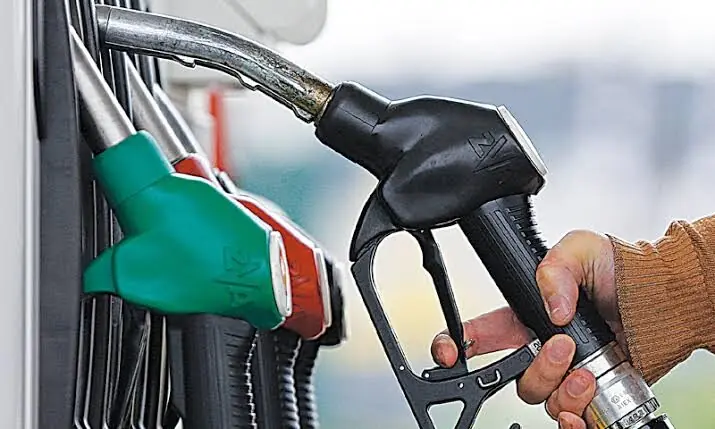
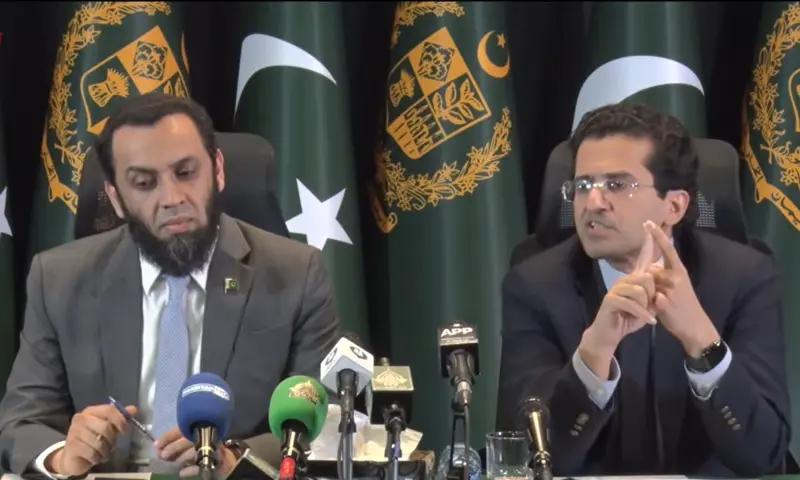
Photo via Dawn

Govt reduces petrol price by Rs2.27 per litre, high-speed diesel rate by Rs3.56

Read the original at Dawn ↗
Cite

News Desk. (2026, September 28). Govt reduces petrol price by Rs2.27 per litre, high-speed diesel rate by Rs3.56. Dawn. https://www.dawn.com/news/2033319/govt-reduces-petrol-price-by-rs227-per-litre-high-speed-diesel-rate-by-rs356

Dated when The Aporia collected the article, usually within hours of publication. Check the original for its exact date and byline.

Dawn · collected 2026-09-28 · by News Desk

Quick Summary

The government reduced the price of petrol by Rs2.27 per litre and high-speed diesel (HSD) by Rs3.56 per litre effective September 29, bringing their prices to Rs389.03 and Rs404.97 respectively. This reduction follows previous increases tied to international market fluctuations due to the US-Iran conflict; petrol peaked at Rs458.41 while HSD reached Rs520.35 in April. The government is also implementing austerity measures, including earlier market closures and reduced fuel allocations for official vehicles, in response to rising fuel costs.
Written by AI on 2026-09-28, from this article's own text only (the story summary below draws on all the coverage).

AI analysis

Story summary

The Government reduced petrol prices by Rs2.27 per litre and high-speed diesel (HSD) by Rs3.56 per litre, effective September 29, after they had peaked at Rs458.41 for petrol on April 3 and Rs520.35 for HSD. Petrol will now retail at Rs389.03 per litre, while HSD will cost Rs404.97 per litre. Despite these cuts, the government continues to impose taxes and duties of Rs114 per litre on petrol and Rs100 per litre on diesel. The price hikes were triggered by rising tensions in the Middle East, leading to austerity measures such as market closures at 9pm and a 50% reduction in fuel allocations for official vehicles for three months.

Written for “Petrol Price Reduction” on 2026-11-04, grounded in this article and the 0 other(s) covering the same event.

Story

📰 Petrol Price Reduction
Economy/Business · 1 article(s) covering the same event.

Compared with similar articles

This article reads unscored and hedges 6% of its claims. Each row says how that neighbour differs.
Dawn
Hedges 1 of 19 claims Outlet record 72/100
“The articles describe different reductions in petrol and diesel prices on separate days with distinct price changes.”
CBS News
⚖️ Leans left Hedges 5 of 32 claims Outlet record 65/100
“The articles describe different actions regarding fuel prices in two distinct countries and at different times.”
BBC News
Hedges 3 of 14 claims Outlet record 68/100
“The articles describe different aspects of fuel price changes over time, not a single identical incident.”
CBS News
Hedges 1 of 3 claims Outlet record 65/100
“The articles discuss different aspects of fuel pricing and policies in distinct contexts and timeframes.”
BBC News
Hedges 1 of 4 claims Outlet record 68/100
“The articles describe different actions regarding fuel prices in distinct countries and contexts.”
Dawn
Hedges 1 of 16 claims Outlet record 72/100
“The articles describe different reductions in fuel prices on different dates with distinct price changes.”
Dawn
Hedges 1 of 17 claims Outlet record 72/100
“The articles describe different price changes occurring on different dates.”
Dawn
Hedges 1 of 20 claims Outlet record 72/100
“The articles describe different pricing changes for petrol and diesel on different dates with distinct price adjustments.”
BBC News
Hedges 3 of 49 claims Outlet record 68/100
“The articles describe different actions regarding fuel prices in distinct countries and contexts.”
Dawn
Hedges 3 of 15 claims Outlet record 72/100
“The articles describe different government actions affecting fuel and vehicle pricing at distinct times.”
How this article was measured signals, leaning charts, publisher record, byline, topics and claims

Signals How these are calculated →

Claims extracted
16
sentences that state something as happening or true
Uncertain
6%
1 of 16 hedged ("reportedly", "may", "according to")
Leaning
not political
takes no side on a contested political question
Publisher signals
72/100
Dawn's corrections and hedging, across everything collected from it. Not a measure of accuracy.
Outlets on this story
1
Economy/Business
Same framing elsewhere
3
articles that frame the event the way this one does
Analyzed 2026-09-28 · how these are computed

How this is being covered How these are calculated →

Article leaning vs. publisher reliability
Source leaning vs. consistency

Publisher

Dawn · 2656 article(s) · 3 correction(s) detected
Running correction rate · 3 correction(s)

Who wrote this

News Desk
363 article(s) here · 1 carrying a prediction
🔮 Petroleum Minister Ali Pervaiz Malik on Tuesday assured the public that the government will make utmost efforts to meet the demand for liquefied petroleum gas (LPG) during the winter months.
🔮 Petroleum Minister Ali Pervaiz Malik on Tuesday assured the public that the government will make utmost efforts to meet the demand for liquefied petroleum gas (LPG) during winters.
🔮 Following the revision, petrol will retail at Rs374.51 per litre, while HSD will cost Rs395.20.
🔮 The PTI founder also faces pending trials in terrorism cases related to the May 9, 2023 riots.
🔮 Also last week, the two countries launched the China-Pakistan Information Corridor (CPIC), which will be based on four pillars — media, business and enterprises, think tanks, and culture/tourism.
🔮 “The foundation he has laid will be critical to the carrier’s future commercial viability and success,” it added.
🔮 week, the two countries launched the China-Pakistan Information Corridor (CPIC), which will be based on four pillars — media, business and enterprises, think tanks, and culture/tourism.
🔮 The government announced on Monday that oil refineries would bear a burden of approximately Rs15 billion each month, which would allow petrol to be sold Rs15 cheaper than what it was in the global market amid the US-Israeli war on Iran.
🔮 Pakistan is also set to host the next meeting of the SCO Council of Heads of State (CHS) after assuming its chairmanship in September.
Wire or desk byline, not an individual reporter.
Also by News Desk
Nothing else under this byline is closely related to this article, so these are simply their most recent.
All 363 articles by News Desk →

Topics

Iran Ogra Petroleum the Oil and Gas Regulatory Authority the Petroleum Division’s

Subjects

Iran GPE · 2× Ali Pervaiz Malik PERSON · 1× Ogra ORG · 1× Petroleum ORG · 1× Shehbaz Sharif PERSON · 1× the Oil and Gas Regulatory Authority ORG · 1× the Petroleum Division’s ORG · 1×

Narrative

The petrol price had peaked at Rs458.41 on April 3 after beginning its upward trajectory from Rs266 in the first week of March. Meanwhile, the government has reintroduced a raft of austerity measures in response to rising fuel prices amid the ongoing Middle East conflict.
framing: assertive · carried by 3 article(s) · first seen 2026-09-22
🔮 Following the revision, petrol will retail at Rs389.03 per litre, while HSD will cost Rs404.97 per litre.

Claims (16 extracted, 1 hedged)

The government on Monday decreased the price of petrol by Rs2.27 per litre and that of high-speed diesel (HSD) by Rs3.56 per litre. asserted
government → decrease → litre
Following the revision, petrol will retail at Rs389.03 per litre, while HSD will cost Rs404.97 per litre. asserted
HSD → follow → litre
The government continues to levy Rs114 per litre in taxes and duties on petrol and Rs100 per litre on diesel. asserted
government → continue → diesel
According to the Petroleum Division’s notification, the new prices are applicable for Sept 29. uncertain
prices → accord → Sept
The price of HSD has come down from a peak of Rs520.35 recorded on April 3. asserted
price → come → April
Its price had started rising from Rs281 per litre after the US-Iran war broke out on February 28. asserted
war → start → February
The petrol price had peaked at Rs458.41 on April 3 after beginning its upward trajectory from Rs266 in the first week of March. Meanwhile, the government has reintroduced a raft of austerity measures in response to rising fuel prices amid the ongoing Middle East conflict. asserted
government → peak → conflict
Under these measures, markets are required to close by 9pm and fuel allocations for official vehicles has been cut by 50 per cent for three months. asserted
allocations → require → months
On September 13, Prime Minister Shehbaz Sharif also announced a “relief scheme” for users of motorcycles, autos and vehicles of up to 800cc to “alleviate the burden” of rising global oil prices. asserted
Sharif → announce → prices
Previously, on July 17, Petroleum Minister Ali Pervaiz Malik announced that fuel prices would now be fixed on a daily basis due to fluctuations in international market prices following renewed hostilities between Iran and the US. asserted
prices → announce → Iran
Prior to this, the government had been announcing weekly revisions to fuel prices since early March, alongside measures for the conservation of fuel amid possible oil supply disruptions due to the ongoing conflict in the Middle East. asserted
government → announce → East
The federal government in April also announced targeted relief measures to provide subsidised fuel. asserted
government → announce → fuel
The petroleum minister stated that the cabinet and the prime minister had decided to give the Oil and Gas Regulatory Authority (Ogra) the responsibility of deciding fuel prices on a daily basis based on international market trends. asserted
cabinet → state → trends
Petrol is mainly used in private transport, small vehicles, rickshaws and two-wheelers, and changes in its price affect the middle and lower-middle classes. asserted
changes → use → classes
Similarly, changes in diesel prices also impact the public at large, as it is mainly used in the heavy transport sector, power plants and large generators. asserted
it → impact → sector
Petrol and high-speed diesel (HSD) are the major revenue earners, with monthly sales of about 700,000 to 800,000 tonnes, compared to just 10,000 tonnes of monthly demand for kerosene. asserted
Petrol → compare → kerosene

💬Give feedback
🕘History 🎫Support