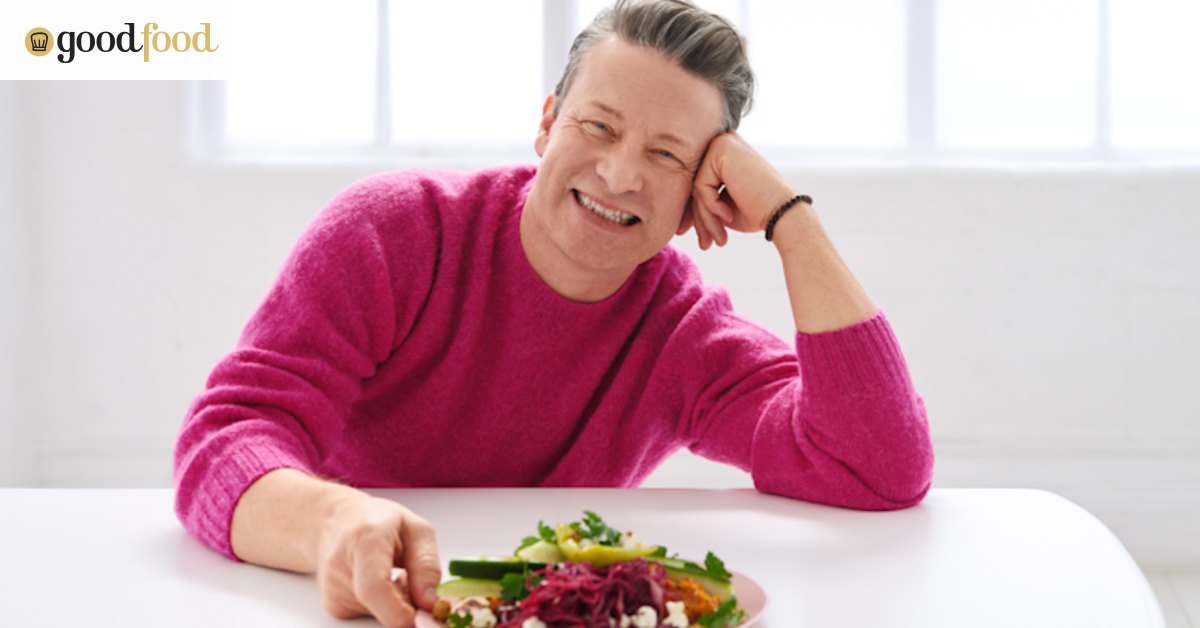
Photo via The Sydney Morning Herald

Why Jamie Oliver thinks eating at the table will soon be a thing of the past

Read the original at The Sydney Morning Herald ↗
Cite

Cline, R. (2026, September 28). Why Jamie Oliver thinks eating at the table will soon be a thing of the past. The Sydney Morning Herald. https://www.smh.com.au/goodfood/tips-and-advice/why-jamie-oliver-thinks-eating-at-the-table-will-soon-be-a-thing-of-the-past-20260929-p60z40.html?ref=rss&utm_medium=rss&utm_source=rss_feed

Dated when The Aporia collected the article, usually within hours of publication. Check the original for its exact date and byline.

The Sydney Morning Herald · collected 2026-09-28 · by Ruby Cline

Quick Summary

Jamie Oliver claims that dining at the table is becoming obsolete due to a survey conducted by YouGov for his TV show Jamie’s 20-Minute Meals. The research found that forty-five percent of adults prefer eating on the sofa, with people aged 35 and older more likely to eat there than at a dining table. Additionally, over a quarter of adults cook fewer than three meals per week, highlighting a decline in home cooking habits. Oliver emphasizes the importance of social connection and mealtime joy amid these changing trends.
Written by AI on 2026-09-28, from this article's own text only (the story summary below draws on all the coverage).

AI analysis

Story summary

Jamie Oliver has highlighted a trend where 45% of British adults are now eating supper on the sofa instead of at the dining table. This shift comes from research conducted by YouGov for his TV series "Jamie’s 20-Minute Meals." The survey, which polled 2,124 people, found that more than a quarter of Brits cook fewer than three meals per week, with one in ten not cooking at all. People aged 35 and older were particularly likely to opt for sofa dining over the table. Additionally, one in twelve Gen Z adults reported having dinner in bed most nights. Oliver noted this trend coincides with a decline in home cooking, predicting the "impending death" of the traditional dinner table. Bridget Benelam from the British Nutrition Foundation emphasized that regular shared mealtimes can support mental well-being and healthy eating habits in children.

Written for “Eating Habits Changes” on 2026-10-30, grounded in this article and the 0 other(s) covering the same event.

Story

📰 Eating Habits Changes
Health · 1 article(s) covering the same event.

Compared with similar articles

Nothing to compare against. No article is close enough to this one for the pipeline to have linked or judged the pair.
How this article was measured signals, leaning charts, publisher record, byline, topics and claims

Signals How these are calculated →

Claims extracted
21
sentences that state something as happening or true
Uncertain
10%
2 of 21 hedged ("reportedly", "may", "according to")
Leaning
not political
takes no side on a contested political question
Publisher signals
61/100
The Sydney Morning Herald's corrections and hedging, across everything collected from it. Not a measure of accuracy.
Outlets on this story
1
Health
Same framing elsewhere
1
articles that frame the event the way this one does
Analyzed 2026-09-28 · how these are computed

How this is being covered How these are calculated →

Article leaning vs. publisher reliability
Source leaning vs. consistency

Publisher

The Sydney Morning Herald · 5572 article(s) · 15 correction(s) detected
Running correction rate · 15 correction(s)

Who wrote this

Ruby Cline
1 article(s) here · 1 carrying a prediction
🔮 Ms Benelam added: “There is evidence that people who regularly eat together tend to have healthier diets, and that shared mealtimes may support mental wellbeing, social connection and the development of healthy eating habits in children.”
The only article under this byline in the corpus.

Topics

Brits Nuush YouGov the British Nutrition Foundation

Subjects

Oliver PERSON · 4× Benelam PERSON · 2× Bridget Benelam PERSON · 1× Brits NORP · 1× Jamie Oliver PERSON · 1× Nuush ORG · 1× Sally Pinnegar PERSON · 1× The Telegraph ORG · 1× YouGov ORG · 1× the British Nutrition Foundation ORG · 1×

Narrative

“With well over half of us not cooking most nights and the impending death of the dinner table a reality, I want to show how much joy, connection and value cooking can give.”Jamie Oliver He added: “It doesn’t have to be a big dinner – even sharing a sandwich at lunchtime with colleagues gives you that wonderful sense of connection and belonging.” As dining tables become increasingly scarce, they provide an important space for “social connection”, said Bridget Benelam, a scientist at the British Nutrition Foundation.
framing: assertive · carried by 1 article(s) · first seen 2026-09-28
🔮 Ms Benelam added: “There is evidence that people who regularly eat together tend to have healthier diets, and that shared mealtimes may support mental wellbeing, social connection and the development of healthy eating habits in children.”
2026-09-28 · The Sydney Morning Herald
Why Jamie Oliver thinks eating at the table will soon be a thing of the past · assertive framing

Claims (21 extracted, 2 hedged)

“Couch potato” has taken on a new – and literal – meaning. asserted
potato → take → meaning
Brits are increasingly eating supper on the sofa rather than at the dining table, Jamie Oliver has claimed. asserted
Oliver → eat → table
Forty-five per cent of adults are leaving the table behind, research conducted by YouGov for Oliver’s TV series Jamie’s 20-Minute Meals has found. asserted
research → leave → series
People aged 35 and older were more likely to eat their meals on the sofa than at the dining table, the figures indicated. asserted
figures → age → table
The “impending death” of the dinner table comes as people give up on home cooking, the celebrity chef said. asserted
chef → come → cooking
More than a quarter of adults said they cook fewer than three meals a week – including a tenth who don’t cook a single meal. asserted
who → say → meal
“We have known for a while that we are cooking less than ever, but never knew the full picture”, said Oliver. asserted
Oliver → know → picture
“With well over half of us not cooking most nights and the impending death of the dinner table a reality, I want to show how much joy, connection and value cooking can give.” asserted
cooking → cook → joy
One in 12 Gen Z adults aged 18 to 24 report having dinner in bed most nights. Overall, 44 per cent of the 2,124 people surveyed said they sat at the dining table to eat their evening meal. asserted
they → age → meal
Other respondents said they ate dinner in bed, at their desk or on the go. asserted
they → say → go
Oliver added “I am hugely passionate about the power of cooking and getting everyone together over a delicious meal. asserted
I → add → meal
“What’s great about this, is the science backs it up too. asserted
science → ’ → it
“With well over half of us not cooking most nights and the impending death of the dinner table a reality, I want to show how much joy, connection and value cooking can give.”Jamie Oliver He added: “It doesn’t have to be a big dinner – even sharing a sandwich at lunchtime with colleagues gives you that wonderful sense of connection and belonging.” As dining tables become increasingly scarce, they provide an important space for “social connection”, said Bridget Benelam, a scientist at the British Nutrition Foundation. asserted
Benelam → cook → Foundation
“The research suggests that what matters most is not necessarily whether you’re sitting at a dining table or on a sofa. uncertain
you → suggest → sofa
The greatest benefits appear to come from sharing a balanced meal, engaging in conversation and minimising distractions such as television and other screens,” says Benelam. asserted
Benelam → appear → television
“Dining tables often provide the best environment for this, but the social connection around a meal is probably more important than the location itself.” asserted
connection → provide → location
Ms Benelam added: “There is evidence that people who regularly eat together tend to have healthier diets, and that shared mealtimes may support mental wellbeing, social connection and the development of healthy eating habits in children.” uncertain
mealtimes → add → children
The process of eating upright is important for digestion, said Sally Pinnegar, nutritional therapist and founder of Nuush, an online lifestyle business. asserted
Pinnegar → eat → Nuush
“Eating at the table means eating in a more upright position than if you were on a sofa or armchair, and that leads to better digestion because of pure mechanics,” she said. asserted
she → eat → mechanics
“When food travels from the mouth through the food pipe, into the stomach, and from the stomach to the small intestine it’s partly assisted by gravity. asserted
it → travel → gravity
“Sitting in a less than upright position gets in the way of gravity and can mean worsening things like reflux, wind, bloating and indigestion.” The Telegraph (London) asserted
Sitting → sit → reflux

💬Give feedback
🕘History 🎫Support