Claims extracted
21
sentences that state something as happening or true
Uncertain
10%
2 of 21 hedged
("reportedly", "may", "according to")
Leaning
not political
takes no side on a contested political question
Publisher signals
61/100
The Sydney Morning Herald's corrections and
hedging, across everything collected from it. Not a measure of accuracy.
Outlets on this story
1
Science
Same framing elsewhere
1
articles that frame the event the way this one does
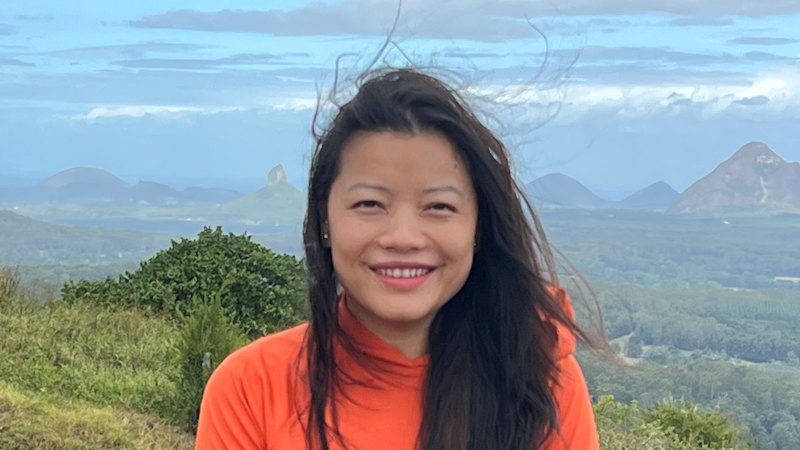
Bhabisara Gharti Magar has a blood type few people have ever heard of.
asserted
people → have → type
In fact, the young mum only learnt she had one of the world’s rarest blood types – a subset of the Bombay blood group called Para-Bombay – when she started planning to have children.
asserted
she → learn → children
During her pregnancy, doctors warned Gharti Magar they would need to prepare her own blood in advance, in case she needed it during childbirth.
asserted
she → warn → childbirth
“I was advised to collect at least three bags through autologous blood donation,” she explains.
asserted
she → advise → donation
“Thankfully, I did not end up haemorrhaging [during birth] and I didn’t need any of my stored blood.
asserted
I → end → blood
For people with extremely rare blood types, finding suitable donors and blood supply can be incredibly challenging.
asserted
finding → find → donors
Experts from The University of Queensland and the Australian Red Cross Lifeblood are hoping to change this, with a new partnership aimed at scaling lab-grown blood to support people with unique transfusion needs.
UQ biomedical engineer Dr Mark Allenby says scientists can already grow fully functional red blood cells in laboratories, but the process is prohibitively expensive and labour-intensive in its current form.
“You need a trillion red blood cells [to produce a blood bag], and to be able to do that in the laboratory, you need something equivalent to like a tennis court filled with cell culture flasks,” he says.
asserted
he → hop → flasks
(“Flasks” provide the nutrient environment, or growth factors, to grow the blood.)
asserted
Flasks → provide → blood
“Here in engineering land … we’re not trying to deliver a new biological thing that hasn’t been discovered before.
asserted
that → try → thing
“We’re trying to create a scaffolding for cells to grow at high density … with less nutrient costs.”
asserted
cells → try → costs
It currently takes about three weeks and costs more than $70,000 to grow a few teaspoons of red blood cells.
asserted
It → take → cells
“The way we grow them is still kind of like an old-fashioned Nokia phone,” Lifeblood researcher Dr Becky Griffiths says.
“We need to be more advanced in the way we do it, using technology that is more like a smartphone.”
asserted
that → grow → smartphone
Griffiths has been working on lab-grown blood for nearly 25 years and helped design the protocols for the world’s first human clinical trial in the UK to compare the benefits of lab grown and donated blood.
asserted
Griffiths → work → blood
“A red cell has a 120-day lifespan, so when you donate red cells, you’re getting all different ages,” she says.
asserted
she → have → ages
“If you think of it like a punnet of strawberries, you’ve got some really fresh ones and some not quite fresh ones.
asserted
you → think → ones
“But what we’re creating in the lab is a brand new red cell each time … so the clinical trial is to test if, firstly, they’re safe to go into people, and secondly … [if they’re] more effective.”
asserted
they → create → people
SMART CRC, an Australian company specialising in the development and scaling of regenerative therapies, has invested $2.5 million in the collaborative project.
asserted
CRC → specialise → project
Lifeblood stresses that advancing the production of lab-grown blood will not replace the ongoing need for blood donations.
asserted
advancing → stress → donations
Rather it could improve healthcare for a small but important segment of the population: people with extremely rare blood types like Gharti Magar’s; babies needing neo-natal blood; and patients who undergo frequent transfusions throughout their life.
uncertain
who → improve → life
“Having Bombay blood has always meant knowing that finding compatible blood in an emergency can be extremely difficult,” Gharti Magar says.
asserted
Magar → have → emergency
“Knowing there could one day be a way to grow compatible blood in a laboratory would give people like me enormous reassurance.”
Start the day with a summary of the day’s most important and interesting stories, analysis and insights.
uncertain
Knowing → know → stories