Millions of mortgage holders have been hit with another repayment shock after the Reserve Bank raised interest rates to their highest level in almost 15 years, adding hundreds of dollars a month to household budgets.
asserted
Bank → hit → budgets
In an unanimous decision by the board, the cash rate was lifted by 25 basis points to 4.6 per cent on Tuesday, with fears more increases could follow before Christmas.
uncertain
increases → lift → Christmas
The increase takes the cash rate to its highest level since 2011 and means borrowers have now endured four rate hikes in 2026 alone.
asserted
borrowers → take → 2026
If banks pass on the increase in full, Canstar estimates monthly mortgage repayments will rise by about $91 on a $600,000 mortgage, $114 on a $750,000 loan and $152 on a $1 million loan.
asserted
repayments → pass → loan
Four rate rises this year alone have added about $364 a month to repayments on a $600,000 loan.
asserted
rises → add → loan
In its monetary policy statement on the decision, the RBA refused to rule out further rate rises, warning it stood ready to tighten policy again if inflation remained stubbornly high.
asserted
inflation → refuse → policy
The central bank pointed to rising global oil prices, the unresolved Middle East conflict and signs businesses were continuing to pass higher costs on to consumers.
asserted
businesses → point → consumers
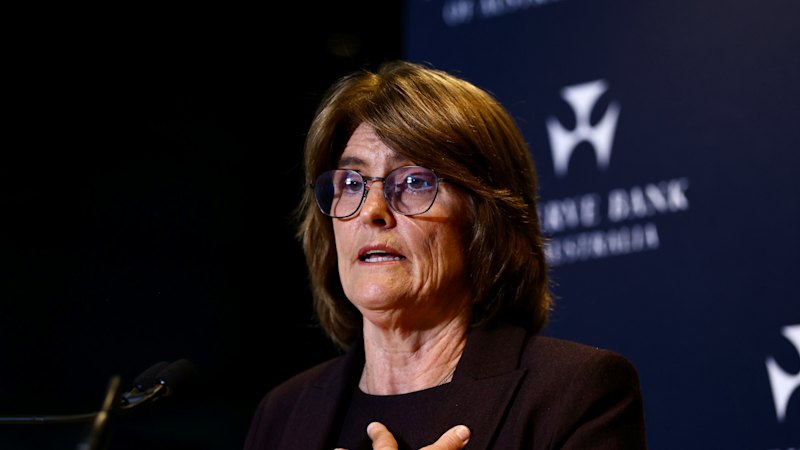
While the RBA held rates steady in August, governor Michele Bullock said she 'doesn't like people losing their jobs' but has made clear higher unemployment may be needed to help bring inflation under control.
uncertain
needed → hold → control
RBA governor Michele Bullock (pictured) said she 'doesn't like people losing their jobs' but has made clear higher unemployment may be needed to help bring inflation under control
While the RBA held rates steady in August, governor Michele Bullock said she 'doesn't like people losing their jobs' but has made clear higher unemployment may be needed to help bring inflation under control
Yet critics argue the real cost of higher interest rates won't just be paid by borrowers, but by Australians who lose their jobs as the economy slows.
uncertain
economy → picture → jobs
Australian Council of Social Service chief Cassandra Goldie said increasing interest rates will cost jobs, with the heaviest burden falling on people who lose work or can't find enough paid work.
asserted
who → say → work
'Since interest rates started to increase, an extra 200,000 people are out of paid work,' she said.
asserted
she → start → work
'An increase towards or above 5 per cent would cause a human disaster, locking people out of jobs for years and forcing them to rely on grossly inadequate income support payments.'
People who lose their jobs are left relying on JobSeeker, which now sits at $417 per week, just 41 per cent of the minimum wage and well below the median national rent of $703 according to the latest data from SQM Research.
When questioned on the ABC on ACOSS' stance, Treasurer Jim Chalmers said he did not believe knock-on impacts would be anywhere as severe.
'
uncertain
impacts → cause → stance
It's possible to have full employment, low unemployment, at the same time as we have lower, more steady inflation,' he said.
asserted
he → have → inflation
ACOSS chief Cassandra Goldie (pictured) warned an increase in the unemployment rate would cause a 'human disaster', locking people out of jobs for years
'
asserted
increase → picture → years
Despite concerns about the impact on jobs, economists said inflation remains too high for the RBA to declare victory.
asserted
RBA → say → victory
REA Group senior economist Eleanor Creagh said underlying inflation has been running at 3.6 per cent, well above the RBA's 2 to 3 per cent target.
asserted
inflation → say → target
'Higher mortgage repayments will weigh on discretionary spending at a time when households are already contending with elevated living costs, although resilient employment and incomes continue to provide an important buffer,' she said.
asserted
she → weigh → buffer
'The economy has slowed, but not enough to give the RBA confidence that inflation will return sustainably to target without further tightening.
asserted
inflation → slow → tightening
Ms Creagh said the rate rise will drive down home prices and sales activity further.
asserted
rise → say → prices
'While structural housing undersupply remains a long-term support for prices, in the near-term, affordability constraints, higher borrowing costs and weaker buyer demand are likely to keep downward pressure on prices,' she said.
asserted
she → remain → prices
Beyond its impact on the housing market itself, the rate rise is also expected to make buying a home even harder for those trying to get a foothold.
asserted
buying → expect → foothold
Treasurer Jim Chalmers (pictured) said it's possible to have full employment at the same time as having lower, more steady inflation
Domain
asserted
it → picture → inflation
chief residential economist Dr Nicola Powell said the rate rise will push home ownership even further out of reach for many Australians, particularly first-home buyers already facing significant affordability challenges.
asserted
rise → say → challenges
'Every increase in interest rates reduces the amount buyers can borrow, limiting what they can afford to pay and pushing some aspiring homeowners out of the market altogether,' she said.
'
asserted
she → reduce → market
For many, that means delaying their plans while they save a larger deposit or work to meet stricter lending requirements.'
asserted
they → mean → requirements
Dr Powell said Sydney and Melbourne could be hit hardest by another rate rise just as the market was behinning to show early signs of stabilisation, however, she said the bigger challenge is what higher rates could mean for future housing supply.
uncertain
rates → say → supply
'The risk is that today's fight against inflation becomes tomorrow's housing shortage,' she said.
asserted
she → become → inflation
Building approvals remain subdued, but that's not because construction activity has disappeared.
asserted
activity → remain → ?
Housing is increasingly competing with infrastructure, renewable energy and data-centre projects for the same workers, materials and resources.
asserted
Housing → compete → workers
Australia's construction industry only has so much capacity.
asserted
industry → have → capacity
As labour and materials are drawn into other major projects, it becomes harder and more expensive to bring new housing developments to market.
asserted
it → draw → market
Higher rates may help cool demand in the short term, but they can also make it harder to increase housing supply and address Australia's long-term housing shortfall.'
uncertain
it → help → shortfall
The latest spending figures from the ABS suggest cash-strapped households are cutting back on discretionary items such as trips the cinema, sporting events and concerts
There are already signs higher borrowing costs are biting, with new figures showing Australians are cutting back on non-essential spending.
asserted
Australians → suggest → spending
The latest spending figures from the ABS suggest cash-strapped households are cutting back on discretionary items such as clothing, furniture and recreation, reinforcing the RBA's view that consumer demand remains subdued as it weighs future rate decisions.
asserted
it → suggest → decisions
Head of business statistics Tom Lay said recreation and culture spending saw the largest fall, down 1.4 per cent, after months of higher spending associated with major sporting events.
asserted
spending → say → events
'Clothing and footwear, recreational goods, food, health, and furniture also fell,' he said.
asserted
he → fall → ?
'These falls were offset by higher transport spending – up 2.3 per cent - leaving overall household spending unchanged from July.
asserted
falls → offset → July
Both fuel spending and new vehicle sales contributed to this rise, especially electric vehicles sales as households respond to rising fuel prices.'
University of Sydney economics senior lecturer Dr Luke Hartigan said recent commentary by senior officials indicate the Bank is losing tolerance with persistently high inflation which has been above the RBA's target band for over 4 years.
asserted
which → contribute → years
'The RBA is worried, if this continues, households and businesses will start to expect higher inflation which will feed into prices, causing more inflation, creating a difficult cycle to break,' he said.
asserted
he → worry → cycle
'At the same time, the labour market remains relatively tight, and many businesses are struggling to increase output because they are already making full use of their staff and resources, suggesting inflationary pressures remain an issue even after the three recent increases.
asserted
pressures → remain → increases
…and 1 more, not listed.
 The Aporia