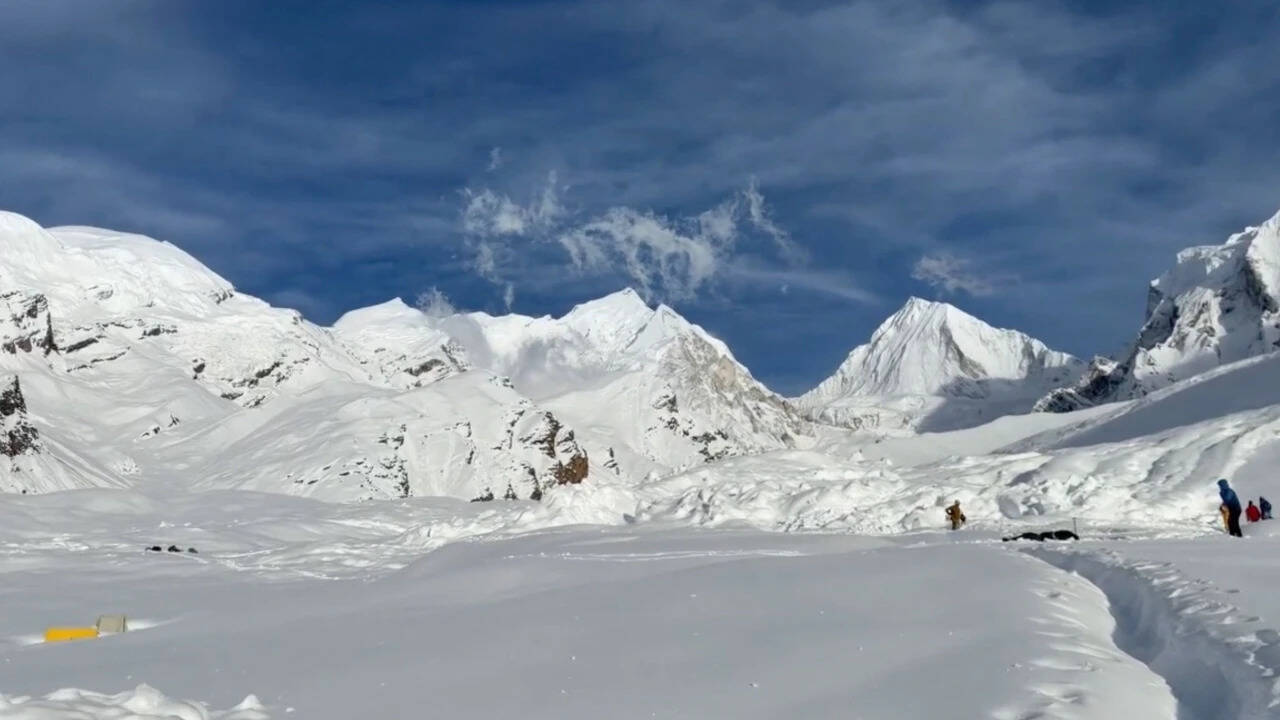
On July 30, 2026, an avalanche swept through an international expedition on the 8,051-metre Broad Peak, killing all 10 climbers, among them a beloved Pakistani mountain guide, Sohail Sakhi, and renowned British-Nepali mountaineer Nirmal ‘Nims’ Purja.
asserted
avalanche → sweep → them
The obvious question, particularly in a year when climbers across the Karakoram range have repeatedly complained of unstable conditions, is whether climate change played a role.
asserted
change → complain → role
There is no evidence yet to say that it did, at least not directly.
asserted
it → be → ?
Fida Ali Arandu, a veteran Pakistani mountaineer and a member of the Purja’s Elite Exped team, believes climate change may have contributed, but also points to another factor: heavy snowfall in the days before the accident and what he considered an overly hurried summit push.
uncertain
he → believe → accident
His advice is simple: after heavy snowfall, wait, let the mountain settle and only move when conditions are clear.
asserted
conditions → wait → snowfall
Naila Kiani, who has climbed 12 of the world’s highest mountains, says the question surrounding the serac collapse that triggered the Broad Peak avalanche remains unresolved.
asserted
that → climb → avalanche
Was it the result of a normal accumulation of snow and ice, or had warming temperatures contributed to instability?
asserted
temperatures → warm → instability
“We’re still trying to analyse” what happened, she says.
asserted
she → try → ?
Glaciers are retreating, routes are shifting and rockfall and avalanches are becoming more common.
asserted
rockfall → retreat → ?
Is climate change rewriting the rules of mountaineering?
asserted
change → rewrite → mountaineering
Not every avalanche is caused by global warming.
asserted
avalanche → cause → warming
What is changing, however, is the mountain environment in which those avalanches occur and, increasingly, the predictability of that environment.
asserted
avalanches → change → environment
For mountaineers who have spent years travelling through the Karakorams, the changes are becoming impossible to ignore.
asserted
changes → spend → Karakorams
MOUNTAINs IN FLUX
Sajid Sadpara has spent nearly a decade climbing major peaks in the Himalayas and Karakorams.
asserted
Sadpara → spend → Himalayas
He says one of the most obvious changes has been the formation of new glacial lakes and the changing nature of established climbing routes.
asserted
one → say → routes
On Gasherbrum I this year, something as mundane as leaving a bottle of water outside the tent became an indication of a much warmer mountain.
asserted
something → leave → mountain
At Camp 1, water that previously would have frozen overnight did not.
asserted
that → freeze → Camp
Climbers wearing heavy down jackets found themselves feeling hot.
asserted
themselves → wear → jackets
A familiar route between Camp 1 and Camp 2 had changed enough that the team had to find an alternative.
asserted
team → change → alternative
The new route took considerably longer.
asserted
route → take → ?
“These changes are happening in front of our eyes,” Sadpara says.
asserted
Sadpara → happen → eyes
Fida Ali has witnessed a similar transformation over decades of travelling through the Karakorams.
asserted
Ali → witness → Karakorams
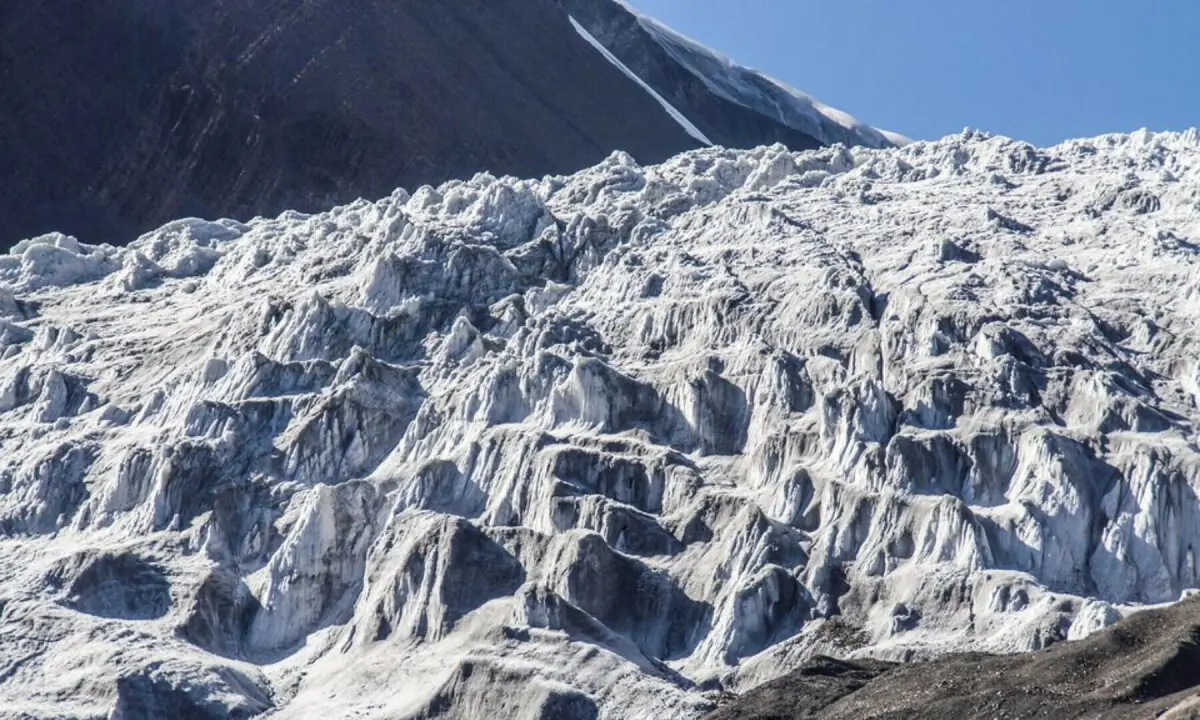
Glaciers that once appeared stable are retreating; large blocks of glacial ice are breaking away and falling into rivers.
asserted
blocks → appear → rivers
Even after August — traditionally the point when temperatures begin dropping and mountain surfaces start to refreeze — rivers, he says, are continuing to swell.
asserted
he → begin → August
The science supports the broader picture.
asserted
science → support → picture
A 2026 review published in Natural Hazards, an academic journal that publishes research on the causes and effects of natural disasters, found within the the Himalaya-Karakoram region widespread retreat and expansion of glacial lakes under a warming climate, with more than 388 documented glacial lake outburst flood (GLOF) events across the region.
asserted
that → publish → region
The researchers also identify ice avalanches and extreme precipitation among the important triggers of these events.
asserted
researchers → identify → events
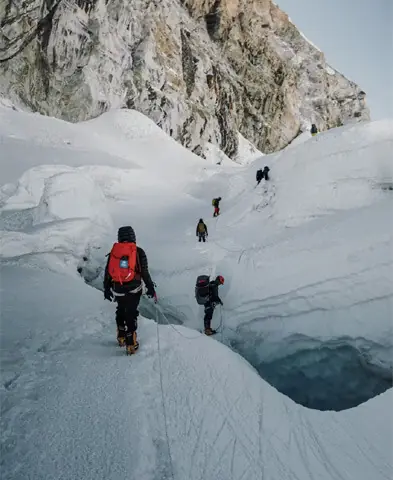
It changes the route beneath their feet.
asserted
It → change → feet
Snow bridges disappear.
asserted
bridges → disappear → ?
Crevasses widen.
asserted
Crevasses → widen → ?
Ice becomes less predictable.
asserted
Ice → become → ?
Rock previously held together by frozen ground becomes exposed.
asserted
Rock → hold → ground
And that can transform a route that has been considered familiar for generations.
asserted
that → transform → generations
WHEN ROCK REPLACES ICE
Kiani remembers seeing the Baltoro Glacier for the first time in 2018.
asserted
Kiani → replace → 2018
Since then, she’s made multiple trips until her last in 2024.
asserted
she → make → 2024
She says the landscape now looks dramatically different.
asserted
landscape → say → ?
“In several sections where there used to be ice and snow, there is now rock,” she says.
asserted
she → use → sections
“These changes used to take decades.
asserted
changes → use → decades
And they are now happening in months.”
asserted
they → happen → months
She also experienced increased rockfall on Everest in 2023, an area where she had not expected to encounter such frequent falling rock.
asserted
she → experience → rock
…and 42 more, not listed.
 The Aporia