Photo via The Hindu

Is the U.S. taking the upper hand in the battle of Hormuz?

Read the original at The Hindu ↗
Cite

Johny, S. (2026, September 29). Is the U.S. taking the upper hand in the battle of Hormuz? The Hindu. https://www.thehindu.com/news/international/is-the-us-taking-the-upper-hand-in-the-battle-of-hormuz/article71523843.ece

Dated when The Aporia collected the article, usually within hours of publication. Check the original for its exact date and byline.

The Hindu · collected 2026-09-29 · by Stanly Johny

Quick Summary

During his speech at the UN General Assembly on September 22, U.S. President Donald Trump outlined two stark options regarding Iran: either negotiate a deal that would allow Iran to rebuild or pursue a policy aimed at destroying the country's capacity for future growth and influence. The article reports that in June 2025, the U.S. signed an MoU with Iran to reopen the Strait of Hormuz, but nuclear talks were delayed. Currently, Iran is pushing for a seven-point plan to reopen the strait quickly if the U.S. lifts its naval blockade and sanctions; however, Trump has rejected this offer. The article focuses on how the ongoing conflict and blockade of the strategic Strait of Hormuz have shifted both nations' bargaining positions in negotiations over Iran's nuclear program.
Written by AI on 2026-09-29, from this article's own text only (the story summary below draws on all the coverage).

AI analysis

Story summary

In his UN General Assembly address on September 22, U.S. President Donald Trump vowed that he would never allow Iran to possess a nuclear weapon, despite having referred to his administration's actions as having "obliterated" Iran’s nuclear program after a hypothetical June 2025 bombing. Trump also indicated the possibility of making a deal with Iran post-midterm elections, suggesting an approach focused on re-opening the Strait of Hormuz and pushing nuclear talks aside for now. This shift signals a change in how the U.S. is handling its conflict with Iran, but it remains uncertain whether the blockade and military presence in Hormuz can be sustained long-term given the significant resources involved.

Written for “U S Iran Tensions Hormuz” on 2026-11-04, grounded in this article and the 0 other(s) covering the same event.

Story

📰 U S Iran Tensions Hormuz
Politics · 1 article(s) covering the same event.

Compared with similar articles

This article reads unscored and hedges 7% of its claims. Each row says how that neighbour differs.
Al Jazeera
Hedges 0 of 2 claims Outlet record 60/100
“The articles describe different aspects and times related to negotiations between Iran and the US, but do not refer to the same specific incident or time.”
NBC News
Hedges 2 of 30 claims Outlet record 78/100
“The articles describe different aspects of a broader situation involving Iran and the United States, but do not clearly refer to the same specific incident or occurrence.”
Daily Mail
Hedges 5 of 36 claims Outlet record 69/100
“The articles discuss different events and timeframes related to Trump's stance on Iran, with Article A focusing on a rejection of a ceasefire deal and a boast about a 'wall of steel', while Article B covers his speech at the UN General Assembly addressing potential deals or annihilation.”
Al Jazeera
Hedges 0 of 2 claims Outlet record 60/100
“The articles discuss different points in time and distinct aspects of the Iran-US relationship, with Article A focusing on Trump's rejection of a recent Iranian proposal and Article B detailing Trump's speech at the UN General Assembly.”
Dawn
⚖️ Leans left Hedges 2 of 25 claims Outlet record 72/100
“The articles discuss different aspects of the Iran-US relationship and do not describe the same specific incident or occurrence.”
The Hindu
⚖️ Leans left Hedges 2 of 30 claims Outlet record 60/100
“The articles discuss different aspects of the Iran-U.S. standoff: Article A focuses on Iran's firm stance regarding the Strait of Hormuz after U.S. rejection, while Article B reports on President Trump's speech at the UN General Assembly.”
Semafor
Hedges 0 of 4 claims Outlet record 59/100
“The articles discuss different aspects of US-Iran relations and diplomatic efforts, but do not describe the same specific occurrence or incident.”
Daily Mail
Hedges 3 of 30 claims Outlet record 69/100
“The articles describe different events: one is a statement by Iran's Supreme Leader, and the other is a speech by U.S. President Trump at the UN General Assembly.”
Dawn
Hedges 3 of 40 claims Outlet record 72/100
“The articles describe different speeches and statements made on separate occasions by Khamenei and Trump, not a single specific incident.”
The Free Press
⚖️ Leans strongly right Hedges 1 of 9 claims Outlet record 96/100
“The articles discuss different aspects of the broader conflict involving the U.S. and Iran, with Article A focusing on Trump's UN speech while Article B discusses military strategy and operations in the Strait of Hormuz.”
How this article was measured signals, leaning charts, publisher record, byline, topics and claims

Signals How these are calculated →

Claims extracted
41
sentences that state something as happening or true
Uncertain
7%
3 of 41 hedged ("reportedly", "may", "according to")
Leaning
withheld
no quote in the article backed the model's score
Publisher signals
60/100
The Hindu's corrections and hedging, across everything collected from it. Not a measure of accuracy.
Outlets on this story
1
Politics
Same framing elsewhere
1
articles that frame the event the way this one does
Analyzed 2026-09-29 · how these are computed

How this is being covered How these are calculated →

Article leaning vs. publisher reliability
Source leaning vs. consistency

Publisher

The Hindu · 907 article(s) · 2 correction(s) detected
Running correction rate · 2 correction(s)

Who wrote this

Stanly Johny
15 article(s) here · 1 carrying a prediction
🔮 The findings contradicted claims by the Board of Peace in its May report to the Security Council that the ceasefire had largely held and brought enormous relief to civilians.
🔮 His Yesh Atid party, which was expected to beat Likud, finished second with 21 seats.
🔮 Israelis will go to the polls on October 27 in the first general election since the October 7, 2023 Hamas attack.
2026-10-27 · assertive framing · A guide to Israel’s elections
🔮 Iran said on Saturday (October 24, 2026) that U.S. warships would not be allowed to enter the Persian Gulf and warned that any attack by the U.S. and Israel would have repercussions beyond the country, amid reports that Washington was considering resuming air strikes.
2026-10-24 · assertive framing · Iran warns of ‘apocalyptic war’ if attacked again
🔮 If Saudi Arabia continues to attack Yemen, “we will resort to major options we did not want to take, and we hold it responsible for the consequences,” the militants said, according to the Houthi-aligned Almasirah television.
🔮 “If I was in the cabinet of the Israeli government, I might not be attacking the only powerful ally that I have anywhere left in the entire world,” he said, adding: “The other thing that I would say is that over the last three months, two-thirds of the defensive weapons that have protected your homeland have been built by American hands and paid for by American tax dollars.”
2026-10-19 · assertive framing · A rift in the U.S.-Israel special relationship
🔮 What he hasn’t tried is an all-out war against Iran, which he might consider once the midterm elections are over, says Trita Parsi, executive vice-president of the Washington-based Quincy Institute.
🔮 The government’s main concern was that the flight could also be used to transport personnel of Iran’s Islamic Revolutionary Guard Corps (IRGC) and military equipment to Yemen.
2026-10-13 · assertive framing · Did Saudi Arabia walk into the Houthi trap?
🔮 The Mahdi Army had received support from Iran, but Mr. Sadr later distanced himself from Iranian influence and projected Saraya al-Salam as an Iraqi nationalist militia.
🔮 On May 1, 2003, nearly two months after launching the invasion of Iraq, the then U.S. President George W. Bush landed on the deck of the aircraft carrier USS Abraham Lincoln, which was off the San Diego coast after returning from combat operations in the Persian Gulf.
Also by Stanly Johny
A guide to Israel’s elections
2026-10-27 · The Hindu
Nothing else under this byline is closely related to this article, so these are simply their most recent.
All 15 articles by Stanly Johny →

Topics

Iran Iranian Tehran U.S. the Islamic Republic

Subjects

Iran GPE · 21× U.S. GPE · 12× Trump PERSON · 5× Iranian NORP · 2× Omani NORP · 2× Tehran GPE · 2× Donald Trumpsaid PERSON · 1× UN General Assembly ORG · 1× Washington GPE · 1× the Islamic Republic GPE · 1×

Narrative

But sooner or later, he would face two key questions: Is the U.S. blockade of Iran, along with its guided assistance to vessels in Hormuz, for which Washington has committed enormous military resources, sustainable in the long term?
framing: assertive · carried by 1 article(s) · first seen 2026-09-29
🔮 Will a deal be made with Iran that lets them rebuild and create a far greater country than it ever was before?
2026-09-29 · The Hindu
Is the U.S. taking the upper hand in the battle of Hormuz? · assertive framing

Claims (41 extracted, 3 hedged)

“I have a big decision to make. asserted
I → have → decision
Will a deal be made with Iran that lets them rebuild and create a far greater country than it ever was before? asserted
it → make → country
Or do I annihilate the Islamic Republic? asserted
I → annihilate → Republic
Do I drive them into hell with no chance of survival and no hope of future greatness?” asserted
I → drive → greatness
“I believe we’ll make a deal right after the [midterm] election because it doesn’t make sense for them not to,” he added. asserted
he → believe → sense
In the speech, in which Mr. Trump vigorously defended his performance as the President of the U.S., there were 10 references to Iran’s nuclear programme, which he claimed the U.S. had obliterated after its June 2025 bombing. asserted
U.S. → defend → bombing
“I will never allow Iran to have a nuclear weapon,” he said. asserted
he → allow → weapon
Iran has an advanced nuclear programme but has repeatedly said that it was not seeking to build nuclear weapons. asserted
it → have → weapons
Mr. Trump’s speech signalled a change in the approach of the administration towards the Iran conflict. asserted
speech → signal → conflict
In June, when the U.S. signed a memorandum of understanding (MoU) with Iran, Washington agreed to make concessions in return for reopening the Strait of Hormuz, while the nuclear talks were pushed to the back burner. asserted
talks → sign → burner
But now, as the stalemate continues, the U.S. seeks to bring the nuclear file back into the negotiations. asserted
U.S. → continue → negotiations
Iran’s President Masoud Pezeshkian and Foreign Minister Abbas Araghchi were also in New York to attend the UNGA. asserted
Pezeshkian → attend → UNGA
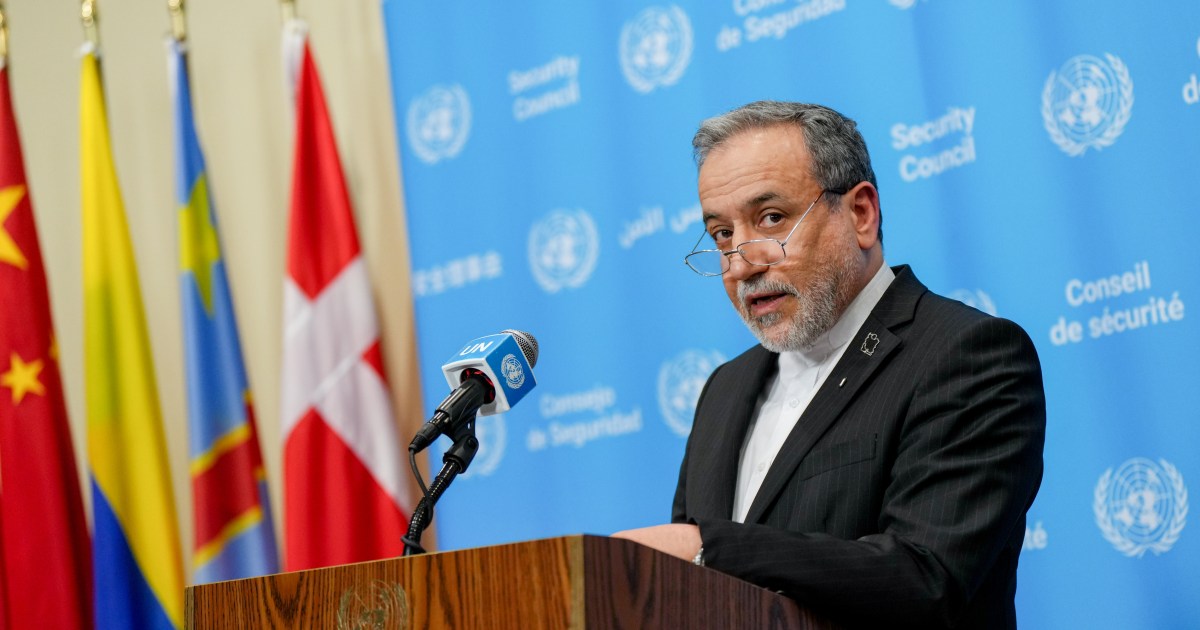
On the sidelines of the assembly, Mr. Araghchi held indirect talks with U.S. officials, seeking to find a way out of the current impasse. asserted
Araghchi → hold → impasse
Tehran submitted a seven-point proposal to reopen the Strait of Hormuz in return for the U.S. lifting its naval blockade on Iranian ports, issuing sanctions waivers and releasing Iran’s frozen funds. asserted
U.S. → submit → funds
In effect, Iran wants the U.S. to return to the June 17 MoU. asserted
U.S. → want → MoU.
While Iran’s demands remained unchanged, it offered to fast-track the timeline. asserted
it → remain → timeline
If the MoU had promised to reopen the Strait of Hormuz in 30 days, Iran now promises to reopen the waterway, which it blockaded in the initial days of the war, in seven days. asserted
it → promise → days
But Mr. Trump said he rejected the Iranian offer. asserted
he → say → offer
Iran, according to Omani Foreign Minister Badr bin Hamad, was ready to make concessions on its nuclear programme on February 27 to avoid war. uncertain
Iran → accord → war
But Mr. Trump and Israeli Prime Minister Benjamin Netanyahu chose not to take the deal and started bombing Iran on February 28, killing its Supreme Leader, Ayatollah Ali Khamenei. asserted
Trump → choose → Leader
The war appears to have hardened Iran’s position on the nuclear question. asserted
war → appear → question
The blockade of the Strait of Hormuz, through which one-fifth of the world’s oil and gas moved before the war, provided additional leverage to Tehran. asserted
fifth → move → Tehran
Iran sought to tie the reopening of the strait to concessions from the U.S., while keeping its trump card, the nuclear file, close to its chest. asserted
Iran → seek → chest
The U.S. toed this line when it signed the MoU, which was largely seen as favourable to Iran. asserted
which → toe → Iran
But after the collapse of the MoU, the U.S. has been trying to rebuild its lost leverage by easing Iran’s grip on the strait and adding more pain on Iran through economic squeezing. asserted
U.S. → try → squeezing
The U.S. attempts to open a safer route along the Omani coast to help tankers get in and out of the Strait of Hormuz have been relatively successful. asserted
tankers → open → Hormuz
Whether with Iran’s tolerance or not, shipments through the waterway rose to almost 80% of its prewar levels in September. asserted
shipments → rise → September
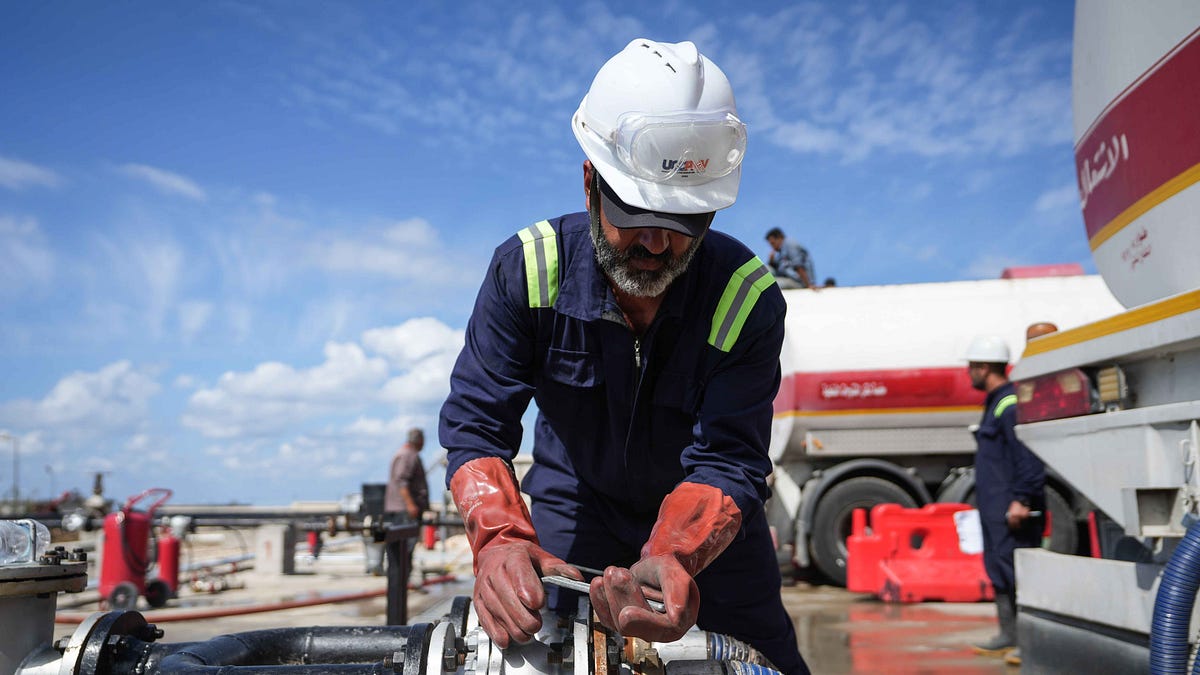
Before the war, the Gulf region exported nearly 19 million barrels of oil a day through the strait, which fell to a trickle in the first phase of the war, pumping up oil prices. asserted
which → export → prices
Shipments rose to almost 13 million barrels a day in September, according to ship tracker Huax. uncertain
Shipments → rise → Huax
While Arab countries, including Iraq, Saudi Arabia and the UAE manage to sell their crude oil out of the strait, Iran’s oil exports collapsed as it faces the American blockade in the Gulf of Oman. asserted
it → include → Oman
As petroleum exports from the Gulf rebound, Mr. Trump believes that Iran is losing its Hormuz leverage. asserted
Iran → rebound → leverage
Hence, he insists that the nuclear file be brought back on the table as part of any deal with Iran. asserted
file → insist → Iran
But Iran insists that its core positions have not changed. asserted
positions → insist → ?
Even though Mr. Trump said he rejected the Iranian seven-point proposal, Mr. Araghchi said on Tuesday (September 29, 2026) Tehran was expecting an official American response. asserted
Tehran → say → response
Supreme Leader Mojtaba Khamenei, in a statement released on Monday (September 28), hailed the “defenders of Hormuz” and added that U.S. forces would be forced out of the Arabian Sea. asserted
forces → release → Sea
It is true that Iran is facing the economic heat of the U.S. blockade, but Tehran seems prepared to take the pain and not to submit to U.S. demands. asserted
Tehran → face → demands
And if Iran believes it is losing its leverage, it could also escalate the crisis militarily. uncertain
it → believe → crisis
This leaves Mr. Trump in a dilemma. asserted
This → leave → dilemma
He would like to see whether Iran would buckle under economic pressure. asserted
Iran → like → pressure
But sooner or later, he would face two key questions: Is the U.S. blockade of Iran, along with its guided assistance to vessels in Hormuz, for which Washington has committed enormous military resources, sustainable in the long term? asserted
Washington → face → term
…and 1 more, not listed.

💬Give feedback
🕘History 🎫Support