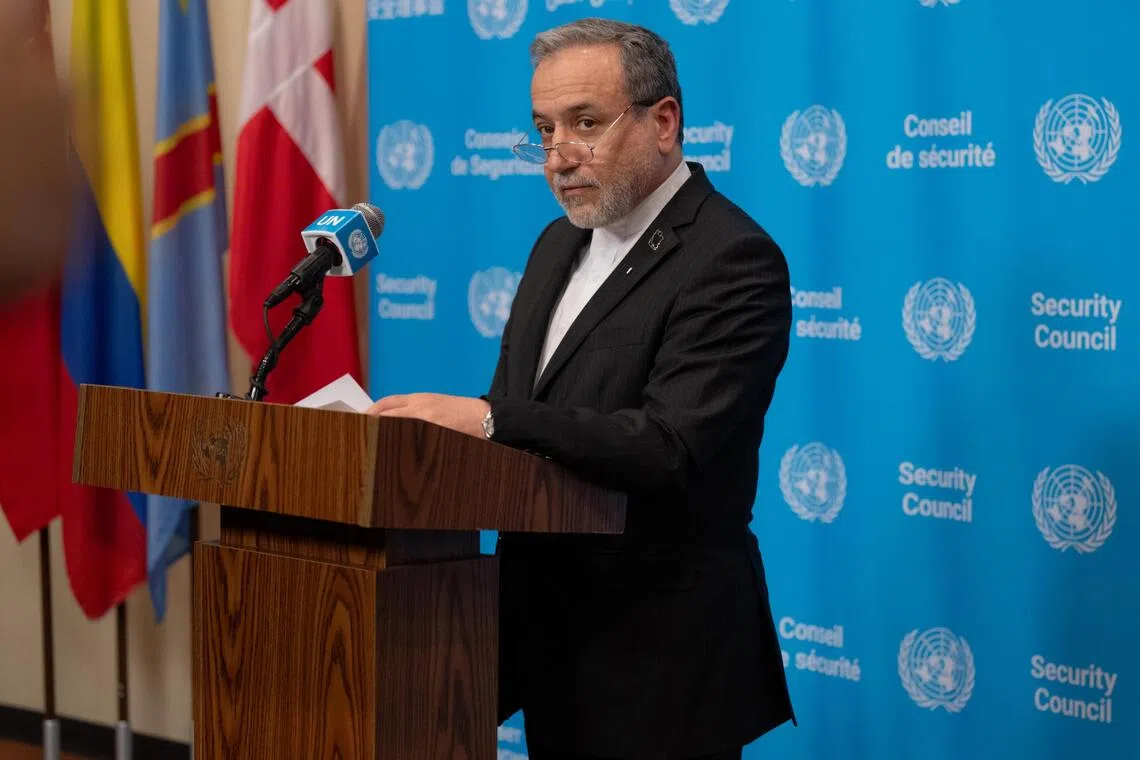
Indirect talks between the United States and Iran aimed at ending the seven-month-long war continue – most recently via Qatar as mediator on the sidelines of the United Nations General Assembly (UNGA) in New York – but the two sides still disagree about the agenda.
asserted
sides → aim → agenda
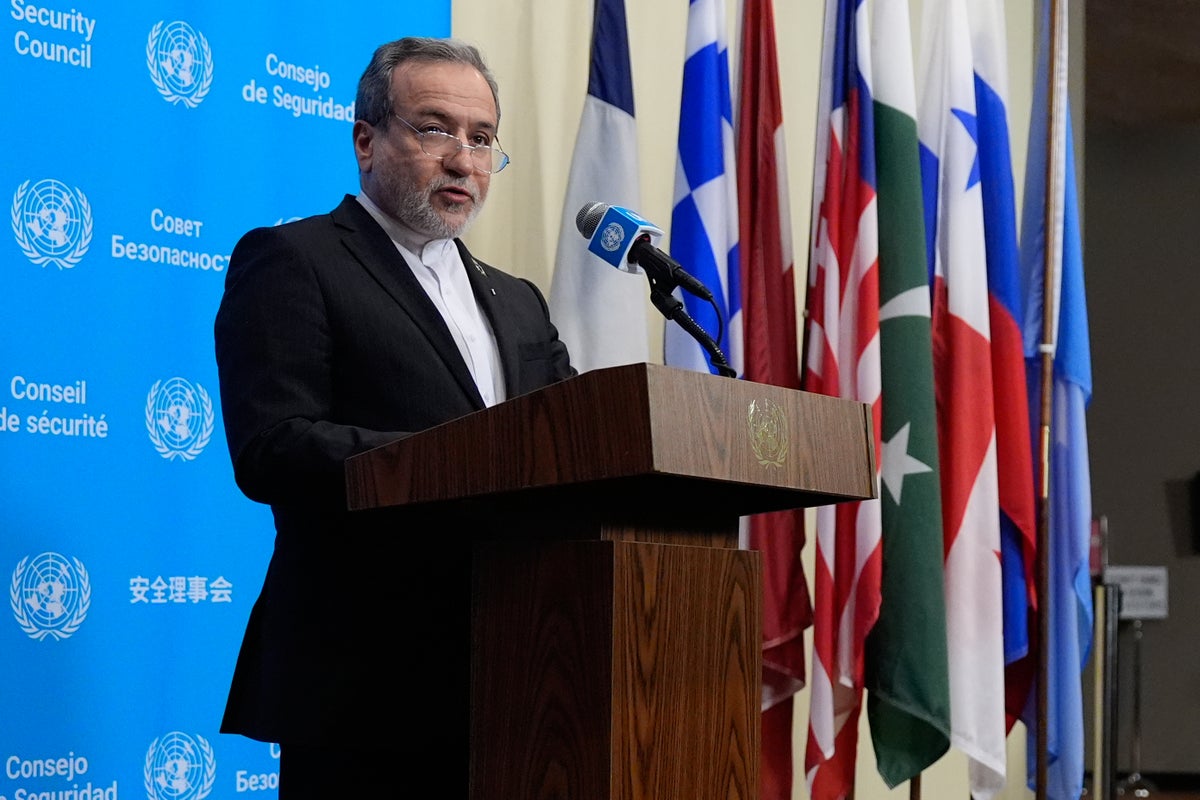
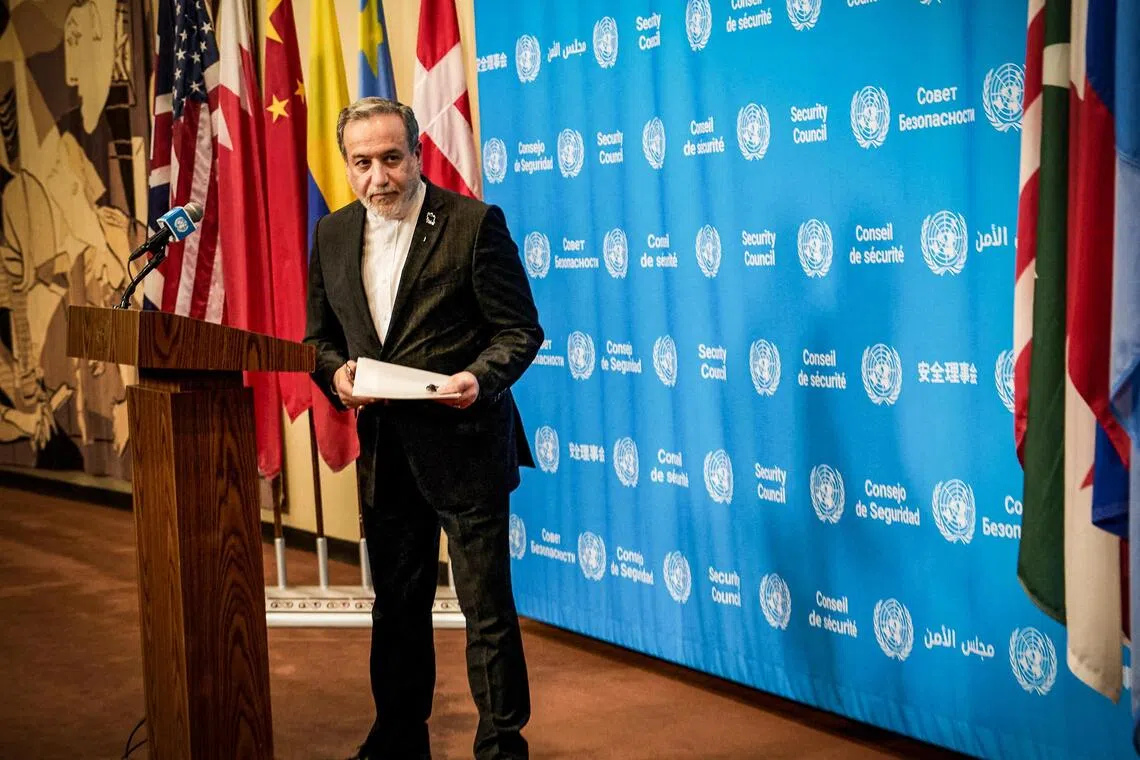
Iranian Foreign Minister Abbas Araghchi left New York on Tuesday after telling state-run Islamic Republic of Iran Broadcasting (IRIB) that he expects an official response to Tehran’s proposal to reopen the Strait of Hormuz by the end of the day.
asserted
he → leave → day
The proposal, which Iran said would see the strait reopened within seven days, was first passed to the US via Qatari mediators last week.
asserted
strait → say → mediators
Recommended Stories
list of 3 items- list 1 of 3Iran’s Araghchi meets Qatari mediators as US calls for nuclear talks
- list 2 of 3US-Iran talks continue, but ‘deal unlikely’ before midterm elections
- list 3 of 3Hormuz and Yemen:
asserted
deal → meet → 3Hormuz
Iran offers de-escalation at a price others will pay
United States President Donald Trump was reported to have rejected that offer, under which Tehran would reopen the strait in return for Washington lifting its naval blockade, waiving sanctions, releasing an estimated $12bn in frozen Iranian assets and enforcing a wider regional ceasefire that includes Lebanon.
asserted
that → offer → Lebanon
Under Iran’s proposal, wider peace talks, including discussions of its nuclear programme, would begin only then
Despite Trump’s public rejection, Araghchi says he has not yet received a formal response from Washington.
asserted
he → include → Washington
Meanwhile, US media reports that Trump may well be willing to relax sanctions and unfreeze Iranian assets have been strongly denied by the US president.
uncertain
Trump → relax → president
Instead, US officials say, the US wants a deal that resolves all outstanding issues, particularly Tehran’s nuclear programme, in one go, rather than pursuing a gradual, step-by-step approach.
asserted
that → say → approach
Here’s what we know about the talks:
asserted
we → ’ → talks
What happened in the Qatar-mediated talks?
asserted
What → happen → talks
Qatari mediators met Araghchi in New York on Monday to discuss how to advance Tehran’s proposal for reopening the Strait of Hormuz and then progressing to wider peace talks.
asserted
mediators → meet → talks
In a post on Telegram, Araghchi insisted that the talks focused solely on the Strait of Hormuz.
asserted
talks → insist → Hormuz
He denied that the US had formally rejected the Iranian proposal.
asserted
US → deny → proposal
“Despite what the US president said, I said that we were waiting for the official US response through the mediators …
asserted
we → say → mediators
They [Qatar] had ideas, and we discussed them.
asserted
we → have → them
They are going to raise this issue with the American side again, and then the final response from the American side will be conveyed to us through the Qatari mediator,” Araghchi said late on Monday.
asserted
Araghchi → go → Monday
Araghchi also said negotiations had become more “serious”, but cautioned that Tehran’s position has not changed.
asserted
position → say → ?
“I state firmly that there has been no change in Iran’s position.
asserted
I → state → position
Our conditions for opening the strait are clear.
asserted
conditions → open → strait
At present, there has been no discussion at all about flexibility,” he added.
asserted
he → add → flexibility
Tehran’s proposal includes elements of the Islamabad memorandum of understanding (MoU), which was signed by both the US and Iran on June 17.
asserted
which → include → June
Is Trump willing to accept some Iranian demands?
asserted
Trump → accept → demands
A US official told The Associated Press news agency last week that Trump is not willing to make a final peace deal with Iran until the issue of its nuclear programme is addressed.
asserted
issue → tell → programme
According to the official, who has not been named, the US president would be willing, however, to grant Iran sanctions relief and release some frozen funds if progress is made on the nuclear file.
uncertain
progress → accord → file
Then, on Monday, US-based news outlet Axios also reported that Trump had offered Iran sanctions relief in return for concessions on its nuclear programme.
asserted
Trump → base → programme
The report also cited US officials, one of whom told Axios that the indirect talks had been “positive and constructive”, adding that Tehran had indicated it was “flexible” on nuclear issues.
asserted
it → cite → issues
Trump, however, angrily denounced the story as a “hoax” in a post on Truth Social, the social media platform he owns.
asserted
he → denounce → Social
He said the story was “not true” and demanded Axios remove the article.
asserted
Axios → say → article
Iran has been heavily sanctioned for decades.
asserted
Iran → sanction → decades
The restrictions have severely affected Iranians’ quality of life, including their access to essential medicines and healthcare.
asserted
restrictions → affect → medicines
In August, the US announced yet more sweeping economic sanctions on Iran and countries that trade with it as it sought to apply more economic pressure to isolate the country from the global economy during the diplomatic deadlock in their war.
asserted
it → announce → war
US Treasury Secretary Scott Bessent described the campaign as the “economic asphyxiation” of Iran.
asserted
Bessent → describe → Iran
It is difficult to quantify exactly how many Iranians have been killed by what Tehran views as “economic warfare”.
asserted
Tehran → quantify → warfare
However, a study published last year by the highly regarded medical journal The Lancet Global Health concluded that more than 564,250 people worldwide die annually as a result of US sanctions.
asserted
people → publish → sanctions
In late February, just before the US launched its first strikes on Iran, the two sides were already holding talks hosted by Oman, which included the issue of Iran’s nuclear programme.
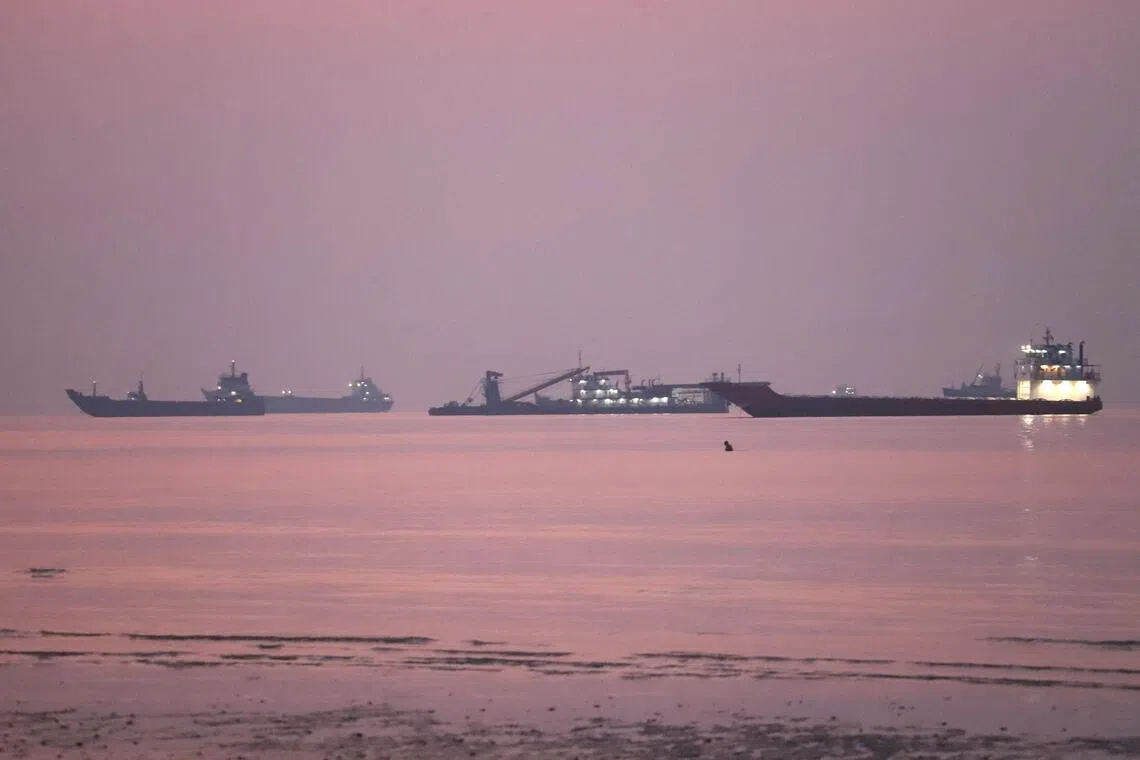
But before those talks could conclude, the US and Israel launched strikes, triggering the closure of the Strait of Hormuz, through which one-fifth of the world’s oil and natural gas is shipped in peacetime, by Iran.
uncertain
fifth → launch → Iran
The closure of the strait has since become the primary point of contention between the two sides, when it had not been an issue before the war began.
asserted
war → become → sides
Throughout the war, Trump has repeatedly expressed his desire to strike a deal with Tehran.
asserted
Trump → express → Tehran
However, serious differences between the two sides will need to be resolved first, including the order in which issues are addressed for the purpose of peace talks.
asserted
issues → need → talks
Iran wants to establish its control of the Strait of Hormuz, have sanctions lifted and assets unfrozen, as well as ensure an end to US-Israeli strikes before it will go back to negotiating other issues, such as its nuclear programme.
asserted
it → want → programme
This was the order of events laid out in the MoU agreed between Iran and the US in June, but which quickly fell apart.
asserted
which → lay → June
…and 29 more, not listed.
 The Aporia