Photo via Dawn

Nepra raises electricity costs by Rs2.58 per unit

Read the original at Dawn ↗
Cite

Kiani, K. (2026, September 5). Nepra raises electricity costs by Rs2.58 per unit. Dawn. https://www.dawn.com/news/2027627/nepra-raises-electricity-costs-by-rs258-per-unit

Dated when The Aporia collected the article, usually within hours of publication. Check the original for its exact date and byline.

Dawn · collected 2026-09-05 · by Khaleeq Kiani

Quick Summary

The National Electric Power Regulatory Authority (Nepra) has raised electricity costs for consumers by Rs2.58 per unit. The increase is due to a combination of higher fuel costs and quarterly tariff adjustments, which will add an additional burden of about Rs45.6 billion on users. For lifeline consumers, EV charging stations, and prepaid users, there will be some relief from this increase. The changes are effective in September and October, with the additional charge of 52 paise per unit remaining for November.
Written by AI on 2026-09-05, from this article's own text only (the story summary below draws on all the coverage).

AI analysis

Story summary

The National Electric Power Regulatory Authority (Nepra) has increased electricity costs by Rs2.58 per unit for consumers in Pakistan. This increase is effective from September onwards, with a total burden of about Rs46bn imposed on users. The main reason for the increase is the expensive LNG purchases from the spot market, which accounts for around Rs33bn of the additional cost. A further 52 paisa per unit quarterly adjustment will also be charged to consumers in the next three months. However, some relief has been provided to lifeline consumers, electric vehicle charging stations, and prepaid users. The increase is a result of Nepra's decision to allow Rs2.06 per unit higher fuel costs in July and additional quarterly charges for other expenses. This will lead to an extra burden of around Rs3 per unit on consumers in September, followed by 52 paisa per unit for the subsequent two months. The increase is expected to be a significant addition to electricity bills, with a total additional burden of Rs45.6bn imposed on users.

Written for “Pakistan Electricity Prices Rise” on 2026-11-01, grounded in this article and the 0 other(s) covering the same event.

Story

📰 Pakistan Electricity Prices Rise
Economy/Business · 1 article(s) covering the same event.

Compared with similar articles

This article reads leans right and hedges 0% of its claims. Each row says how that neighbour differs.
BBC News
Hedges 4 of 34 claims Outlet record 68/100
“Article A discusses a potential energy price spike due to low natural gas storage in Europe, while Article B reports on an increase in electricity costs in Pakistan, citing fuel adjustment and quarterly charges.”
Dawn
⚖️ Leans right Hedges 4 of 21 claims Outlet record 72/100
“Article A reports on Nepra's decision to require mandatory Battery Energy Storage Systems for wind and solar IPPs in an upcoming auction, while Article B reports on Nepra raising electricity costs by Rs2.58 per unit, including a fuel adjustment charge and quarterly charges”
How this article was measured signals, leaning charts, publisher record, byline, topics and claims

Signals How these are calculated →

Claims extracted
12
sentences that state something as happening or true
Uncertain
0%
0 of 12 hedged ("reportedly", "may", "according to")
Leaning
Leans right
of the writing, not the subject · beta estimate
Publisher signals
72/100
Dawn's corrections and hedging, across everything collected from it. Not a measure of accuracy.
Outlets on this story
1
Economy/Business
Same framing elsewhere
1
articles that frame the event the way this one does
Analyzed 2026-09-05 · how these are computed

How this is being covered How these are calculated →

Article leaning vs. publisher reliability
Source leaning vs. consistency

Publisher

Dawn · 2531 article(s) · 3 correction(s) detected
Running correction rate · 3 correction(s)

Who wrote this

Khaleeq Kiani
36 article(s) here · 1 carrying a prediction
🔮 Stakeholders said SOEs had limited LPG import experience and warned that the proposed levy on locally produced LPG would push prices higher, calling for a greater private-sector role.
🔮 This is expected to have a significant impact on fuel cost for power generation in December.
2026-10-30 · assertive framing · Ogra notifies 15.3pc increase in RLNG price for October
🔮 “The petroleum minister highlighted that strategic oil storage facilities in Pakistan would provide Saudi Arabia with greater flexibility in managing supply routes and accessing regional markets,” it added.
🔮 DAAB would monitor project implementation and help prevent or resolve disputes as they arise, while CAP proposed applying the mechanism to projects valued at Rs20bn and above.
🔮 “The project will continue to focus on timely implementation, effective contract management, and compliance with applicable environmental and social requirements.”
🔮 The NEC also approved the inclusion of the Pakistan Virtual Assets Regulatory Authority (PVARA) in Schedule IV of the AMLA, meaning that the crypto body would also have regulatory powers over virtual and digital assets to meet AML-CFT requirements, like the SBP, Securities and Exchange Commission of Pakistan and Federal Board of Revenue, among others.
🔮 Mohammad Ali Haider, vice chairman of the LPG Marketing Association, representing over 200 companies, said prices rose by Rs100 per kilogram over the weekend following withdrawal of the trade exemption and could climb further without immediate intervention.
2026-10-19 · assertive framing · LPG stakeholders seek daily pricing amid soaring rates
🔮 It said a transparent mechanism for disposing of locally produced LPG through a competitive process remained a government priority, as it would ensure a level playing field for the industry and address existing market concentration, where locally produced LPG was concentrated among a few market players.
2026-10-18 · assertive framing · Govt moves to curb LPG hoarding ahead of winter
🔮 Under the Competitive Trading Bilateral Contract Market (CTBCM), open-access consumers participating in the upcoming 400MW auction will have to pay Rs6.23 to Rs19.62 per unit to use the national grid for transporting electricity from the supplier to the consumer.
🔮 The World Trade Organisation on Thursday sharply raised its global trade growth forecast for 2026 — with merchandise trade riding the AI boom — and concluded that some nations, including Pakistan, were actually benefiting from trade disruptions amid the ongoing Middle East conflict in some ways.
Also by Khaleeq Kiani
Nothing else under this byline is closely related to this article, so these are simply their most recent.
All 36 articles by Khaleeq Kiani →

Topics

Discos FCA ISLAMABAD Nepra The National Electric Power Regulatory Authority

Subjects

Nepra ORG · 4× Discos ORG · 2× FCA ORG · 2× Dawn ORG · 1× ISLAMABAD GPE · 1× K-Electric ORG · 1× The National Electric Power Regulatory Authority ORG · 1× XWDISCOs ORG · 1×

Narrative

Under the tariff mechanism, changes in fuel cost are passed on to consumers only on monthly basis through automatic mechanism while quarterly tariff adjustments on account of variation in power purchase price, capacity charges, variable operation and maintenance costs, use of system charges and including impact of transmission and distribution losses are built in the base tariff by the federal government.
framing: assertive · carried by 1 article(s) · first seen 2026-09-05
🔮 Consumers will bear the additional burden of about Rs3 per unit higher tariffs in September and then 52 paisa per unit for subsequent two months of October and November.
2026-09-05 · Dawn
Nepra raises electricity costs by Rs2.58 per unit · assertive framing

Claims (12 extracted, 0 hedged)

• Fuel adjustment adds Rs2.06 per unit to Sept bills • 52 paisa per unit quarterly charge to continue through Nov; Rs45.6bn additional burden imposed on users • asserted
adjustment → add → users
The National Electric Power Regulatory Authority (Nepra) on Friday notified about Rs46bn additional burden to electricity consumers by allowing Rs2.06 per unit higher fuel costs in July and about 52 paise per unit additional quarterly adjustment for other charges for next three months. asserted
Authority → notify → months
Consumers will bear the additional burden of about Rs3 per unit higher tariffs in September and then 52 paisa per unit for subsequent two months of October and November. asserted
Consumers → bear → October
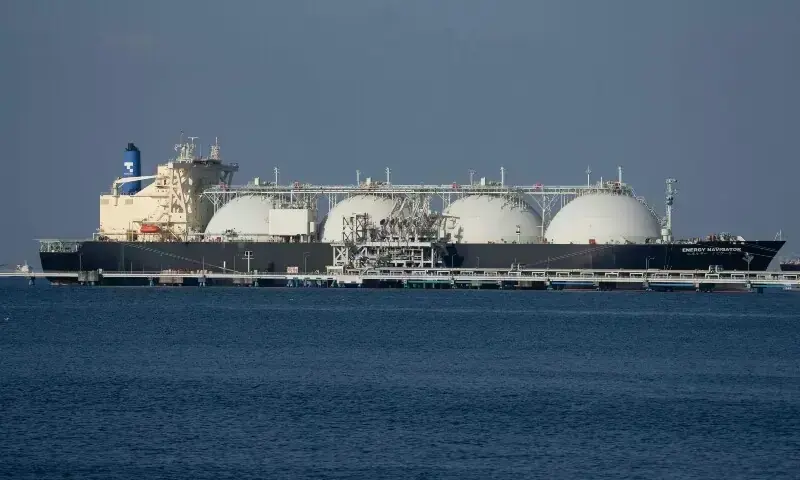
The impact of Fuel Cost Adjustment (FCA) alone in July works out at about Rs33bn and has mainly emanated from expensive LNG purchases from the spot market. Another Rs12.7bn Quarterly Tariff Adjustments (QTA) would be charged to consumers in three months. asserted
Adjustments → work → months
In a late night notification, the Nepra said it “has decided that positive FCA for July 2026 i.e. Rs2.0581/kWh…shall be applicable to all the consumer categories of KE [K-Electric] and XWDISCOs except lifeline consumers, Electric Vehicle Charging Stations (EVCS) and prepaid electricity consumers, of all categories who opted for pre-paid tariff”. asserted
who → say → tariff
The regulator, which has off late started issuing its decisions and notifications late in the night said the higher FCA would also be applicable to incremental consumption package consumers. asserted
FCA → start → consumers
Discos and KE are required to reflect the fuel charges adjustment in respect of July 2026 in the billing month of September 2026. asserted
Discos → require → September
Concurrently, Nepra allowed a 52-paisa per unit higher quarterly tariff adjustment to be recovered over a period of three months. asserted
adjustment → allow → months
“The positive quarterly adjustment of Rs0.5194/kWh shall also be billed to all the consumers (of Discos as well as KE) except lifeline, incremental consumption package billed units and prepaid consumers, to be passed in a period of 03 months i.e. September, October and November 2026”, the Nepra order said. asserted
order → bill → months
The decision to approve 52 paise will result in an overall positive adjustment of Rs12.67bn on account of variation in capacity charges, variable O&M, use of system charges, market operator fee, FCA impact on T&D losses and recovery of PPP on incremental units for year’s 2nd quarter. asserted
decision → approve → quarter
The FCA is reviewed every month as per the tariff regime applicable across the country and is usually applicable to the consumer’s bills for one month only. asserted
FCA → review → month
Under the tariff mechanism, changes in fuel cost are passed on to consumers only on monthly basis through automatic mechanism while quarterly tariff adjustments on account of variation in power purchase price, capacity charges, variable operation and maintenance costs, use of system charges and including impact of transmission and distribution losses are built in the base tariff by the federal government. asserted
adjustments → pass → government

💬Give feedback
🕘History 🎫Support